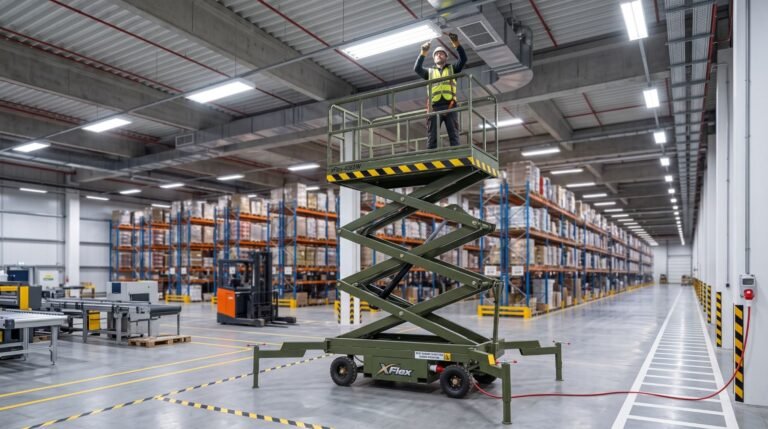
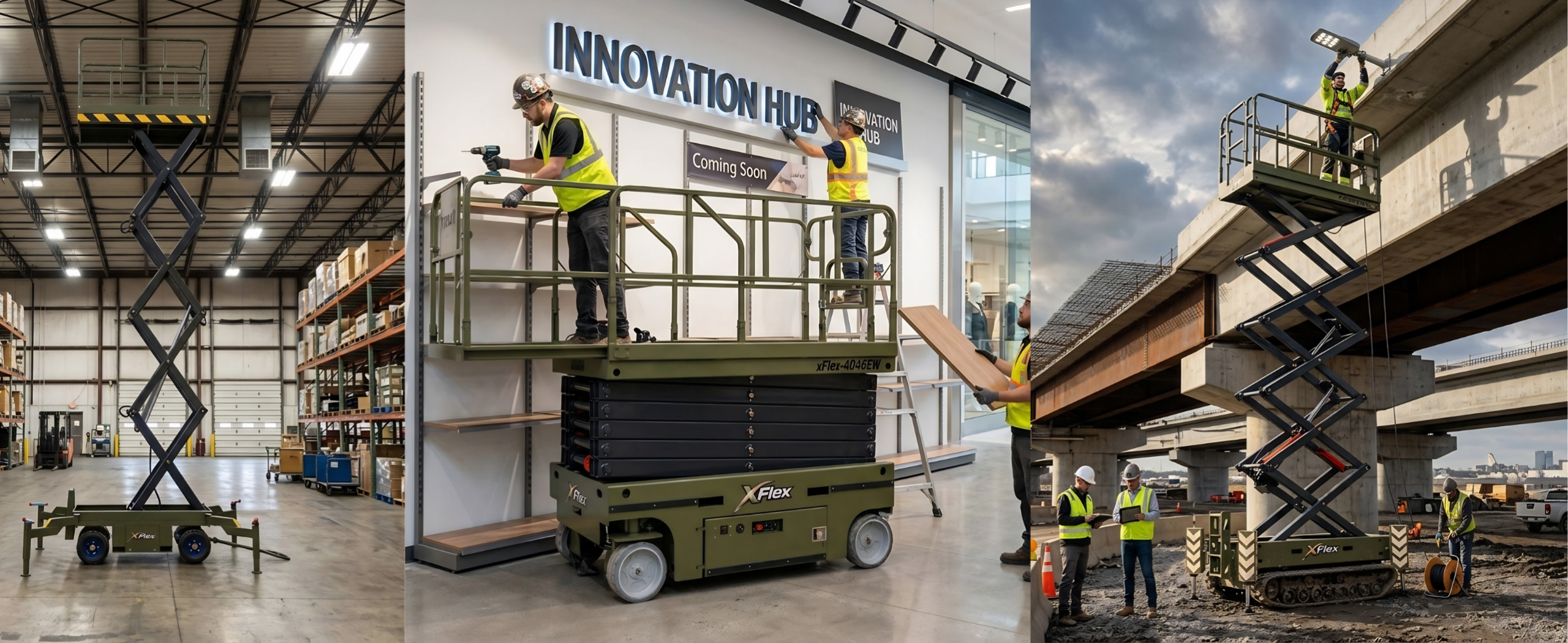
Selecting the correct equipment for your jobsite directly impacts your operational efficiency, budget, and worker safety. When your crew needs to work at height, a scissor lift provides a stable, secure platform that far outperforms traditional scaffolding or ladders. However, choosing the right machine requires a clear understanding of your specific work environment.
A frequent mistake contractors and facility managers make is assuming any lift can handle any job. Placing an indoor lift on a muddy construction site results in stuck equipment and project delays. Conversely, driving a heavy diesel lift into a finished warehouse damages floors and creates severe health hazards for your crew.
We want to help you make informed equipment decisions. This comprehensive guide details the key scissor lift differences. We will examine power sources, terrain capabilities, tire types, and weight capacities to provide a clear aerial work platform comparison. By understanding these features, you will know exactly how to select the best machine for your upcoming projects.
Power Source: Electric vs. Internal Combustion
The most defining difference between indoor scissor lifts and outdoor scissor lifts is how they generate power. The power source dictates where the machine can operate safely and legally.
Indoor Power Systems
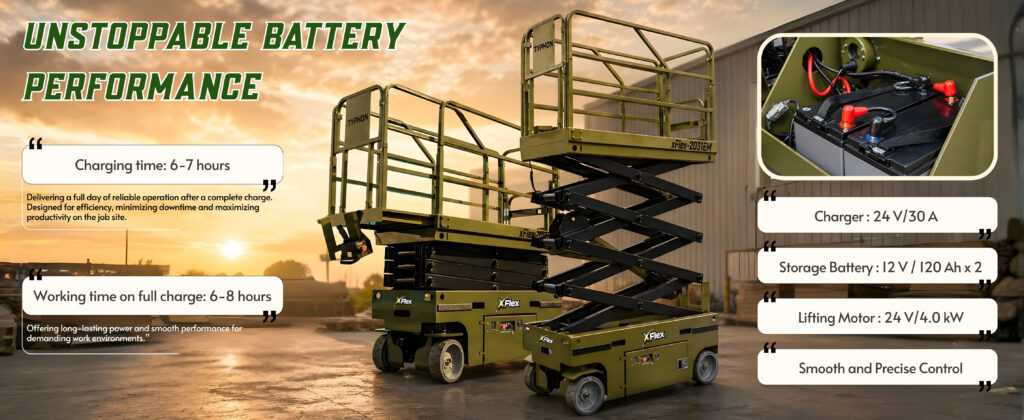
Indoor scissor lifts operate almost exclusively on battery-electric power. These machines utilize deep-cycle lead-acid batteries or advanced lithium-ion battery packs to drive electric motors. This design serves a vital safety purpose: electric lifts produce zero exhaust emissions.
You must never run an internal combustion engine inside a closed building without massive, specialized ventilation. Carbon monoxide builds up rapidly, creating a lethal environment for your workers. Electric indoor scissor lifts eliminate this risk entirely. Furthermore, electric motors run almost silently. This allows your crew to work in occupied buildings, hospitals, or schools without disrupting the people around them.
Outdoor Power Systems
Outdoor scissor lifts, commonly known as rough terrain (RT) scissor lifts, require massive torque to navigate difficult jobsite conditions. These machines typically rely on robust diesel engines to power heavy-duty hydraulic pumps. Diesel engines provide the relentless power needed to push through thick mud, climb steep grades, and carry heavy materials up to the platform.
Some outdoor models feature dual-fuel engines that run on either gasoline or liquid propane gas (LPG). While dual-fuel engines offer some flexibility, diesel remains the industry standard for aggressive outdoor construction environments. Because they operate outside, the exhaust emissions and engine noise do not present the same hazards as they would indoors.
Terrain Capability and Chassis Design
The ground conditions of your jobsite dictate the structural design your lift requires. Manufacturers engineer indoor and outdoor lifts with entirely different chassis profiles to handle their respective environments.
Navigating Smooth Concrete
Professionals refer to indoor models as “slab scissor lifts” for a good reason. Manufacturers design these machines to operate strictly on flat, level, concrete slabs. They feature a very low ground clearance to maintain a low center of gravity.
Because they operate on smooth surfaces, slab lifts do not need heavy suspension systems. The rigid chassis provides excellent stability when the platform is fully elevated. However, this low clearance means a slab lift will instantly bottom out or get stuck if you attempt to drive it over gravel, dirt, or debris.
Conquering Rough Terrain
Outdoor scissor lifts feature a high-clearance chassis designed to conquer unpredictable earth. These machines incorporate active oscillating axles. When one tire drops into a deep rut or climbs over a rock, the oscillating axle pivots. This keeps all four tires firmly planted on the ground, maintaining traction and keeping the main chassis level.
Additionally, rough terrain lifts almost always feature true four-wheel drive. The hydraulic system sends maximum torque to the wheels with the best grip, allowing the machine to power through sticky mud and loose sand. If your job site lacks a finished concrete or asphalt surface, you absolutely must use an outdoor rough terrain model.
Tire Type: Non-Marking vs. Heavy Tread
Tires serve as the only point of contact between your heavy machinery and the ground. The wrong tires will either destroy your client’s property or leave your machine helplessly stuck.
Protecting Finished Floors
Indoor scissor lifts utilize solid rubber, non-marking tires. Manufacturers strip the carbon black out of the rubber compound during production. This ensures the tires do not leave dark scuff marks or black streaks on finished flooring.
If you drive a standard tire across a polished concrete warehouse floor, expensive commercial carpet, or painted basketball court, you will cause thousands of dollars in property damage. Non-marking tires feature a smooth profile with little to no tread, maximizing the surface contact area on flat ground.
Gaining Outdoor Traction
Outdoor scissor lifts utilize large, aggressive pneumatic or foam-filled tires. These tires feature deep, thick treads designed to bite into dirt and gravel. The large diameter of the tire helps the machine roll smoothly over debris and uneven ground.
We highly recommend foam-filled tires for outdoor construction sites. A construction site is covered in sharp rocks, dropped screws, and scrap metal. A traditional pneumatic tire will eventually suffer a puncture, causing downtime and requiring a service call. Foam-filled tires provide the exact same traction and shock absorption but are completely flat-proof.
Platform Height and Weight Capacity
When you rent or buy an aerial work platform, you must calculate exactly how high you need to reach and how much weight you need to lift. Indoor and outdoor models offer different capabilities in these areas based on their physical footprint.
Indoor Reach and Capacity
Indoor scissor lifts prioritize a compact footprint. To fit through standard commercial doorways and navigate narrow warehouse aisles, these machines feature narrow bases. Because the base is narrow, the maximum safe operating height is naturally restricted to prevent the machine from tipping over.
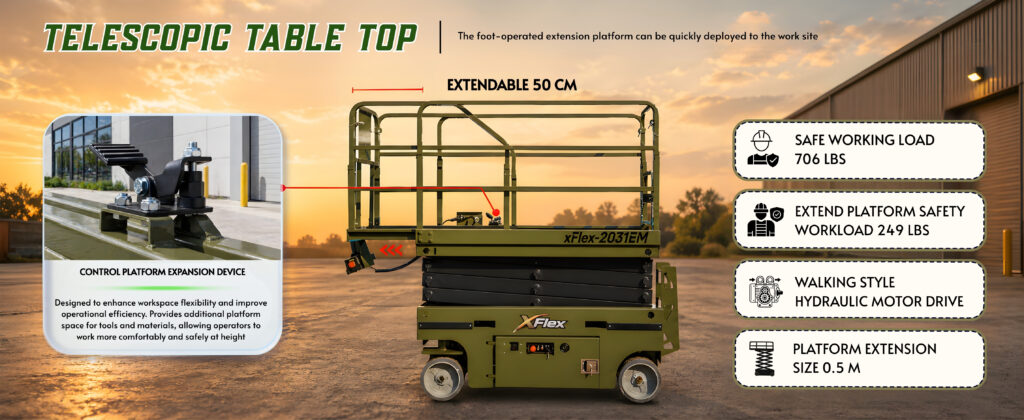
Most indoor slab lifts offer working heights between 19 feet and 32 feet. The platform capacity generally ranges from 500 to 900 pounds. This provides enough capacity for two workers and their hand tools, which perfectly suits tasks like changing light fixtures or pulling electrical wire.
Outdoor Reach and Capacity
Outdoor scissor lifts do not have the same size restrictions. They feature a wide, heavy stance that provides incredible stability. This wide base allows the lifting mechanism to extend much higher and support significantly more weight safely.
Rough terrain models frequently offer working heights between 30 feet and 60 feet. More importantly, they offer massive platform capacities, often ranging from 1,000 to over 2,500 pounds. This allows crews to load the platform with heavy materials like cinder blocks, large windows, or structural steel, lifting both the materials and the workers to the installation point simultaneously.
Maneuverability and Space Constraints
Space defines how your operators can move and position the equipment. You must measure your access points before you order a machine.
Tight Indoor Navigation
Indoor scissor lifts excel in highly confined spaces. Manufacturers design standard models to be exactly 30 inches or 32 inches wide. This allows the operator to drive the machine directly through a standard single doorway without removing the guardrails.
Furthermore, these machines feature a zero inside turning radius. The operator can pivot the machine within its own footprint, making it incredibly easy to navigate around warehouse racking, tight corners, and crowded manufacturing floors.
Outdoor Positioning
Outdoor scissor lifts require significantly more operating space. A standard rough terrain lift often measures over 60 inches wide and features a much longer wheelbase. They cannot fit through standard doors and require large, open areas to turn around. The larger footprint provides the stability needed for heavy lifting, but it sacrifices tight maneuverability.
Safety Considerations and Outriggers
Working at height introduces significant risks. Both indoor and outdoor scissor lifts feature integrated safety systems, but the specific hazards they address vary by environment.
Indoor Safety Protocols
The primary safety concerns indoors involve floor loading limits and overhead obstacles. Even a compact indoor lift is incredibly heavy due to its solid steel construction and massive battery pack. You must verify that the building’s floor or elevator can safely support the machine’s gross weight.
Additionally, operators must watch for overhead hazards like fire sprinkler heads, suspended HVAC ducts, and overhead power tracks. Most indoor lifts feature a pothole protection system. When the lift elevates, steel bars drop down just above the floor. If a tire drives into a small hole, the bars catch the floor, preventing the machine from tipping over.
Outdoor Safety and Stabilization
Wind is the most dangerous hazard for outdoor scissor lifts. Every aerial work platform features a strict maximum wind speed rating, usually around 28 miles per hour. If wind speeds exceed this limit, operators must lower the platform immediately. A fully elevated platform acts like a sail, and strong wind gusts can easily blow the machine over.
To increase stability on uneven ground, rough terrain lifts utilize hydraulic leveling outriggers. The operator deploys four hydraulic legs that push down into the dirt, lifting the machine’s tires slightly off the ground. The lift’s internal computer automatically adjusts the legs to ensure the chassis is perfectly level before allowing the platform to rise. You must never bypass or ignore the outrigger system when working on sloped outdoor terrain.
Ideal Use Cases for Each Lift Type
To summarize this aerial work platform comparison, let us examine the specific tasks where each machine delivers the best return on your investment.
When to Choose Indoor Scissor Lifts
You should select a battery-electric slab scissor lift for any project inside a finished or enclosed structure.
Common applications include:
- Facility Maintenance: Changing high bay lighting, cleaning elevated windows, and inspecting fire suppression systems in warehouses.
- Mechanical and Electrical: Running conduit, pulling wire, and installing hanging HVAC ductwork in commercial buildings.
- Retail and Inventory: Conducting stock counts in large retail stores or managing high-rack inventory in distribution centers.
- Finished Construction: Completing drywall taping, painting, and drop-ceiling installation during the final phases of a commercial build.
When to Choose Outdoor Scissor Lifts
You must select a diesel-powered rough-terrain scissor lift for projects taking place on raw earth, gravel, or unfinished grades.
Common applications include:
- Exterior Construction: Installing exterior siding, brickwork, and large commercial windows on new buildings.
- Steel Erection: Lifting welders and heavy steel beams into place during the structural framing phase.
- Industrial Painting: Reaching high exterior walls, storage tanks, and large bridge structures for sandblasting and coating.
- Event Setup: Building outdoor concert stages, erecting large event tents, and installing temporary stadium lighting.
Evaluating Your Jobsite Needs
Making the right equipment choice requires a thorough site assessment. Before you commit to a specific machine, walk your jobsite and answer these fundamental questions.
First, identify the ground surface. If the ground is dirt, gravel, mud, or cracked asphalt, you need an outdoor rough terrain lift. If the ground is smooth concrete, tile, or finished hardwood, you need an indoor slab lift.
Second, check your access points. Measure the width and height of the doors, gates, or alleys the machine must pass through. An outdoor lift provides great power, but it is useless if it cannot fit through the access gate.
Third, calculate your required working height and capacity. Working height is typically calculated by adding six feet to the machine’s maximum platform height. Ensure the machine can reach your highest task while securely holding your workers and all their heavy materials.
Maximize Jobsite Productivity with the Right Equipment
Understanding scissor lift differences ensures your projects run smoothly, safely, and highly efficiently. You protect your operators from dangerous tipping hazards and you protect your clients from costly property damage.
By carefully evaluating your power requirements, terrain conditions, and lifting needs, you guarantee that your crew has the exact tools required to succeed. We take pride in helping contractors and facility managers build reliable, safe operations. Use this authoritative guide to confidently select your next aerial work platform, and keep your business moving forward with absolute certainty.