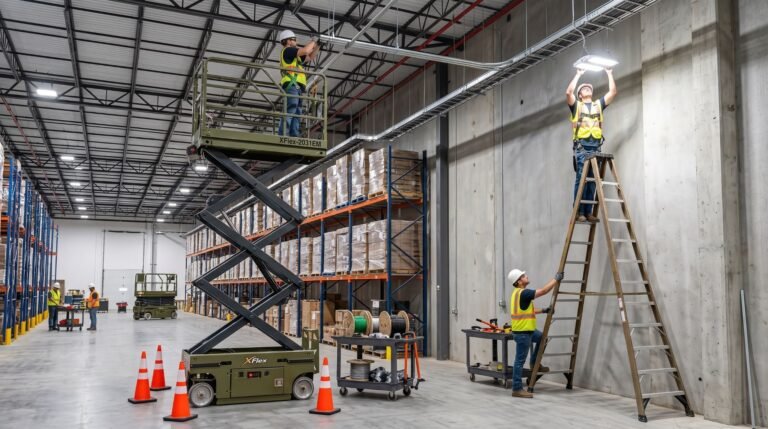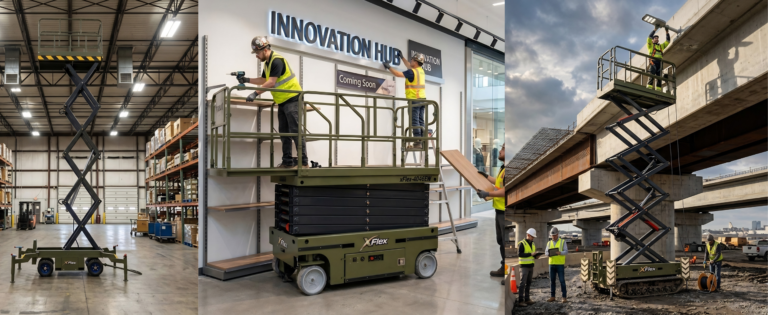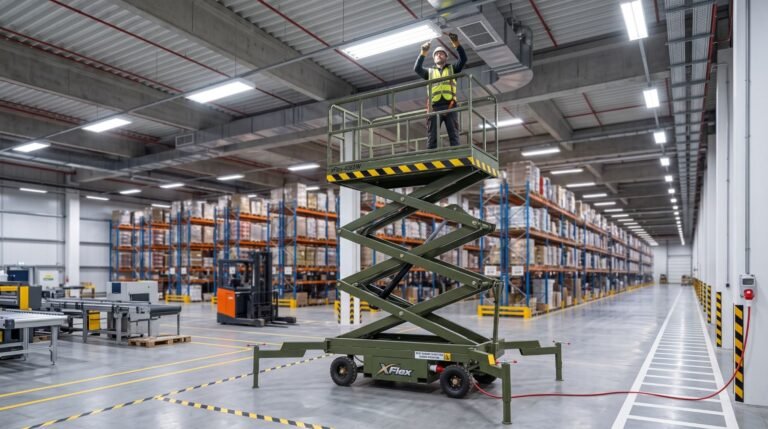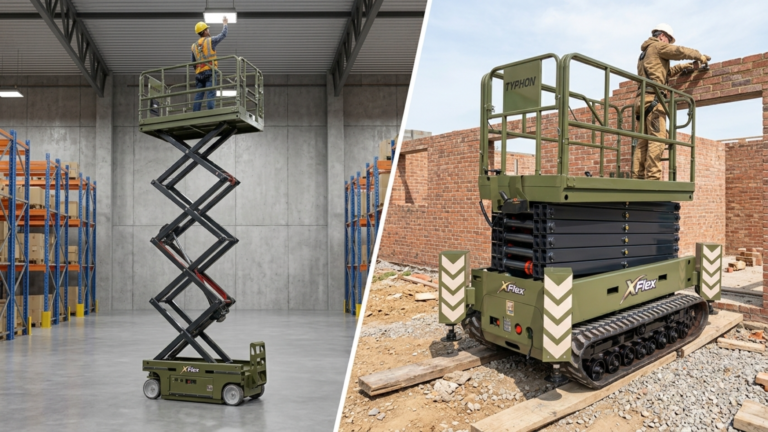
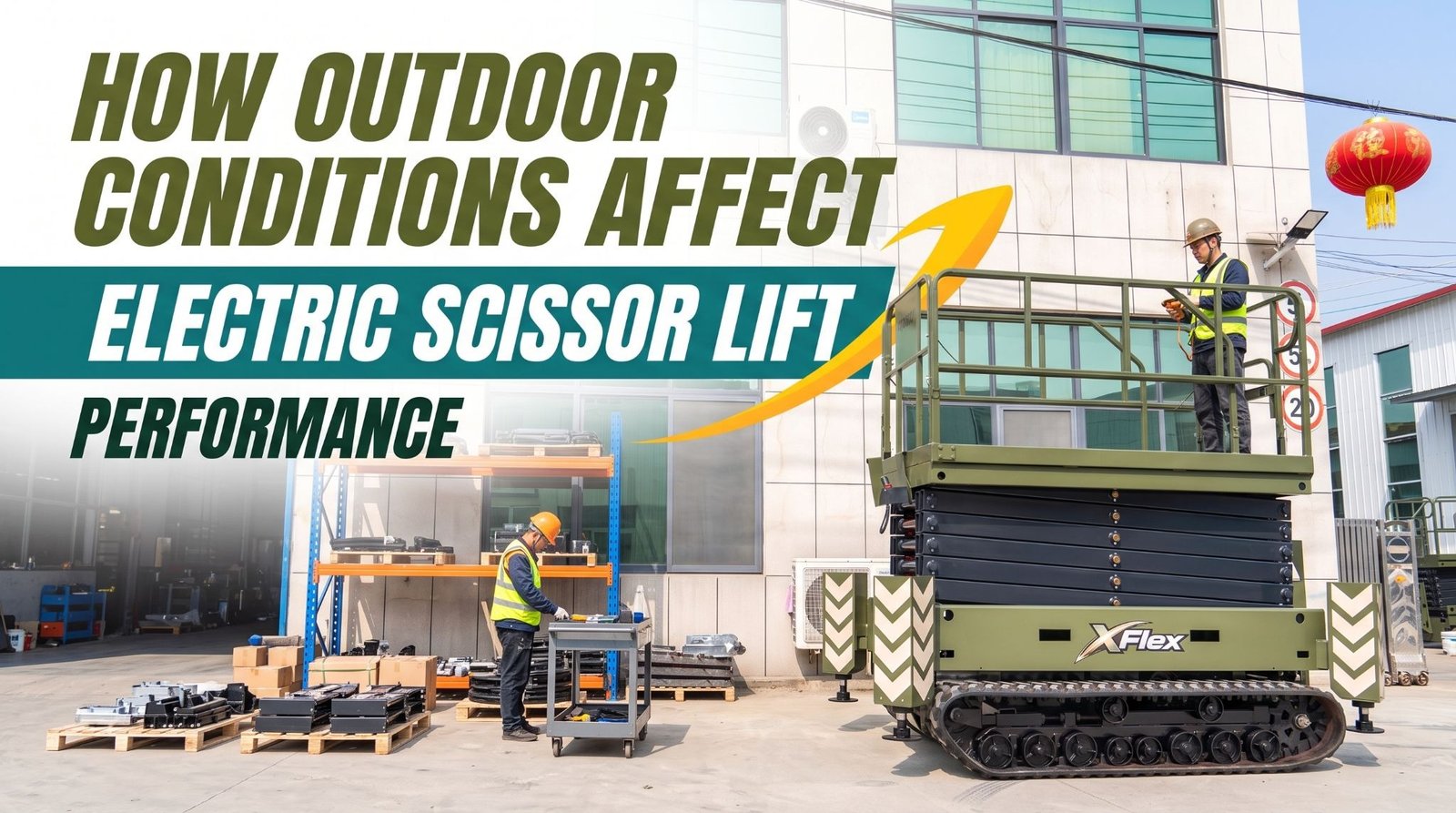
Bring an electric scissor lift outdoors, and the machine you know from clean indoor floors starts to behave in unfamiliar ways. A unit that glides quietly across a warehouse and holds its charge through a full shift can lose runtime, feel slower, and demand more careful handling the moment it meets open air. Electric scissor lifts are engineered first and foremost for smooth, level, sheltered environments, and outdoor sites introduce a set of variables the machine wasn’t primarily built to shrug off. Temperature swings tug at the battery, wind presses against a raised platform, soft or wet ground challenges the wheels, and slopes tax the drive system. Understanding these forces before you roll a lift onto an outdoor job protects both your productivity and everyone working at height.
Outdoor conditions deserve real attention because they reshape nearly every aspect of performance you rely on indoors. Charge endurance, lifting behavior, mobility, and stability all respond to the weather and the ground in ways that catch operators off guard when they assume outdoor work will mirror the indoor routine. Knowing how heat and cold affect the cells, how wind interacts with an elevated deck, how terrain governs traction and gradeability, and how moisture threatens the electronics lets you plan the work sensibly and choose the right machine for it. This post walks through each of those forces in turn and closes with practical guidance for selecting and running an electric scissor lift outdoors with confidence.
How Temperature Affects Battery Chemistry and Runtime
The battery pack is the heart of an electric scissor lift, and it responds to temperature far more than most operators expect. Batteries store and release energy through chemical reactions, and those reactions run at different rates depending on how warm or cold the cells are. In cold weather, the chemistry slows, so the pack delivers less of its stored energy and delivers it more sluggishly. A machine that runs a comfortable eight hours indoors at room temperature can surrender a noticeable share of that runtime on a cold morning, sometimes dropping well below what the gauge suggested at start-up. The colder it gets, the more pronounced the shortfall, and lead-acid packs tend to feel the effect more sharply than lithium chemistries.
Heat brings its own set of problems from the opposite direction. High ambient temperatures push chemical activity faster, which can help short-term output but accelerates wear on the cells over time. Sustained heat, especially when combined with hard lifting duty, raises the internal temperature of the pack and speeds the fade that permanently trims capacity. The machine may run acceptably on a hot afternoon, but the pack pays a hidden price that shortens its working life across seasons of outdoor use. Charging in extreme temperatures adds further strain, since packs charge less efficiently when cold and risk damage when charged hot.
Key takeaway: Cold weather slows battery chemistry and cuts usable runtime, while sustained heat speeds long-term capacity fade, so temperature directly shapes both the hours you get per charge and the life of the pack.
How Wind Affects Platform Stability at Height
Wind is one of the most underestimated hazards of outdoor scissor lift work, because it barely registers at ground level yet grows powerful the moment the platform rises. A raised deck acts like a sail, and every square foot of platform, guardrail, occupant, and material catches moving air. The higher the lift extends, the longer the lever arm between the base and the platform, so even a moderate gust exerts a surprising sideways force that can rock the machine or, in the worst case, threaten to tip it. Materials carried on the deck, sheets of plywood or panels especially, enlarge that sail area dramatically and turn a manageable breeze into a serious risk.
Manufacturers publish a maximum wind speed rating for outdoor-capable lifts, and that figure is a firm operating limit rather than a suggestion. Many indoor-only electric scissor lifts carry a very low or zero outdoor wind rating precisely because their footprint and design assume calm, sheltered air. Exceeding the rated wind speed removes the stability margin the machine was built with, and gusts are especially dangerous because they arrive suddenly and unevenly, striking the platform before an operator can react. Wind rarely blows at a steady pace outdoors, so the peak gust matters far more than the average reading.
Key takeaway: A raised platform catches wind like a sail, and gusts grow more dangerous with height and load, so respecting the machine’s maximum wind rating is essential to keeping the lift stable outdoors.
How Wet and Muddy Ground Affects Traction and Mobility
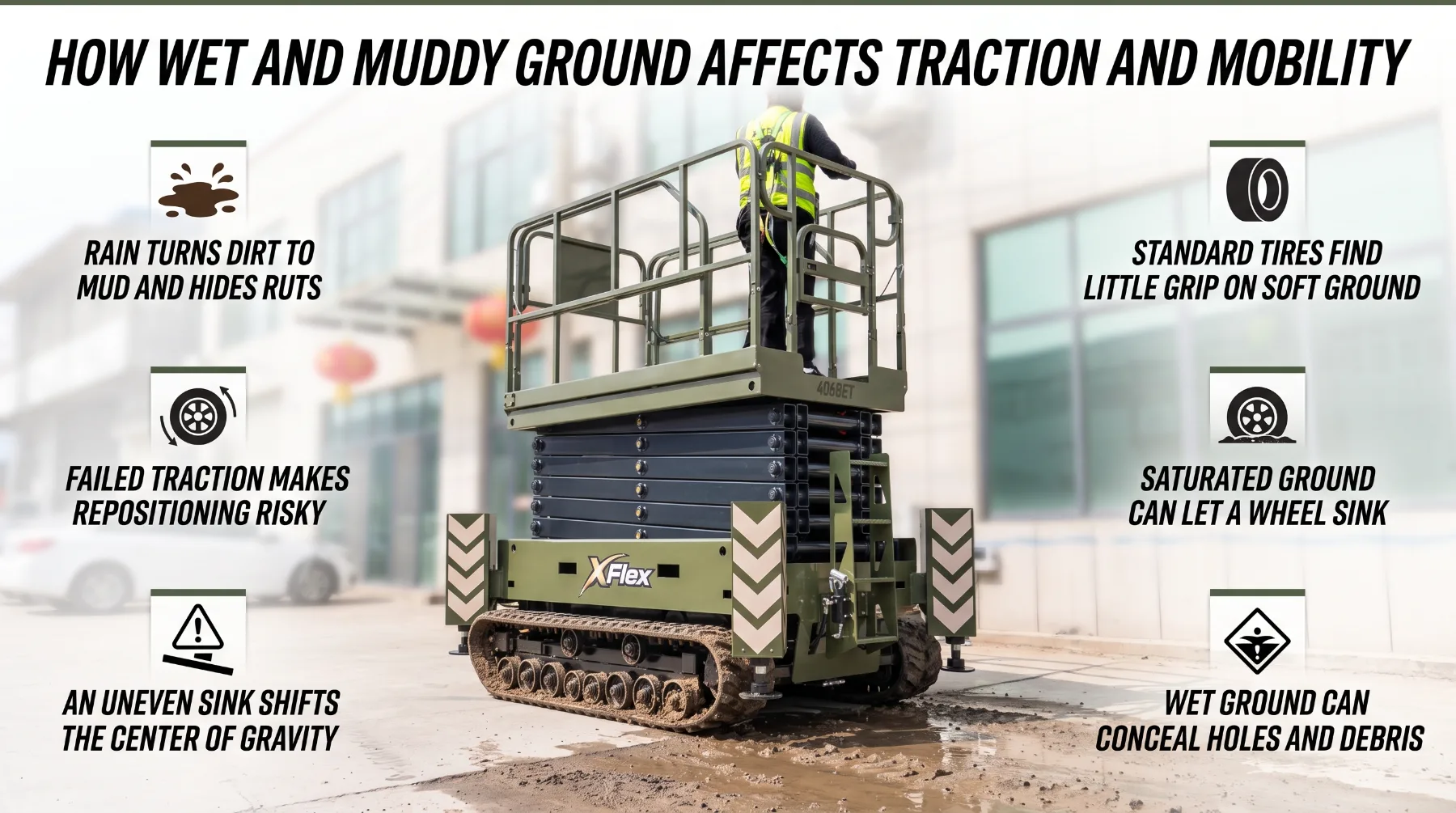
Indoor floors give an electric scissor lift the clean, firm, level surface its wheels were designed for. Outdoor ground rarely offers the same courtesy. Rain turns dirt to mud, saturates gravel, and leaves puddles that hide soft spots and ruts beneath the surface. Many electric scissor lifts run smooth or lightly treaded tires suited to hard flooring, and those tires find little grip on slick or loose ground. When traction fails, the machine can spin its wheels, struggle to reposition, or slide slightly on a slope, none of which inspires confidence when the platform is elevated.
Soft ground introduces a deeper concern than grip alone. An electric scissor lift concentrates significant weight on a compact footprint, and on saturated or loose soil a wheel can sink unevenly, tilting the whole machine. Because stability at height depends on a level base, even a modest sink on one side shifts the center of gravity and erodes the safety margin the platform relies on. Waterlogged ground can also conceal holes, buried debris, or drop-offs that a firm floor would never present. This is why outdoor scissor lift work almost always calls for assessing and often preparing the ground first, laying down mats or boards where the surface is questionable, and why rough-terrain machines built for outdoor duty carry larger, aggressively treaded tires and greater ground clearance.
Key takeaway: Wet and muddy ground robs traction and can let wheels sink unevenly, undermining the level, firm base a scissor lift needs, so ground assessment and the right tires are critical outdoors.
How Terrain and Slopes Affect Gradeability and Drive Performance
Outdoor sites are seldom flat, and slopes place demands on an electric scissor lift that indoor work never does. Gradeability, the steepness of incline a machine can climb, is a published specification, and standard electric scissor lifts typically carry modest gradeability ratings because they assume mostly level operation. Driving up even a gentle ramp forces the drive motor to haul the full weight of the machine against gravity, pulling far more current from the battery and draining charge faster than level travel. On a grade that approaches or exceeds the machine’s rating, the motor can labor, slow noticeably, or fail to make the climb at all.
Slopes also intersect with the stability concerns that govern all scissor lift work. Most electric scissor lifts are rated to elevate the platform only on firm, level ground, and driving on a slope with the platform raised is generally prohibited because the incline shifts the center of gravity toward the tipping edge. Uneven terrain compounds the problem, since a machine straddling a dip or a hummock sits at an angle even when the ground looks roughly flat. Descending a grade brings braking and control into play as well, because the drive system must hold the machine’s weight steady rather than letting it run away downhill. Rough-terrain electric and hybrid machines offer stronger drive systems, higher gradeability, and often four-wheel drive precisely to handle the inclines that would defeat a standard indoor unit.
Key takeaway: Slopes drain the battery faster, tax the drive motor, and threaten stability with a raised platform, so matching the site’s terrain to the machine’s gradeability rating is essential for safe, capable outdoor operation.
Practical Tips for Operating an Electric Scissor Lift Outdoors
Getting dependable performance from an electric scissor lift outdoors comes down to planning around the conditions and operating the machine within the limits those conditions impose. Start every outdoor job by reading the environment: check the weather forecast and monitor wind speed at working height, since a raised platform meets far stronger air than the ground does. Assess the ground carefully before driving onto it, watching for soft, wet, uneven, or hidden hazards that could let a wheel sink or tilt the machine, and lay down mats or boards to spread the load and firm up questionable surfaces. Confirm the site’s slopes fall within the machine’s gradeability rating, and never elevate the platform on ground that isn’t firm and level.
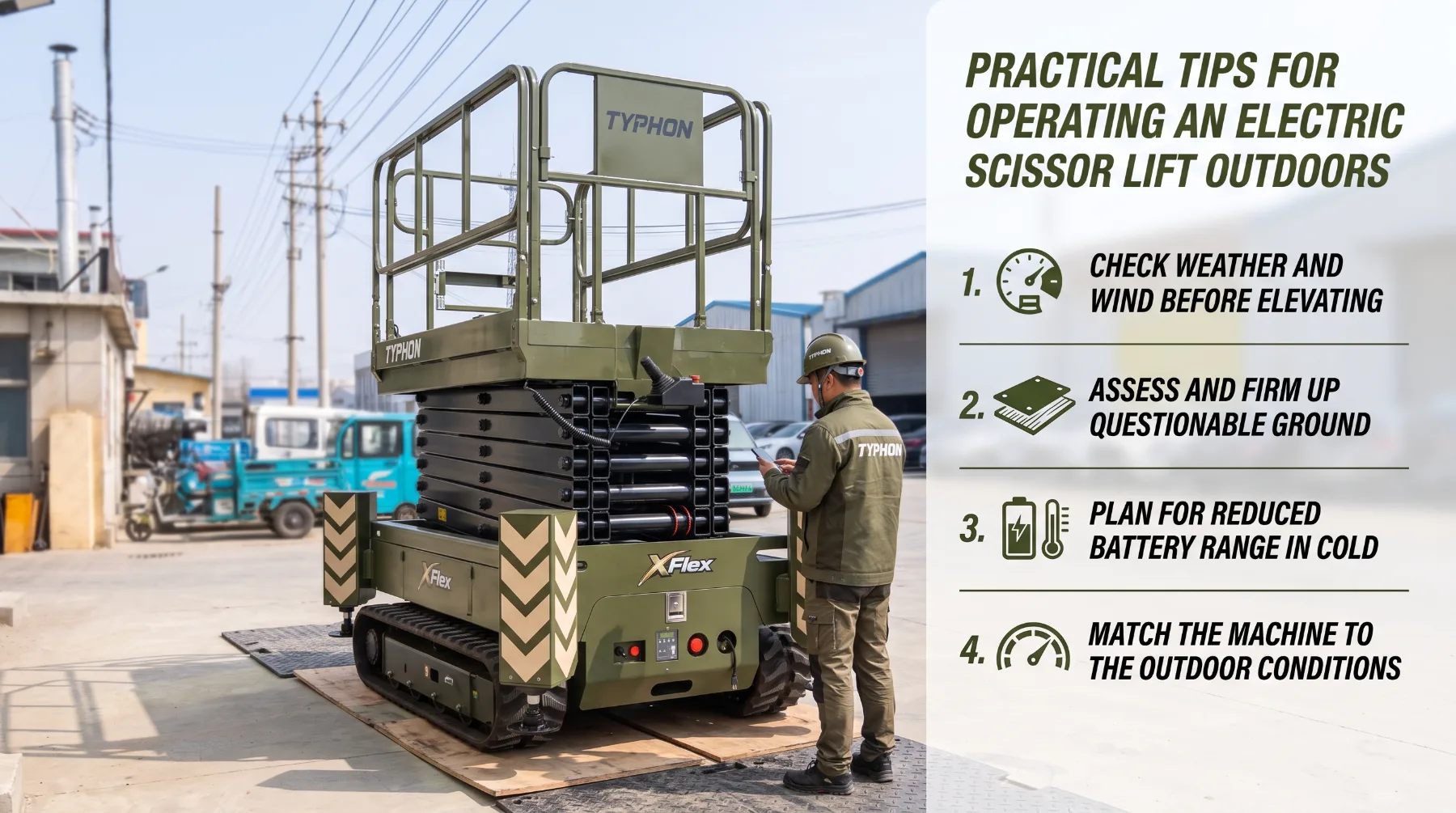
Manage the battery around the temperature you’re working in. On cold days, expect reduced runtime and plan a spare pack, a mid-shift charge, or a shorter working window rather than being caught short at height; on hot days, let the machine and pack cool when you can and avoid charging in extreme heat. Protect the electronics by keeping the machine out of standing water and heavy rain, and shelter or store it under cover when it isn’t working, so sun and moisture don’t quietly degrade the seals and components over time. Above all, match the machine to the conditions: reserve indoor-rated electric scissor lifts for sheltered, firm, level work, and choose a rough-terrain electric or hybrid unit when the job genuinely demands outdoor capability. These habits cost little beyond attention, yet together they recover much of the runtime, stability, and reliability that outdoor conditions would otherwise erode.
Key takeaway: Read the weather and ground, respect wind and gradeability limits, manage the battery around temperature, shelter the electronics, and match the machine to the conditions, so the lift performs safely and dependably outdoors.
Conclusion
Outdoor conditions and electric scissor lift performance are closely connected, as temperature, wind, ground conditions, slopes, moisture, and UV exposure can all affect safety, runtime, traction, and reliability. Cold reduces usable battery runtime, heat accelerates battery wear, wind becomes more hazardous as the platform rises, and wet or uneven ground can reduce traction and stability. Slopes also increase battery and drive demand, while moisture and UV exposure can affect electrical components and seals over time. For outdoor work, match the lift’s wind, gradeability, tire, sealing, and battery capabilities to your climate and terrain, then operate within those limits and protect the machine from prolonged exposure. This helps maintain stable operation, dependable runtime, and consistent performance across demanding outdoor shifts.
Frequently Asked Questions
Can I use any electric scissor lift outdoors, or do I need a specific model?
You should not assume an indoor electric scissor lift is suitable for outdoor work. Many are designed for firm, level surfaces and have low or zero outdoor wind ratings. Smooth tires, limited gradeability, and less weather-resistant components may not handle wind, slopes, wet ground, or moisture safely. For outdoor use, choose a model specifically rated for it, such as a rough-terrain electric or hybrid lift with suitable wind limits, stronger drive capability, traction-focused tires, higher ground clearance, and weather-resistant components. Always verify the manufacturer’s ratings before operating outdoors.
Why does my electric scissor lift’s battery run down faster outdoors?
Temperature and terrain are two major factors. Cold conditions can reduce battery performance, especially with lead-acid batteries, while slopes, soft ground, and uneven surfaces make the drive motors work harder and draw more current. These conditions can significantly shorten runtime compared with smooth indoor floors. Plan for reduced runtime in cold or demanding conditions, and allow time for charging or battery changes when needed.
How much wind is too much for an electric scissor lift?
The maximum wind speed specified by the manufacturer is the firm limit. A raised platform increases wind exposure, while occupants and materials add to the effect. Gusts are especially important because they can create sudden, uneven forces, so peak gust speed matters more than average wind speed. Check wind conditions at working height using an anemometer when required, and never exceed the lift’s rated wind limit.