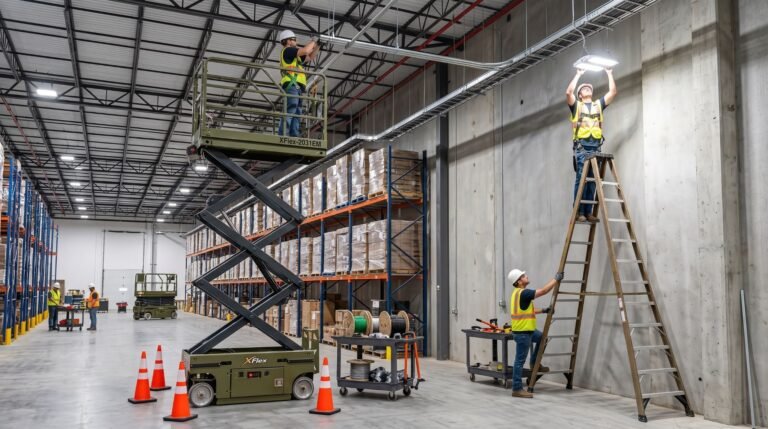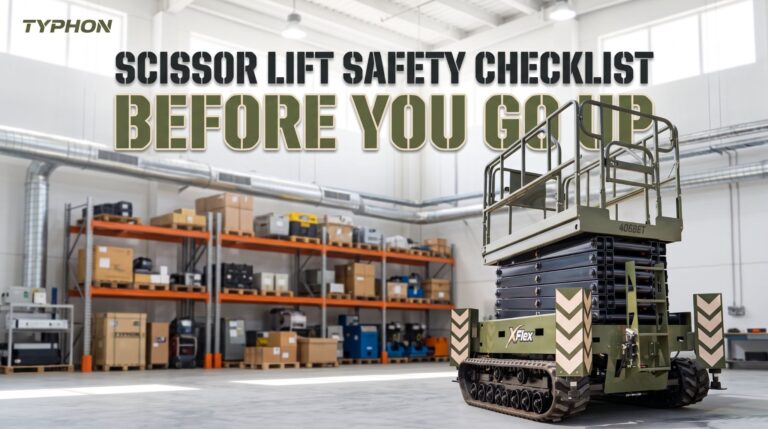
On many construction sites, warehouses, and maintenance projects, workers often face the same challenge—how to safely reach elevated work areas without wasting time or risking falls from ladders or scaffolding. Whether it’s installing ceiling fixtures, painting high walls, or handling stock in a warehouse, working at height is part of daily operations.
This is where a scissor lift becomes essential. Yet many teams still underestimate how it works or choose the wrong type for the job, leading to delays, inefficiency, or unnecessary safety risks.
Understanding how a scissor lift functions and when to use each type helps improve productivity, reduce labor strain, and create a safer working environment.
The Challenge of Working at Height on Busy Jobsites
In real jobsite conditions, working at height is rarely simple. Ladders are limited by stability and reach, while scaffolding takes time to assemble and move. This often creates bottlenecks in workflow, especially when tasks require frequent repositioning.
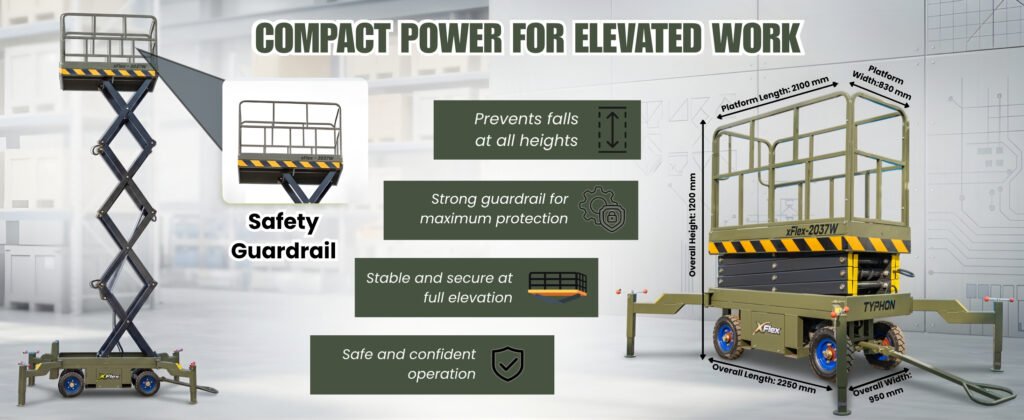
A scissor lift solves this by providing a stable, movable platform that can lift workers and tools vertically in seconds. It uses a crisscrossing (scissor-like) metal support structure that expands upward when hydraulic or electric pressure is applied.
This mechanism allows smooth vertical lifting while maintaining platform stability, making it ideal for indoor maintenance, warehouse operations, and controlled construction environments.
The impact is clear: faster setup, improved safety, and reduced labor fatigue compared to traditional access methods.
How Standard Scissor Lifts Work in Everyday Operations
A basic scissor lift operates using a hydraulic or electric system that pushes fluid or power into cylinders. This action forces the crisscross arms to extend upward, raising the platform vertically.
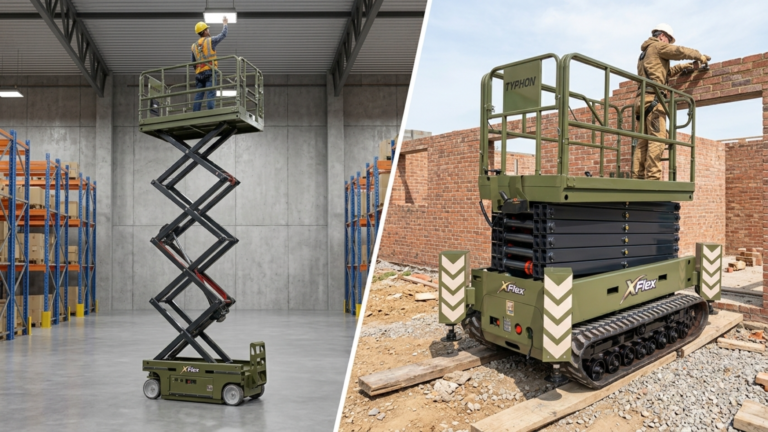
These lifts are commonly used when ground conditions are flat and stable—such as inside warehouses, retail centers, or factories.
They are especially effective for:
- Stock picking and shelving work
- Electrical and lighting installation
- HVAC maintenance
- Interior construction tasks
However, standard models are limited in terrain handling and horizontal reach. Once the job requires uneven ground or outdoor conditions, performance starts to drop, and stability becomes a concern.
This is where choosing the right variation becomes important.
When Standard Lifts Are Not Enough: Rough-Terrain Scissor Lifts
As projects move outdoors or into unfinished construction zones, conditions become more demanding. Uneven surfaces, gravel, and slopes make standard lifts less reliable.
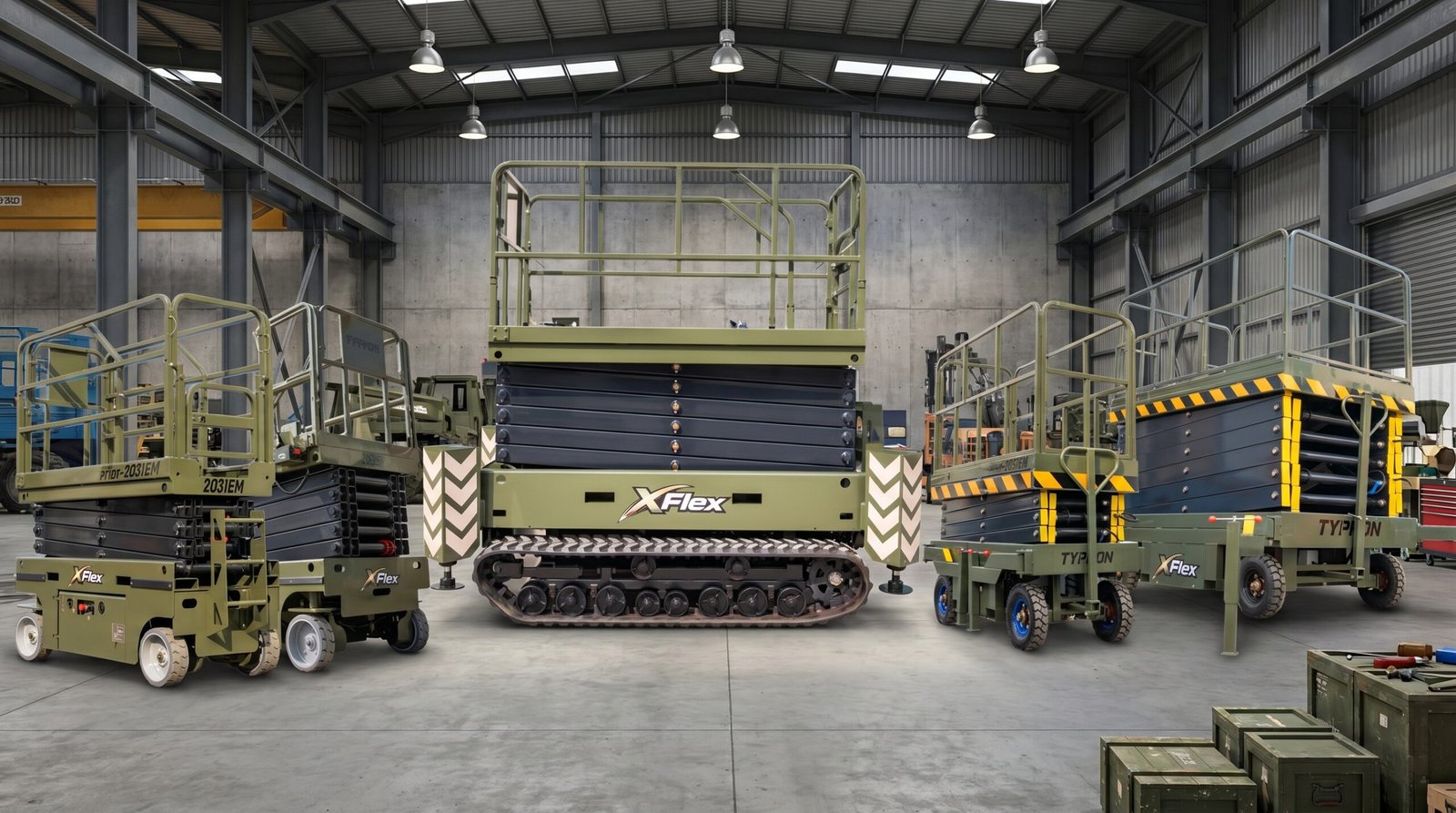
Rough-terrain scissor lifts are designed for these environments. They feature stronger tires, enhanced stability systems, and higher ground clearance.
Unlike indoor models, these machines are built to handle:
- Construction sites with uneven ground
- Outdoor installation work
- Large-scale structural maintenance
The difference matters because using the wrong lift in these environments can slow down work and increase safety risks. Rough terrain models maintain platform stability even when surface conditions are not ideal, allowing crews to continue working efficiently without frequent repositioning or setup changes.
Scaling Up: High-Capacity Scissor Lifts for Larger Workloads
As projects increase in size, so does the need for higher load capacity and greater working height. Standard and rough terrain lifts can reach limitations when multiple workers, heavy tools, or materials are involved.
High-capacity scissor lifts address this by offering:
- Larger platforms
- Higher weight limits
- Extended lifting heights
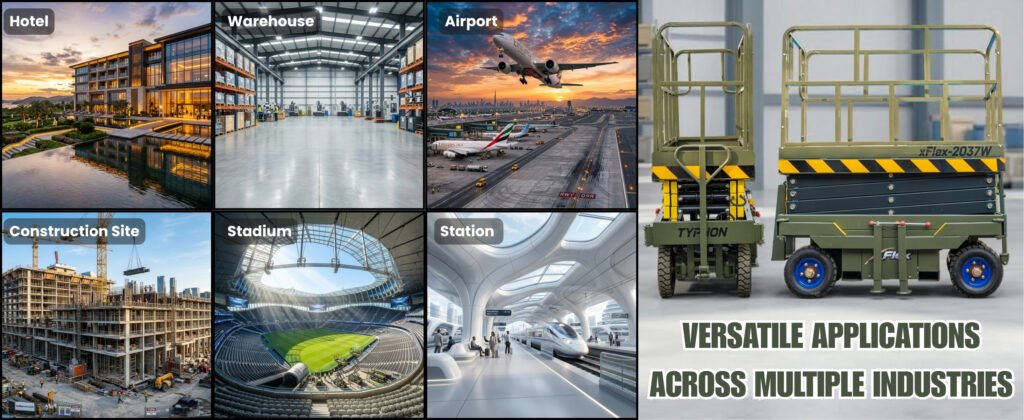
These machines are often used in industrial construction, stadium maintenance, and large facility installations.
The trade-off is that they require more space, careful transport planning, and higher operational costs. However, the productivity gain often outweighs these factors when managing large crews or complex installations.
Heavy-Duty Applications in Industrial and Infrastructure Projects
In extreme environments such as bridge maintenance, large warehouses, or infrastructure development, specialized scissor lifts are used to handle demanding workloads.
These machines prioritize strength and reach over compact design. They may be heavier, slower to reposition, and more expensive to maintain, but they are built for continuous heavy-duty operation.
They make sense when:
- Work requires maximum-height access
- Heavy tools or multiple workers are needed
- Continuous operation is required over long periods
However, for smaller or indoor jobs, these machines can be inefficient due to size and cost.
Choosing the Right Scissor Lift for Your Work
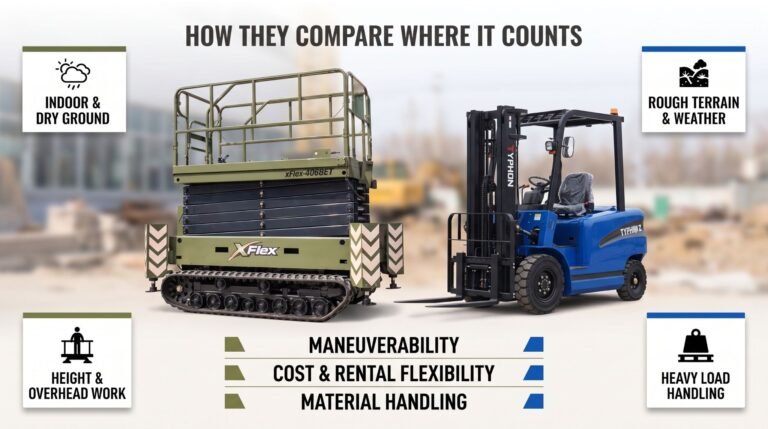
Selecting the right scissor lift depends on understanding your daily job site conditions rather than just looking at specifications.
Key factors to consider include:
- Work environment (indoor vs outdoor)
- Ground conditions (flat, uneven, rough terrain)
- Required height and load capacity
- Frequency of repositioning
- Budget and maintenance capability
For example, a warehouse operation may benefit most from a compact electric scissor lift, while a construction site with uneven ground requires a rough terrain model.
The best choice is the one that balances safety, efficiency, and operational cost for your specific workflow.
Conclusion
A scissor lift is more than just a piece of lifting equipment—it is a productivity tool that directly affects how safely and efficiently work gets done at height. From compact indoor models to heavy-duty industrial machines, each type serves a specific purpose.
Choosing the right scissor lift is not about getting the biggest machine, but about matching the equipment to the jobsite conditions. When used correctly, it improves safety, reduces downtime, and keeps projects moving smoothly from start to finish.
Frequently Asked Questions
What is a scissor lift?
A scissor lift is a mechanical platform that raises workers and equipment vertically using linked, folding supports powered by hydraulic or electric systems.
How do I choose the right scissor lift?
Choose based on where you work, how high you need to reach, ground conditions, and how much weight you need to carry.
What is the best scissor lift for indoor use?
Electric scissor lifts are best for indoor use because they are quiet, emission-free, and designed for flat surfaces.
Is a scissor lift worth using instead of scaffolding?
Yes, in many cases. Scissor lifts are faster to set up, safer for workers, and more efficient for repetitive height tasks.
What is the difference between electric and rough-terrain scissor lifts?
Electric models are for smooth indoor surfaces, while rough terrain lifts are designed for outdoor, uneven, and construction environments.