Scissor lift height is one of the first questions buyers and rental customers ask, and for good reason. Choose a machine that does not reach your work area, and you have wasted time, money, and a delivery fee. Choose one that is taller than your space allows, and you face a real safety hazard.
The answer is not a single number. Scissor lifts range from compact indoor models that reach just under 20 feet to heavy-duty outdoor machines that extend well past 50 feet. The right machine for your project depends on what you need to reach, where you are working, how much weight you need to lift, and the physical conditions of the site.
This guide breaks down scissor lift heights by machine type, explains the difference between platform height and working height, and gives you a practical framework for selecting the right aerial lift for your application.


Platform Height vs. Working Height: Know the Difference
Before comparing machines, you need to understand the two height measurements that manufacturers publish — because confusing them leads to the wrong rental or purchase decision.
Platform Height
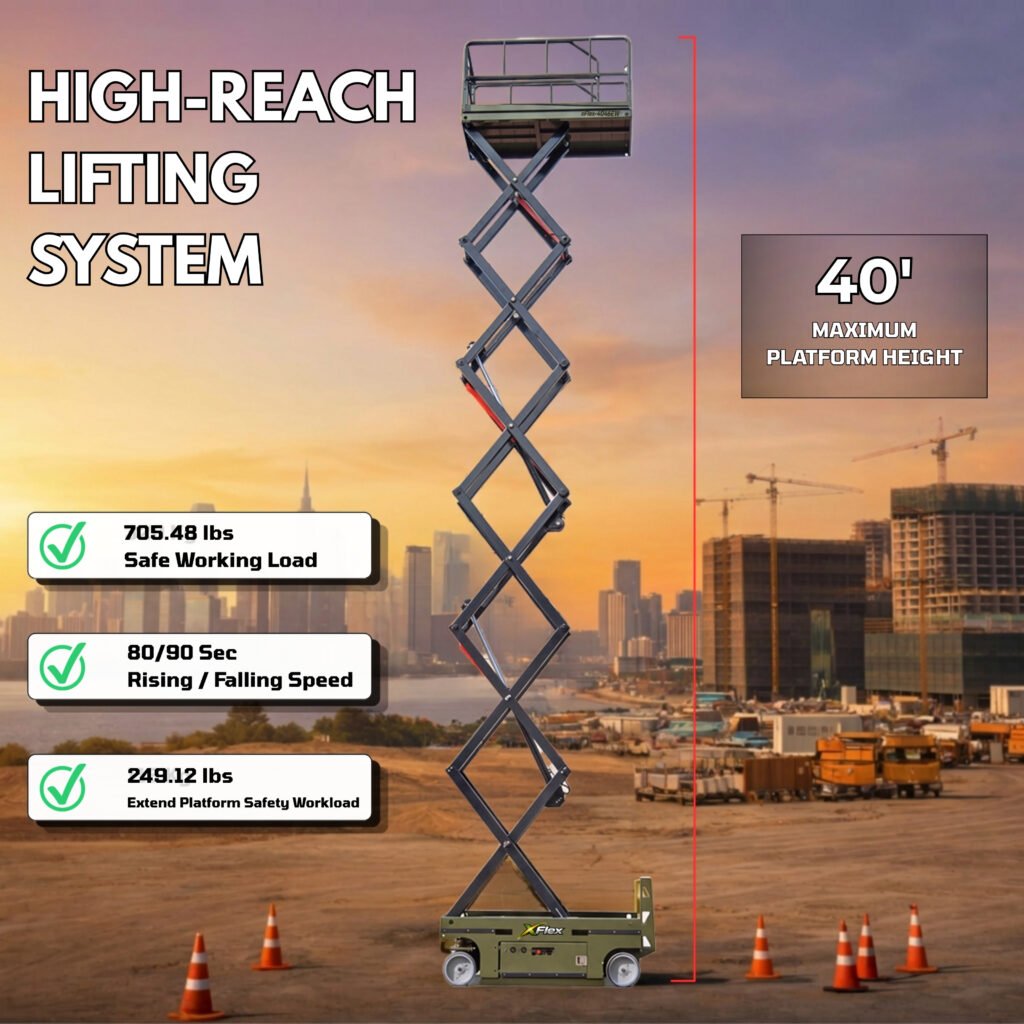
Platform height is the maximum elevation of the floor of the platform itself. When a manufacturer states that a scissor lift has a platform height of 30 feet, that means the deck surface rises to 30 feet above the ground at full extension.
Working Height
Working height adds approximately six feet to the platform height. This accounts for the average reach of a person standing on the platform — typically measured from the ground to the outstretched hands of a six-foot worker. A machine with a 30-foot platform height is therefore rated at roughly 36 feet of working height.
Why this distinction matters: When you are selecting an aerial lift, your target is always the working height, not the platform height. If your task requires reaching a light fixture at 28 feet, you need a machine with at least 22 to 24 feet of platform height to give your operator a safe, comfortable working position.
A common mistake is selecting a machine based on its working height and then arriving on-site to find the platform cannot actually reach the work area. Build in a margin. Always confirm actual platform height before you commit.

Indoor Scissor Lift Height Ranges
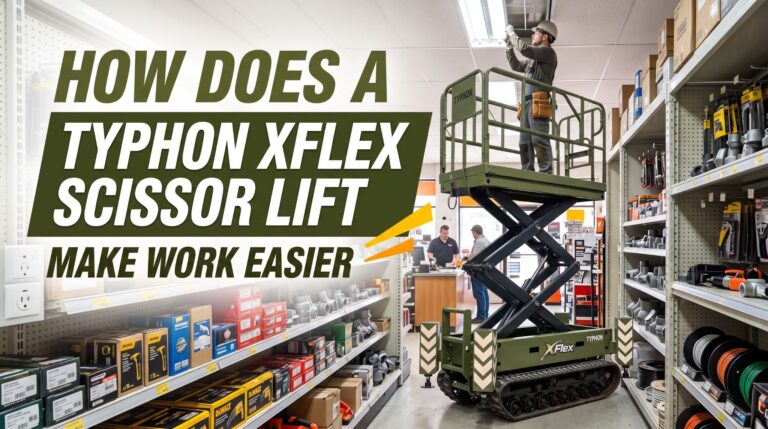
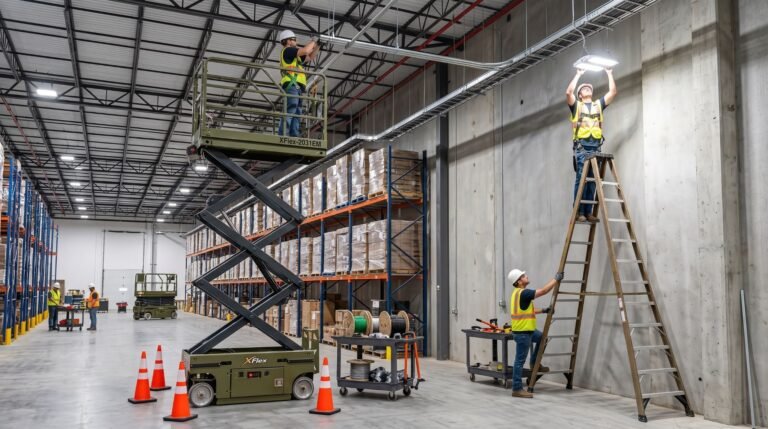
Indoor scissor lifts — often called slab models or electric scissor lifts — are designed for use on flat, finished concrete surfaces inside warehouses, commercial buildings, and occupied facilities. They run on battery-electric power and produce zero exhaust emissions, making them safe and practical for enclosed spaces.
Compact and Mid-Range Indoor Models
The most commonly rented indoor scissor lifts fall in the 19 to 32-foot platform height range, translating to working heights of roughly 25 to 38 feet. These machines cover the majority of commercial interior maintenance and construction tasks.
Typical applications at this height:
- Changing high bay lighting in warehouses and distribution centers
- Installing or servicing HVAC ductwork suspended from the ceiling structure
- Painting or finishing work on upper walls and ceilings in multi-story commercial spaces
- Running electrical conduit or data cable through suspended ceiling areas
A 26-foot platform height model (approximately 32 feet working height) is often the go-to choice for standard commercial warehouse work, where ceiling heights typically range from 24 to 30 feet. These machines are narrow enough to pass through standard doorways and maneuver in tight aisle configurations.
Extended-Reach Indoor Models
For taller interior applications like high-bay manufacturing facilities, large sports arenas, and distribution centers with racking systems 40 feet or more, manufacturers offer indoor scissor lifts with platform heights up to 40 feet, yielding working heights approaching 46 feet.
These machines are heavier and wider than standard compact models. Before specifying one, you must verify:
- The building’s floor load rating can support the machine’s gross weight
- Doorways, elevators, and access routes are wide and tall enough
- The ceiling height allows full extension without hitting structural elements, sprinkler heads, or suspended systems
If you regularly work in very tall interior structures, an extended-reach electric scissor lift is a sound investment. It eliminates the need for scaffolding at elevation and keeps your crew mobile across large floor areas.
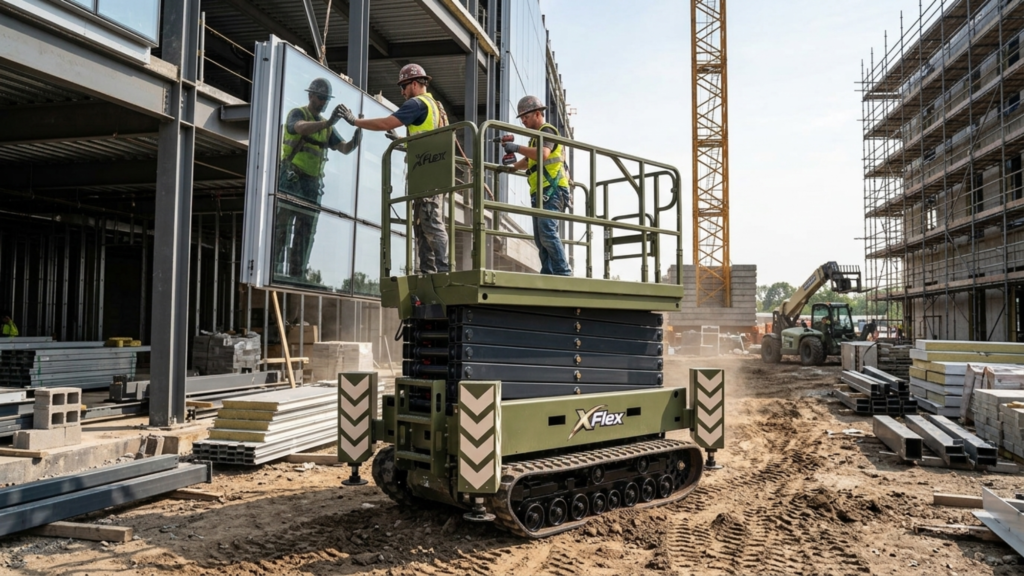
Outdoor Rough Terrain Scissor Lift Height Ranges
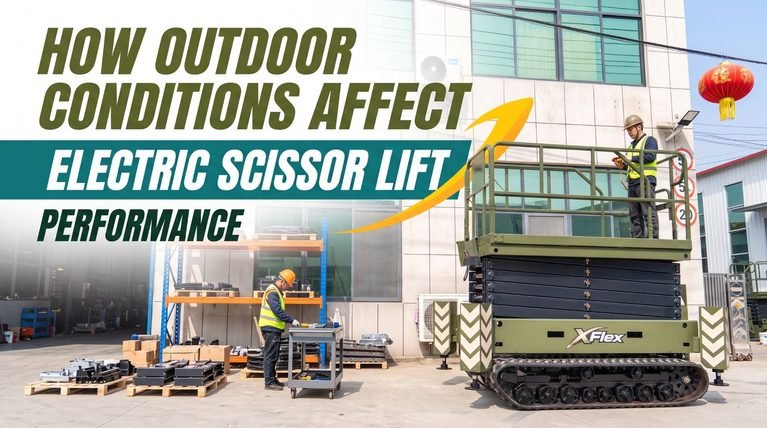
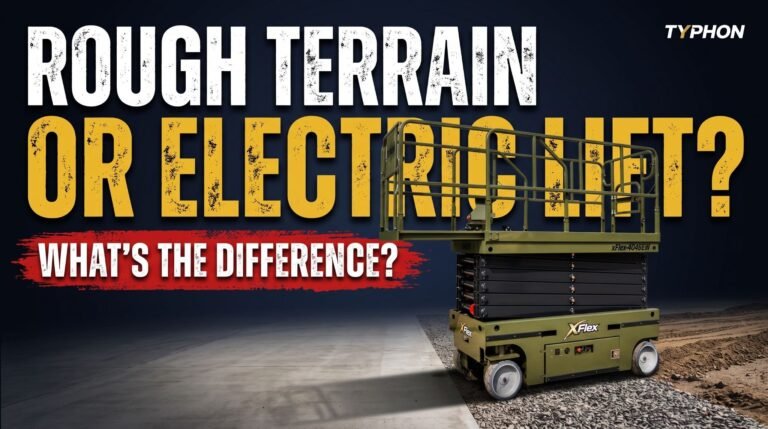
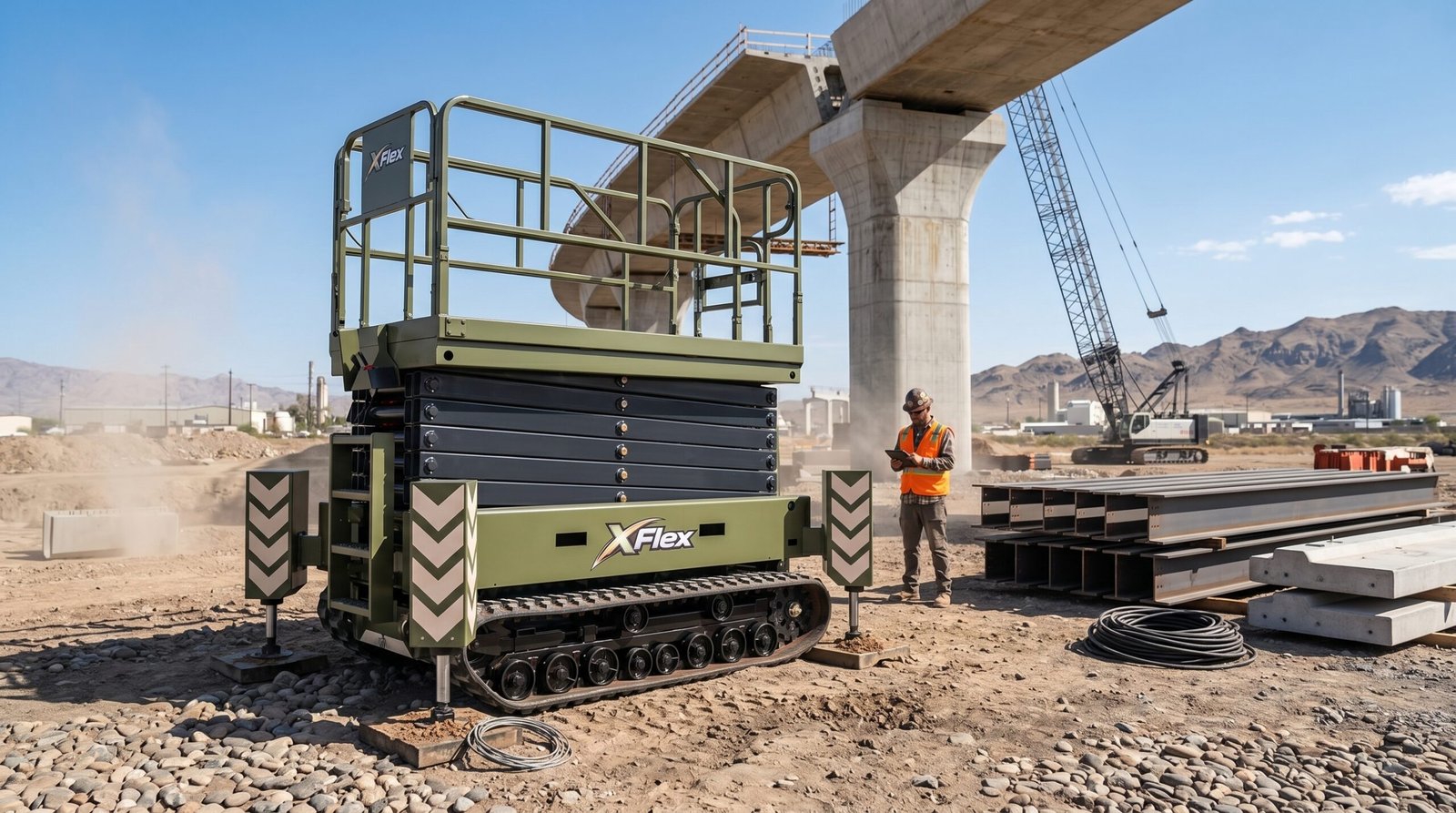
Outdoor scissor lifts — called rough terrain (RT) models — are engineered for construction sites, raw earth, gravel, and unpaved surfaces. They typically run on diesel engines and feature four-wheel drive, high-clearance chassis, and large pneumatic or foam-filled tires that handle uneven ground.
Standard Outdoor Models
Most rough-terrain scissor lifts offer platform heights between 30 and 40 feet, producing working heights in the 36 to 46-foot range. These machines are the workhorses of exterior construction handling siding installation, structural framing support, exterior glazing, and elevated concrete work.
Practical examples:
- A three-story commercial building with an exterior wall height of 35 feet requires a rough terrain lift with at least a 29-foot platform height to give operators comfortable access at the top of the wall
- Steel erection crews working on structural frames at 32 feet need a machine that places the platform at 26 to 28 feet, allowing safe, hands-free work with material
High-Reach Outdoor Models
For large-scale construction, infrastructure projects, and industrial applications, rough-terrain scissor lifts extend to platform heights of 50 feet or more with some specialized units reaching platform heights of 60 feet, delivering working heights close to 66 feet.
At these elevations, the machine’s stability system becomes critical. Hydraulic outriggers deploy from the chassis and level the machine on sloped or uneven ground before the platform is allowed to rise. The wider base of a high-reach outdoor scissor lift is specifically engineered to support the additional leverage forces that act on the machine when the platform is fully extended.
Applications requiring high outdoor reach:
- Industrial tank maintenance and coating
- Bridge inspection and repair
- Exterior cladding on tall commercial or industrial buildings
- Stadium and large venue construction and maintenance
- Telecom tower base work and equipment installation
What Determines the Maximum Height of a Scissor Lift?
Scissor lift height is not arbitrarily assigned. It is the result of several interconnected engineering decisions and operational constraints. Understanding these factors helps you select the right machine and operate it within safe limits.
Machine Design and Scissor Stack Configuration
The physical height a scissor lift can achieve is primarily determined by the number of scissor sections in its folding mechanism. Each scissor stage adds to the maximum extension height. More stages allow greater elevation, but they also add weight, require more hydraulic power, and demand a wider, heavier base to maintain stability at full extension.
Manufacturers balance these competing demands to create machines that are practical on real jobsites. A machine with eight scissor stages and a 50-foot platform height requires a substantial base footprint. You cannot extend that kind of height from a narrow, lightweight chassis without creating an unacceptably unstable machine.
Rated Weight Capacity
Platform height and weight capacity are directly related, and this relationship catches many buyers off guard. A scissor lift’s rated capacity is specified at a particular load center and, critically, at maximum platform height. Exceeding the weight limit at full extension places dangerous lateral and bending forces on the scissor mechanism that the machine was not designed to sustain.
What this means in practice: If your task requires two operators, heavy tools, and material loads on the platform simultaneously, verify the combined weight against the machine’s rated capacity at the lift height you plan to use. If you are close to the limit, either use a larger-capacity machine or make multiple trips with lighter loads.
Never attempt to extend a scissor lift to maximum height with an overloaded platform. The consequences—structural failure, tip-over, or sudden hydraulic pressure loss are severe.
Jobsite Surface and Terrain Conditions
A scissor lift’s rated maximum height assumes the machine is operating on a surface that meets specific conditions. For indoor slab models, that means a flat, level concrete floor with adequate load-bearing capacity. For outdoor models, it means the outriggers are fully deployed and the machine’s built-in leveling system confirms the chassis is within its permissible tilt range.
Attempting to operate a scissor lift at maximum height on a surface outside these parameters—a sloped grade, soft ground that allows outriggers to sink, or a damaged concrete floor—compromises stability in ways the machine’s engineering did not account for. Most modern scissor lifts include tilt sensors that prevent the platform from rising if the machine is outside its safe operating angle. Bypassing or ignoring these systems is a serious safety violation.
Wind Speed Ratings
Every scissor lift has a maximum wind speed rating, typically 28 mph for most models under standard conditions. At maximum platform height, the elevated platform acts as a wind catch. Lateral forces from wind gusts exert bending moments on the scissor mechanism and can destabilize the machine far more quickly than many operators expect.
On outdoor construction sites, wind conditions can change rapidly. Operators must monitor wind speed actively and lower the platform immediately when wind approaches the rated limit. Never assume that working at slightly above the wind limit is acceptable; the margin for error at full extension is very small.
In regions or seasons where wind is a consistent concern, high-reach outdoor aerial lifts should be selected with explicit attention to their rated wind load performance. Some specialized machines are engineered with enhanced structural rigidity and wider bases to perform safely in higher wind environments.
Height Restrictions and Overhead Hazards
The working height you select must account for clearance, not just reach. In any indoor application, the maximum usable platform height is determined by the lowest overhead obstruction — whether that is a structural beam, fire sprinkler head, HVAC duct, or suspended lighting system.
Always measure the clear height from the floor to the lowest overhead obstruction before specifying a machine. The platform height you order must allow enough clearance for the machine to extend without striking overhead infrastructure. Experienced jobsite planners add a buffer of at least two to three feet below the lowest obstruction to account for unexpected protrusions and to give operators comfortable working clearance.
Scissor Lift Height by Application: A Practical Reference
Use this reference to match common tasks to appropriate platform height ranges.
| Application | Recommended Platform Height |
|---|---|
| Interior lighting and HVAC — standard ceilings | 19–26 ft |
| Warehouse lighting and racking systems | 26–32 ft |
| Exterior siding — two-story residential | 20–26 ft |
| Exterior work — three-story commercial | 30–36 ft |
| High-bay interior—manufacturing facilities | 32–40 ft |
| Structural steel erection—multi-story | 36–46 ft |
| Large commercial exterior wall work | 40–50 ft |
| Industrial and infrastructure applications | 50 ft and above |
These ranges represent starting points. Your specific ceiling height, wall elevation, access constraints, and load requirements will refine the right selection for each project.
Common Scissor Lift Height Mistakes to Avoid
Even experienced crews make selection errors when it comes to aerial lift height. Here are the most frequent ones.
Confusing working height with platform height. A machine advertised with a 32-foot working height places the platform at about 26 feet. If your work area is at 30 feet, you will not be able to reach it comfortably. Always confirm platform height against your task elevation.
Underestimating load weight. Two workers, tools, and materials on a platform add up fast. If you select a machine based purely on height without verifying the capacity at that height, you risk an overloaded lift at full extension. Check the load capacity chart before every job.
Ignoring overhead clearance. Ordering a machine capable of 40-foot platform height for a facility with 36-foot ceilings is a wasted specification. Measure clear height first, then select accordingly.
Selecting an indoor machine for outdoor use. Compact slab lifts are not designed for unfinished surfaces. Using one on gravel, packed dirt, or grass creates a stability risk and will likely result in the machine becoming stuck. Match the machine type to the surface conditions, not just the height requirement.
Not accounting for outrigger footprint. High-reach outdoor models deploy outriggers that extend beyond the machine’s wheel base. On tight sites with limited working space, those outrigger pads may conflict with excavations, curbs, or other equipment. Confirm available outrigger space during site planning.
Choosing the Right Aerial Lift Height for Your Project
The right scissor lift height for your project comes down to four questions:
- What is the exact elevation of your work area? Measure precisely. Add the operator’s reach height (approximately 6 feet) and subtract from that total to determine the minimum platform height you need.
- What is the surface condition at the jobsite? Smooth, level concrete points to an electric indoor model. Unpaved, rough, or sloped terrain requires an outdoor rough terrain machine.
- What is the total weight your platform must carry? Count workers, tools, and any materials that will ride the platform simultaneously. Verify this against the machine’s rated capacity at your target height.
- Are there overhead clearance constraints? Measure your clear height and select a machine whose maximum platform height stays comfortably below that limit.
If you work across a variety of projects with different height requirements, maintaining access to multiple machine configurations or working with a rental supplier who can match machines to specific project specs gives you the flexibility to select precisely the right tool each time.
Conclusion
Scissor lift height varies considerably across machine types and applications, from compact 19-foot indoor models to heavy-duty outdoor units exceeding 60 feet of working height. Selecting the right machine requires understanding the difference between platform height and working height, knowing what factors constrain maximum safe elevation, and matching the machine’s capability to your actual jobsite conditions.
Take the time to measure your work area accurately, assess your surface conditions, calculate your platform load, and verify overhead clearance before you specify a machine. An accurate pre-job assessment costs nothing. A wrong aerial lift selection costs time, money, and, in the worst cases, far more.
Work with a qualified equipment dealer or rental partner who can review your project details and recommend the right configuration. The right machine, matched precisely to your task, keeps your crew safe and your project on schedule.