An electric scissor lift that operates normally in the morning but loses usable battery capacity by mid afternoon can leave a crew without enough runtime to complete the shift. Battery condition is one possible cause, but operating demand often has a greater effect on how quickly stored energy is depleted. Platform load, lift frequency, travel distance, terrain, operating speed, temperature, and auxiliary electrical loads all influence current draw from the battery. The battery runtime stated by a manufacturer is therefore based on specific test conditions and does not represent a fixed operating time under every jobsite condition.
Battery efficiency depends on how the lift is operated and maintained throughout the duty cycle. Heavier platform loads increase the energy required for elevation, while repeated lifting to greater working heights adds more energy demand over time. Frequent travel, acceleration, inclines, rough surfaces, and unnecessary repositioning increase traction motor load, while low temperatures can reduce the battery’s available capacity. Battery chemistry, state of charge, charging practices, tire condition, and electrical system maintenance also affect usable runtime. Managing these factors together helps reduce unnecessary energy consumption and maintain more predictable operating time from each charge.
How the Battery Powers the Lift
An electric scissor lift draws everything from one source: the battery. That battery feeds two main systems. The first is the hydraulic system, where a pump forces fluid into the lift cylinders to raise the platform. The second is the drive system, the motors that move the machine across the floor and up ramps.
Both systems turn stored electrical energy into physical work, and both discharge the battery in proportion to how hard they labor. A light lift on level ground sips power slowly. A heavy lift, or a hard pull across rough ground, pulls current fast. Keep this principle in mind, because nearly every factor below traces back to it: the harder the hydraulics and drive motors work, the quicker the battery empties.
Key takeaway: The battery powers both the hydraulics and the drive motors, and it discharges in proportion to how hard those systems work.
Platform Load Weight and Hydraulic Current Draw
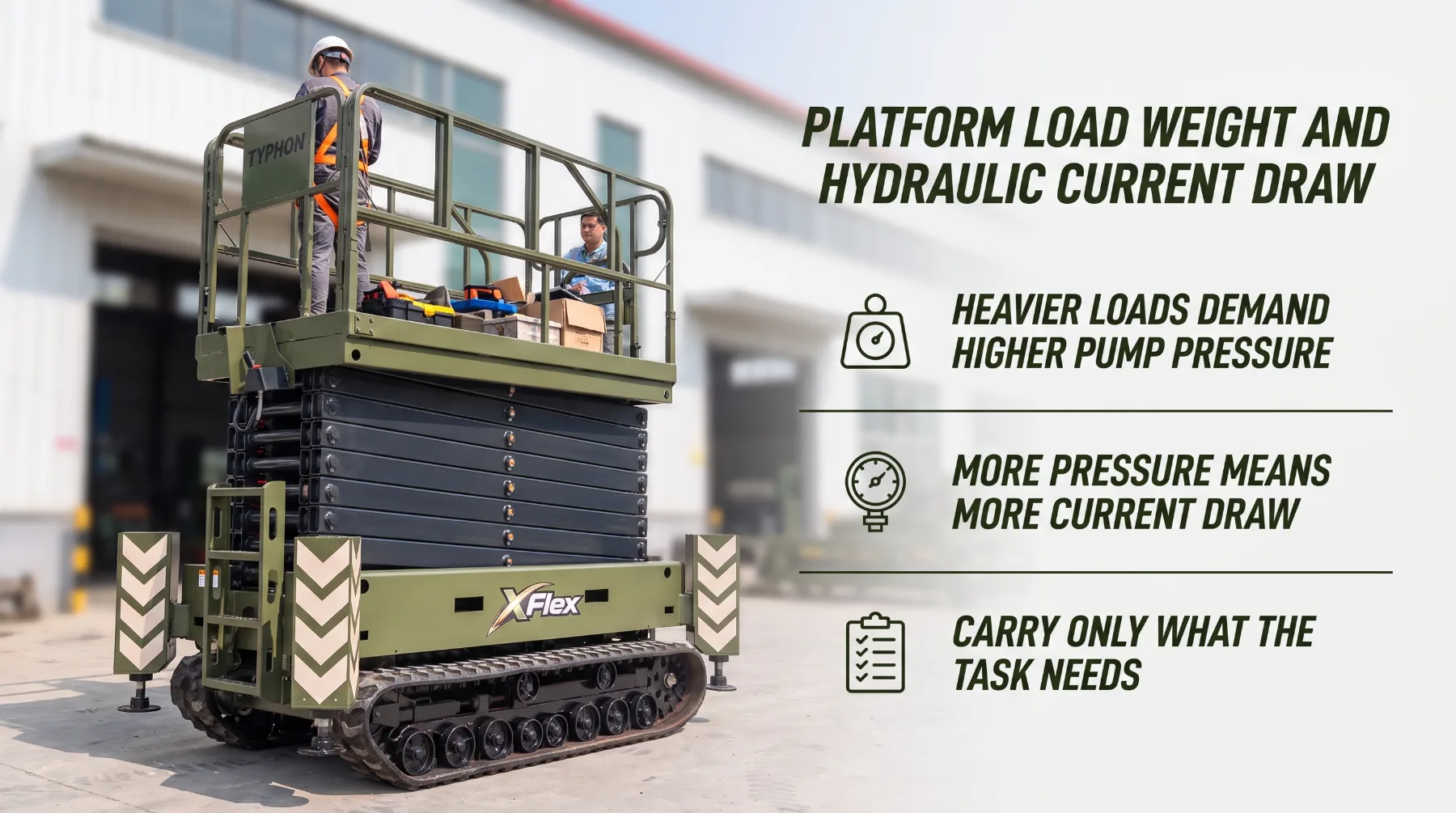
Platform load is the first factor operators control, and it hits the battery hardest during lifting. To raise the platform, the hydraulic pump has to build enough pressure to overcome the combined weight pressing down on the cylinders, the platform itself plus the workers, tools, and materials on it. The heavier that load, the higher the pressure the pump must build, and the more current the electric motor pulls from the battery to build it.
A platform loaded near its rated capacity drains the battery noticeably faster on every lift than a lightly loaded one. The relationship is direct: more weight means more pressure, more pressure means more current draw, and more current draw means the battery gives up its stored energy sooner. Carrying only what the immediate task needs, rather than loading the platform heavy “just in case,” is one of the simplest ways to protect runtime.
Key takeaway: Heavier platform loads force the hydraulic pump to build more pressure, which raises current draw and empties the battery faster on every lift.
Lift Cycle Frequency and Height
A single lift barely dents a healthy battery. The drain builds through repetition and reach. Raising the platform is one of the most energy intensive things a scissor lift does, because the hydraulics fight gravity on every cycle, and each lift is a fresh peak draw on the battery.
Frequency multiplies that cost. A machine raised once and left in place gives the battery long stretches of low demand. A machine cycling up and down repeatedly, raising, working briefly, lowering to reposition, then lifting again, stacks peak draw upon peak draw with little relief. Height adds to it as well, since raising the platform higher means the pump moves more fluid and runs longer to get there, drawing more current on each full height lift than on a shallow one. Combine frequent cycles with full height lifts, and the two compound into a steep, steady drain.
The practical response is to plan work so the platform holds a stable, productive height for longer stretches, rather than dropping and re-lifting for every small move.
Key takeaway: Each lift is a peak current draw, so frequent cycles and full height lifts compound to drain the battery far faster than occasional, low lifts.
Travel Distance and Surface Conditions
Lifting isn’t the only demand on the battery, every foot the machine drives costs current too. The drive motors pull energy to get the machine rolling and keep it at speed, so long travel distances between work points steadily draw down the charge across a shift. A layout that forces the machine to cover ground repeatedly burns more energy than a tight, well organized one.
Surface conditions sharpen the effect dramatically. Smooth, level concrete asks relatively little of the drive motors. Ramps are the toughest case, because the motors must move the machine against gravity for the entire climb, spiking current draw well above level travel. Rough, soft, or debris strewn ground adds rolling resistance, so the machine burns extra energy simply to keep moving. A lift working outdoors on uneven, sloped ground will consistently show shorter runtime than one on a flat indoor floor. Where the work allows, choosing smoother, flatter paths and cutting unnecessary driving protects a real share of the charge.
Key takeaway: Long travel distances draw steady current, and ramps and rough terrain force the drive motors to work much harder, so both sharply reduce runtime.
Operator Habits: Smooth vs. Aggressive Inputs
Two operators can run the same machine on the same job and get noticeably different runtime, and the difference often comes down to how they handle the controls. Aggressive inputs, jamming the drive lever, jerky starts and stops, slamming the platform up and down, force the motors to draw sharp spikes of current. Every hard acceleration and abrupt lift pulls more energy than the task actually requires.
Smooth, deliberate operation does the same work for less. Gradual acceleration, controlled lifting, and steady travel keep current draw closer to what the job genuinely demands, so the battery lasts longer without slowing real productivity. There’s a bonus here too: smoother operation reduces wear on the drive motors, hydraulics, and the machine as a whole, so it protects more than just the charge. Coaching operators toward measured inputs is a no cost habit that pays back on every shift.
Key takeaway: Aggressive inputs spike current draw, while smooth, deliberate operation does the same work with less energy and reduces machine wear at the same time.
Ambient Temperature Effects on Battery Output
Temperature shapes what a battery can deliver, and it’s a factor no operator controls directly but every operator should understand. Batteries rely on chemical reactions to release stored energy, and those reactions slow in the cold. Working in low temperatures reduces the capacity a battery can actually deliver, so a pack that carries a full shift indoors may fall short on a cold outdoor morning, even when it’s fully charged.
Heat cuts the other way, but it’s no friendlier. High ambient temperatures, especially combined with the heat of heavy work, stress the battery and can shorten both its usable output and its long term life. The most demanding conditions stack temperature onto heavy loads: a cold start with a heavy platform, or a hot day with continuous cycling, both push the battery harder than moderate conditions would. Where possible, storing and charging batteries in a temperate space, and letting them reach a reasonable working temperature before a demanding shift, helps the pack deliver closer to its rated capacity.
Key takeaway: Cold reduces the capacity a battery can deliver, and heat stresses it and shortens its life, so extreme temperatures both cut usable runtime.
Battery Type: Lead Acid vs. Lithium Ion
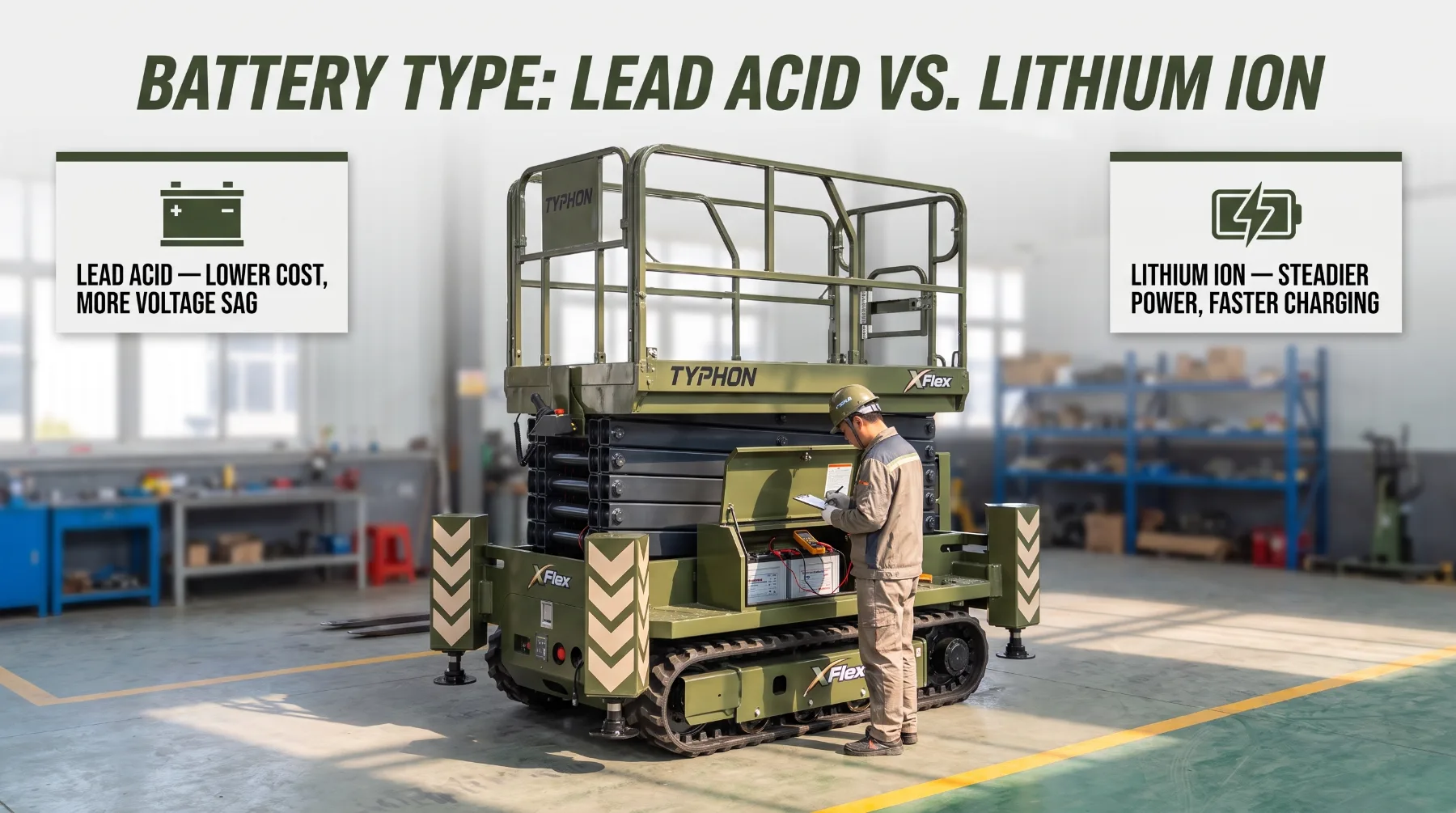
The kind of battery in the machine changes how it behaves during operation, so it’s worth knowing which you’re running.
Lead acid batteries are common, proven, and lower in upfront cost. They deliver dependable power, but their usable output tends to sag more noticeably as the charge depletes, so performance can taper toward the end of a shift. They’re also more sensitive to cold, ask for regular maintenance, and generally don’t tolerate frequent partial charging as well, which shapes how they should be run and charged.
Lithium ion batteries cost more upfront but bring real operating advantages. They hold a steadier voltage as they discharge, so performance stays more consistent from a full charge down toward empty. They handle partial “opportunity” charging well, tolerate demanding conditions better, charge faster, and require far less routine maintenance. For operations running long or heavy shifts, that steadier delivery and flexible charging can translate into more dependable runtime day to day. The right choice depends on your workload, budget, and how hard the machines run, but knowing the difference helps you set realistic expectations for the battery in front of you.
Key takeaway: Lead acid batteries cost less but sag more under depletion and cold, while lithium ion holds steadier output, charges flexibly, and needs less upkeep.
Charging Habits That Protect Runtime
How a battery gets charged between shifts directly affects how much runtime it delivers during them. The single most important habit is completing charge cycles as the manufacturer specifies. Returning a machine to work only partly charged means it starts the day with less energy to spend against heavy loads and long travel, so it fades early through no fault of the battery itself.
Charging practice should match the battery type. Lead acid packs generally prefer full, complete charge cycles and don’t respond well to frequent interrupted charging, while lithium ion packs handle partial top ups comfortably, which lets crews grab opportunity charges during breaks. Whatever the type, following the manufacturer’s charging guidance, avoiding a pattern of deep over discharge, and keeping charging connections clean and sound all help the pack hold its capacity. Tracking each battery’s runtime over time matters too: a well charged pack that steadily delivers less across weeks and months is aging, and spotting that trend early lets you plan a replacement before it disrupts a shift rather than after.
Key takeaway: Full, type appropriate charge cycles and sound charging habits keep the battery starting each shift with its full capacity and holding that capacity over time.
Conclusion
Battery runtime in an electric scissor lift depends on total energy consumed throughout the duty cycle, not battery capacity alone. Platform load, lifting frequency, lift height, travel distance, speed, terrain, and grade all affect energy demand, with heavier loads and repeated lifting increasing hydraulic power consumption while long travel, ramps, rough surfaces, and frequent acceleration increase traction motor demand. Operator technique also matters, as smooth acceleration, controlled direction changes, and efficient repositioning can reduce unnecessary energy use. Battery temperature, chemistry, age, and charging practices further influence available capacity and runtime, with cold conditions reducing performance and improper charging or excessive heat accelerating battery degradation. For accurate runtime expectations, consider the complete operating cycle and battery condition rather than relying only on the rated battery capacity.
Frequently Asked Questions
Why does my electric scissor lift battery last longer on some shifts than others?
Runtime depends on how hard the machine works. Heavy platform loads, frequent full-height lifts, long travel, ramps, and rough ground increase current draw and drain the battery faster. Light loads, flat surfaces, and shorter travel use less energy. Operator habits also matter, since smooth inputs reduce unnecessary current spikes. Cold temperatures can further reduce available battery capacity. Shorter runtime during demanding or cold shifts does not necessarily indicate a battery problem.
Is a lithium ion battery worth the extra cost over lead acid?
It depends on the workload. Lithium ion batteries cost more upfront but maintain steadier voltage, support partial charging, charge faster, and require less routine maintenance. These benefits can make them worthwhile for long shifts or operations that need quick top-ups. For lighter, intermittent use where upfront cost matters most, a well-maintained lead acid battery can still be a practical option. Consider workload, budget, charging needs, and required runtime.
How can I tell whether short runtime is caused by operation or an aging battery?
First, review the working conditions. Heavy loads, frequent lifts, long or rough travel, aggressive operation, and cold temperatures can all shorten runtime without indicating battery failure. If the machine still delivers significantly less runtime under reasonable loads, level conditions, normal cycles, moderate temperatures, and a full charge, battery aging becomes more likely. Tracking runtime over time helps identify the pattern: a gradual decline suggests battery wear, while daily changes usually reflect workload and operating conditions.