
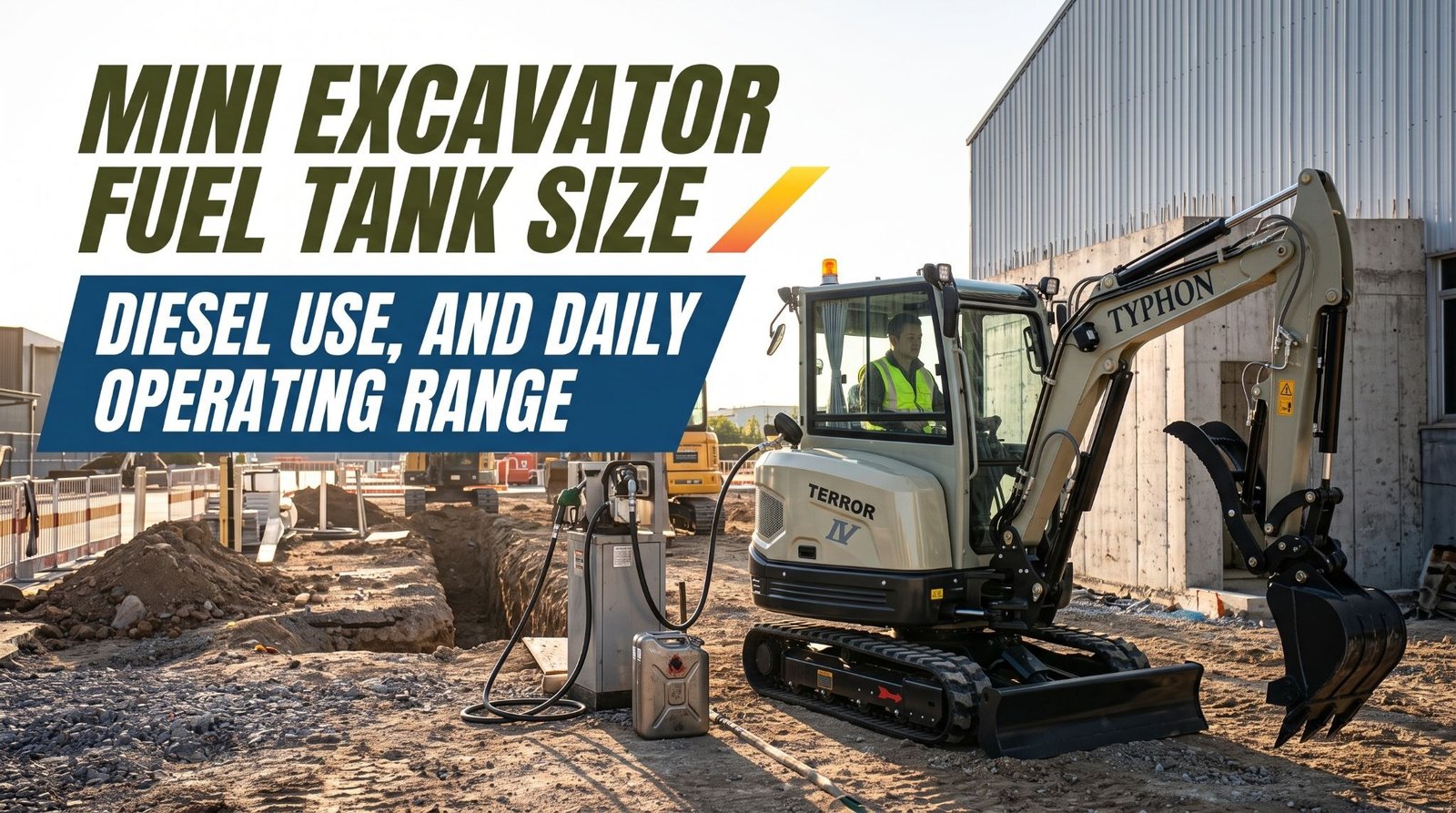
A mini excavator starts a morning shift on a residential construction site with trenches to dig, soil to move, and ground to prepare. Inside its fuel tank is a limited supply of diesel that determines how long the machine can continue working before refueling becomes necessary. Tank capacity provides the starting point, but it does not tell the operator exactly how many working hours remain. Engine workload, digging intensity, travel, idle time, and site conditions all affect how quickly that fuel is consumed.
Fuel consumption changes as the machine moves between light and demanding tasks. Digging hard ground or operating under heavy hydraulic demand generally requires more engine output than idling or performing lighter movements. Travel distance and operating habits also influence daily fuel use, making actual working time different from what a simple tank-capacity calculation might suggest.
Planning around fuel use helps keep a full shift from being interrupted by an unexpected refill. Operators can track fuel consumption across similar jobs, consider the workload planned for the day, and allow enough reserve for changing site conditions. Matching fuel planning to actual machine use makes it easier to schedule refueling without unnecessarily interrupting productive work.
How Fuel Tank Size Affects Runtime
A larger fuel tank holds more diesel, and more diesel generally means longer stretches of work between refueling stops. That much is straightforward, and it’s a genuine advantage on jobs where returning to a fuel source costs time. But tank size only tells you how much fuel you start with, not how long that fuel will last, and those are two very different things.
Actual runtime depends just as much on engine load and how intensively the machine is worked. A generous tank drained by constant heavy digging can deliver less working time than a smaller tank powering lighter tasks. That’s why tank capacity is best read alongside expected fuel consumption rather than treated as a standalone measure of working time. The reserve you carry and the rate you burn it always have to be considered together.
Diesel Use During Excavation
Fuel consumption changes with the amount and type of work the excavator performs. Continuous digging, heavy lifting, long-distance travel, and working through dense material place greater demand on the engine than lighter tasks or periods of low engine load. Because of this, the same machine can use noticeably different amounts of fuel depending on the work being performed throughout the day.
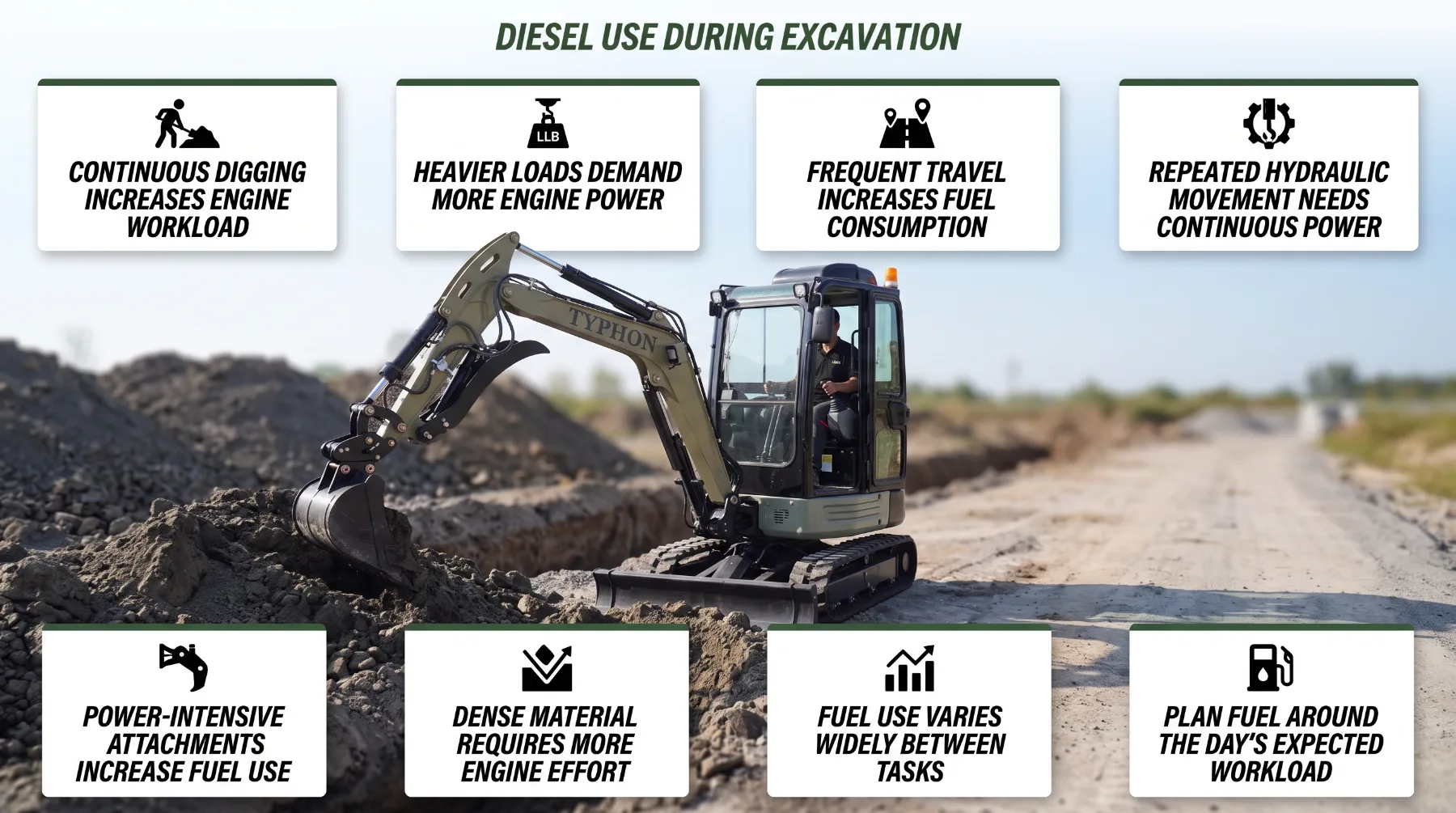
Attachment use and hydraulic workload also have a direct impact on fuel demand. Operating demanding attachments or performing repeated hydraulic movements requires additional engine power, which increases fuel use. Understanding the type of work and workload expected during a shift provides a more practical basis for estimating fuel requirements.
- Digging Work: Continuous digging and difficult ground conditions increase engine workload.
- Heavy Lifting: Greater loads require more power from the engine and hydraulic system.
- Travel Demand: Frequent or extended travel can increase fuel consumption during a workday.
- Hydraulic Workload: Repeated hydraulic movements require continuous engine power.
- Attachment Demand: Power-intensive attachments can increase fuel use compared with lighter attachments.
- Material Resistance: Dense or difficult material can require more engine effort to complete the same task.
- Workload Variation: Fuel consumption can change significantly between different tasks and operating conditions.
- Fuel Planning: Understanding the day’s expected workload helps operators estimate fuel needs more realistically.
Engine Load and Fuel Demand
The engine rarely works at a single, steady output across a full shift. It surges and eases as the work changes, and fuel demand follows. Digging into compacted ground, lifting heavy material, and cycling the hydraulics repeatedly all push the engine harder and draw more diesel, while repositioning the machine or letting it idle calls for far less power. A shift is really a series of these peaks and lulls rather than one constant load.
Operator technique and work cycle shape the overall total as well. Smooth, efficient movements that accomplish the task in fewer cycles keep demand in check, while excessive idling, unnecessary travel, or working the machine harder than a task requires quietly adds to the day’s fuel use. Two operators running the same machine on the same job can post different consumption simply through how they approach the work. That makes technique one of the more controllable influences on fuel demand.
Operating Conditions Change Consumption
The environment around the machine has as much say in fuel use as the work itself. Ground conditions, slope, temperature, travel distance, material density, and attachment type all influence how hard the engine has to work. Soft or uneven terrain, steep grades, long travel legs, and dense material each add to the load, and together they can lift consumption well above what the same machine would use on easier ground.
Because of this, a mini excavator working continuously on difficult terrain can burn noticeably more diesel than the identical machine handling lighter work on level ground. That difference is exactly why published or estimated figures only take you so far. The reliable approach is to monitor actual consumption under the conditions where the machine will genuinely operate, since real numbers from your own site beat assumptions every time. Conditions vary from job to job, and your fuel planning should reflect the ones in front of you.
Planning Refueling Intervals
Refueling planning matters most when the machine works far from a fuel source or runs long shifts, because that’s when an unplanned empty tank costs the most. On a remote site or during an extended day, stopping to fetch fuel eats into productive time, so knowing roughly when the machine will need diesel lets you handle refueling on your terms rather than mid-task.
Building that knowledge is simple in practice. Monitoring the fuel gauge through the shift and recording how much diesel the machine uses gives you a working sense of how frequently refueling comes around. Over time, those records turn into a dependable estimate you can plan against. Keeping appropriate fuel reserves on hand adds a further safeguard, letting you top up without downtime and reducing interruptions during the work periods that matter most.
Daily Workload and Operating Range
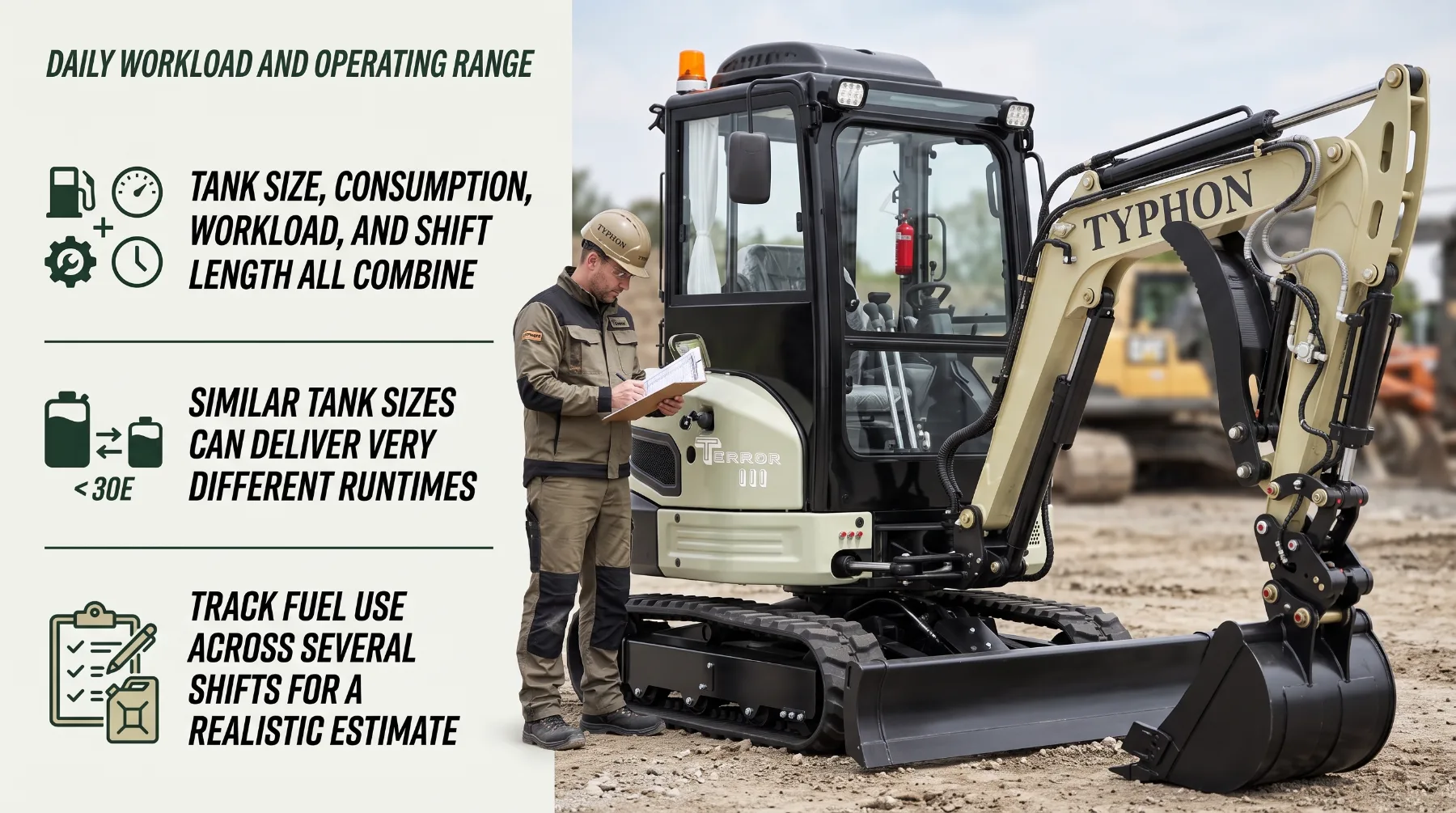
A machine’s practical daily operating range comes out of the relationship between four things: tank capacity, fuel consumption, engine workload, and shift duration. No single one answers the question on its own. A large tank paired with heavy consumption and a long shift can leave you refueling more often than a smaller tank on lighter, shorter work. Range is what emerges when all four are considered together.
This is why two excavators with similar tank sizes can deliver quite different daily runtimes. Their engines differ, and so do the conditions and tasks they face, so identical fuel capacity doesn’t translate into identical working time. The most reliable way to pin down real operating range is to review actual fuel use across several shifts. A few days of records under normal working conditions give a far more realistic estimate than any figure taken in isolation, and that estimate becomes the foundation for dependable daily planning.
Conclusion
Mini excavator fuel tank size determines the available diesel reserve, while engine load, hydraulic demand, attachment use, travel, and jobsite conditions determine how quickly that fuel is consumed. Heavy digging, dense material, continuous hydraulic operation, steep slopes, difficult terrain, and frequent travel can increase fuel demand, while idling and lighter-duty work generally require less engine output. Tank capacity should therefore be evaluated alongside actual fuel consumption, expected workload, shift duration, and operating conditions rather than treated as a direct measure of runtime. Monitoring fuel use over several comparable shifts provides a more reliable basis for estimating daily consumption and planning refueling, particularly on remote sites or during extended work periods. Maintaining an appropriate reserve and scheduling refueling before the tank reaches a critical level helps reduce unplanned downtime and keeps the mini excavator available throughout the planned duty cycle.
Frequently Asked Questions
How does fuel tank size affect a mini excavator’s operating range?
A larger fuel tank provides more diesel and can extend the time between refueling stops. However, tank size alone does not determine operating range because fuel consumption depends on workload and operating conditions. Heavy digging can use fuel much faster than light work, so tank capacity should be considered alongside expected consumption. Combining tank size with real-world fuel use gives a more accurate estimate of working time.
What makes a mini excavator use more diesel?
Heavy digging, lifting, demanding hydraulic attachments, frequent travel, and difficult terrain can all increase diesel consumption. Dense material, steep slopes, soft ground, and repeated hydraulic cycles place greater demands on the engine. The more intensive the work and conditions, the faster fuel is consumed. Understanding your typical workload helps estimate fuel needs and plan reserves.
Does idling use diesel?
Yes. The engine continues consuming diesel while idling, although usually at a lower rate than during active digging or hydraulic work. Extended idling uses fuel without producing useful work and can reduce the amount available for productive cycles. Where appropriate, shutting the machine down during longer pauses can reduce unnecessary fuel use and extend the tank’s effective operating range.
How can daily fuel use be estimated?
Track actual diesel consumption over several normal work shifts and compare it with operating hours and the type of work performed. Record how much fuel is added, machine hours, and whether the work involved heavy digging, travel, or lighter tasks. Several days of records can reveal a practical average that reflects your actual terrain and workload, making refueling and operating-range planning more accurate.