Your electric scissor lift is only as dependable as the battery that powers it. When that battery loses its charge too quickly, your entire crew loses valuable working time. Your project slows to a crawl, and the money you spend on replacement parts climbs very fast. The good news is that the life of your battery is largely in your own hands. With the right daily habits, you can easily stretch out every single charge cycle and add many productive years to your expensive equipment.
This complete guide will walk you through the practical and simple steps that protect your power source and keep your machine running strong all day long. From smart charging habits to proper warehouse storage, you will learn exactly what works best on the active job site and inside the storage building.
Taking care of your lift battery does not take up much time. By simply paying attention to how you plug the machine in and where you park it overnight, you will save your business a large amount of money. Let us get right into the exact steps you need to follow to maximize your battery life and keep your daily operations moving forward without any power failures.
Build Smart Charging Habits
Charging is exactly where most battery problems begin. If you get this step right, you build a strong foundation for a long and reliable battery life. Follow these simple daily rules to protect your equipment:
- Charge after full shifts: Always plug your lift in at the end of a full workday. Do not plug it in for short, random bursts during your breaks.
- Finish the charge cycle: Standard batteries work best when they receive a full and complete charge. Short, partial charges can easily ruin the internal chemistry.
- Stop overcharging: Leaving a battery plugged in long after it is completely full creates too much heat. This extra heat dries out the internal cells. Always use a smart charger with an automatic stop feature.
- Never run on empty: Pushing your machine until it has zero power puts a massive strain on the system. You should always plug your machine in before the power drops below twenty percent. Letting the power run completely out is the fastest way to destroy it.
- Use the right charger: Always use the exact charger made for your specific machine. Using the wrong charger pushes the wrong voltage and quietly ruins the battery over time.
Stay on Top of Battery Maintenance
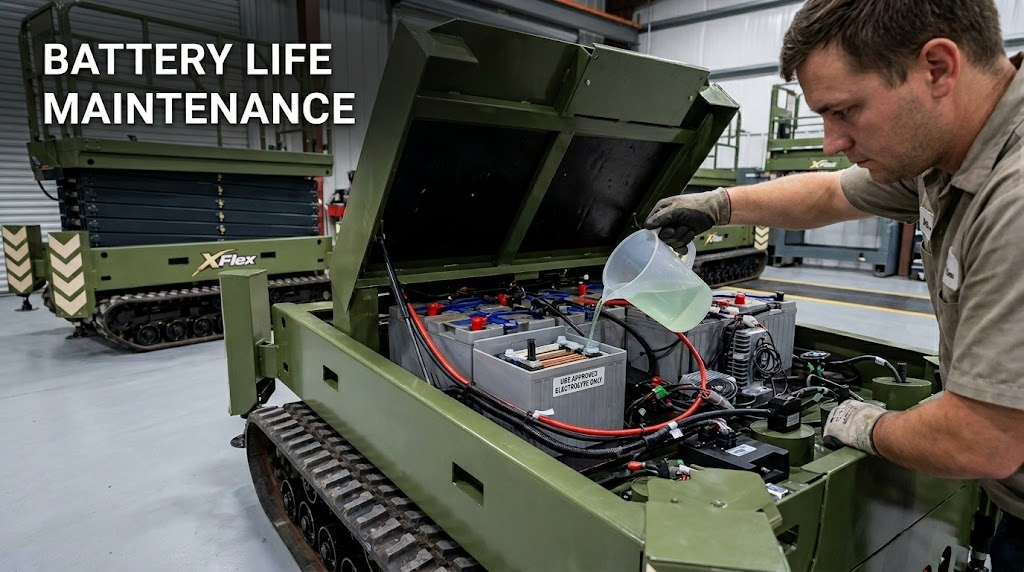
A clean and well-maintained battery gives you much more power and lasts a very long time. Taking just a few minutes for regular care will give you many extra months of reliable use. If your machine uses standard wet cell batteries, you must watch the water levels closely. The metal plates inside always need to stay covered with fluid. You should check these levels on a regular schedule to keep the machine running perfectly.
When it is time to fill the battery, you must use only pure distilled water. Never use regular tap water because the hidden minerals will quickly ruin the inside of the power cells. You should also remember to add the water only after the machine finishes charging, never before. This is because the fluid naturally rises while it is plugged into the wall. Carefully pour the water until it sits just above the metal plates, but make sure you do not fill it too high.
The metal connection points also need your careful attention. White or green crust on these connections blocks the flow of electricity and forces the system to work much harder than it should. You can easily clean this crust away using a simple mix of baking soda and water along with a wire brush. Finally, always make sure every wire connection is tight and wipe the top of the entire battery with a dry cloth. Removing dirt and wet spots stops power from slowly leaking away. A clean power source is always a highly efficient power source.
Operate in Ways That Reduce Battery Drain
How your crew runs the lift has a direct effect on how quickly the power drains away. Smart operating habits easily squeeze much more work out of every single charge. By changing just a few daily actions, your team can keep the machine moving all day.
- Accelerate smoothly and gently: Pushing the control stick all the way forward instantly forces the electric motor to pull a massive amount of power all at once. This sudden spike drains the system very quickly. Instead, teach your crew to slowly push the joystick and build speed gently. Driving at a smooth and steady pace saves a large amount of electricity and also keeps your workers much safer on the platform.
- Respect the platform load limit: Every machine has a strict weight limit for a very good reason. When you pack too many heavy tools, building materials, and workers onto the platform, the electric motor has to pull extra electricity just to lift the heavy basket into the air. This deep power draw drains your charge much faster than normal. Keeping your total weight well below the maximum limit protects your internal power cells and ensures the lift has enough energy to finish the job.
- Stop unnecessary idling: Leaving your machine turned on while you stop to prepare materials is exactly like leaving your car engine running in the driveway. The control panels, safety sensors, and internal computers constantly drain power even when the lift is standing perfectly still. You should always turn the main power off during lunch breaks, meetings, or anytime the machine will sit empty for a while. Saving these small amounts of power adds up to extra hours of useful lifting time.
- Plan your daily movements: Driving up and down the work area simply to move a few feet wastes a massive amount of valuable power. Before you raise the basket into the air, take a moment to look at the entire space. Park the machine in a smart central spot where you can easily reach multiple tasks without needing to drive the base around again. Loading all the tools you need at once also stops you from having to lower the basket just to grab a forgotten wrench. Smart planning saves your energy for the actual work.
Manage the Effect of Temperature
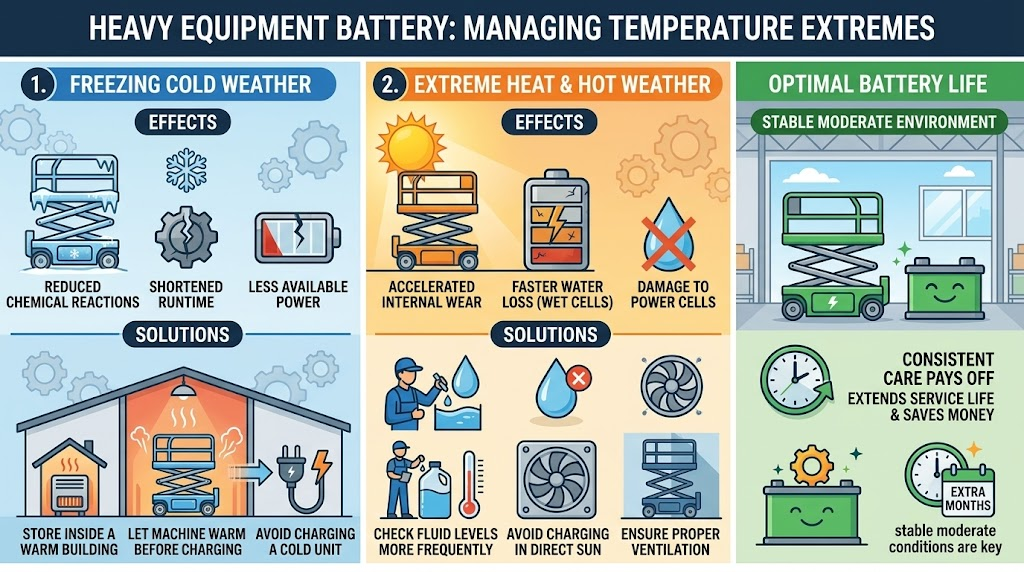
The weather at your job site has a huge impact on how well your battery performs. Knowing exactly how freezing cold and extreme heat change your power source will help you protect your heavy equipment and save money.
Freezing weather heavily slows down the chemical reactions happening inside the power cells. Because of this, you will notice a large drop in available power, and your machine will run for much shorter times between charges during the winter. To fix this problem, you should always park and charge your lift inside a warm building when the weather gets cold. Always let a freezing machine warm up inside the shop before you plug it into the wall.
Very hot weather brings a completely different set of dangerous problems. Extreme heat speeds up internal wear and tear, and it makes wet cell batteries lose their water much faster. During the hot summer months, you must check your fluid levels much more often. You should also avoid plugging the machine in while it sits in direct sunlight or inside a tiny room with bad air flow.
Whenever you can, you should keep your lift away from extreme weather conditions. Giving your machine a comfortable and stable place to rest is the absolute easiest way to add years to its life.
Know When to Replace the Battery
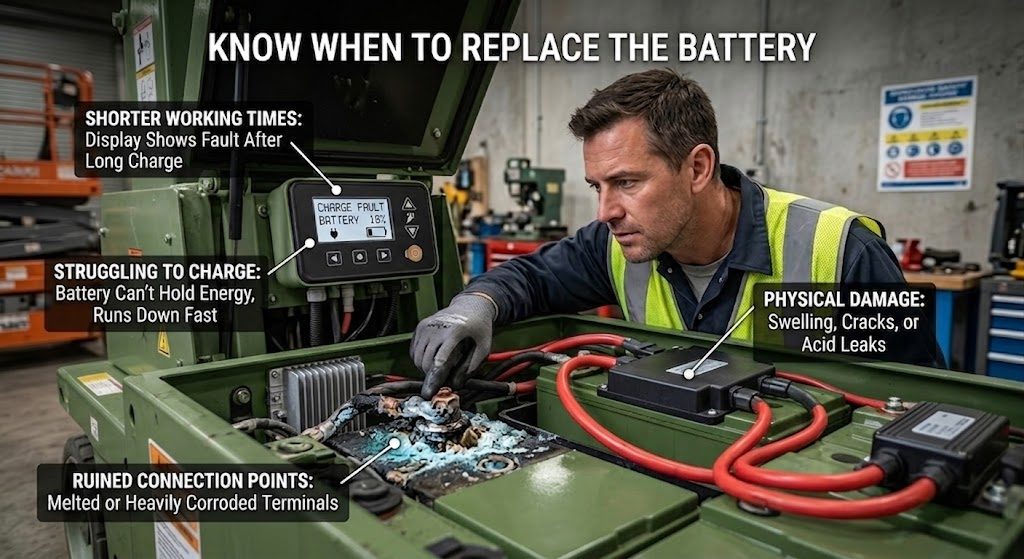
Even the best well-maintained battery will eventually wear out. Knowing exactly when to buy a new one helps you avoid being stuck with a dead machine right in the middle of an important job.
Pay close attention to these clear warning signs:
- Shorter working times: If your lift suddenly runs out of power halfway through the morning even after spending the whole night plugged into the wall, the internal power cells are failing.
- Struggling to charge: When the charger takes much longer than normal to show a full battery, or if the power level drops quickly as soon as you turn the machine on, the battery can no longer hold its energy.
- Physical damage: You must look closely at the outer plastic box. Any strange swelling, deep cracks, or wet acid leaks mean the unit is completely broken and extremely dangerous to keep using.
- Ruined connection points: If the top metal posts are melted, broken, or covered in thick crust that a hard wire brush cannot remove, the electricity can no longer flow safely.
Most standard lead acid batteries will last for several years if you take great care of them. When your machine constantly slows your crew down, buying a new battery is much cheaper than paying workers to stand around waiting for a slow charge. When you are ready to buy, always make sure the new unit perfectly matches the exact size and power needs of your specific lift.
Conclusion
The key to extending the life of your electric scissor lift battery is to establish smart, consistent habits. You don’t need complicated gear to keep your machine running well. All you need to do is follow the principles. Make sure the machine is completely charged at the end of each day. Keep the power cells clean and make sure the fluid levels are regularly and suitably refilled. Give your team instructions to drive cautiously and adhere to the platform’s maximum weight limitations. You also need to protect the equipment from extreme heat and cold whenever you can. Finally, learn to recognize the warning signs so you can replace the power unit before it completely fails while operating.
These everyday duties are all rather easy to do. However, you can simply offer your expensive equipment many more years of dependable operation by combining all of these simple actions. Your business will save a lot of money by maintaining your power supply. Every team member needs to be informed of these particular rules, and they should be integrated into your daily operations. When the battery is clean and properly charged, your elevator is always fully functional. It guarantees that your big projects are finished on schedule and helps you keep tight control over your operating expenses.