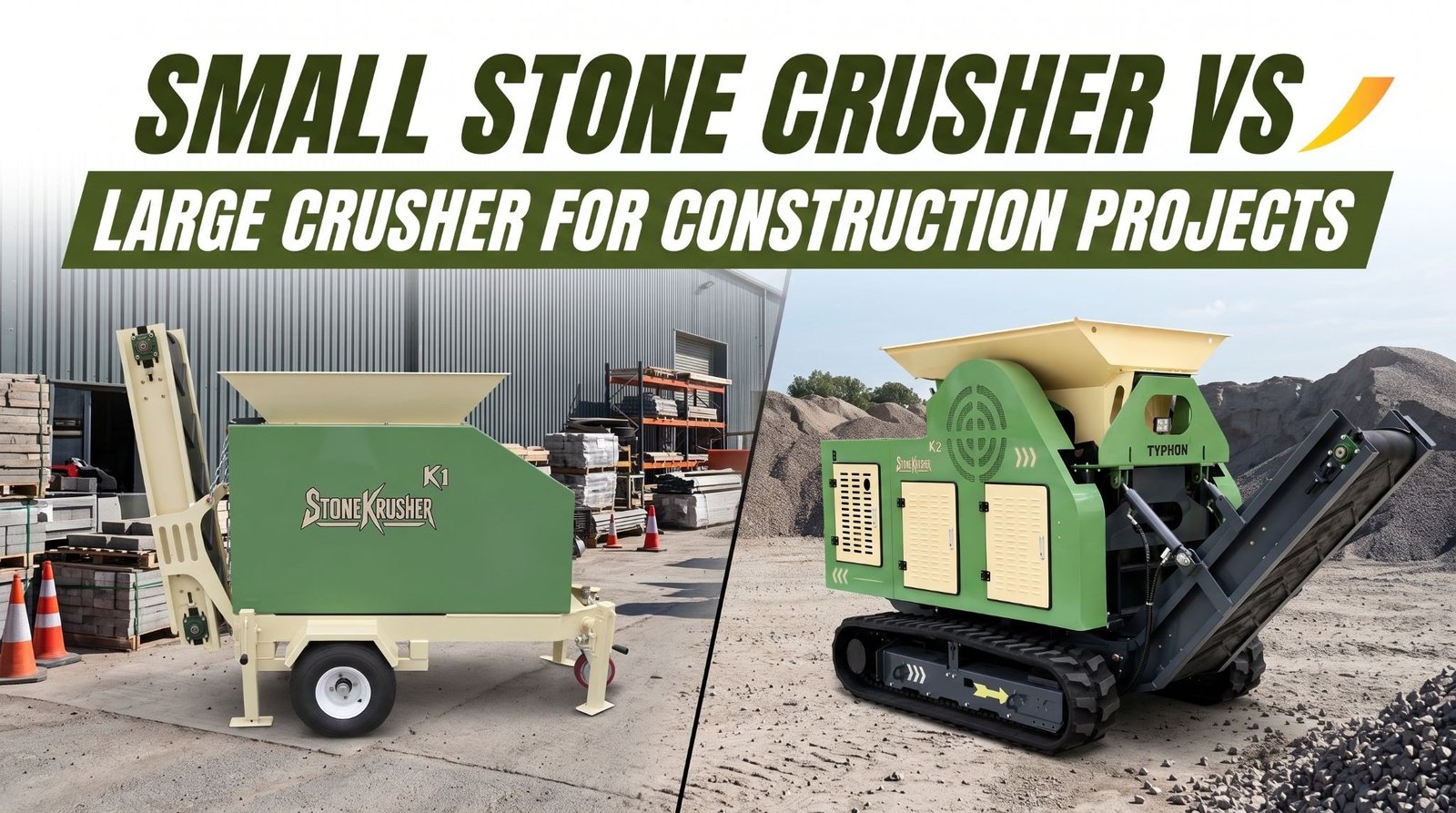
Handling demolition material on a small commercial site can make a large crushing plant impractical. An old retaining wall and cracked concrete slab may produce enough rubble to justify on-site processing, but a tight lot, modest material pile, and difficult equipment access can make transporting a large crusher more trouble than the crushing work itself.
A compact stone crusher provides a more practical option when the project does not require high-volume processing. Its smaller footprint can fit closer to the material pile and work within restricted areas while still reducing suitable concrete, rock, and other hard material into manageable aggregate. Lower transport requirements can also make it easier to move the equipment between smaller projects.
Selecting the crusher according to the material volume, available space, feed requirements, output size, and site access helps avoid unnecessary equipment capacity. A machine sized for the actual workload can reduce setup demands while keeping on-site processing practical. For contractors handling smaller demolition and construction projects, compact crushing equipment can provide useful processing capability without the logistical burden of a much larger plant.
Consider Material Volume
The amount of material you need to process should be one of your first considerations. Rock, concrete, masonry, and other debris all count toward the total workload. That figure sets the baseline for how much production capacity the job requires.
High-volume projects may call for greater production capacity. Large quarry-style operations, major road builds, or sites producing aggregate continuously over months often justify a larger crushing system. The higher throughput keeps pace with the workload and prevents crushing from becoming a bottleneck.
Smaller jobs are a different story. A demolition project, a site cleanup, or a driveway base may not need a large processing system at all. Bringing oversized equipment to a modest workload adds transport, setup, and operating costs without a matching return. A small stone crusher sized to the actual volume often completes the work more economically.
Key takeaway: Estimate the total volume of rock, concrete, or debris first, since high-volume projects may need greater capacity while smaller jobs rarely justify a large processing system.
Evaluate Available Jobsite Space
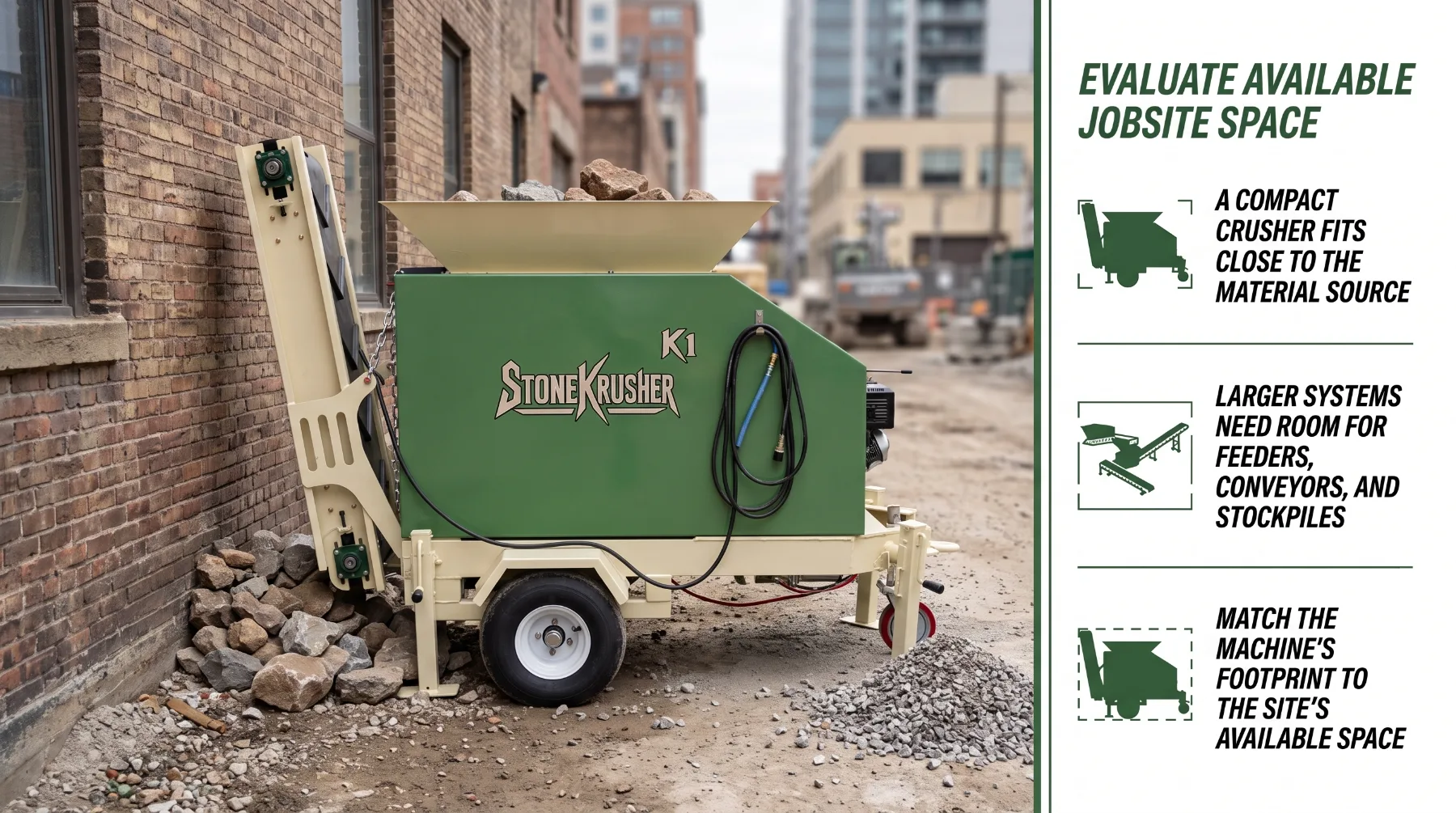
Crushing takes more room than the machine’s footprint alone. You need space to feed material into the crusher, operate the machine safely, move processed material away, and build stockpiles of finished product. Each of these zones has to fit within the site without blocking other work.
Compact equipment offers a clear advantage when working space is restricted. A small stone crusher can be positioned close to the material source, beside a structure, or within a confined urban lot. That flexibility reduces the distance material has to travel before and after crushing, which saves time and handling.
Larger systems need a correspondingly larger layout. Feeders, conveyors, screens, and stockpile areas can extend well beyond the crusher itself. On open sites with ample room, that footprint is manageable. On tight sites, it can crowd out other trades, restrict traffic, or simply fail to fit.
Key takeaway: Crushing requires room for feeding, operating, moving processed material, and stockpiling, and compact equipment is easier to position when space is restricted.
Review Transportation Needs
Many construction contractors move equipment between multiple projects throughout the year. How easily a crusher travels and sets up has a direct effect on scheduling, cost, and productivity.
A smaller crusher simplifies transportation and jobsite positioning. Compact, mobile units can often be moved with standard hauling equipment and set up quickly on arrival. That makes them practical for contractors handling several short-duration jobs, where frequent relocation is part of the routine.
A large fixed or heavy crushing setup requires more planning. Equipment dimensions and weight can affect hauling arrangements, route selection, and permits, and setup on site may involve additional time and assembly. For long-term, high-volume operations, that investment in transport and setup is spread across a large amount of production. For short jobs, it can outweigh the value of the crushing work itself.
Key takeaway: A smaller crusher simplifies transportation and positioning between projects, while a large fixed or heavy setup demands more transport planning and setup time.
Check the Feed Material
The size and type of material being fed into a crusher directly affect how well the machine can process it. Every crusher has a defined feed opening, so the incoming material needs to be suitable for that opening to support smooth and consistent operation. Reviewing the material before selecting equipment can also help identify whether additional preparation will be needed.
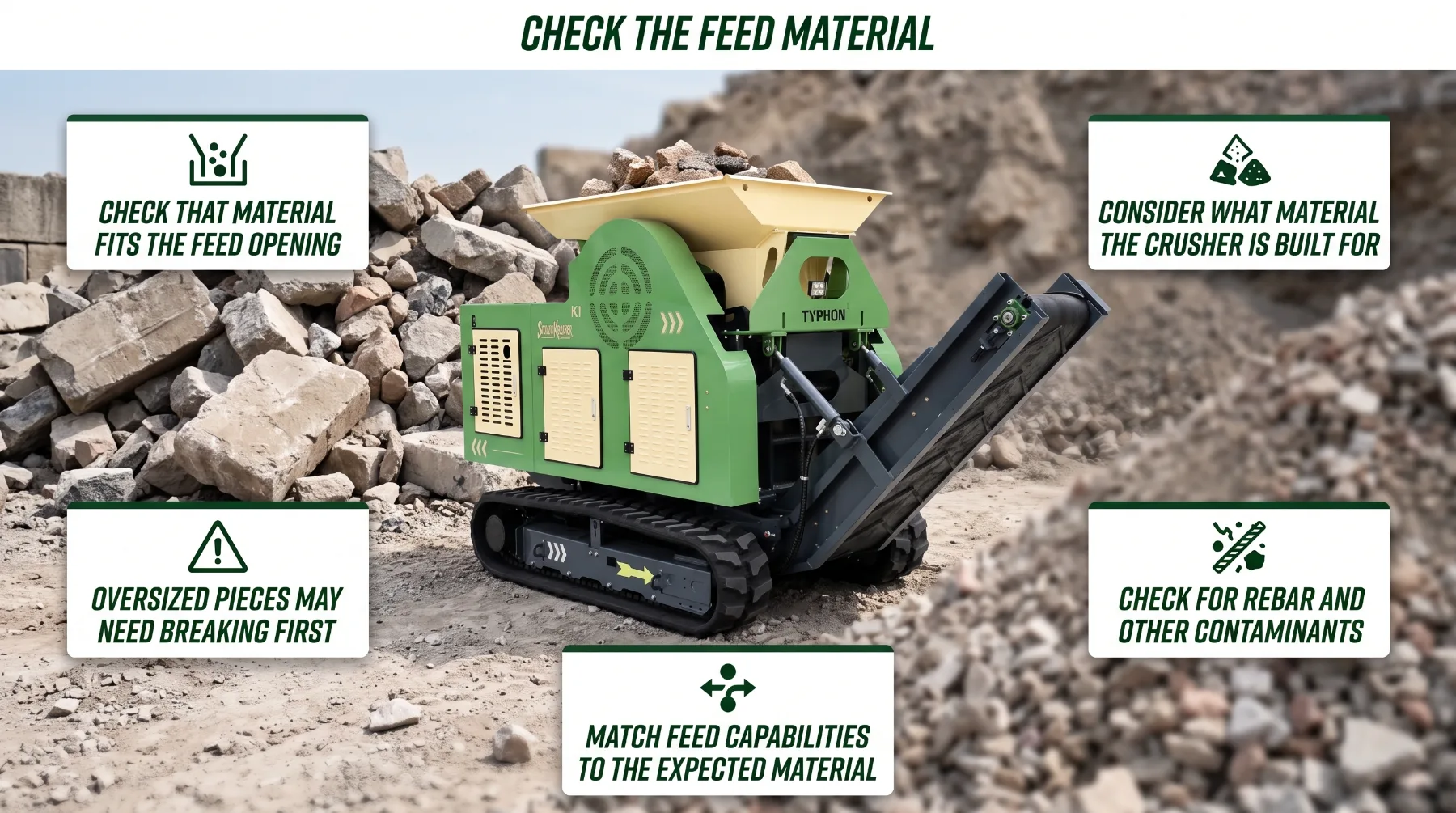
Oversized rocks, thick concrete, and bulky demolition debris may require breaking or sorting before entering a compact crusher. Larger equipment may accept bigger feed material, while material containing reinforcing steel or other contaminants may require additional handling according to the manufacturer’s guidance. Planning these conditions in advance helps match the crusher to the material and avoid unnecessary delays.
- Feed Size: Check that the material dimensions are suitable for the crusher’s feed opening.
- Material Type: Consider whether the crusher is appropriate for rock, concrete, demolition debris, or other materials.
- Oversized Material: Identify pieces that may require breaking, sorting, or other preparation before crushing.
- Material Contamination: Check for reinforcing steel and other unwanted materials that may require removal.
- Crusher Selection: Match the machine’s feed capabilities to the material expected on the jobsite.
Key takeaway: The feed opening must accommodate the rock or debris being processed, and oversized material may require additional preparation before crushing.
Compare Output Requirements
Output has two parts that should always be considered together: the desired size of the crushed material and the required production rate. A crusher needs to deliver the right product at a pace the project can use.
Product size depends on the end use. Fill material, road base, drainage aggregate, and other applications each call for a particular size range. Some projects may also need screening to separate crushed material into specific sizes. Confirm the crusher can produce the size your project specifications require.
Production rate determines how quickly the work gets done. The crusher should provide enough capacity to keep the project on schedule. However, selecting equipment far beyond the actual workload adds cost without adding value. The goal is a balanced match, with capacity sized to the job rather than the largest figure available.
Key takeaway: Consider the desired crushed material size and required production rate together, and choose enough capacity for the project without selecting equipment far beyond the actual workload.
Consider Operation and Maintenance
Every crushing system requires ongoing attention. Feeding, inspection, cleaning, servicing, and routine maintenance are all part of keeping the equipment productive and reliable. The scale of that work often grows with the size of the system.
Smaller systems may be easier to integrate into projects where labor, staging space, and maintenance resources are limited. A compact crusher typically involves fewer components to manage and can often be operated and serviced by a smaller crew. That makes it a practical option for contractors who want to add crushing capability without dedicating extensive personnel or space to it.
Larger systems can deliver greater output, but they usually call for more planning. Additional components such as feeders, conveyors, and screens each need inspection and maintenance. Staging areas for parts and servicing may also be required. Following the manufacturer’s maintenance schedule, whatever the system size, protects performance and extends equipment life.
Key takeaway: Crushing equipment requires feeding, inspection, cleaning, and servicing, and smaller systems may be easier to manage where labor, staging space, and maintenance resources are limited.
Conclusion
Small and large stone crushers serve different production requirements, so equipment selection should be based on material volume, jobsite space, transportation, feed size, output requirements, and available maintenance resources. Large crushers are suited to higher-volume, continuous production where sufficient space, feed handling, stockpiling, and long-term operation justify their larger capacity, while small crushers can provide practical performance for modest workloads, restricted sites, and projects requiring frequent relocation. Feed opening should accommodate the largest material pieces, with oversized rock or concrete prepared as required, while crushing capacity and output size should align with the project’s daily production target. Site layout should also provide adequate space for feeding, operation, material movement, and stockpiling, while transport requirements and setup time should be considered for mobile operations. Matching crusher capacity, dimensions, feed requirements, output specifications, transport needs, crew capability, and maintenance resources to the actual project conditions helps provide efficient and reliable crushing without unnecessary capacity or complexity.
Frequently Asked Questions
Is a small stone crusher useful for construction projects?
Yes. A small stone crusher can be practical for projects with lower material volumes, restricted jobsites, or mobile crushing needs. Demolition, site cleanup, driveway bases, and landscaping projects may generate manageable amounts of rock or concrete that do not justify a large crushing system. A compact crusher can process this material on site into reusable fill or aggregate, reducing hauling and disposal needs. Its smaller footprint also makes it easier to transport and position on tight jobsites. The key is matching the feed opening, output size, and production capacity to the project requirements.
When is a larger crusher needed?
A larger crusher is generally better suited to projects requiring high processing capacity and continuous production, such as major road construction, infrastructure projects, or long-term aggregate production. Higher throughput helps keep up with large material volumes, while a larger feed opening can accept bigger rock or demolition debris. However, larger systems require more space, transportation planning, setup, and operating resources. When production demands are lower, a smaller crusher may provide a more practical and efficient solution.
Does crusher size affect transportation?
Yes. Crusher dimensions and weight directly affect transportation, route planning, and jobsite setup. Compact crushers are generally easier to move between projects and can simplify positioning on restricted sites. Larger systems may require specialized hauling arrangements, additional planning, permits, and more involved setup. Their size also means the jobsite needs sufficient access and working space. Transportation and setup should therefore be included when comparing the overall cost and practicality of different crusher sizes.
What should contractors compare before buying?
Contractors should compare the crusher’s feed opening, output size, production capacity, dimensions, transport requirements, operating needs, and maintenance access. The feed opening should handle the material size typically produced, while capacity and output size should match project requirements. Check that the machine fits the available jobsite and allows enough space for feeding and stockpiling. Also consider hauling equipment, setup time, crew requirements, and servicing needs. Comparing these factors against actual workloads helps identify a crusher that provides reliable performance without unnecessary capacity or operating costs.