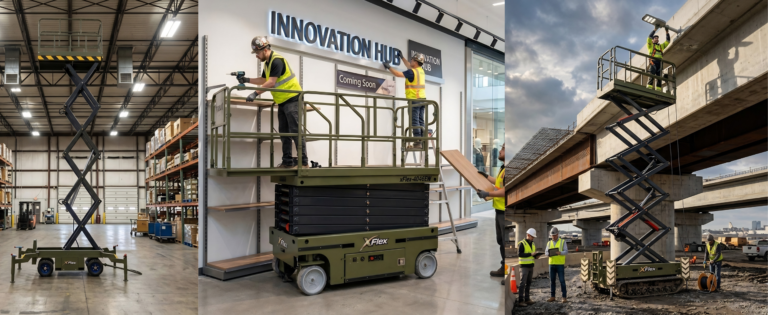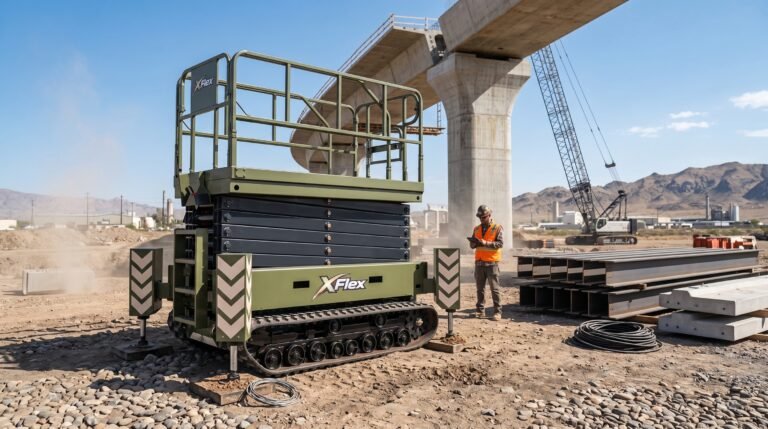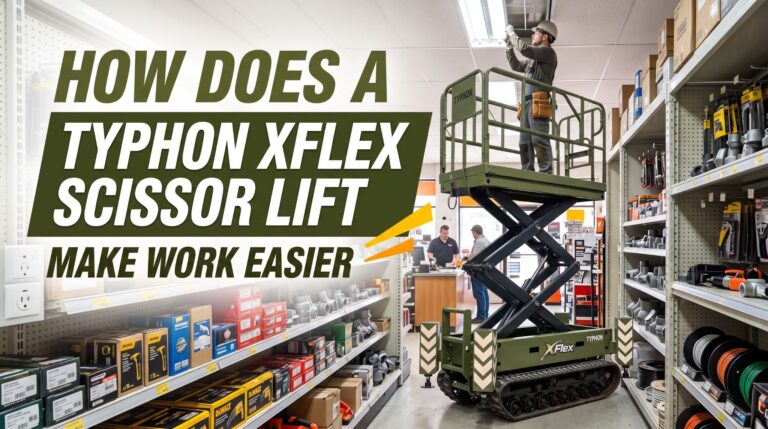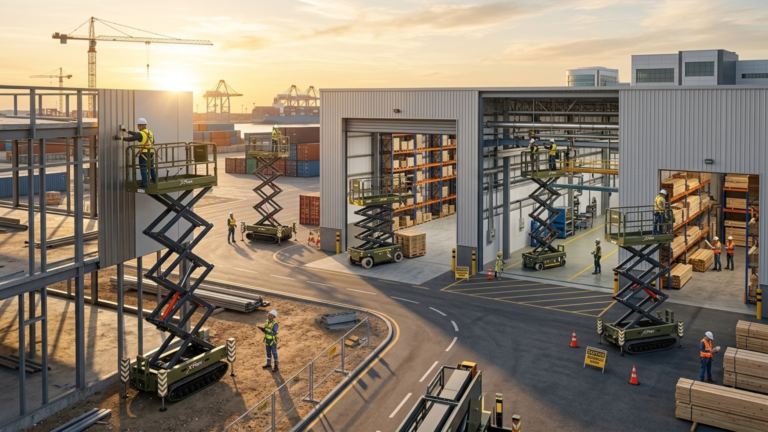

Choosing between electric and diesel scissor lifts comes down to a single practical question: where and how will the machine actually work? Pick the wrong type and you face stalled jobs, scuffed floors, ventilation headaches, or a machine that bogs down on rough ground. Pick the right one and you get a reliable, productive asset matched precisely to your conditions.
This guide is written for equipment buyers, rental customers, and jobsite planners who want a clear, practical scissor lift comparison. Below, we weigh electric vs. diesel scissor lifts across power source, indoor and outdoor use, emissions, noise, maintenance, operating costs, terrain, lift performance, runtime, and common applications. By the end, you will know which machine fits your work and why that match matters.
Understanding the Core Difference in Power Source
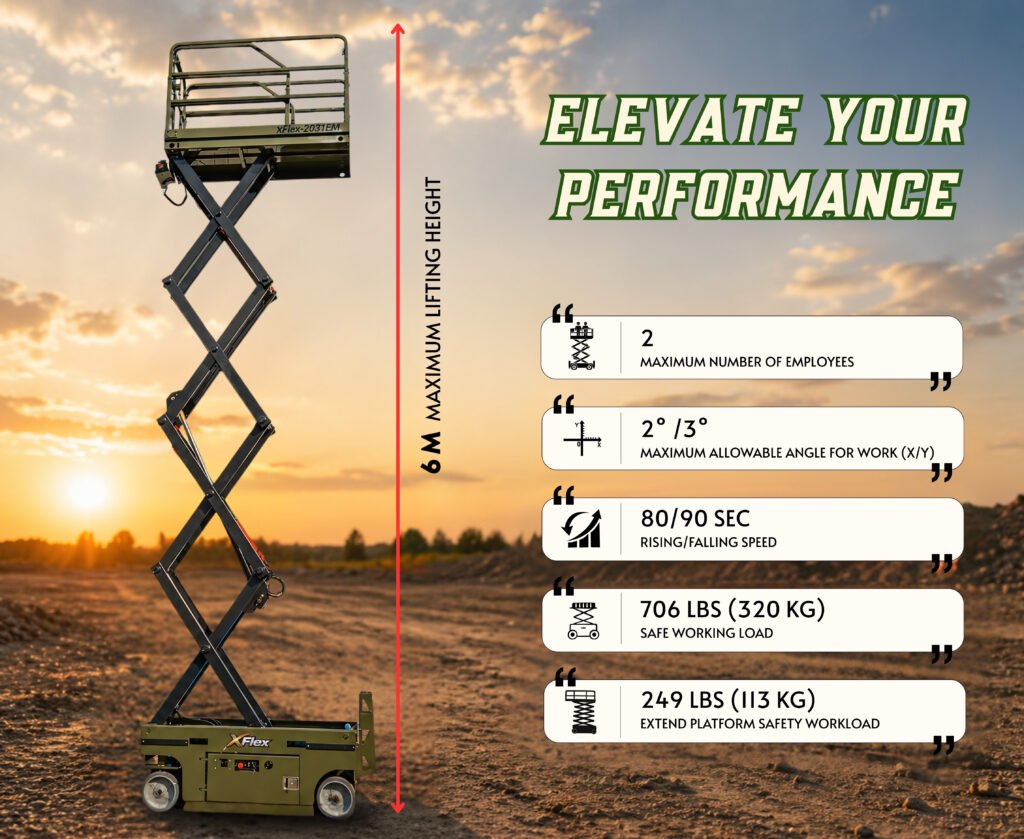
The fundamental distinction between these two machines is how they generate power, and nearly every other difference flows from that single choice. Electric scissor lifts run on rechargeable battery packs, typically lead-acid or lithium-ion, which drive an electric motor and hydraulic pump. They are designed to be charged overnight or during breaks and then deployed for clean, quiet work the following shift. Diesel scissor lifts, by contrast, run on an internal combustion engine fueled at the pump, delivering the kind of sustained power and rugged drivetrain that demanding outdoor work requires.
That difference in power source shapes everything that follows. The battery-driven electric machine is built for controlled, finished environments where cleanliness and low noise matter. The diesel machine is engineered for raw power and endurance on terrain that would defeat a lighter indoor unit. Recognizing this from the start makes the rest of the decision far more straightforward, because you are no longer comparing two interchangeable tools but two machines built for genuinely different worlds.
Indoor Versus Outdoor Use
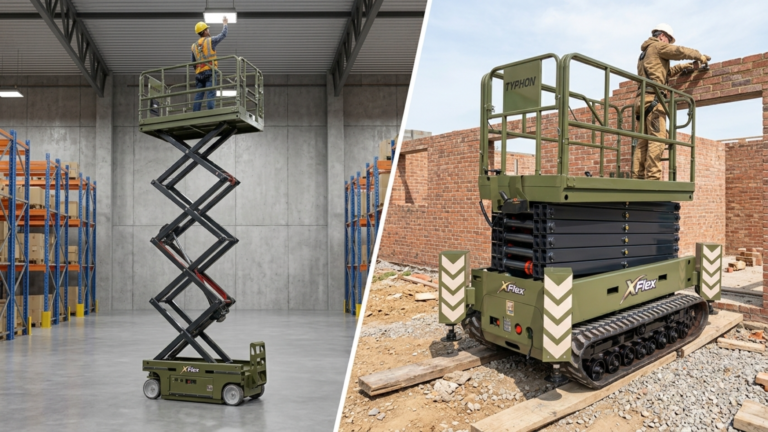
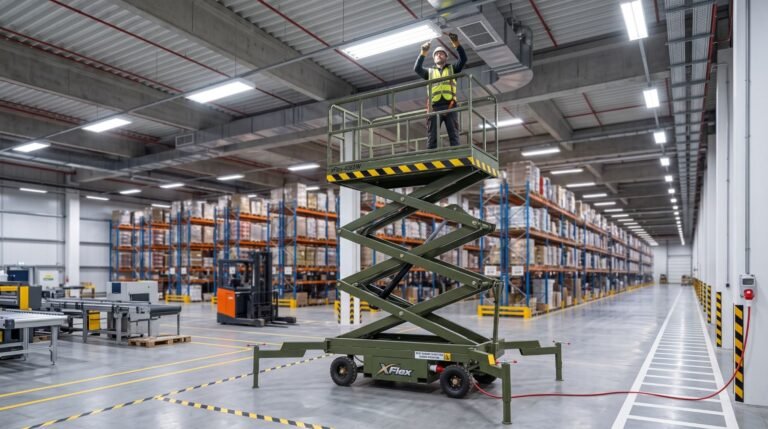
For most buyers, the indoor-versus-outdoor question settles the decision before any other factor enters the conversation. Electric scissor lifts are the clear choice for indoor work. They produce no exhaust, run quietly, and feature compact frames with non-marking tires that protect finished concrete. Inside a warehouse, retail store, manufacturing plant, or hospital, an electric machine moves through tight aisles and standard doorways without contaminating the air or disturbing the people working nearby.
Diesel scissor lifts belong outdoors, where their power and durability come into their own. On construction sites, industrial yards, and infrastructure projects, the diesel machine handles rough, uneven ground that an electric slab model simply cannot manage. If your work happens primarily on raw earth, gravel, or packed dirt, the diesel unit is built for those conditions. Many operations run both types for exactly this reason: an electric fleet for interior maintenance and finishing work and diesel rough-terrain machines for exterior construction. When your work straddles both environments, matching the machine to the dominant surface condition is the single most important step in choosing the right scissor lift.
Emissions and Air Quality
Emissions are where the electric machine holds an undeniable advantage, and the reason is simple. Electric scissor lifts produce zero exhaust at the point of use. Inside an enclosed building, that matters enormously, because diesel exhaust contains carbon monoxide, nitrogen oxides, and particulate matter that accumulate quickly in sealed spaces and create serious health hazards for everyone on the floor. Running a diesel machine indoors is not just unpleasant; it is genuinely unsafe without substantial ventilation infrastructure.
For environments with strict air quality controls, such as food processing, pharmaceutical facilities, and cleanrooms, the electric machine is the only practical option. Diesel scissor lifts, of course, run outdoors where exhaust disperses into open air, so their emissions present a far smaller concern in that setting. Still, as more contractors face emissions regulations and sustainability targets on their projects, the clean operation of electric machines has become a growing point in their favor even for some outdoor applications where a battery-electric rough terrain model can do the work.
Noise Levels on the Jobsite
Noise is an underrated factor that affects both safety and comfort, and here again the electric machine leads. Electric scissor lifts operate at a low hum, producing little more than the soft sound of the motor and hydraulics. That quiet operation allows crews to communicate clearly, reduces operator fatigue over a long shift, and lets work proceed in noise-sensitive settings such as occupied offices, schools, hospitals, and retail spaces during business hours.
Diesel scissor lifts run considerably louder because of the combustion engine driving them. On an open construction site, where heavy equipment noise is already part of the environment, that volume is rarely a problem. But it does rule out the diesel machine for any setting where noise ordinances, occupant comfort, or clear crew communication are priorities. If you are planning work near residential zones or inside occupied buildings, the quieter electric option keeps you compliant and keeps your crew sharp.
Maintenance Requirements
Maintenance is an area where the two machines diverge sharply, and the difference adds up over the life of the equipment. Electric scissor lifts have far fewer moving parts. With no engine, no fuel system, and no exhaust system to service, the maintenance routine narrows to battery care, hydraulic fluid checks, tire inspections, and general structural upkeep. Keeping the battery properly charged and watered, in the case of lead-acid units, is the main ongoing responsibility, and lithium-ion packs reduce even that burden.
Diesel scissor lifts demand more attention because the engine requires regular oil and filter changes, coolant service, air filter replacement, and fuel system upkeep. That maintenance keeps the machine reliable in demanding conditions, but it costs more in parts, labor, and downtime. For fleet managers, the practical implication is clear: an electric fleet generally costs less to maintain and is easier to service with existing staff, while a diesel fleet requires access to qualified engine mechanics and a larger parts budget. If you are seeing rising maintenance bills on an aging diesel fleet used mostly indoors, that is a strong signal to reevaluate.
Operating Costs Over Time
The cost picture rewards buyers who look beyond the purchase price. Electric scissor lifts often carry a comparable or slightly higher upfront cost than diesel models in the same height class, but they typically cost less to run over their working life. Electricity is cheaper per operating hour than diesel fuel, especially when charging happens during off-peak hours, and the reduced maintenance burden compounds those savings year after year. For high-utilization indoor operations, an electric machine frequently delivers a lower total cost of ownership.
Diesel scissor lifts carry ongoing fuel costs that fluctuate with market prices, along with the higher maintenance spend that combustion engines require. That said, for outdoor work where a diesel machine is the only suitable option, those costs are simply the price of getting the job done in conditions an electric unit cannot handle. The smart approach is to build a total cost of ownership comparison rather than comparing sticker prices alone, factoring in fuel or electricity, maintenance, expected utilization, and resale value. When you run the full numbers, the right choice for your specific use pattern usually becomes obvious.
Terrain Suitability and Stability
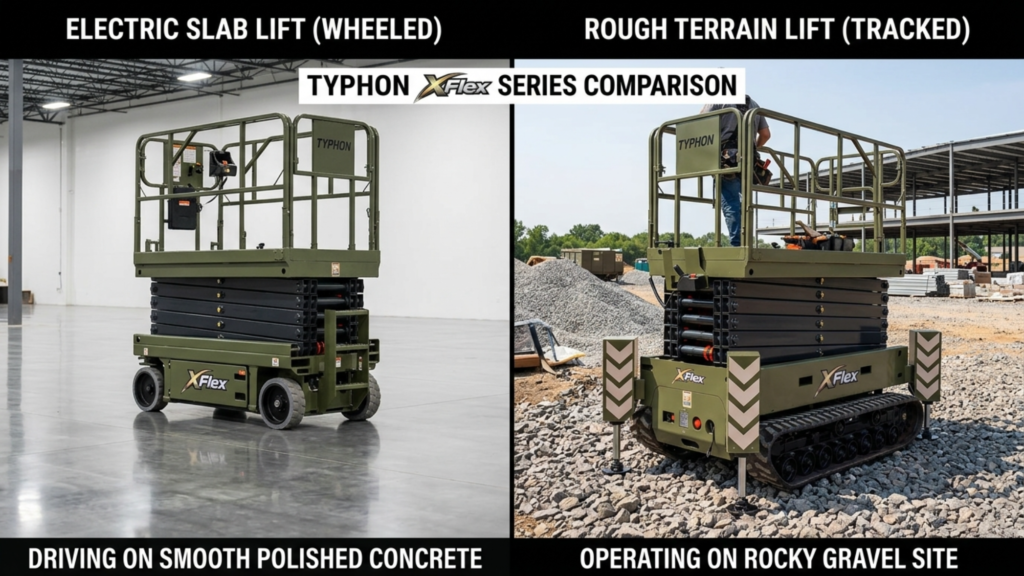
Terrain is the factor that most clearly separates these two machines in practical performance. Electric scissor lifts are slab machines, engineered for flat, level, finished surfaces. Their lower ground clearance and smaller tires make them ideal for smooth concrete but ill-suited to anything rougher. Drive an electric slab model onto gravel, soft soil, or uneven ground and you risk getting stuck, losing traction, or compromising stability.
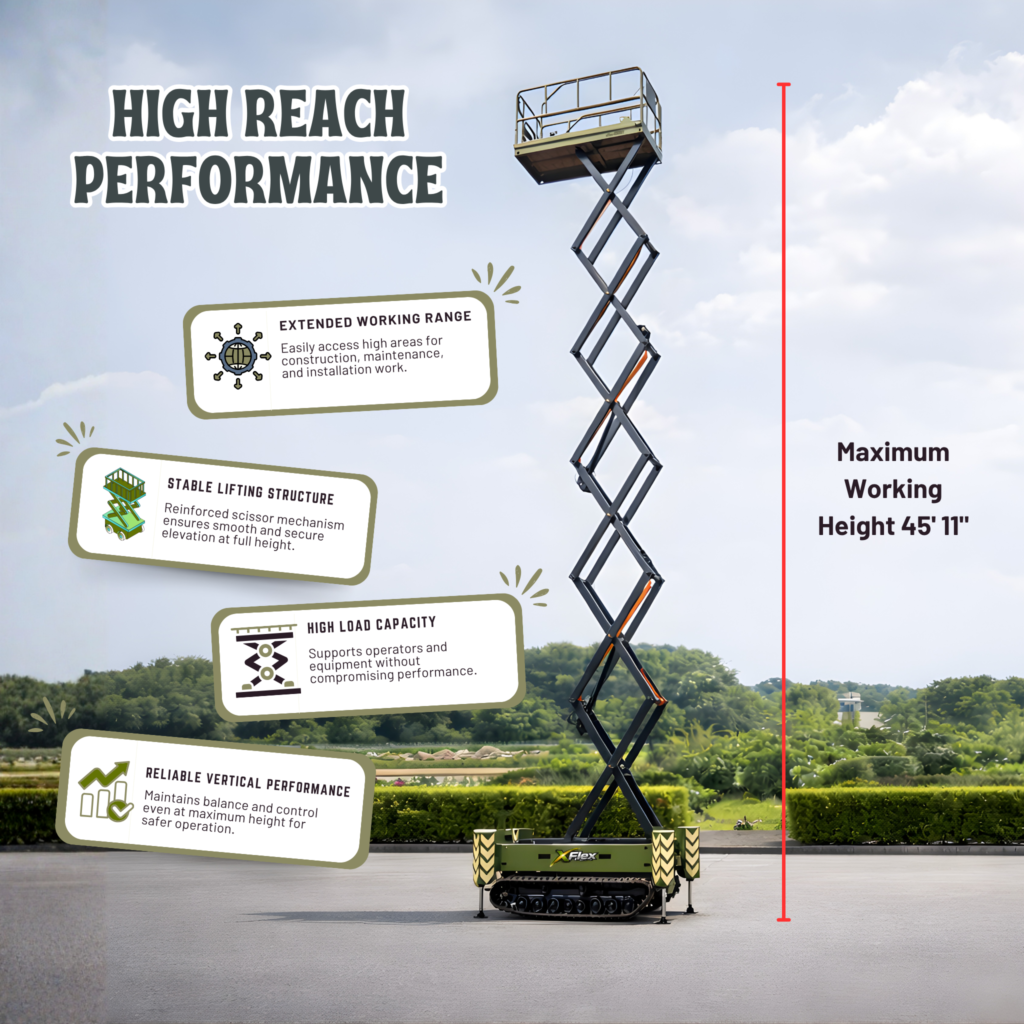
Diesel scissor lifts, particularly rough terrain models, are built for exactly the conditions that defeat electric machines. They feature four-wheel drive, high ground clearance, aggressive tires, and hydraulic outriggers that level the platform on sloped or irregular ground before the machine extends. This engineering allows a diesel rough terrain lift to work safely and stably on construction sites, industrial yards, and unpaved surfaces where heavy-duty performance is non-negotiable. Before you commit to either type, walk the surface where the machine will actually operate. That single assessment tells you more about the right choice than almost any spec sheet.
Lift Performance and Height
When it comes to reach and capacity, the two types serve overlapping but distinct ranges. Electric scissor lifts commonly cover platform heights from around 19 to 40 feet, which suits the majority of indoor maintenance, installation, and finishing work in commercial and industrial buildings. Their platform capacities are well matched to the workers, tools, and materials that interior tasks require, and their precise electric controls make delicate positioning straightforward.
Diesel scissor lifts generally reach higher and carry more. Rough terrain models frequently extend to platform heights of 50 feet or beyond, with larger platforms and higher weight capacities suited to heavy outdoor construction, structural work, and industrial applications. If your project demands both substantial height and the ability to carry heavy loads or multiple workers at elevation on rough ground, the diesel machine delivers performance that indoor electric units are not designed to match. Matching lift performance to your actual reach and load requirements, rather than to the largest available number, keeps you from overspending on capacity you will never use.
Runtime and Refueling
Runtime is a real operational consideration, and the two machines handle it in fundamentally different ways. Electric scissor lifts run on stored battery charge, which means an operator must plan around charging cycles. A fully charged machine generally supports a full shift of typical indoor duty, and lithium-ion batteries add the convenience of opportunity charging during breaks, but heavy continuous use can require battery swaps or scheduled downtime to recharge. For single-shift indoor operations, this rhythm is easy to manage; for round-the-clock work, it requires planning.
Diesel scissor lifts offer the advantage of fast refueling and effectively unlimited runtime as long as fuel is available. An operator can top off the tank in minutes and return to work immediately, which keeps the machine productive across long shifts and multi-shift operations without the scheduling that battery charging demands. For continuous outdoor work far from convenient charging infrastructure, that refueling speed and endurance is a genuine practical benefit. If your operation runs long days in remote locations, the diesel machine’s runtime advantage carries real weight.
Common Applications for Each Type
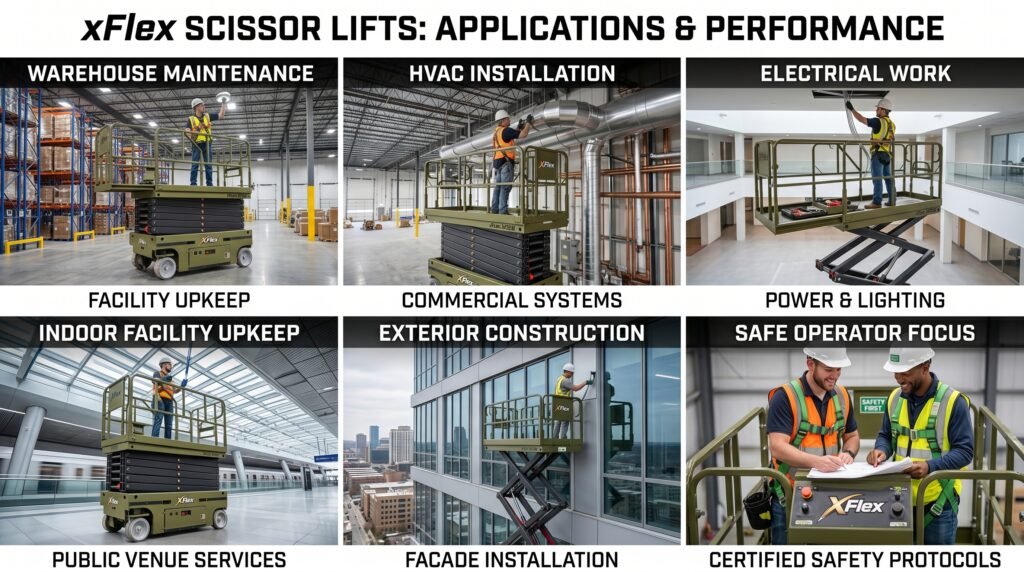
Seeing where each machine typically earns its keep brings the comparison into focus. Electric scissor lifts dominate indoor applications: warehouse high-bay lighting and racking maintenance, HVAC and ductwork service, electrical and data cabling, interior painting and finishing, retail display and signage work, and facility upkeep in offices, schools, and hospitals. Anywhere the surface is finished, the air must stay clean, and the noise must stay low; the electric machine is the natural fit.
Diesel scissor lifts are the workhorses of outdoor and heavy-duty work: exterior construction, structural steel support, building envelope and cladding installation, industrial plant maintenance, infrastructure projects, and any application on rough or unpaved ground. Their power, height, and terrain capability make them indispensable where conditions are demanding and surfaces are unforgiving. Many contractors maintain a mixed fleet precisely because their work spans both worlds, deploying electric machines for interior tasks and diesel rough-terrain units for everything outside.
Making the Right Choice for Your Work
The decision between electric and diesel scissor lifts ultimately rests on a clear-eyed look at your work environment and project needs. If your work happens indoors on finished floors, where emissions, noise, and floor protection matter, the electric machine is almost always the right answer, delivering clean, quiet, low-maintenance performance with strong long-term value. If your work happens outdoors on rough terrain, where height, power, endurance, and stability on uneven ground are essential, the diesel machine is built for exactly those demands.
You might be weighing a mixed operation that involves both settings, and in that case the honest answer is that you may need both types to do the work well. Rather than forcing one machine to cover conditions it was never designed for, match each machine to its dominant environment. Before you buy or rent, assess your surface conditions, define your required height and load, review your shift structure and runtime needs, and consult a knowledgeable equipment partner who understands your application. A scissor lift comparison grounded in your actual jobsite, rather than in spec sheets alone, leads you to the machine that delivers safe, productive work for years.
Conclusion
Choosing the right scissor lift is less about which type is better in the abstract and more about which type is better for your specific conditions. Electric machines win indoors with clean, quiet, low-cost operation on finished floors, while diesel machines win outdoors with the power, height, and rugged terrain capability that demanding construction and industrial work require. Every other factor, from maintenance to runtime to operating cost, flows from that core distinction in power source and environment.
Your next step is simple: walk the surface where the machine will work, measure your height and load requirements, and weigh your runtime and air quality needs honestly. With those facts in hand, the choice between electric vs. diesel scissor lifts becomes clear, and you can invest with confidence in a machine that fits the job, protects your crew, and delivers a strong return for every shift it runs.