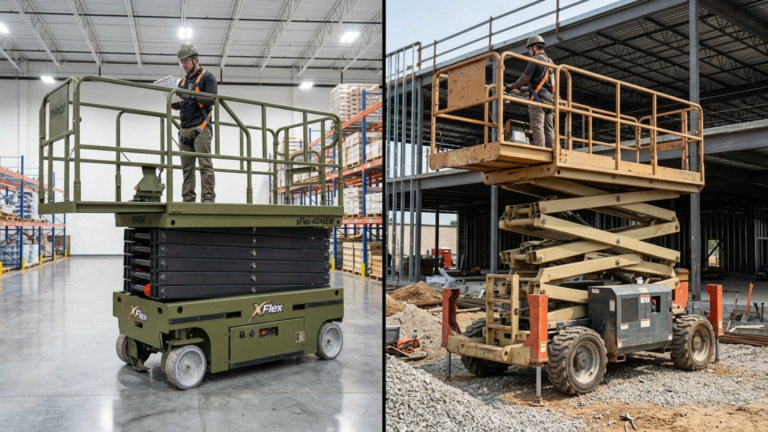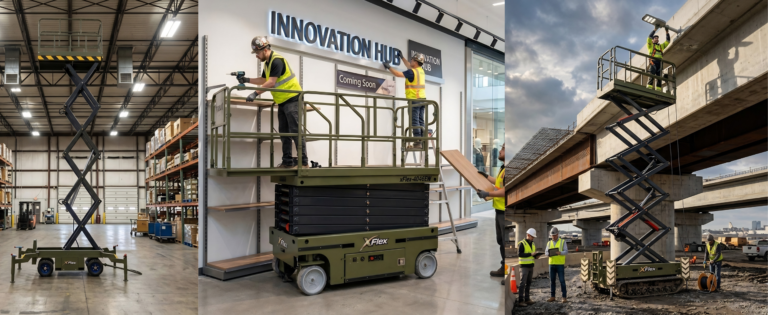
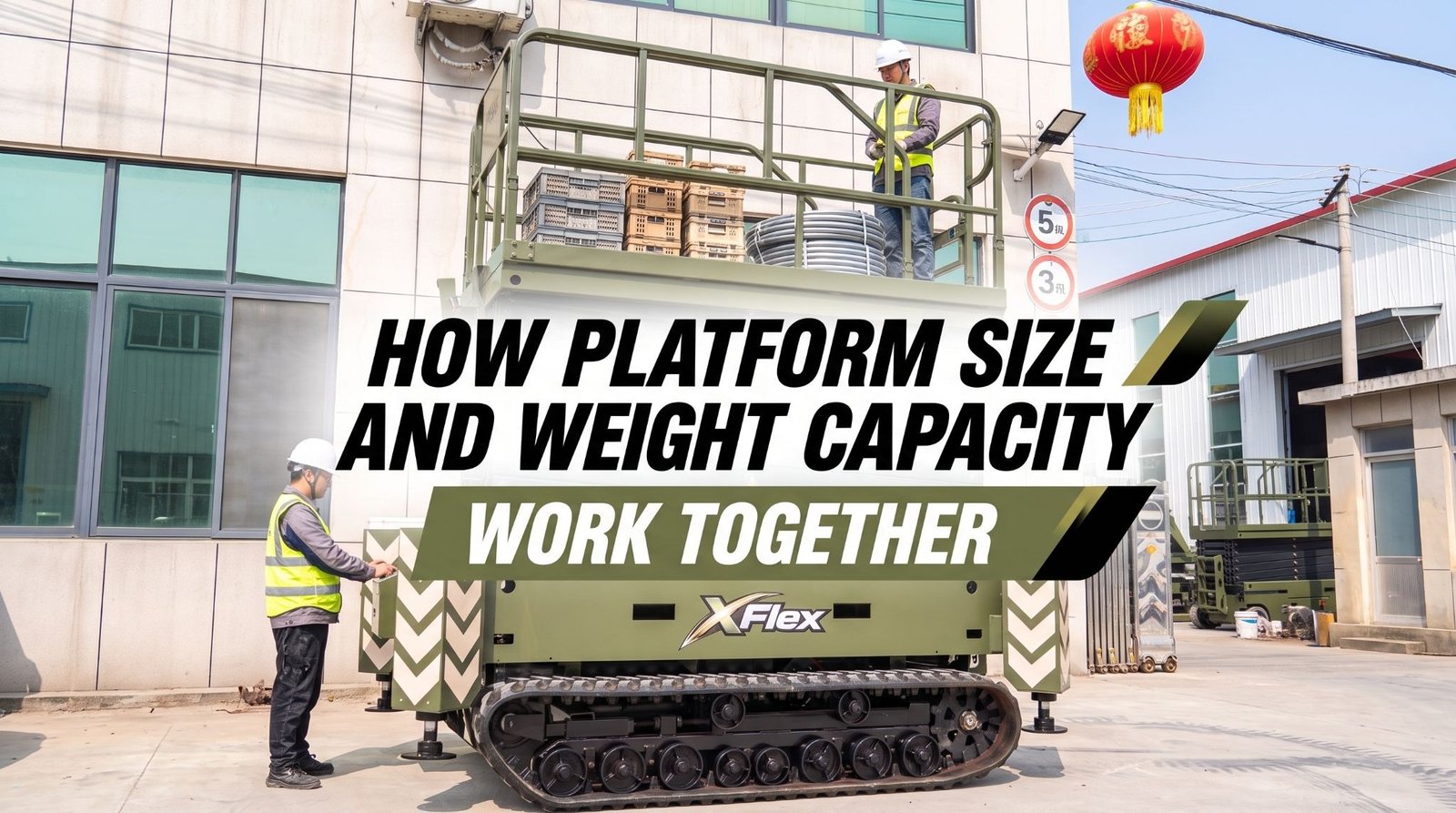
Platform size and lifting capacity work together to determine how effectively a scissor lift can support workers and equipment at height. A larger platform provides more room for personnel, tools, and materials, but that additional space can encourage heavier loads. The lift therefore needs sufficient capacity to raise and support the combined weight safely. At the same time, a scissor lift with a high lifting capacity offers limited practical value if its platform is too small for the crew and equipment required for the job.
The balance between these specifications affects much more than basic load handling. A properly matched platform and capacity allow workers to use the available deck space without approaching the machine’s limits, while maintaining stable and predictable operation at height. Choosing the right combination can improve workflow, reduce unnecessary loading concerns, and help the machine perform reliably throughout daily use. It is not simply a matter of choosing the biggest platform or highest capacity, but finding a configuration that suits the actual crew, tools, materials, and working conditions.
What Platform Size Actually Measures
Platform size defines the physical footprint of the working deck, expressed as length and width. It determines how many workers can position themselves comfortably, how much material can be staged without stacking, and how wide a stretch of work face the crew can cover before repositioning. A deck sized for the job keeps every tool and supply within reach, cutting the trips up and down that chip away at productive time.
The key measurement to verify is whether the listed dimension includes the roll-out extension or covers the base deck alone. Some manufacturers fold the extension into the advertised size; others list it separately. A machine that appears larger on paper may simply be accounting for that extension in a way a competing model does not, so confirming what the number actually represents is the first step in any fair comparison.
What Weight Capacity Actually Measures
Rated load describes the maximum combined weight the platform can safely carry and raise: workers, tools, consumables, and any material staged for installation. This figure is not a target. It is an absolute ceiling, calculated with a built-in safety margin to preserve stability at full height. The moment that margin disappears, the machine’s behavior at elevation becomes unpredictable.
An important detail that often goes unread is the separate capacity rating for the extension deck. Because loads staged on the extension sit farther from the machine’s center, they place different stress on the structure. The extension limit is nearly always lower than the main platform limit, and ignoring it is one of the most common ways crews unknowingly push a scissor lift past its safe range.
How the Two Specs Shape Each Other
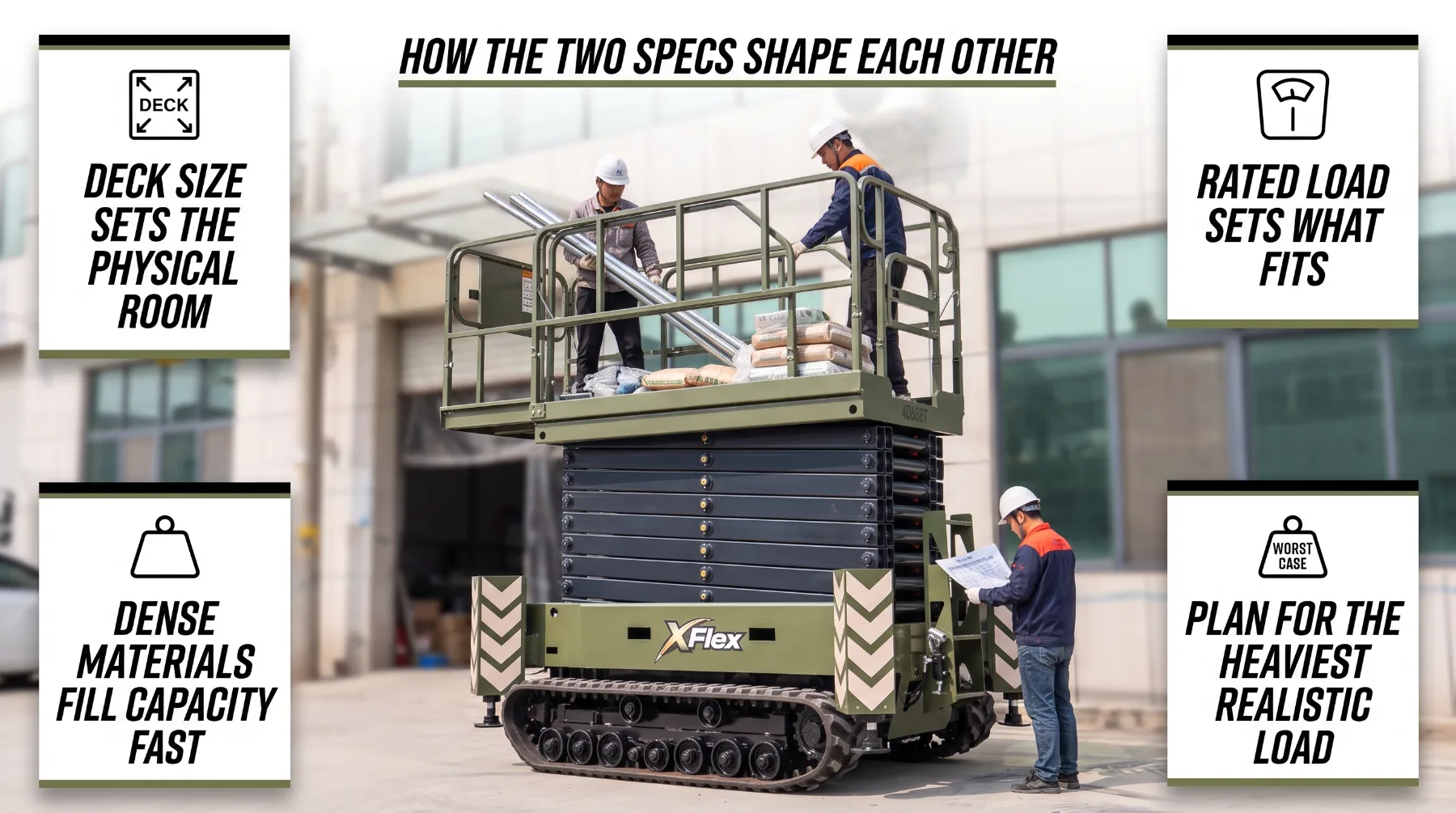
Platform size determines how much a crew can physically fit on the deck. Rated load determines how much of that physical space can actually be filled. A machine with abundant deck room but limited capacity forces workers to make choices, leave someone below, cut the material load, or take the risk. None of those options serve productivity or safety.
Material density adds another layer to this relationship. A deck well-suited for electrical supplies and hand tools can exceed its capacity quickly when the same space fills with tile, pipe, or bagged concrete. The right approach is to estimate the weight of the heaviest realistic load the crew will ever stage, not a typical light day, but the worst-case scenario, and confirm that scenario sits within the rated limit with margin to spare.
What Breaks Down When the Specs Do Not Match
An oversized deck on an underpowered lifter creates a passive overload hazard. Efficient power management keeps the platform looks like it has room, the crew fills it naturally, and the weight limit gets crossed without anyone making an obvious mistake. The machine is now operating beyond its safe range, and stability at height suffers in ways that are difficult to see from the platform itself.
An undersized deck on a high-capacity machine presents a different kind of waste. The structural engineering and hydraulic system are built to lift far more than the narrow platform can ever hold. Workers crowd each other, tools compete for space, and the crew makes repeated descents to retrieve material that should have come up in a single load. The machine’s lifting strength goes largely unused because the workspace cannot take advantage of it.
Each failure mode costs time, adds risk, or both. The solution in both cases is the same: treat the two specs as a matched pair from the start of the selection process.
How to Compare Models Without Being Misled
Before comparing scissor lifts side by side, establish the weight of a full, realistic platform load for your specific work. Add the heaviest number of workers likely to be on the deck at once, plus the tools and materials they carry up. Use that figure as the benchmark every model must clear.
Then compare extension ratings alongside main platform ratings, not just the headline capacity. Confirm that every platform dimension you are reading reflects the same measurement standard, base deck only, or base plus extension. A comparison built on inconsistent inputs will steer you toward the wrong machine, even with perfect math behind it.
What a Matched Pairing Looks Like on the Job
When platform size and weight capacity are properly aligned, the crew boards the lift with everything they need, raises it once, and works through a wide section of the job without coming back down. Repositioning happens on the crew’s schedule, not because supplies ran out or space ran short. That uninterrupted workflow multiplies productivity far beyond what any single impressive spec could achieve.
Stability is equally concrete. A load that respects the rated capacity keeps the machine planted, the controls responsive, and the platform steady at any working height. An overloaded deck compresses the safety margin the design depends on, and the operator begins to feel that instability as sluggish response and a heightened sense of risk. The longer that condition persists, the more energy the crew spends managing it instead of working.
How Balance Affects the People Doing the Work
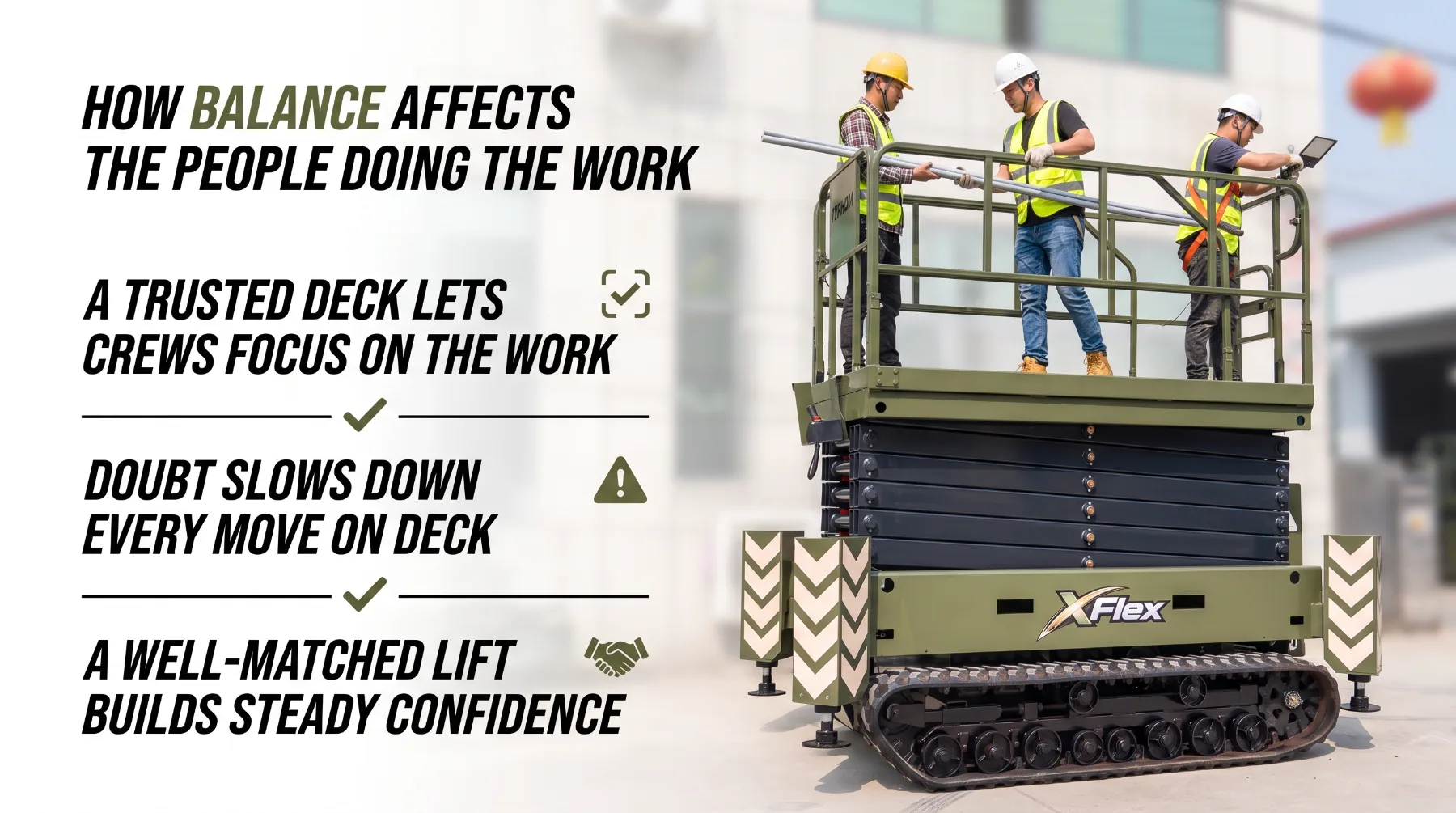
Crew performance at height depends on mental clarity as much as physical capability. When workers trust that a loaded deck is a safe deck, they focus entirely on the task. They move confidently, hand materials to each other fluidly, and maintain the kind of steady pace that gets a job finished well.
Doubt erodes that performance. A crew aware, or half-aware, that the deck may be over its limit becomes cautious in ways that slow progress: lighter individual loads, more frequent descents, hesitation before adding one more item. That caution is the right instinct, but it is also a symptom of a machine that was not matched to the job from the start. A crew running a properly paired lift does not need to calculate every move. They trust the machine, and that trust shows up in the work.
Long-Term Costs of Mismatched Specs
A scissor lift regularly loaded near or beyond its rated capacity accumulates structural stress faster than intended. The scissor linkage, lift cylinders, and platform frame are engineered to cycle within their load limits. Consistent overloading accelerates wear at the pins, joints, and hydraulic seals, components that are expensive to replace and whose failure can strand a crew at height.
Proper load matching does the opposite. Every component operates within its design range, service intervals stay predictable, and the machine holds its condition through more years of use. At resale, a lift with a documented history of appropriate use commands a meaningfully better return than one that shows the wear patterns of chronic overloading.
Conclusion
Platform size and weight capacity are not independent selling points. They are interdependent specifications, and the value of each depends on how well the two work together under real jobsite conditions. A well-matched scissor lift provides your crew with a safe and practical working deck that can accommodate workers, tools, and materials without approaching its limits, while also maintaining the stability and dependable performance needed when working at height. This balance can reduce unnecessary strain on the lifting system and help the machine remain a reliable asset over years of regular use. The practical test is straightforward: define your heaviest realistic working load, including personnel, tools, and materials, then verify that it remains comfortably below the rated capacity. Also confirm that both the main platform and any extension deck are rated to support the way your crew actually works. The machine that passes this real-world test, rather than the one with the largest platform or highest capacity listed in a specification sheet, is the one that offers the right combination of safety, usability, and long-term value.
Frequently Asked Questions
Is a bigger platform always better on a scissor lift?
Only if the rated load supports a full deck of your actual crew and materials. Extra deck space that the weight limit prevents you from using is not an asset. It is a source of overload risk. The most productive lifts are those where the deck can be fully and safely occupied for the specific work at hand.
How do I know if my platform size and weight capacity are well matched?
Build a realistic load scenario using your heaviest expected combination of workers, tools, and staged materials. Compare that total against the machine’s rated capacity. A properly matched lift leaves a visible margin between your realistic load and the published limit. If that margin is thin or nonexistent, the machine is not suited for your application regardless of how the deck looks at a glance.
Why does the extension deck capacity matter when comparing models?
Because crews frequently work from the extension when reaching into tight areas or along long work faces. The extension carries a lower load rating than the main deck due to the different stress it places on the structure. If your work habits include stationing a worker or staging material on the extension, that lower figure, not the main deck rating, is the number that governs safe operation.