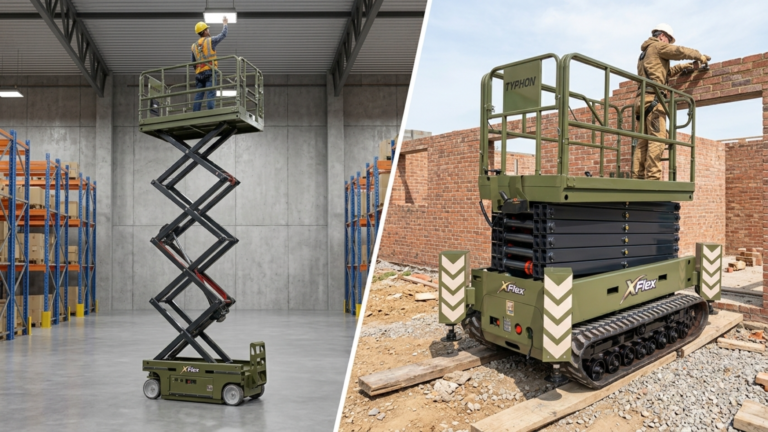
A maintenance tech rolls a scissor lift into a warehouse aisle to swap a bank of light fixtures, hits the up button without a second thought, and rides the platform toward the ceiling. Fifteen feet up, one wheel settles into a shallow floor drain nobody noticed, the deck tilts, and the tilt alarm screams as tools slide toward the edge. He froze, gripped the rail, and got lucky enough to lower back down and reposition. Nothing about that machine had failed. A thirty-second look at the floor before he climbed on would have caught the drain and spared him the scare. That near-miss is exactly why a pre-use checklist matters more than any deadline pushing you to skip it.
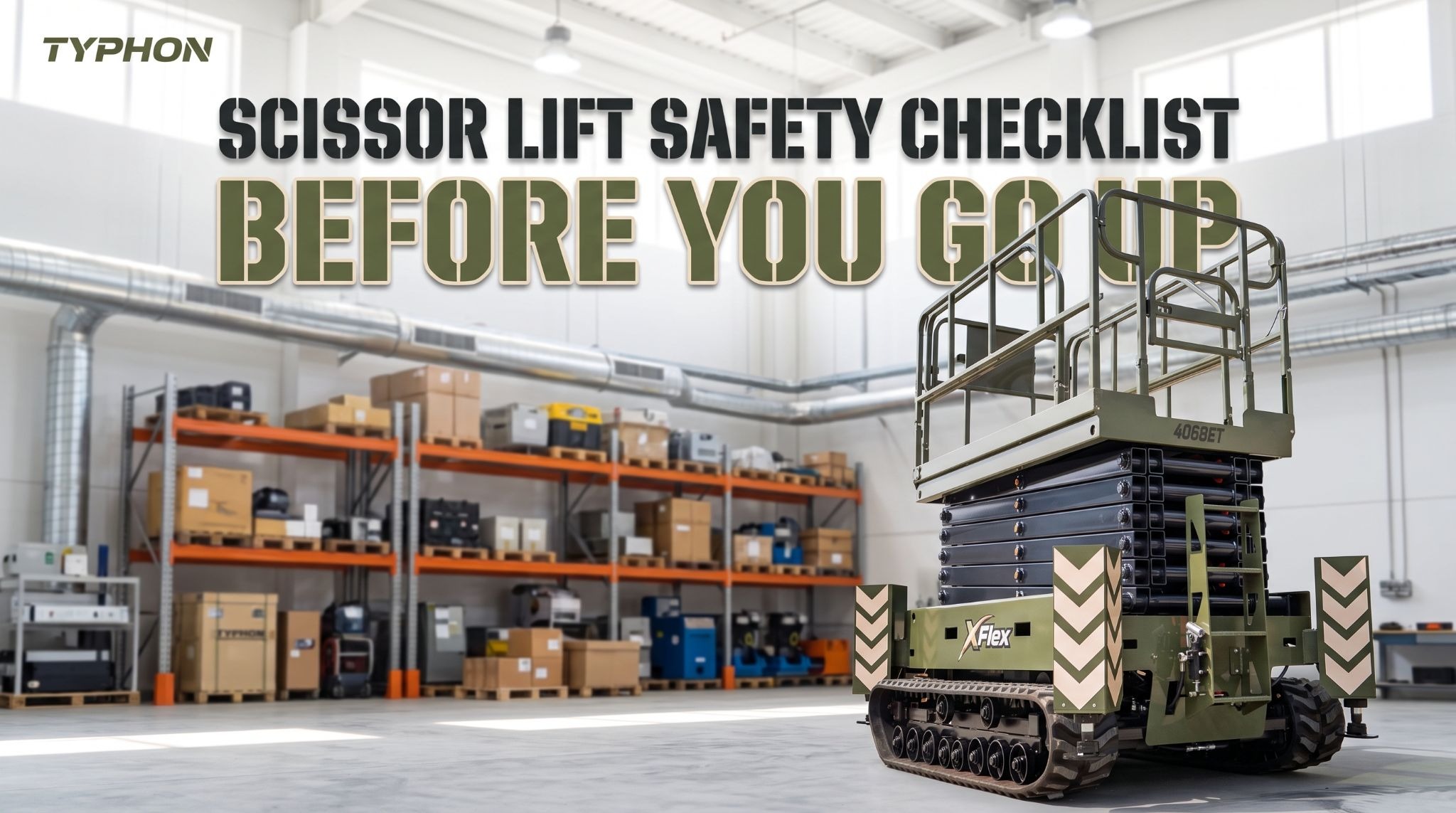
Going up safely starts on the ground, long before your thumb touches the control. A short, disciplined walkthrough before every lift catches the small problems that turn into falls, tip-overs, and injuries once the platform is elevated. This guide covers why pre-use checks matter, how to inspect the ground and surface, what to confirm on the platform and guardrails, the controls and power checks that keep you in command, how to verify weight and capacity, and the protective gear and operator habits that tie it all together. Here’s what to run through before you rise.
Why a Few Minutes on the Ground Pay Off
Skipping the walkthrough feels harmless, right up until it isn’t. Most scissor lift accidents trace back to a problem that was present and visible before the machine ever left the ground, whether a soft floor, a damaged guardrail, or a battery showing signs of trouble. If you’ve ever wondered why your scissor lift battery is dying quickly, a pre-operation inspection is often the first place to spot loose connections, corrosion, or charging issues before they affect performance. Catching these problems early is far cheaper than discovering them thirty feet up.
Consistency separates operators who stay safe from those who get hurt. Running the same checklist every single time, even on a machine you used an hour ago, builds a habit that spots the one thing that changed since your last shift. Complacency is what sneaks up on experienced crews, since a machine that worked fine yesterday can develop a leak, a low charge, or a fault overnight.
Regulations reinforce the habit for good reason. OSHA generally requires operators to inspect aerial and scissor lifts before use and to follow the manufacturer’s instructions, so a documented pre-use check protects both your crew and your compliance record. Treating that inspection as a genuine safeguard rather than a box to tick is what keeps it meaningful.
Key takeaway: A pre-use inspection takes minutes and prevents the falls and tip-overs that seconds of carelessness cause. Run the same check every time, and never let familiarity with a machine talk you out of it.
Sizing Up the Ground and Surface First
Ground condition decides whether a scissor lift stays stable once it climbs, so study the surface before you position the machine. Scissor lifts are built for firm, level ground, and a floor that slopes, gives, or hides a weak spot can tip a raised platform in an instant. Walking the work area first beats discovering a soft patch with the deck fifteen feet up.
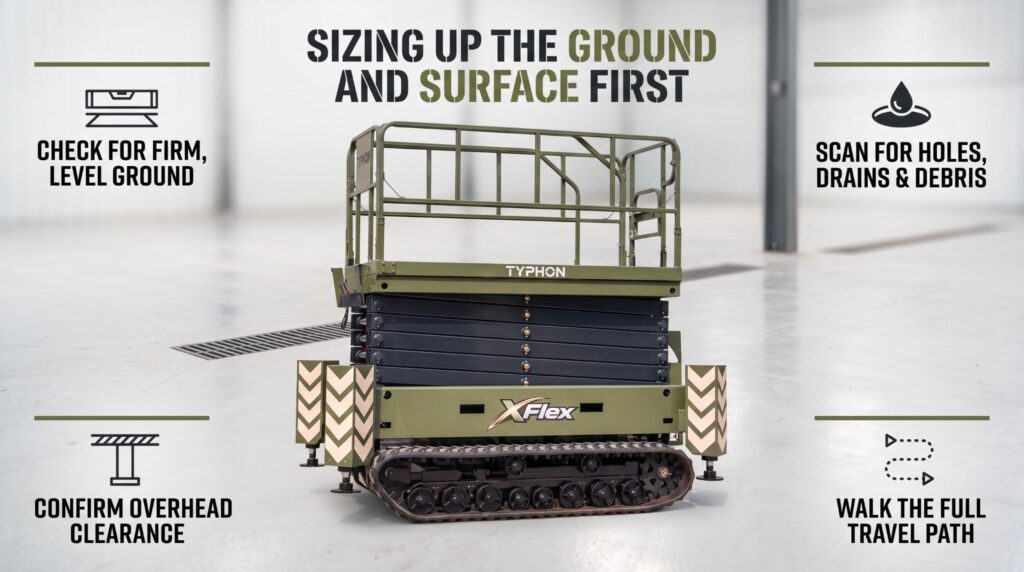
Hazards hide in plain sight when you’re rushing. Look for holes, drains, floor joints, debris, and loose material that could catch a wheel or shift the machine’s footing under load. Outdoor sites add mud, gravel, slopes, and hidden dips to the list, so scout the full path the lift will travel, not just the spot where it starts.
Overhead clearance deserves the same attention as the floor beneath you. Check for power lines, beams, ductwork, sprinkler heads, and low ceilings that the rising platform could strike, since an obstruction you miss on the ground becomes an emergency once you’re moving toward it. Confirming both the surface below and the space above keeps the whole lift path clear.
Key takeaway: Scissor lifts demand firm, level ground and clear overhead space. Inspect the surface for slopes, holes, and soft spots, and scan above for obstructions before the platform ever rises.
Checking the Platform, Rails, and Deck
Guardrails are your primary fall protection on a scissor lift, so confirm they’re intact before you climb aboard. Verify every rail is in place, undamaged, and free of bends or cracks, and check that the mid-rails and toe boards are secure. A guardrail system that’s compromised turns a routine lift into a fall risk the moment you lean against it.
Entry points need the same scrutiny that the rails do. Make sure the access gate or chain closes and latches properly, since an open or faulty gate leaves a gap exactly where you’d step or lean. Test the latch by hand rather than assuming it caught, because a gate that looks shut but doesn’t hold offers no protection at all.
Deck condition rounds out the platform check. Clear the floor of loose tools, debris, and slip hazards before you load your gear, confirm the surface is sound and free of holes or damage, and check that the extension deck, if the machine has one, slides and locks the way it should. A clean, solid platform keeps your footing sure through every movement up top.
Key takeaway: The guardrails, gate, and deck are what keep you on the platform and off the ground. Confirm the rails are solid, the gate latches, and the deck is clear before you step on.
Testing Controls, Battery, and Power Systems
Controls decide whether you stay in command once the platform moves, so test them at ground level first. Operate the up, down, and drive functions from the platform controls through their full range, and confirm the machine responds smoothly without hesitation or drift. A control that sticks or lags at ground level becomes a serious problem at height.
Emergency systems earn their keep only when they work, so verify them before you trust them. Test the emergency stop button, locate and check the manual lowering valve that brings you down if the power fails, and confirm the tilt alarm and any warning lights function. Knowing these safeguards respond gives you a way out when something goes wrong up top.
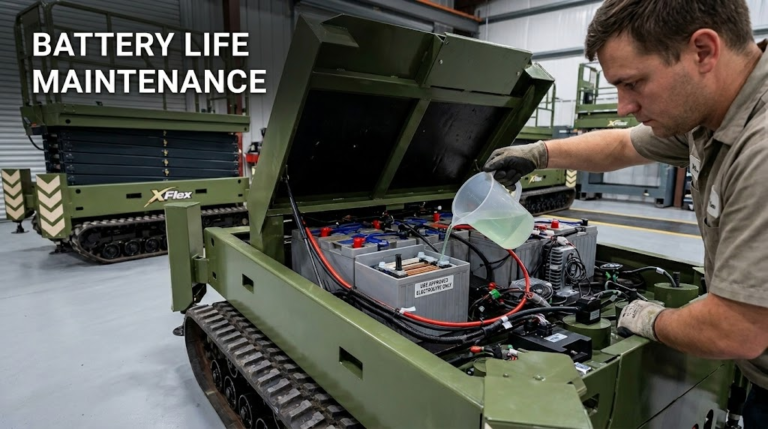
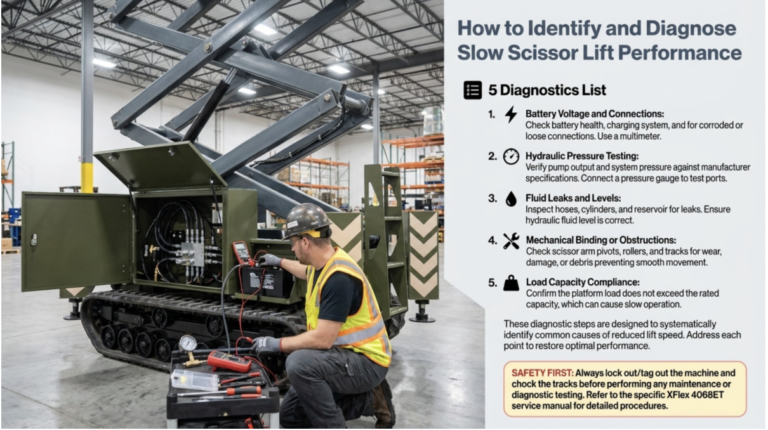
Power supply keeps the whole machine running, so confirm it before you commit to a lift. Check that an electric machine holds a solid battery charge and shows no corroded or loose connections, and verify that a fuel-powered unit has enough in the tank for the job. Inspect underneath for hydraulic leaks too, since a puddle of fluid signals a failing line or seal that could drop the platform unexpectedly.
Key takeaway: Test every control, emergency stop, and lowering function at ground level, and confirm the battery, fuel, and hydraulics are sound. A machine that fails any check stays down until it’s fixed.
Confirming the Load Stays Within Limits
Capacity governs how much a scissor lift can safely carry, and exceeding it is a leading cause of tip-overs. Locate the rated capacity on the plate near the controls, and read both the total weight limit and the maximum number of occupants the machine allows. Treating that number as a hard ceiling, not a rough guide, keeps the platform stable through every height.
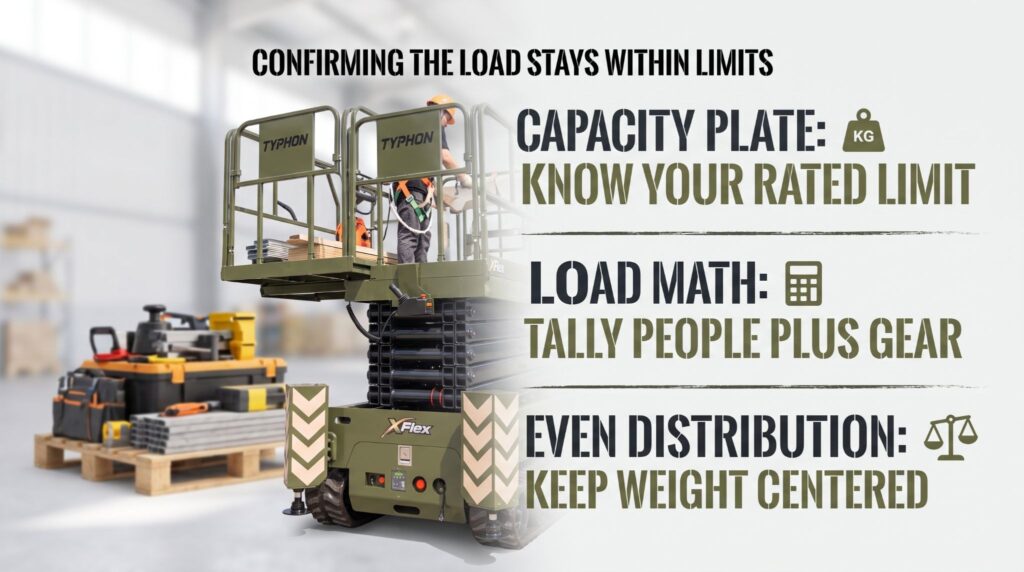
Load math is simple once you actually run it. Add up the weight of every person riding, plus all the tools and material going onto the deck, then compare that total against the rating with a comfortable margin to spare. Rounding down and leaving room below the limit protects you against the extra strain that height and movement place on the machine.
Distribution matters nearly as much as the total weight. Spread the load evenly across the deck rather than piling everything in one corner, keep material centered and secured, and avoid stacking anything that could shift or fall as the platform rises. An off-center load on a raised platform is exactly the imbalance a scissor lift punishes, so where the weight sits deserves your attention alongside how much there is.
Key takeaway: Find the rated capacity and occupant limit, tally the full weight of people plus gear, and keep the load balanced and well under the maximum. Overloading and uneven weight are what tip a raised platform.
Gearing Up and Working Smart Up Top
Protective equipment guards you against the hazards a checklist can’t eliminate, so gear up before you climb on. Wear a hard hat, sturdy footwear, and any site-required high-visibility clothing, and check whether your specific machine and task call for a harness and lanyard tied to a rated anchor point. Following the manufacturer’s and your employer’s fall-protection guidance keeps you covered when conditions turn unpredictable.
Safe habits protect you throughout the lift, not just at the start. Keep both feet flat on the platform floor, stay inside the closed guardrails, and never climb, lean, or stretch over the rails to reach the work, since over-reaching is one of the fastest ways to fall or tip the machine. Repositioning the lift closer to the task beats stretching toward it every time.
Awareness of your surroundings ties the whole safe operation together. Watch for people and equipment moving below, keep the area around the base clear, lower the platform before you travel any real distance, and know your emergency lowering procedure cold. Communicating with the crew on the ground and staying alert to changing conditions keeps a routine job from turning into an incident.
What this means: The right gear and disciplined habits carry you through the part of the job a pre-use check can’t reach. Stay inside the rails, keep your feet planted, never over-reach, and stay aware of everything moving around you.
Conclusion
Going up on a scissor lift safely comes down to a short, honest checklist you run every single time, no matter how well you know the machine. Start on the ground by studying the surface for slopes, holes, and soft spots and scanning above for overhead obstructions, then confirm the guardrails are solid, the access gate latches, and the deck is clear. Test the controls, emergency stop, and manual lowering function at ground level, verify the battery, fuel, and hydraulics, and check for leaks before you trust the machine with your weight. Find the rated capacity, tally the full load of people and gear, and keep it balanced well under the limit. Gear up with the right protection, stay inside the rails with your feet planted, and never over-reach for the work. Run this checklist before every lift, and you protect yourself, your crew, and the job itself. When you’re ready to put a dependable, well-maintained scissor lift to work, reach out to a trusted equipment specialist who can pair a reliable machine with the results your projects depend on.
Frequently Asked Questions
What should you check before using a scissor lift?
Begin on the ground by inspecting the surface for slopes, holes, and soft spots, and scan overhead for power lines, beams, and low ceilings. Confirm the guardrails are intact, the access gate latches, and the deck is clear, then test the controls, emergency stop, and manual lowering function. Verify the battery or fuel level, check for hydraulic leaks, and confirm your load stays within the rated capacity before you climb on.
Why is a pre-use inspection important on a scissor lift?
Most scissor lift accidents trace back to a problem that was visible before the machine ever left the ground, such as soft footing, a faulty guardrail, or a low battery. A quick pre-use check catches those hazards while they’re still easy to fix, well before they become a fall or a tip-over at height. OSHA also requires operators to inspect the lift and follow the manufacturer’s instructions, so the habit protects both your crew and your compliance.
Do you need a harness on a scissor lift?
It depends on the machine and your employer’s fall-protection policy. Scissor lifts rely on their guardrail system as primary fall protection, so many tasks don’t require a harness the way boom lifts do. Always check the manufacturer’s guidance and your site rules, though, since some jobs and machines call for a harness and lanyard tied to a rated anchor point. When in doubt, follow the stricter requirement.