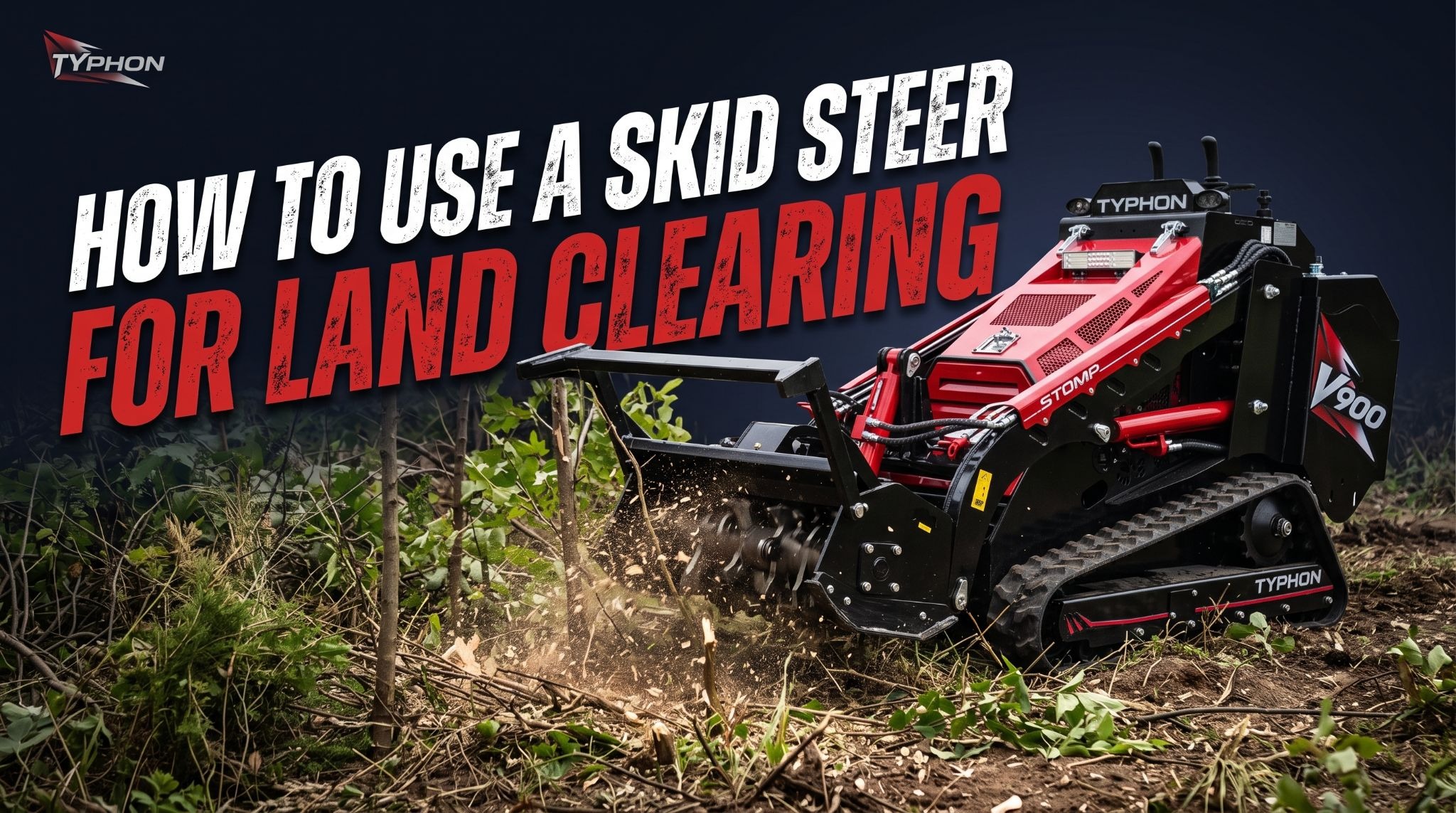
A contractor takes on a two-acre lot choked with brush, saplings, and a scattering of old stumps, with a build slated to start in three weeks. Hand-clearing it with chainsaws and a crew would eat most of that timeline. Instead, he rolls a skid steer onto the site, bolts on a brush cutter, and mows down a season’s worth of overgrowth before lunch. By the end of the week, the lot is stripped, graded, and ready. That’s the whole reason a skid steer belongs on a clearing job. The right machine with the right attachment turns weeks of backbreaking work into a few days of steady, controlled progress.
A skid steer clears land by swapping a single attachment to match the task in front of it, cutting brush, grabbing debris, mulching growth, and hauling material off the lot. It’s compact enough to weave between trees, powerful enough to run demanding attachments, and quick enough to change tools in minutes. This guide walks through choosing the right attachments, prepping the site, working techniques for brush and debris, handling stumps and roots, and the efficiency and safety habits that keep the job moving. Here is how to put the machine to work.
Every property presents different challenges, from dense undergrowth and uneven terrain to buried rocks and leftover construction debris, so success depends on more than simply driving across the site. Knowing when to switch attachments, how to approach different vegetation, and how to work in a logical sequence helps maximize productivity while reducing fuel use, machine wear, and unnecessary rework. With the right strategy, a skid steer becomes more than a compact loader. It becomes an all-in-one land-clearing solution capable of transforming overgrown ground into a clean, build-ready site with remarkable speed and efficiency.
Why a Skid Steer Fits Land Clearing
Strip away the specifics and the fit is simple. Land clearing is a mix of cutting, grabbing, mulching, and hauling, and this machine does all four by changing attachments on the same base machine. Instead of renting a separate piece of equipment for each task, you run one machine and swap tools as the job shifts from knocking down brush to piling debris to loading it out.
Its size is the other half of the argument. A skid steer is small enough to maneuver around standing trees, along fence lines, and into corners a larger machine can’t reach, yet it carries the hydraulic power to drive a mulcher or cutter through heavy growth. On soft or torn-up ground, a tracked model holds traction better, which is why crews weigh before a clearing job. Match the machine and attachment to the lot, and the work almost runs itself.
Choosing the Right Attachments
The attachment does the real work, so start there. Three cover most land clearing jobs, and knowing what each one does helps you pick the right tool before you ever start the engine.
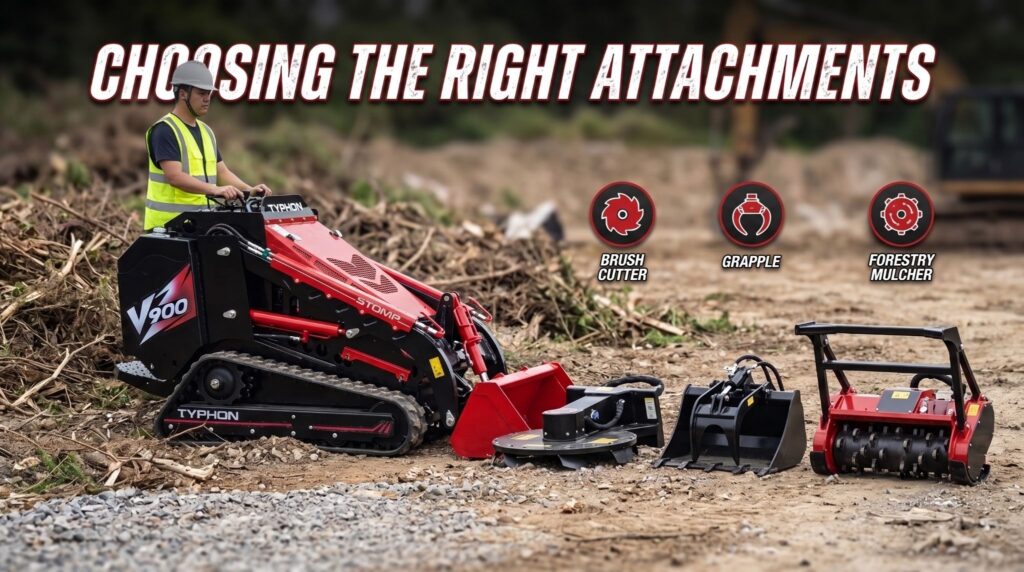
A brush cutter is the workhorse for open clearing. It mows down grass, weeds, saplings, and light brush fast, chewing through overgrowth that would take a crew days by hand. For a lot buried in vegetation but light on large trees, the brush cutter clears the most ground per hour.
A grapple grabs, lifts, and hauls. Once a brush is cut or a lot is littered with limbs, logs, and debris, a grapple bucket or root grapple lets you pile material, load it out, and clean up behind the cutting. It’s the tool that turns a mowed-down mess into a clean, hauled-off site.
A forestry mulcher is the heavy hitter. It grinds standing brush, saplings, and small trees into mulch in a single pass, leaving the ground covered instead of piled with debris to remove. It costs more to run and demands high-flow hydraulics, but for dense growth it does the cutting and the cleanup in one step. Matching the attachment to your machine’s flow and the density of the growth is the first real decision, and a quick look at a keeps you from pairing a demanding tool with an underpowered machine.
Preparing the Site
A little prep saves a lot of trouble once the attachment is spinning. Walk the lot before you cut, and mark anything you need to work around: property lines, utilities, septic fields, wells, large trees you’re keeping, and any structures near the edges. Buried and overhead utilities are the ones that cause real damage, so confirm their locations before a blade or mulcher goes near them.
Clear the obvious hazards first. Large rocks, scrap metal, old fencing, and trash hidden in the brush can wreck a cutter or throw debris at high speed. Flag or pull them where you can. Then plan your path, since a rough route through the lot keeps you moving in a steady pattern instead of backtracking. Knowing where the debris pile and the loading area go before you start keeps the whole job flowing in one direction.
Think about the ground conditions before you begin cutting as well. Wet soil, steep slopes, and hidden soft spots can affect traction and make the machine harder to control, especially when working with heavier attachments. Choose a starting point that gives the skid steer room to maneuver and avoid forcing the machine into areas where it may lose stability. A few minutes spent understanding the terrain before operation helps prevent delays, protects the attachment, and makes the clearing process safer and more efficient from the first pass.
Working Techniques for Brush and Debris
With the site prepped, technique decides how fast and clean the job goes. Work in steady, overlapping passes rather than charging at the thickest growth head-on. Let the attachment do the cutting at its own pace instead of forcing the machine forward, since pushing too hard bogs the hydraulics and stalls the cut. A slower, controlled pass almost always clears more than a fast, straining one.
Cut in sections and work toward your debris pile or loading zone so material collects where you want it. With a brush cutter, take lighter growth in a single pass and step down through heavier stands rather than trying to swallow it all at once. Once an area is cut, switch to the grapple to gather limbs and brush, stack them cleanly, and haul them out before moving on. Clearing and cleaning in stages keeps the lot navigable and stops cut debris from hiding hazards you’ll hit on the next pass.
Handling Stumps and Roots
Stumps and roots are where a clearing job slows down, so plan for them separately. A root grapple pulls loose stumps, exposed roots, and larger woody debris that a cutter can’t touch, letting you drag them to the pile without leaving a mess in the ground. For stumps that won’t budge, a stump bucket or a dedicated stump-grinding attachment grinds them down below grade so the surface finishes clean.
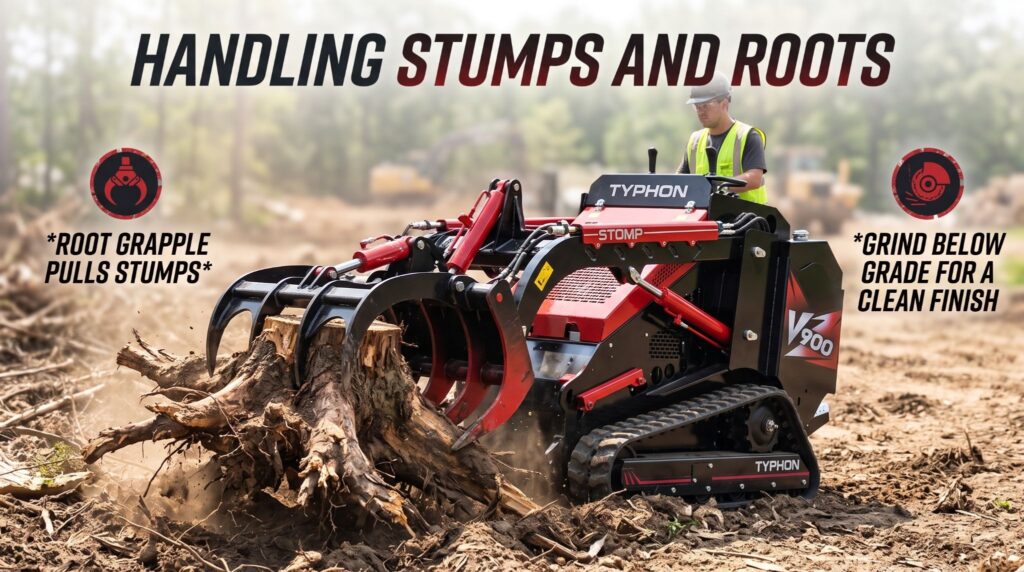
Work stumps with patience and steady pressure rather than ramming them. Rock a stubborn root loose with the grapple, dig around it to expose the anchor roots, then lift once it’s free. Forcing a stump before it’s ready strains the machine and can lift the front end off the ground, so ease into it. For a lot that needs to grade out flat, grinding stumps below the surface beats leaving humps that fight you when it’s time to level.
Tips for Efficiency and Safety
A few habits keep the job fast and everyone safe. Work with the load low and the attachment close to the ground when traveling, which keeps the machine stable on uneven, torn-up terrain. Keep your speed matched to the ground and the growth, and take breaks to clear built-up debris off the attachment before it chokes performance. Running a well-maintained machine matters just as much, so staying on top of a steady keeps hydraulics, tracks, and cutting edges ready for demanding work.
Safety on a clearing site is non-negotiable. Cutting attachments throw debris fast and far, so keep bystanders well clear, always run with the cab door or polycarbonate shield closed, and wear the right protective gear. Watch for hidden hazards like rocks, buried metal, and unstable ground, and never work a slope steeper than the machine is rated for. Follow safe operating practices for the machine and every attachment you run, and keep the whole crew clear of the cutting zone. A steady, careful operator clears more ground safely than a fast, careless one ever will.
Conclusion
A skid steer turns land clearing from a slow, manual grind into a controlled, few-day job, as long as you set it up right. Start by matching the attachment to the growth, a brush cutter for open overgrowth, a grapple for gathering and hauling, and a forestry mulcher for dense stands you want ground down in one pass. Walk and prep the site first so hazards and utilities don’t surprise you, then work in steady, overlapping passes and clean up in stages so the lot stays navigable. Handle stumps and roots with patience and the right tool, and keep efficiency and safety front and center from the first cut to the last haul. Do those things, and one machine clears a lot faster and cleaner than a full crew working by hand. When you’re ready to line up a skid steer and the attachments to match your clearing work, reach out to a trusted equipment specialist who can pair reliable machines with the results your projects depend on.
Frequently Asked Questions
What is the best skid steer attachment for land clearing?
It depends on the growth: a brush cutter handles open overgrowth and saplings fast, a grapple gathers and hauls cut debris, and a forestry mulcher grinds dense brush and small trees into mulch in a single pass.
Can a skid steer remove stumps and roots?
Yes. A root grapple pulls loose stumps and exposed roots, while a stump bucket or grinding attachment removes stubborn stumps below grade, so the surface finishes clean for grading.
Do I need high-flow hydraulics to clear land with a skid steer?
For a brush cutter or grapple, standard flow often works, but a forestry mulcher and other demanding attachments usually need high-flow hydraulics, so match the attachment to your machine’s rating before you start.