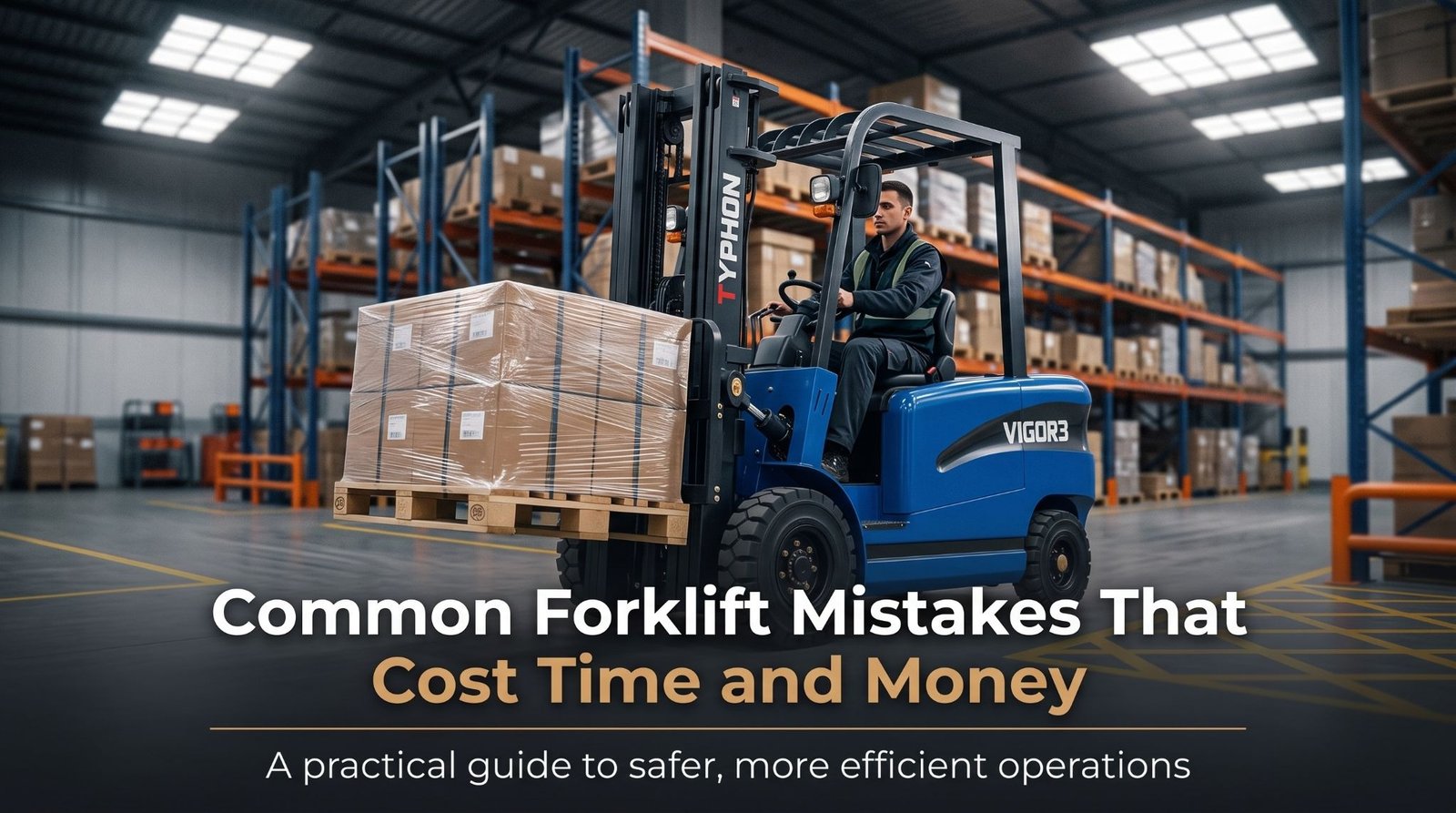
The operator swings a loaded forklift around the end of a rack aisle at full travel speed, forks raised a little higher than they should be, eyes on the next pallet instead of the floor ahead. The tilt of the mast shifts the load just enough. A wheel catches the edge of a floor drain, the raised load lurches, and three thousand dollars of packaged product slides off the forks and slams onto the concrete. Nobody’s hurt, but the aisle is blocked for an hour, a customer order is now short, the rack upright is bent, and the forklift needs an inspection before it runs again. One rushed corner, and the morning’s productivity is gone.
Most costly forklift problems do not result from a single major failure but from small, repeated mistakes that accumulate over time. Skipped inspections, overloaded forks, missed lubrication points, and overlooked operating procedures can gradually reduce productivity, increase repair costs, and shorten equipment life. Understanding where these issues occur is the first step toward preventing unnecessary downtime and improving operational efficiency. The following sections examine the most common forklift mistakes, including pre-shift inspection oversights, improper loading and operating practices, maintenance neglect, and training deficiencies, along with practical strategies to help reduce costs, improve safety, and maintain reliable forklift performance.
Pre-Shift Mistakes That Set Up Failure Before Work Begins
Most costly forklift problems don’t start mid-shift; they start before the machine ever moves. Skipping the checks and setup that a good shift depends on quietly loads the deck against you. Catching these errors early is the cheapest way to protect a whole day’s productivity. If you’re weighing whether a machine even fits your operation, our guide to forklift selection pairs well with these habits.
Skipping the Pre-Operation Inspection
The single most common and expensive pre-shift mistake is skipping the daily inspection. Operators in a hurry fire up the machine and drive off without checking fluids, tires, forks, brakes, or the mast, and a small fault that a two-minute walk-around would have caught becomes a mid-shift breakdown that strands a crew and blocks an aisle.
The cost isn’t just the repair; it’s the downtime and the ripple effect. A forklift that fails at 10 a.m. can stall receiving, shipping, and every task that depends on it. A consistent pre-shift inspection, checking tires, forks, hydraulics, brakes, horn, and warning lights, turns you from someone reacting to breakdowns into someone preventing them, and it’s required practice for safe operation.
Ignoring Warning Signs at Startup
The second pre-shift mistake is noticing a problem and driving anyway. A warning light on the dash, a hydraulic leak under the machine, a soft brake pedal, or an odd noise at startup are all the forklift telling you something needs attention. Operators who push through these signs to “get the shift started” trade a small fix now for a major failure later.
Addressing warnings early is almost always cheaper. A weeping hydraulic hose caught in the yard is a quick swap; the same hose bursting under load is lost fluid, a stalled job, and a cleanup. Treat every startup warning as a decision point, and tag any machine that isn’t safe to run rather than gambling a whole shift on it.
Poor Attachment and Load Setup
The third mistake happens before the first pallet moves: setting up the wrong forks, attachment, or fork spacing for the job. Forks set too narrow let a load teeter, an attachment left on from the last task changes the machine’s capacity, and worn or bent forks compromise every lift. These small setup errors cause dropped loads and uneven wear all shift long.
Take the extra minute to match the setup to the work. Space the forks to the pallet, confirm the right attachment is fitted and its capacity rating is understood, and check that the forks themselves are straight and sound. Getting this right before you start prevents the slow, repeated damage that a poor setup inflicts on loads, racking, and the machine.
Takeaway: Most costly forklift failures are set up before work begins, so a consistent pre-shift inspection, honest attention to startup warnings, and correct load and attachment setup are the cheapest protection you can buy against a lost day.
Loading and Operating Errors That Damage Loads and Machines
Once the machine is moving, the mistakes get more visible and more expensive. Loading and operating errors damage products, bend racking, wear out equipment, and put people at risk, all while dragging down the pace of work. These are the errors that show up on repair invoices and incident reports alike.
Overloading and Off-Center Loads
Overloading is one of the most damaging and dangerous mistakes an operator can make. Every forklift has a rated capacity that drops as the load moves out on the forks or up the mast, and pushing past it strains the hydraulics, wears the drivetrain, and risks tipping the machine. A load that’s too heavy doesn’t save a trip; it costs a repair.
Off-center and unbalanced loads are just as harmful. A load stacked unevenly or placed too far forward on the forks shifts the machine’s balance and can slide or tip, damaging product and endangering everyone nearby. Load to the machine’s rated capacity, keep the load centered and back against the fork carriage, and never guess when a load looks marginal.
Traveling With the Load Raised
Driving with the forks raised high is a fast route to a tip-over or a dropped load. A raised load lifts the machine’s center of gravity, making it far less stable through turns and on uneven floors. Operators do it to save a second reaching the rack, but that second buys a real chance of losing the load and the machine’s stability.
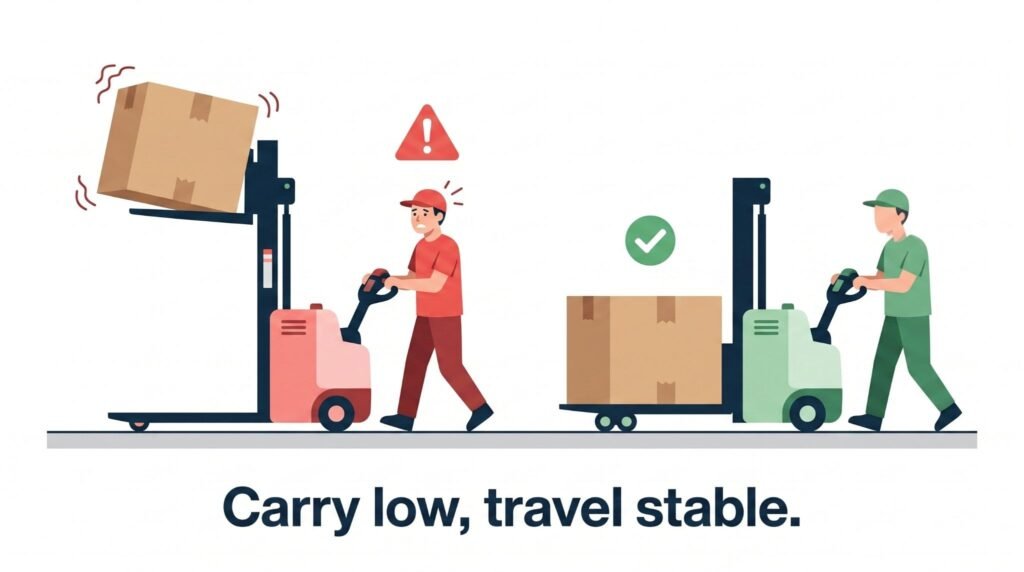
The fix is simple and disciplined: travel with the load low, just high enough to clear the floor, and tilted back into the mast for stability. Raise the load only when you’re positioned to place it. This one habit prevents a huge share of tip-overs and dropped loads, protecting product, racking, and people in a single move. Broader guidance on safe handling is well covered in OSHA’s powered industrial truck standards, worth reviewing with any crew.
Speeding, Sharp Turns, and Careless Maneuvering
Excess speed is a quiet, constant drain. Driving too fast for space shortens reaction time, worsens stability in turns, and turns minor misjudgments into collisions with racking, walls, other machines, and people. The time “saved” by speeding is repeatedly erased by the damage and downtime it causes.
Careless maneuvering compounds it. Sharp turns at speed, especially with a load, invite tip-overs, while inattentive driving around blind corners and pedestrians risks serious harm. Slow to a controlled pace, honk at intersections and blind spots, watch the load and the path, and treat every aisle as shared space. Smooth, deliberate operation is both safer and, over a full shift, faster.
Takeaway: Overloading, carrying loads high, and driving carelessly are the operating errors that wreck product, damage machines and racking, and endanger people, so loading within capacity and driving low, slow, and deliberately protects your bottom line every shift.
Maintenance Neglect That Turns Cheap Fixes Into Expensive Ones
Behind many forklift failures is a maintenance task that got skipped. A forklift is a hardworking machine, and neglect doesn’t announce itself right away, it builds quietly until a small, cheap problem becomes a major, expensive one. Staying ahead of maintenance is one of the highest-return habits an operation can build.
Letting Fluids, Filters, and Tires Slide
The most common maintenance mistake is letting the basics slide. Low or dirty engine oil, hydraulic fluid, and coolant, clogged air and fuel filters, and worn or underinflated tires all seem minor until they cause real damage. Running a machine on neglected fluids invites overheating and internal wear that costs far more than the fluid ever would.
Tires deserve the same discipline. Worn, cut, or underinflated tires hurt stability and traction, wear other components faster, and on a loaded machine become a safety risk. Check fluids and tires daily, change filters on schedule, and top off with the correct types. These cheap, quick tasks prevent the expensive failures that idle a machine for days.
Ignoring Small Problems Until They Grow
The costliest maintenance mistake is the “run it till it breaks” mindset. A minor hydraulic leak, a slightly slipping brake, a small mast noise, or a warning light left unaddressed rarely fixes itself. It grows, and it usually takes surrounding components down with it, turning a cheap repair into a major overhaul and a machine out of service.
Catch problems while they’re small. A quick log of hours, fluid changes, filter swaps, and repairs tells you what’s due and flags patterns before they become failures. Address wear the moment you spot it, follow the manufacturer’s service intervals, and you’ll spend far less over the machine’s life while keeping it earning day after day.
Skipping Scheduled Professional Service
Daily checks matter, but so does scheduled professional service, and skipping it to keep a machine running is a false economy. Planned maintenance catches the developing issues an operator can’t see and keeps the forklift running efficiently and safely. Deferring it saves nothing when the deferred problem becomes an emergency repair mid-shift.
Sourcing quality replacement parts and dependable technical support helps keep maintenance on schedule and reduces unnecessary downtime. Keeping essential filters, fluids, and common wear parts readily available allows routine service to be completed without delays, helping maintain reliable forklift performance. A forklift supported by consistent maintenance and quality components is better equipped to deliver dependable operation and long-term productivity across changing workloads.
Takeaway: Neglecting fluids, filters, and tires, ignoring small problems, and skipping scheduled service all turn cheap, routine tasks into expensive breakdowns, so consistent maintenance is one of the highest-return investments your operation can make.
Training and Procedural Gaps That Let Mistakes Repeat
Even the best equipment fails when the people and procedures around it fall short. Training and procedural gaps are what let the same costly mistakes repeat across operators and shifts. Closing these gaps is what turns one-off fixes into lasting improvement.
Undertrained or Uncertified Operators
Putting undertrained operators on a forklift is a mistake that costs on every front: more accidents, more product and equipment damage, slower work, and real legal and safety exposure. An operator who never learned proper load handling, capacity limits, or safe travel habits will repeat the same expensive errors until someone teaches them otherwise.
Proper training pays for itself quickly. Certified operators handle loads correctly, drive safely, spot problems early, and simply get more done with less damage. Invest in thorough initial training and regular refreshers, and confirm operators understand the specific machines and attachments they run, because skilled operation is the cheapest insurance against costly mistakes.
Weak or Unclear Operating Procedures
When procedures are vague or unenforced, every operator invents their own approach, and mistakes multiply. Unclear traffic patterns, undefined speed expectations, no standard for load handling, and fuzzy inspection routines all create room for the errors that cost time and money. Consistency can’t happen without clear, shared rules.
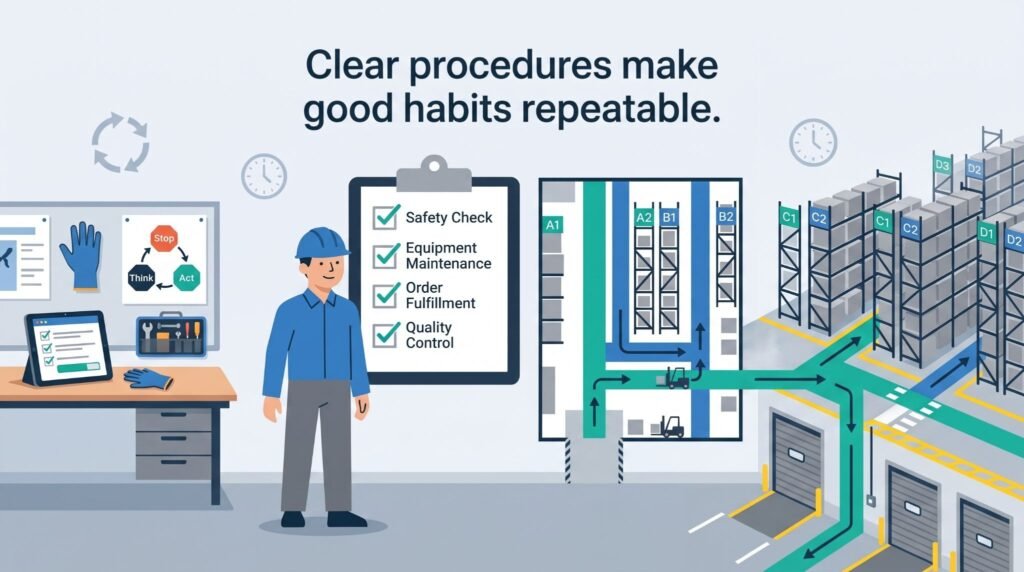
Set and enforce clear procedures. Define traffic lanes and pedestrian zones, set speed limits for each area, standardize the pre-shift inspection, and make load-handling expectations explicit. Written, visible, consistently applied procedures turn safe operation from an individual choice into an operational standard, which is exactly what stops the same mistakes from recurring.
No Accountability or Feedback Loop
The final gap is having no way to catch and correct mistakes. When near-misses, minor damage, and unsafe habits go unreported and unaddressed, they quietly continue until they cause a major incident. An operation that doesn’t track what’s going wrong can’t fix it, and the same losses keep repeating.
Build a simple feedback loop. Encourage reporting of near-misses and minor damage without blame, review incidents to find root causes, and coach operators when habits slip. Recognize good practice, too. When people know issues will be caught and addressed constructively, the whole operation tightens up, and the mistakes that drain time and money steadily disappear.
Takeaway: Undertrained operators, unclear procedures, and no accountability let costly mistakes repeat across shifts, so investing in training, clear standards, and a blame-free feedback loop is what turns individual fixes into lasting savings.
Frequently Asked Questions
What is the most common forklift mistake that costs money?
Skipping the daily pre-shift inspection is among the most common and expensive. A two-minute walk-around catches the low fluids, worn tires, soft brakes, and hydraulic leaks that otherwise become mid-shift breakdowns, blocking aisles and stalling entire crews. The repair is only part of the cost; the downtime and ripple effect across shipping and receiving usually cost far more. Making the inspection non-negotiable prevents a large share of costly failures.
How does overloading a forklift cost time and money?
Overloading strains the hydraulics and drivetrain, accelerates wear, and risks tipping the machine or dropping the load, damaging product, racking, and potentially people. A forklift’s rated capacity drops as the load moves out on the forks or up the mast, so a load that seems fine at the ground can become dangerous at height. Loading within capacity and keeping loads centered prevents both immediate accidents and long-term equipment damage.
Can better maintenance really reduce forklift costs that much?
Yes. Most major forklift failures start as small, cheap problems, a minor leak, a clogged filter, a worn tire, that were left to grow. Consistent daily checks and on-schedule service catch these early, when they’re inexpensive to fix, and prevent the breakdowns that idle a machine for days. Maintenance is one of the highest-return habits an operation can build, since the routine cost is a fraction of an emergency repair.
Why does operator training matter for reducing costs?
Undertrained operators cause more accidents, more product and equipment damage, and slower work, and they tend to repeat the same expensive mistakes until properly taught. Certified operators handle loads correctly, drive safely, spot developing problems early, and get more done with less damage. Thorough initial training plus regular refreshers pays for itself quickly through fewer incidents and lower repair costs, making it one of the cheapest forms of insurance available.
How do I stop the same forklift mistakes from repeating?
Combine clear procedures with accountability. Set and enforce standard traffic lanes, speed limits, inspection routines, and load-handling expectations so every operator works to the same rules. Then build a blame-free feedback loop that encourages reporting near-misses and minor damage, reviews root causes, and coaches operators when habits slip. When mistakes are consistently caught and addressed constructively, the losses that drain time and money steadily disappear.
Conclusion
Many of the most expensive forklift problems develop from small, preventable mistakes rather than major failures. Skipping pre-shift inspections, exceeding load capacity, carrying loads too high, overlooking lubrication points, or bypassing established operating procedures can gradually increase repair costs, reduce productivity, and create unnecessary safety risks. Consistent inspections, proper loading practices, scheduled maintenance, and ongoing operator training help prevent these issues while extending equipment life and improving workplace efficiency. By identifying and correcting avoidable errors early, businesses can reduce downtime, lower operating costs, and keep forklifts performing reliably across daily operations.