Starting a construction day with a fully charged electric scissor lift does not guarantee the same runtime throughout the shift. Two identical lifts can begin work at the same charge level yet reach the afternoon with very different battery levels. Driving distance, platform cycles, load, surface conditions, and the frequency of repositioning all affect how much energy the machine uses. What happens during operation therefore has a direct effect on how long the battery can support the work.
Battery consumption changes as the lift handles different operating demands. Frequent platform raising and lowering requires repeated energy from the lift system, while longer travel distances can increase overall power use. Uneven surfaces, slopes, heavy loads, and repeated starts or stops may also require more energy than steady operation on a level floor. These conditions make actual runtime different from the simple capacity shown by the battery.
Throughout a workday, efficient operating habits can help make available battery power last longer. Planning work areas to reduce unnecessary travel, avoiding excessive repositioning, and using the platform only as needed can reduce avoidable energy consumption. Understanding how site conditions and operating patterns affect the battery gives crews a more practical basis for planning charging and work cycles.
Frequent Platform Lifting
Every time the platform rises and lowers, it draws electrical energy from the battery. Lifting is one of the more demanding functions a scissor lift performs, so the number of cycles across a shift adds up quickly in terms of energy used.
The pattern of use makes a real difference. A lift raised and lowered continuously as workers move between elevations consumes noticeably more power than one making occasional platform adjustments during a shift. On jobs that call for constant repositioning of the platform height, this becomes one of the largest single draws on the battery. Planning work so the platform stays at a working height where possible, rather than cycling up and down for every small task, helps stretch the available charge further into the day.
Key takeaway: Repeated raising and lowering cycles draw significant battery energy, so continuous platform cycling consumes more power than occasional adjustments during a shift.
Extended Travel
Traveling between work areas also uses energy, and long distances can increase battery consumption over the course of a day. A lift that is frequently repositioned around a jobsite can spend a meaningful share of its charge simply moving from one location to another before any lifting begins.
Route planning can help reduce this unnecessary energy use. Mapping out where the machine needs to work and handling those points in a sensible order can limit repeated trips and avoid doubling back across the site. On a large or spread-out job, reducing redundant movement can preserve more runtime for productive work.
Looking ahead at the day’s positioning turns travel into a more controlled part of operation. Grouping nearby tasks together, limiting unnecessary repositioning, and planning access routes before work begins can help make better use of the available battery charge. This approach allows more of the lift’s runtime to support actual work rather than repeated travel.
Key takeaway: Long repositioning distances increase battery consumption, so efficient route planning reduces unnecessary movement and helps preserve available energy.
Heavy Platform Loads
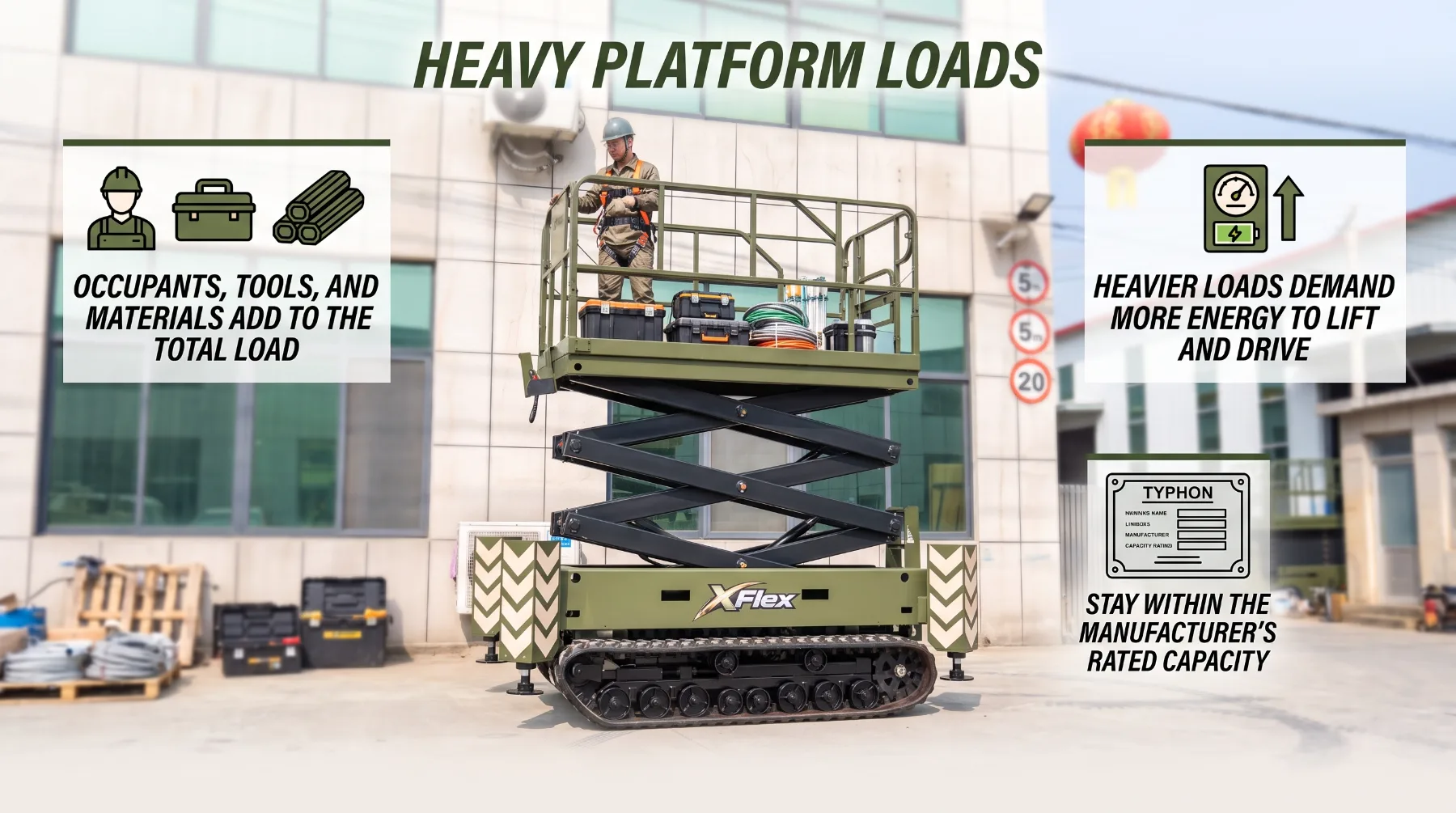
The weight carried on a platform affects the energy required for both lifting and driving. Workers, tools, and permitted materials all contribute to the total load, with heavier loads requiring more energy each time the platform rises or the machine travels.
Load limits always come first, and operators should remain within the manufacturer’s rated capacity. Within that limit, carrying only the tools and materials needed for the task can help manage energy use and support more consistent battery runtime throughout the shift.
- Total Platform Load: Occupants, tools, and materials all contribute to the machine’s working load.
- Energy Demand: Heavier loads require more energy during lifting and travel.
- Rated Capacity: Loads must remain within the manufacturer’s specified platform capacity.
Key takeaway: Loads within the rated platform capacity still affect the energy needed for lifting and driving, and loads must always remain within the manufacturer’s specified limits.
Rough Ground Conditions
Ground conditions can have a direct effect on how much energy a machine needs to travel. Uneven surfaces, slopes, and other demanding terrain require more energy than smooth, level ground because the drive system has to overcome greater resistance. Over a full day of repositioning across difficult ground, that additional demand can steadily reduce available battery runtime.
Machine selection becomes important when working across different surfaces. Rough-terrain scissor lifts are designed for specific outdoor conditions and built to handle the demands associated with them, while indoor models may be intended mainly for level surfaces. Using a machine beyond the conditions it is designed for can increase energy demand and affect safe operation.
Considering the ground before work begins helps keep both performance and runtime on track. Selecting a lift suited to the terrain, limiting unnecessary travel across difficult surfaces, and planning work areas around suitable access routes can reduce avoidable battery use. Matching the machine to the jobsite conditions also supports more predictable operation throughout the workday.
Key takeaway: Uneven surfaces and slopes demand more energy for movement, so match the machine to the ground, using rough-terrain lifts for outdoor conditions and indoor models for level surfaces.
Temperature Effects
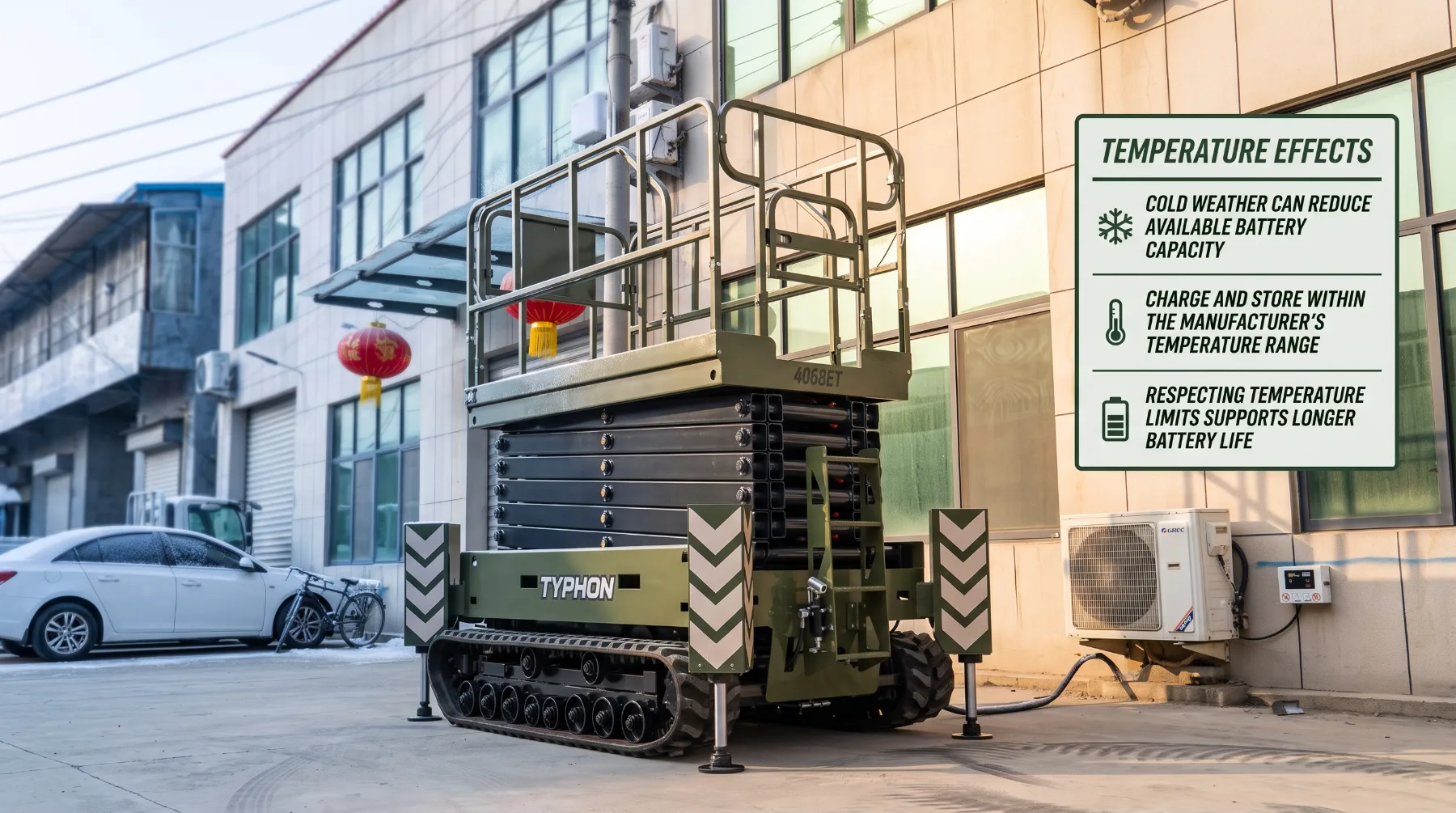
Batteries are sensitive to temperature, and the conditions a machine works in can influence its performance. Very hot or cold weather can affect battery performance and available capacity, so the same battery may deliver different runtime on a freezing morning than it does on a mild afternoon. Cold in particular can reduce the capacity you have to work with.
The reliable approach is to follow the manufacturer’s guidance. Battery systems should be operated, charged, and stored according to the manufacturer’s specified temperature ranges, which are set to protect both performance and the working life of the battery. Charging within the recommended range and storing the machine in suitable conditions helps the battery deliver dependable runtime and hold up over time. Respecting those temperature limits is a straightforward way to get consistent results in demanding weather.
Key takeaway: Hot and cold conditions can affect battery performance and available capacity, so operate, charge, and store the battery within the manufacturer’s specified temperature ranges.
Idle and Operating Practices
Energy doesn’t only disappear during active work. Leaving systems active during extended periods without productive work consumes available energy, so a machine sitting idle with everything switched on quietly draws down the charge you’ll want later in the shift. Over breaks and waiting periods, that waste adds up.
Sound operating habits close that gap. Operators can follow the manufacturer’s shutdown and idle procedures to avoid unnecessary battery use during breaks or waiting periods, powering down systems that aren’t needed rather than leaving the machine running. Building these habits into the workday, shutting things down properly during downtime and bringing them back up when work resumes, keeps energy focused on productive tasks. Small, consistent practices like this often make the difference between a battery that lasts the shift and one that runs short.
Key takeaway: Leaving systems active during downtime wastes energy, so follow the manufacturer’s shutdown and idle procedures to avoid unnecessary battery use during breaks and waiting periods.
Conclusion
Scissor lift battery life depends on the relationship between available battery energy and the operating conditions experienced throughout the work cycle. Frequent platform lifting and lowering, extended travel, heavier loads, slopes, uneven surfaces, and extreme temperatures can increase energy consumption, while efficient routing and reduced unnecessary movement can help conserve available charge. Load weight must remain within the rated platform capacity, and terrain should be suitable for the machine because travel on slopes or uneven surfaces can increase motor and hydraulic demand. Battery temperature also affects available capacity and charging performance, so charging and storage should follow the manufacturer’s specified temperature ranges and procedures. During breaks or waiting periods, unnecessary electrical and auxiliary systems should be shut down according to the manufacturer’s recommendations to limit energy use. Planning lift cycles, travel routes, payloads, charging periods, and operating conditions together provides a more reliable basis for estimating runtime and maintaining productive electric scissor lift operation throughout the shift.
Frequently Asked Questions
Does frequent lifting reduce scissor lift battery runtime?
Yes. Raising and lowering the platform is one of the more energy-demanding functions, so frequent lift cycles can reduce runtime faster. A lift that constantly changes height will generally use more energy than one making only occasional adjustments. Group tasks at the same working height when possible and avoid unnecessary lift cycles to conserve battery power and extend runtime.
Does load weight affect battery consumption?
Yes. Carrying workers, tools, and materials requires more energy for lifting and driving, especially as the load approaches the machine’s rated capacity. Always stay within the manufacturer’s specified platform capacity. Carry only the tools and materials needed for the task rather than adding unnecessary weight, which helps manage energy use while maintaining safe operation.
Can cold weather affect scissor lift batteries?
Yes. Cold temperatures can reduce battery capacity and available runtime, depending on the battery technology and operating conditions. Follow the manufacturer’s temperature requirements for operation, charging, and storage. Charging and storing the battery within the recommended range helps maintain more consistent performance and supports longer battery life. Extreme heat can also affect battery performance, so specified temperature limits should be respected.
How can operators extend battery runtime?
Limit unnecessary travel and platform cycles by planning efficient routes and grouping tasks at similar working heights. Keep platform loads within the rated capacity and carry only what the job requires. Operate on suitable terrain, follow recommended shutdown and idle practices, and maintain the battery according to the manufacturer’s requirements. Proper temperature management for operation, charging, and storage also helps preserve runtime and long-term battery performance.