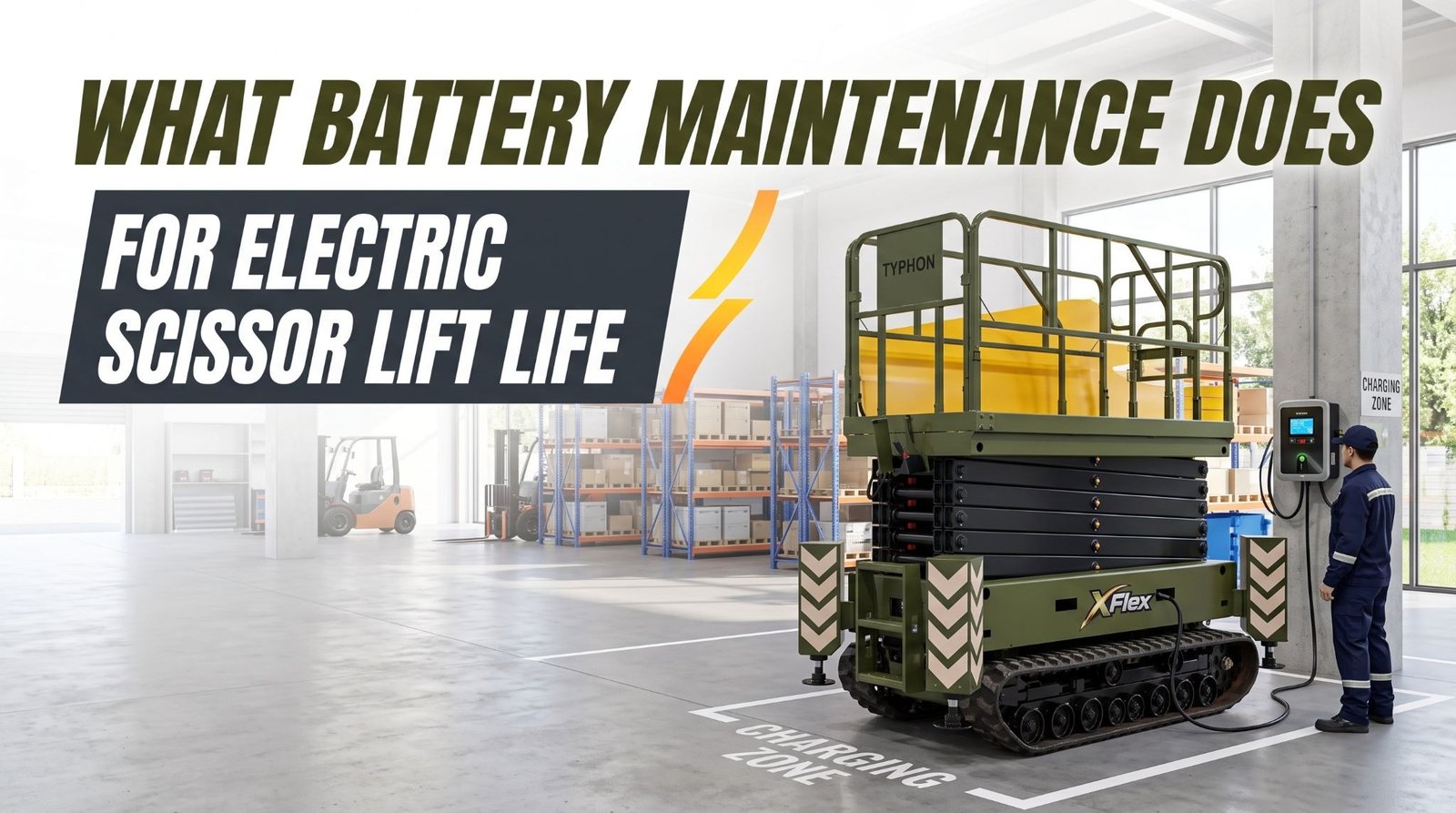
At the end of a shift, an electric scissor lift returns to the charging area after spending hours traveling, raising its platform, and supporting overhead work. The operator connects the charger, checks the battery condition, and leaves the machine ready for the next day. That simple routine can have a major effect on long-term performance. Consistent charging and basic battery care help preserve usable capacity, reduce unexpected downtime, and delay the need for costly replacement.
Energy storage affects nearly every function of an electric scissor lift. The battery supplies power for platform movement, travel, steering, and the electrical systems used during daily operation. Poor charging habits, neglected connections, incorrect fluid levels on serviceable battery types, and excessive heat can gradually reduce performance. Regular care helps the battery deliver more consistent power while making developing problems easier to identify.
Long service life comes from repeated attention rather than occasional major repairs. Following the correct charging procedure, keeping connections clean, checking the battery condition, and maintaining suitable operating temperatures all contribute to dependable performance. A consistent maintenance routine also gives operators an opportunity to catch signs of reduced capacity or charging problems before they interrupt the next shift.
Keeping Battery Capacity Available
Battery condition directly determines how much usable energy your scissor lift can deliver during operation. A battery in good shape holds its capacity and gives you consistent runtime across the shift, while a neglected one steadily loses usable energy and leaves the lift short of power before the work is done. That difference traces straight back to how the battery is cared for over time.
Following the manufacturer’s charging and maintenance requirements is the foundation for preserving that capacity. These specifications exist to keep the battery operating within the conditions it was designed for, which is what prevents premature capacity loss. When you treat those requirements as the baseline rather than the exception, the battery is far more likely to deliver dependable runtime shift after shift.
Key takeaway: Battery condition sets how much usable energy the lift provides, and following manufacturer charging and maintenance requirements is what preserves that capacity over time.
Checking Electrolyte Levels
For battery types that require watering, electrolyte levels need regular inspection, and this is one of the most important checks you can build into a routine. When the fluid drops too low, it can expose internal components, and that exposure contributes directly to battery damage that shortens service life. Catching low levels early keeps those components protected.
Watering has to be done correctly to help rather than harm. Add water according to the battery manufacturer’s instructions, using the correct type of water and following the recommended procedure, including the right timing in the charge cycle. Guessing at any of these steps can create problems of its own, so the manufacturer’s guidance is the reliable reference every time.
Key takeaway: On batteries that require watering, inspect electrolyte levels regularly and add the correct water by the manufacturer’s procedure, since low levels expose internal components and cause damage.
Cleaning Battery Connections
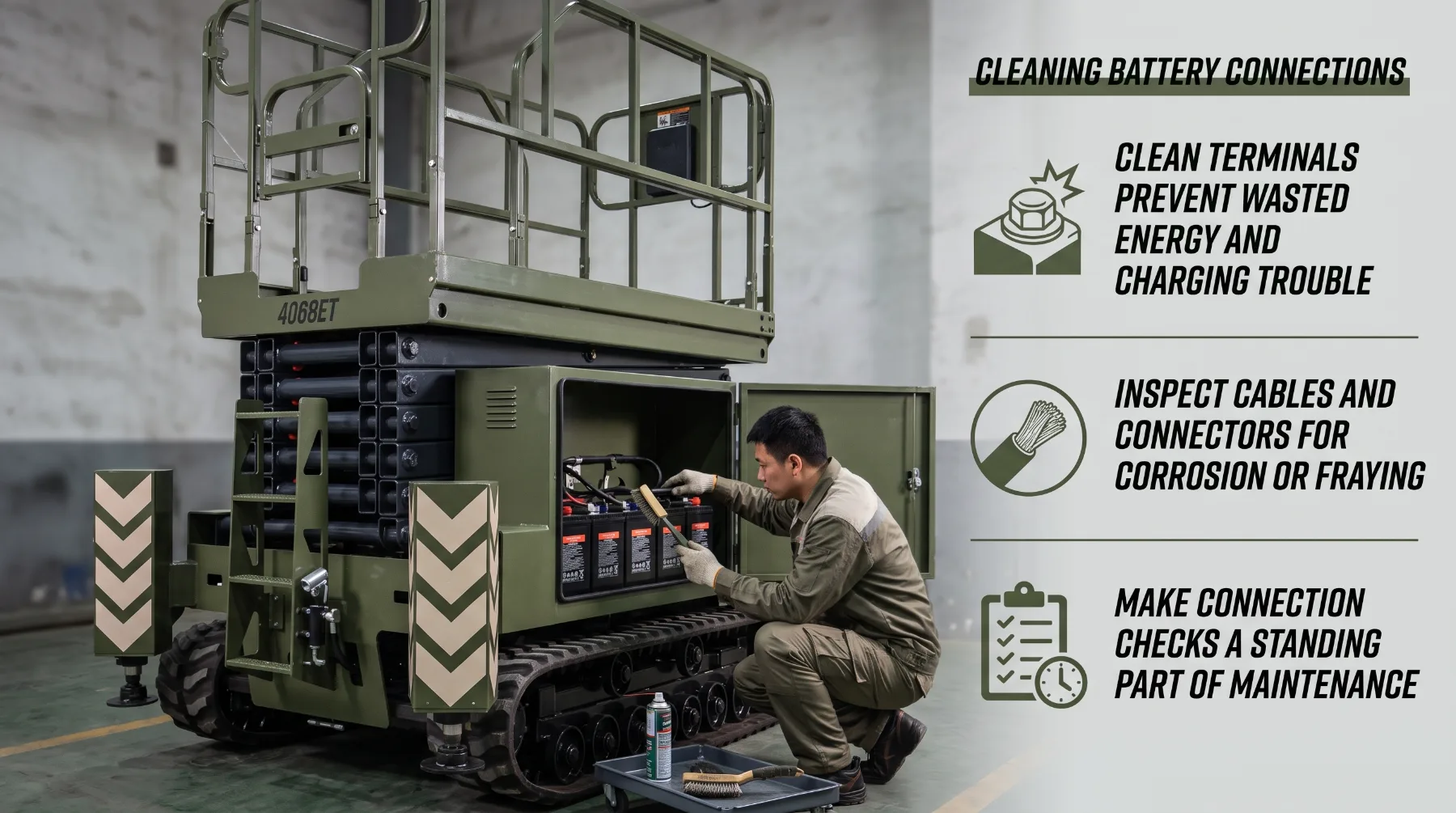
Dust, dirt, corrosion, and residue around the terminals quietly interfere with electrical connections, and on a busy jobsite that buildup is constant. Poor connections waste energy, create charging trouble, and undercut the reliable power transfer the lift depends on. Keeping the terminals and the area around them clean is a simple habit that protects performance every day.
A proper connection check goes beyond wiping down the terminals. Inspect the cables and connectors too, looking for corrosion, fraying, looseness, or any visible physical damage. A clean, tight, undamaged connection is what lets the battery deliver its full power to the machine, so make this inspection a standing part of your maintenance routine rather than an occasional cleanup.
Key takeaway: Dirt and corrosion at the terminals disrupt power transfer, so keep terminals and connections clean and inspect cables and connectors for corrosion or damage.
Following Proper Charging Practices
Charging habits have a major effect on battery condition, and this is where good and poor maintenance most clearly part ways. Use the correct charger for the battery, and follow the recommended charging cycle rather than repeatedly interrupting sessions or improperly stretching them out. Those shortcuts might feel harmless in the moment, but over time they wear the battery down and erode both capacity and lifespan.
Letting the battery reach its required charge level before the lift goes back to service is central to dependable shift operation. A partially charged battery may run out before the work does, forcing downtime at the worst moment. Consistent, complete charging with the right equipment keeps the lift ready to work and protects the battery from the stress that improvised charging creates.
Key takeaway: Use the correct charger, follow the recommended charging cycle without interrupting or overextending it, and let the battery fully charge before returning the lift to service.
Monitoring Battery Temperature
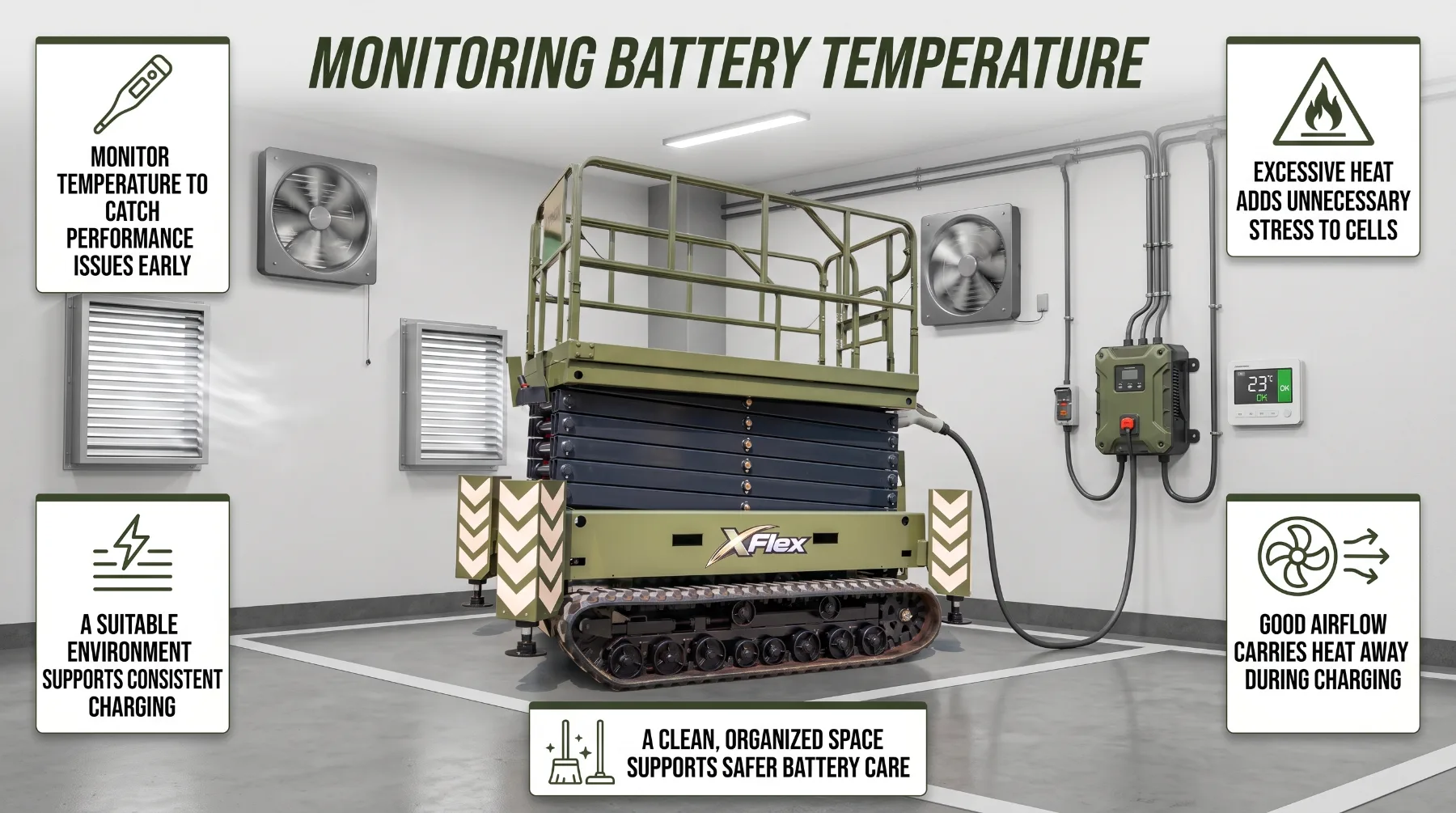
Battery temperature can affect both charging and operating performance, making temperature awareness an important part of regular battery care. Excessive heat can place additional stress on battery components, while unsuitable charging conditions may reduce efficiency and shorten service life.
The charging environment is one of the easiest areas to manage. Keeping the battery area clean and providing adequate ventilation helps dissipate heat and maintain more stable charging conditions, reducing avoidable temperature stress over time.
- Temperature Monitoring: Helps identify conditions that may affect battery performance.
- Heat Management: Controlling excessive heat reduces unnecessary stress on battery components.
- Charging Conditions: A suitable environment supports more consistent charging performance.
- Ventilation: Good airflow helps carry heat away during charging.
- Clean Charging Area: A clean, organized space supports safer and more stable battery care.
Key takeaway: Heat and poor charging conditions stress battery components and reduce efficiency, so keep the battery area clean and well ventilated during charging.
Inspecting Battery Condition
Routine inspections catch problems before they interrupt a workday, and that early warning is one of the biggest benefits of a maintenance habit. Watch for swelling, damaged cables, corrosion, unusual odors, leaks, or any other visible changes in the battery. Each of these is a signal that something needs attention, and addressing it according to the manufacturer’s service procedures keeps a small issue from becoming a failure mid-shift.
Regular checks do more than flag emergencies. They let maintenance teams track how the battery’s condition changes over time, which turns guesswork into informed planning. When you can see a battery gradually declining, you can schedule service or replacement on your terms rather than reacting to a breakdown. That visibility is what keeps a fleet dependable.
Key takeaway: Routine inspections catch swelling, leaks, corrosion, odors, and cable damage early, and tracking condition over time supports informed maintenance and replacement planning.
Supporting Longer Service Life
Good battery maintenance does more than protect daily runtime; it extends how long the battery serves reliably. Every practice covered here works toward that goal. Avoiding improper charging, keeping connections clean, maintaining required fluid levels, and responding to problems early all reduce the unnecessary stress that shortens a battery’s life. Together, they give the lift a stronger foundation for consistent operation over a longer service period.
The value here is cumulative. No single check transforms battery life on its own, but the combined effect of consistent care is a battery that holds its capacity, charges dependably, and avoids the avoidable failures that force early replacement. For a contractor or fleet manager, that translates into more dependable equipment, fewer surprises, and better return on the machine’s investment.
Key takeaway: Consistent charging, clean connections, proper fluid levels, and early problem response reduce battery stress and support dependable performance over a longer service life.
Conclusion
Battery maintenance directly affects the reliability, available energy, and service life of an electric scissor lift because charging practices, electrical connections, temperature, and battery condition influence overall performance. Following the manufacturer’s charging procedures helps preserve usable capacity, while batteries that require watering should have electrolyte levels checked and maintained using the specified water and service method. Terminals, cables, and connectors should be kept clean and inspected for corrosion, looseness, damaged insulation, or poor connections that can increase electrical resistance and heat. Using the correct charger and completing the required charging cycle also helps prevent improper charging conditions that can reduce battery performance. During charging, the battery compartment should remain clean and adequately ventilated, with operating and charging temperatures monitored according to the battery type and manufacturer’s requirements. Regular inspections should also check for swelling, leakage, corrosion, damaged components, or other changes in battery condition. Consistent maintenance and accurate service records help identify developing problems early and support dependable lift operation and longer battery service life.
Frequently Asked Questions
How does battery maintenance affect electric scissor lift life?
Proper maintenance helps preserve battery capacity, electrical connections, and reliable runtime. Correct charging, clean connections, and proper fluid levels on batteries that require watering reduce unnecessary wear and stress. Regular inspections also help catch problems early, reducing breakdowns and premature battery replacement.
How often should an electric scissor lift battery be checked?
A practical routine combines daily visual checks with scheduled maintenance based on the manufacturer’s recommendations. Daily inspections should look for corrosion, leaks, damaged cables, or swelling. More detailed service can include checking electrolyte levels, cleaning terminals, and inspecting connections on batteries that require these tasks.
Do all electric scissor lift batteries need water?
No. Watering depends on the battery type. Some batteries require regular water to maintain electrolyte levels, while others are maintenance-free. Identify the battery type and follow its manufacturer’s instructions. For batteries that require watering, use the specified water and procedure to prevent damage from low electrolyte levels.
Can poor charging habits reduce battery life?
Yes. Using the wrong charger, interrupting charging repeatedly, overcharging, or returning the lift to work before the battery is properly charged can reduce capacity and shorten service life. Use the correct charger and follow the recommended charging cycle to maintain reliable runtime and long-term battery performance.