
Few pieces of aerial lift equipment match the versatility of the scissor lift. From a warehouse floor to a busy construction site, these machines give workers safe, stable access to elevated work areas that would otherwise require scaffolding or ladders. Their straight vertical lift, generous platform space, and solid load capacity make them a practical choice across a remarkable range of work environments.
If you are an equipment buyer, a rental customer, or a jobsite planner, understanding the industries that use scissor lifts helps you appreciate just how broad their value truly is. The same basic machine that helps an electrician install ceiling fixtures in a retail store also supports steel workers framing a commercial building. Below, we walk through the major industries that depend on scissor lifts every day, explaining how each one puts the equipment to work and why these machines have earned their reputation as one of the most reliable elevated access solutions available.
Construction
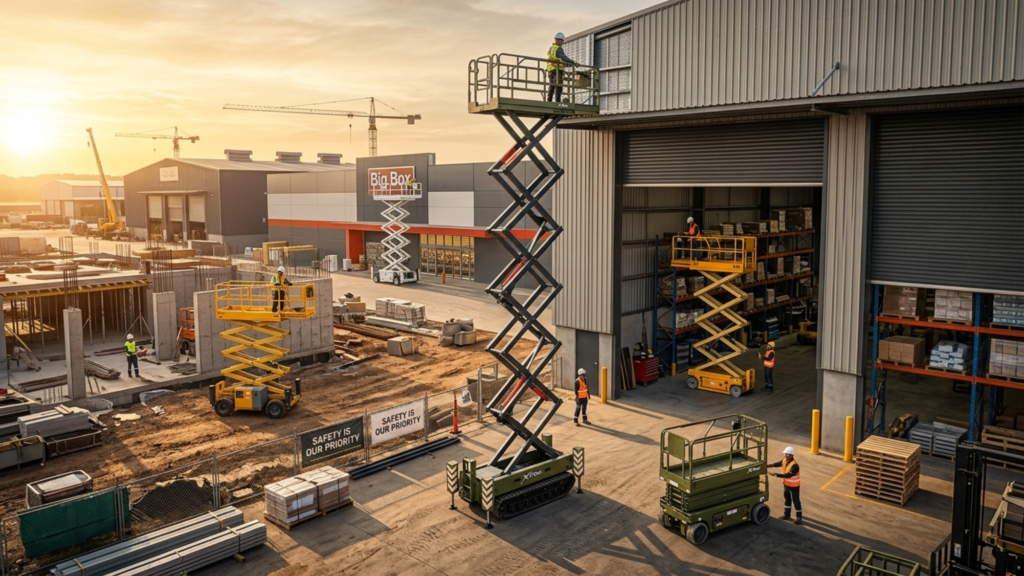
Construction remains the largest and most visible industry relying on scissor lifts. On any active build, crews need to reach elevated work areas safely and repeatedly throughout the day, and scissor lifts deliver exactly that. Electricians use them to run conduit and wiring through upper walls and ceilings. Drywall installers and painters depend on the stable, spacious platform to finish high walls without the awkward repositioning that ladders demand. HVAC technicians rely on them to install and service ductwork suspended from the ceiling structure.
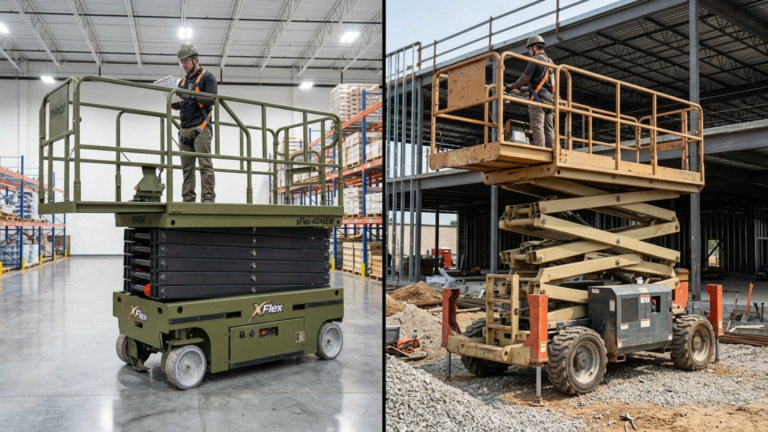
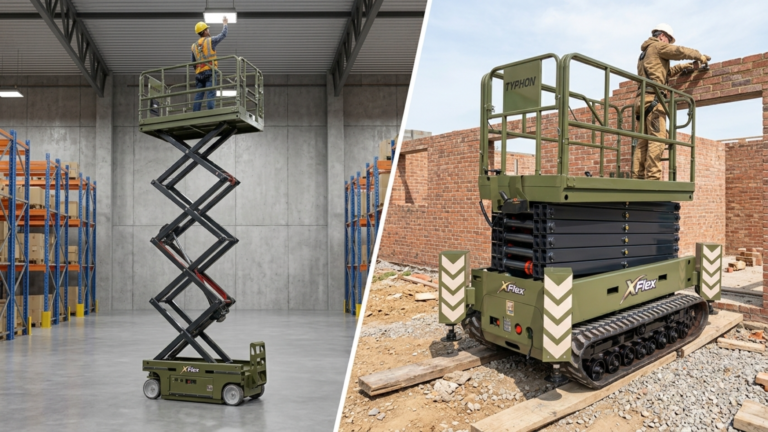
The value of scissor lifts on construction sites comes down to a combination of safety, productivity, and load capacity. A worker on a scissor lift platform can carry tools and materials up with them, eliminating the constant trips up and down a ladder that slow progress and increase fatigue. Indoor slab models handle interior finishing work on smooth concrete, while rough terrain scissor lifts tackle exterior tasks on uneven ground, gravel, and packed earth. Steel erection crews use these outdoor machines to support framing work at height, and exterior glazing teams rely on them for window and cladding installation. Because construction work often involves multiple trades operating at elevation across a single project, scissor lifts frequently move from task to task throughout a build, making them one of the most utilized assets on the site.
Warehousing and Distribution
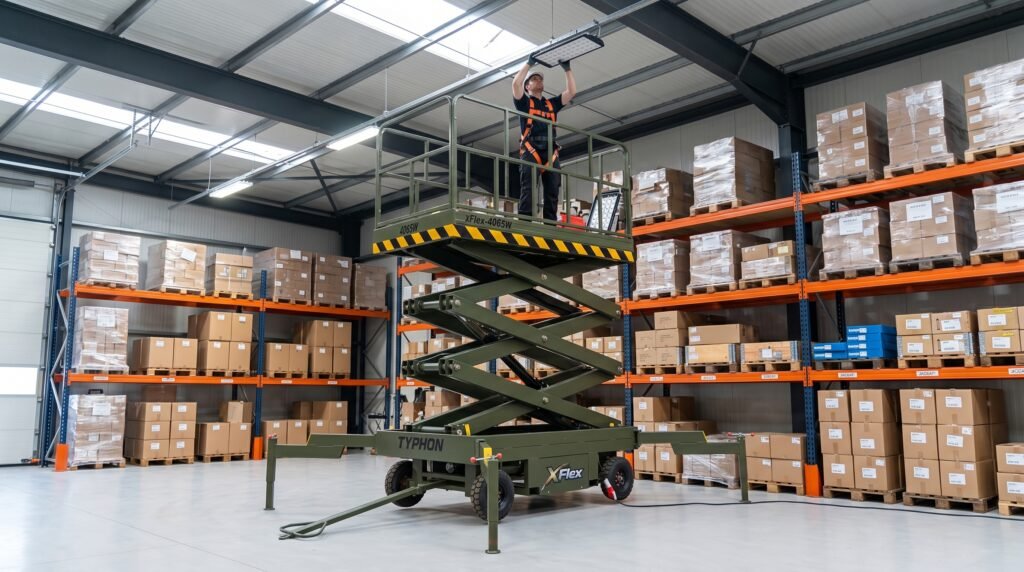
Warehouses and distribution centers represent another major category among the industries that use scissor lifts. These facilities are built tall to maximize storage capacity, and that vertical space creates constant demand for safe elevated access. Maintenance teams use scissor lifts to change high-bay lighting, a routine but essential task in any large storage facility. Workers also rely on them to inspect and repair racking systems, service overhead sprinkler and fire suppression infrastructure, and reach inventory stored at significant heights.
Electric scissor lifts are particularly well suited to warehouse environments because they run on battery power and produce zero exhaust emissions, making them safe for use in enclosed spaces. Their compact footprint and tight turning radius let operators navigate narrow aisles and crowded staging areas without disrupting daily operations. For a distribution center that runs around the clock, the ability to perform overhead maintenance quickly and safely keeps the facility moving and prevents small issues from becoming costly disruptions. The combination of clean operation, maneuverability, and dependable lift performance makes scissor lifts a natural fit for the demands of modern warehousing.
Manufacturing
Manufacturing facilities depend on scissor lifts to keep production lines running and overhead systems properly maintained. These plants are filled with elevated equipment, from conveyor systems and lighting to ventilation ducts and overhead cranes, all of which require regular inspection and service. Maintenance technicians use scissor lifts to access this infrastructure safely without shutting down more of the operation than necessary.
The stable, oversized platform of a scissor lift is especially valuable in manufacturing because technicians often need to bring specialized tools and replacement parts to the work area. The machine provides a secure base for detailed mechanical and electrical work at height, reducing the risk that comes with balancing on a ladder while handling components. Electric models suit indoor production floors where air quality and noise control matter, allowing maintenance to proceed during active shifts without exposing workers to fumes. As manufacturing facilities grow more automated and their overhead systems more complex, the role of scissor lifts in keeping that equipment serviced and operational only becomes more important.
Facility Maintenance and Building Management
Facility maintenance is one of the most consistent scissor lift applications across virtually every type of building. Office complexes, schools, hospitals, hotels, and government buildings all require ongoing overhead work, and scissor lifts make that work safer and more efficient. Maintenance crews use them to replace lighting, clean and service HVAC vents, repair ceilings, paint upper walls, and access mechanical systems mounted overhead.
What makes scissor lifts so valuable to building management teams is their ability to handle a wide variety of tasks with a single piece of equipment. Rather than maintaining a collection of ladders and scaffolding for different jobs, a facility can rely on one machine that elevates a worker and their tools to the needed height quickly and safely. Compact electric models pass through standard doorways and operate quietly indoors, allowing maintenance to occur with minimal disruption to building occupants. For property managers responsible for keeping facilities safe, functional, and presentable, scissor lifts are an indispensable tool that supports routine upkeep and emergency repairs alike.
Retail
The retail industry uses scissor lifts more than many people realize. Large stores, shopping centers, and big-box retailers have high ceilings filled with lighting, signage, and display systems that require regular attention. Store maintenance teams rely on scissor lifts to change overhead lighting, install seasonal displays and promotional signage, service ceiling-mounted systems, and complete renovation work during off hours.
Compact electric scissor lifts are ideal for retail settings because they operate cleanly and quietly on finished floors. Non-marking tires protect polished concrete and tile surfaces, preserving the appearance that retail environments depend on. Because much of this work happens in occupied or recently occupied spaces, the zero-emission operation of electric models is essential for protecting indoor air quality. A scissor lift allows a retail maintenance crew to handle overhead tasks during slow periods or overnight, keeping the sales floor ready for customers without lengthy closures. For retailers managing large footprints with constant display and lighting needs, this elevated access equipment supports both daily operations and the frequent updates that keep a store looking fresh.
Aviation
Aviation presents some of the most demanding scissor lift applications, and the industry relies on specialized machines to meet those needs. Aircraft maintenance requires workers to access fuselages, wings, tail sections, and engines at considerable heights, often with precision and care. Scissor lifts provide the stable, elevated platform that technicians need to perform inspections, repairs, and routine servicing on large aircraft.
Hangars and maintenance facilities use scissor lifts to reach overhead lighting, structural elements, and the upper surfaces of aircraft that ladders simply cannot serve safely. The generous platform space allows technicians to bring tools and components directly to the work area, which is critical when servicing complex aircraft systems. Beyond aircraft maintenance itself, airport facilities use scissor lifts for terminal upkeep, signage installation, and the constant maintenance that keeps large public spaces functioning. The precision, stability, and reach of scissor lifts make them well suited to an industry where safety standards are exceptionally high and the cost of error is significant.
Logistics and Transportation
Logistics and transportation operations share many of the same elevated access needs as warehousing, but they extend into a broader range of facilities and tasks. Shipping terminals, freight depots, and transportation hubs all contain tall structures, overhead lighting, and elevated systems that require regular maintenance. Scissor lifts give crews the means to service this infrastructure safely and keep these high-throughput facilities running.
In loading and cross-dock environments, scissor lifts support the maintenance of dock equipment, overhead doors, and lighting systems that are essential to smooth operations. The mobility of these machines lets workers move efficiently across large facilities, addressing maintenance needs wherever they arise. Because downtime in logistics directly affects the movement of goods and delivery schedules, the ability to perform fast, safe overhead repairs is a real operational advantage. Electric scissor lifts fit indoor terminals where clean operation matters, while rough-terrain models handle outdoor yards and intermodal facilities where surfaces are less predictable.
Events and Entertainment
The events and entertainment industry depends on scissor lifts to build, light, and maintain the spaces where performances and gatherings take place. Concert venues, theaters, stadiums, convention centers, and arenas all require extensive overhead work, from rigging lighting and sound equipment to hanging banners, screens, and decorative elements. Scissor lifts give stage crews and production teams the elevated access they need to assemble and adjust these systems quickly and safely.
The value of scissor lifts in this industry lies in their stability and platform capacity during setup and teardown, which often happen under tight time constraints. A crew preparing a venue for an event can use a scissor lift to install overhead rigging, position lighting fixtures, and complete finishing touches at height, then return the space to its original condition just as efficiently after the event ends. Indoor electric models operate cleanly and quietly in enclosed venues, while larger machines handle the substantial heights found in stadiums and arenas. For event production teams working against deadlines, dependable aerial lift equipment is essential to delivering polished, professional results on schedule.
Industrial Operations and Energy
Heavy industrial operations, including refineries, power plants, processing facilities, and utility sites, rely on scissor lifts for maintenance and inspection work that often takes place at significant heights and in challenging conditions. These environments contain vast networks of piping, tanks, structural steel, and overhead equipment that demand regular attention to remain safe and operational. Scissor lifts provide the stable platforms workers need to perform this work effectively.
Rough-terrain scissor lifts are especially important in industrial settings, where outdoor work on uneven ground, gravel, and unpaved surfaces is common. These machines feature four-wheel drive, high ground clearance, and hydraulic outriggers that level the platform on sloped or irregular terrain, ensuring stability even at considerable height. High-reach models support tank maintenance, structural coating, and equipment installation in facilities where the work area can extend fifty feet or more above the ground. Because industrial environments carry serious safety requirements, the stability and engineered safety systems of scissor lifts make them a trusted choice for crews performing critical maintenance in demanding conditions.

Telecommunications and Infrastructure
Telecommunications and infrastructure work adds another important dimension to the industries that use scissor lifts. Crews installing and maintaining communication systems, network cabling, and equipment in large facilities depend on elevated access to complete their work. Scissor lifts support the installation of overhead cable runs, the servicing of equipment mounted at height, and the maintenance of the systems that keep modern communication networks functioning.
In data centers and network facilities, scissor lifts give technicians safe access to overhead cable trays, cooling systems, and infrastructure that runs above the equipment floor. The clean operation of electric models matters greatly in these sensitive environments, where dust and emissions could compromise delicate electronics. The precision and stability of a scissor lift platform allow technicians to perform careful installation and repair work without the risk that comes with ladders. As infrastructure projects grow in scale and complexity, scissor lifts continue to provide the reliable elevated access that these specialized tasks require.
Why Scissor Lifts Serve So Many Industries
The reason scissor lifts appear across such a wide range of industries comes down to a few core strengths that translate well into nearly any work environment. Their straight vertical lift maximizes platform space, giving workers room to carry tools and materials and to work comfortably at height. Their solid load capacity supports both personnel and the equipment they need, which sets them apart from ladders and many other access solutions. And the availability of both indoor electric models and outdoor rough-terrain machines means there is a configuration suited to virtually any surface and setting.
Safety is another reason scissor lifts have become standard across so many fields. Guardrails, stable platforms, tilt sensors, and other engineered safety features protect workers far better than ladders or improvised scaffolding. For organizations that take worker safety seriously and that face the regulatory and financial consequences of workplace injuries, this protection carries real weight. The combination of safety, versatility, and dependable performance is exactly what makes scissor lifts so valuable to the diverse industries that rely on them.
Choosing the Right Scissor Lift for Your Industry
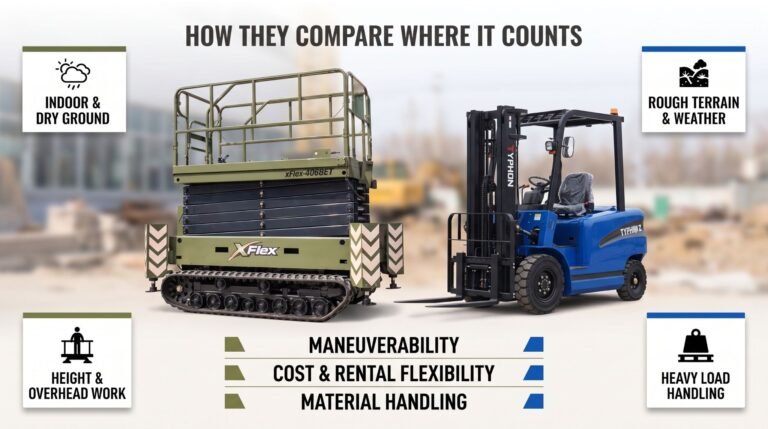
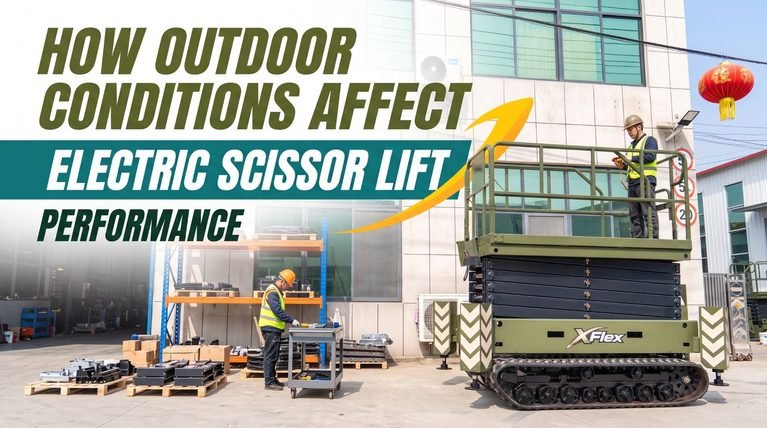
Selecting the right machine begins with understanding the specific demands of your work environment. Indoor operations on smooth, finished floors are best served by electric slab models that run cleanly, operate quietly, and feature non-marking tires to protect flooring. Outdoor work on construction sites, industrial yards, and unpaved surfaces calls for rough terrain models built with four-wheel drive, high ground clearance, and stabilizing outriggers. Matching the machine type to your surface conditions is the first and most important step in any selection decision.
Beyond surface conditions, jobsite planners should consider the working height the task requires, the combined weight of operators, tools, and materials that will ride the platform, and any overhead clearance constraints in the work area. A machine that reaches too low wastes a delivery and stalls the job, while one specified without regard to load capacity creates a genuine safety risk. Working with a trusted equipment dealer or rental partner who understands your industry helps ensure you select a configuration that matches your work precisely. Whether you are buying for a permanent fleet or renting for a single project, the right aerial lift equipment, matched carefully to your application, delivers safer work, better productivity, and a stronger return on your investment.
Conclusion
Scissor lifts have earned their place across an impressive range of industries because they solve a universal problem in a safe, efficient, and dependable way. Construction crews, warehouse teams, manufacturers, facility managers, retailers, aviation technicians, logistics operators, event production teams, industrial workers, and telecommunications specialists all depend on these machines to access elevated work areas without the risks and limitations of ladders and scaffolding. The breadth of scissor lift applications reflects just how well the equipment adapts to different environments, tasks, and demands.
For equipment buyers, rental customers, and jobsite planners, the lesson is clear: scissor lifts are among the most versatile and valuable aerial lift equipment available, and the right machine, matched to your specific industry and application, pays dividends in safety and productivity for years. If you are evaluating your options, take the time to assess your work environment, define your height and load requirements, and consult a knowledgeable equipment partner. The right scissor lift, chosen with care, becomes a reliable workhorse that supports your operation day after day.