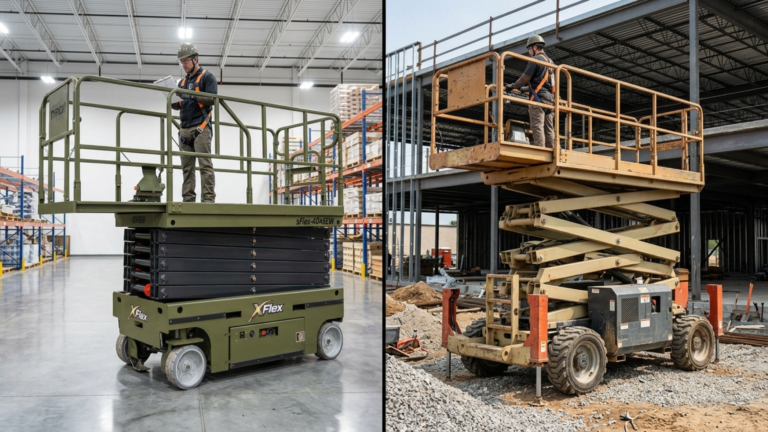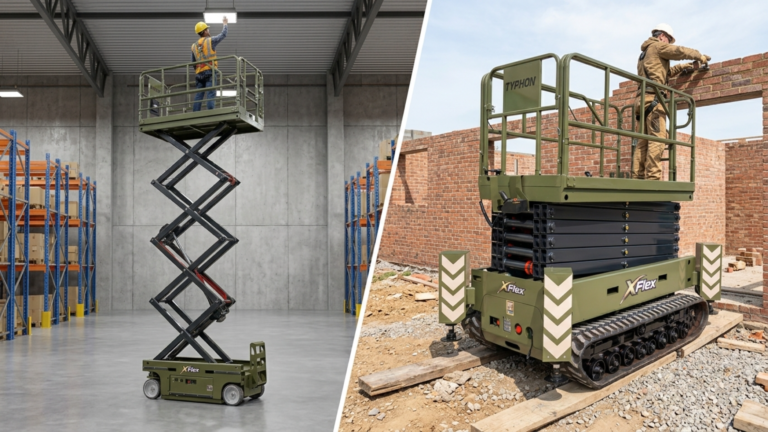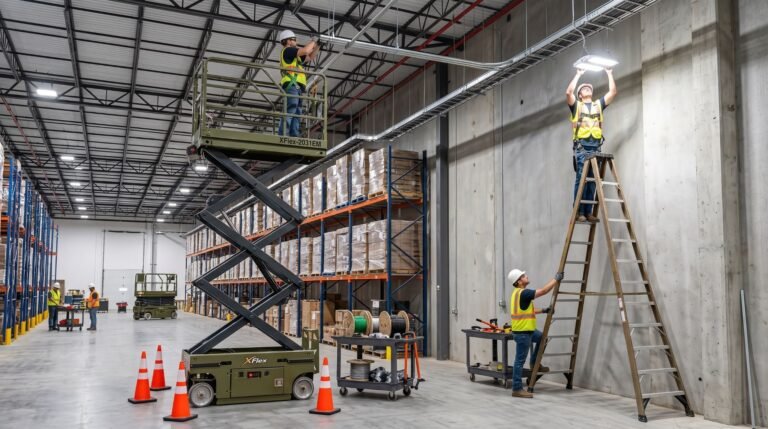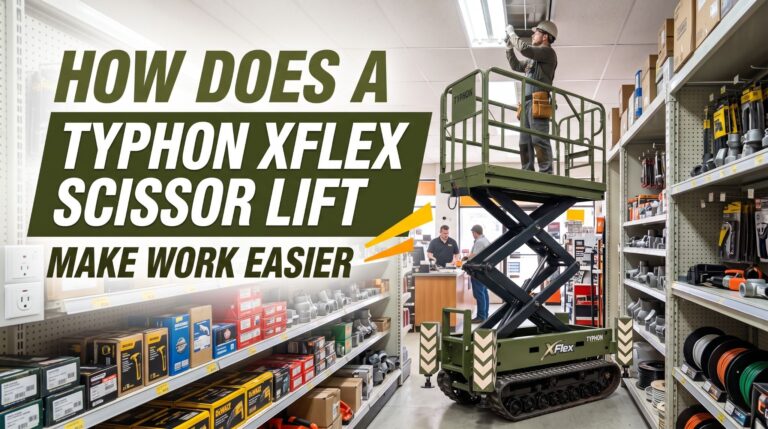
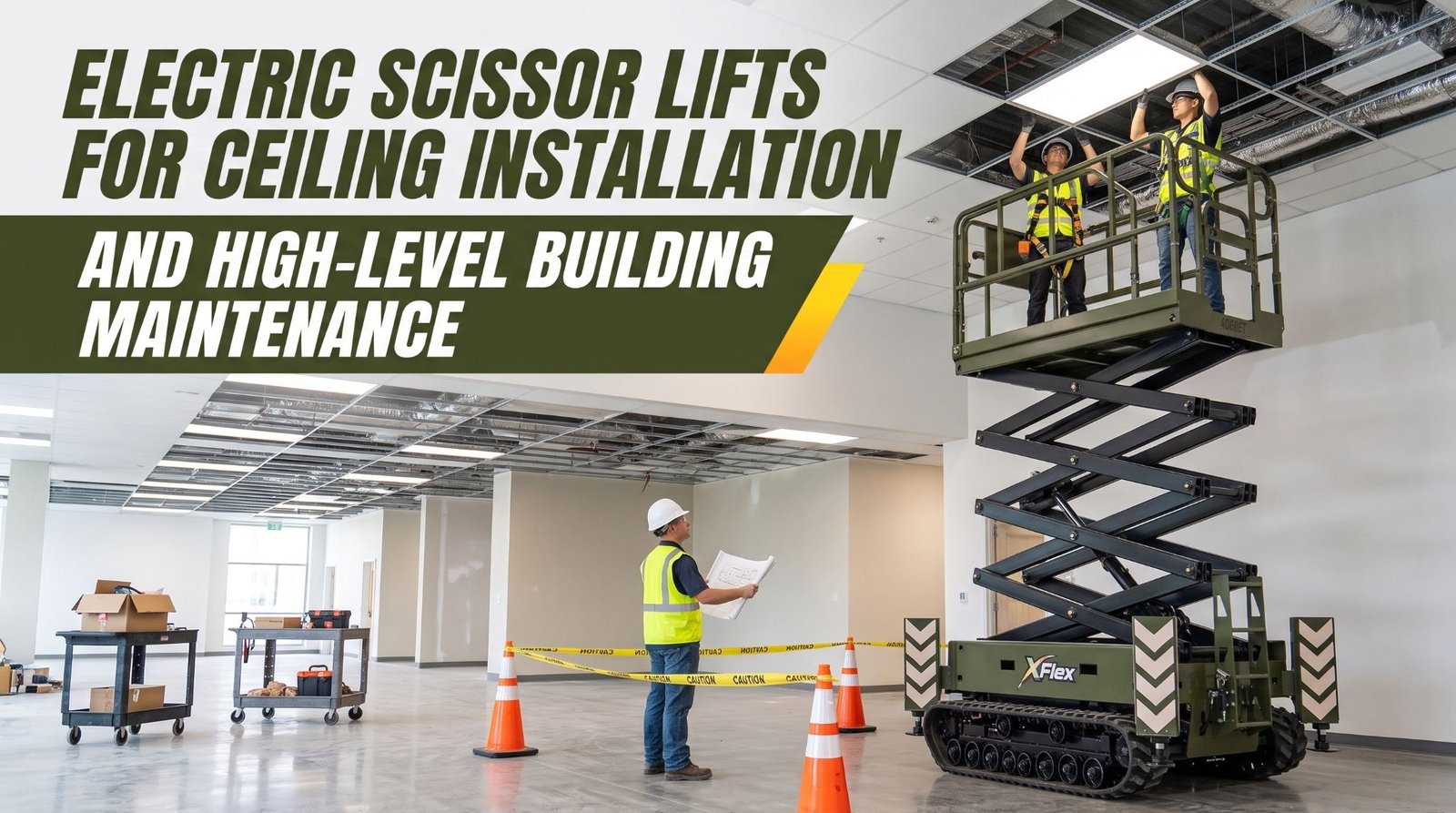
Indoor construction and maintenance projects often require workers to reach ceilings, lighting systems, HVAC equipment, and other elevated areas for extended periods. Tasks such as electrical installation, painting, inspections, and building repairs also require space for tools and materials while maintaining stable footing. Ladders may restrict movement and carrying capacity, making an appropriate elevated work platform more practical for many jobs.
Electric scissor lifts provide vertical access through a guarded platform supported by a folding lifting mechanism. Their design makes them suitable for a range of indoor applications where workers need a stable platform and room to complete tasks. Selecting the right model involves considering working height, platform capacity, machine dimensions, battery performance, and the condition of the floor surface.
Safe and efficient operation begins with matching the lift to the work area and the demands of the task. Operators should confirm that the platform can accommodate the combined weight of workers, tools, and materials, while checking access clearance, floor support, and available charging arrangements. Proper inspections, operator training, and compliance with manufacturer requirements help maintain reliable performance throughout the project.
Determine the Required Working Height
Height is usually the first specification buyers check, and it is also the one most often misread. Scissor lift specifications typically list two figures: platform height and working height. Platform height is the distance from the ground to the platform floor at full elevation. Working height is a manufacturer-defined figure that adds an allowance for an average operator’s reach, commonly about 6 feet above the platform floor. Always check how each manufacturer defines its numbers before you compare models.
Calculate your requirement from the task, not the ceiling. Start with the height of the highest point the worker must reach, such as a ceiling grid, a light fixture, a duct connection, or a sprinkler head. Then consider how the worker will actually perform the task. Installing a fixture overhead with both arms raised is tiring and less precise than working at shoulder or chest height. A platform that places the work in a comfortable zone improves accuracy, reduces fatigue, and keeps the job moving through a full shift.
Allow for practical margin. A lift that reaches the task only at its absolute maximum leaves no room for uneven ceilings, items mounted higher than expected, or work above suspended obstructions. At the same time, a lift with far more height than you need is usually larger, heavier, and harder to move through the building. Workers must never stand on guardrails, mid-rails, buckets, or ladders placed on the platform to gain extra height. If a task can’t be reached comfortably from the platform floor, the job needs a taller lift.
Key takeaway: Compare platform height and working height using each manufacturer’s definitions, and choose a lift that places the task within comfortable reach without standing on rails or makeshift supports.
Check Platform Capacity
Platform capacity is the maximum combined weight the lift is rated to carry. It includes every occupant, every tool, and every piece of material on the deck. On ceiling installation work, that total adds up quickly. Two workers, a toolbag, a cordless drill, a box of fixtures, and a stack of ceiling tiles can approach the rating of a compact lift sooner than many crews expect.
Many models also list a maximum number of occupants for indoor and outdoor use, along with a separate, lower capacity for the extension deck. The extension deck slides out to bring workers closer to walls and overhead work, but it supports less weight than the main platform because the load sits farther from the scissor stack. Confirm both ratings on the machine’s capacity decal and in the operator’s manual, and train workers to stay within them.
Plan loads before the platform rises. Estimate the weight of people, tools, and materials for each task, and stage materials so the lift carries only what the crew needs for that section of work. Distribute weight evenly across the platform rather than stacking heavy items in one corner. Never use the scissor lift as a material hoist, and never hang loads from the guardrails or let materials extend beyond the platform where they can shift or strike someone. If the job requires lifting heavy items such as large ductwork or equipment, use a machine designed for material handling.
Key takeaway: Platform capacity includes occupants, tools, and materials. Check the main deck and extension deck ratings separately, distribute loads evenly, and never use the lift as a material hoist.
Inspect Floors and Overhead Hazards
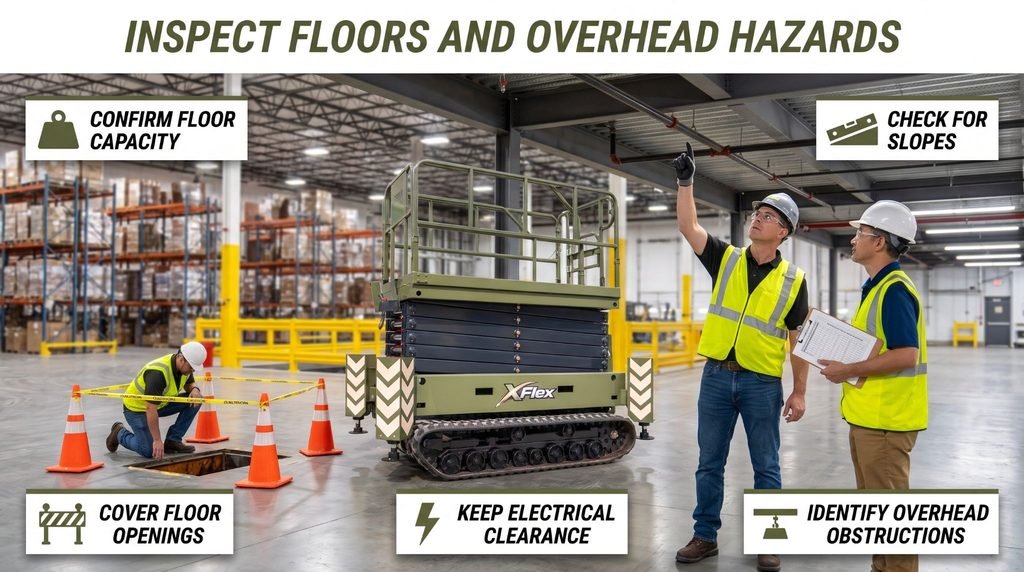
A scissor lift is only as stable as the surface beneath it. Indoor floors may look solid and level, yet hide slopes, ramps, floor openings, trench drains, loading dock edges, and areas that can’t support concentrated wheel loads. The work area overhead deserves the same attention, since beams, pipes, ducts, and electrical equipment create crush and contact hazards as the platform rises.
Start with floor strength. Review the lift’s total weight and its wheel or point loads, and compare them with the floor’s rated capacity. This matters most on suspended slabs, mezzanines, raised access floors, and older buildings. When capacity is uncertain, consult the building owner or a qualified engineer before bringing the lift in. Then walk the work area and look for holes, uncovered pits, ramps, expansion joints, debris, and wet or oily surfaces. Cover or barricade floor openings, and keep the lift well back from dock edges and drop-offs. Most scissor lifts are designed to operate on firm, level surfaces, and a tilt alarm will warn the operator when the slope exceeds the machine’s limit.
Next, look up. Identify beams, sprinkler pipes, ductwork, cable trays, light fixtures, and roof structures along the travel path and above each work position. Crushing between the guardrail and an overhead structure is a serious hazard during elevation and while driving at height. Some lifts offer secondary guarding or anti-entrapment systems that help reduce this risk. Maintain the clearances the manufacturer and applicable regulations require from energized electrical equipment and lines, and coordinate with the building’s electrical team when work involves live circuits. Mark hazards clearly and brief the crew before raising the platform.
Key takeaway: Confirm floor capacity, check for slopes, openings, and drop-offs, and identify every overhead obstruction and electrical hazard before the platform rises.
Evaluate Indoor Dimensions
An electric scissor lift only helps when it can reach the work area. Indoor projects often involve standard doorways, narrow corridors, store aisles, freight elevators, and finished spaces with fixtures already in place. Measuring the route before the lift arrives prevents delays and damage on day one.
Compare the lift’s overall width, stowed length, and stowed height with every doorway, corridor, and opening along the route. Compact slab scissor lifts are commonly built narrow enough to pass through standard doorways, but confirm the exact figures for the model you’re considering. Check turning radius as well, since tight corners and short hallways can stop a machine that fits through the door. If the lift must travel between floors, confirm the freight elevator’s dimensions and rated capacity against the lift’s weight.
Platform dimensions matter once the lift is in place. A larger platform gives workers room to stage materials and work side by side, while a smaller one fits between shelving, equipment, and partitions. Non-marking tires help protect finished floors in retail, healthcare, and office settings. Also consider how close the lift can get to walls and fixtures, and whether the extension deck reaches the work without repositioning. Walk the route with a tape measure before ordering, and record every opening along the way.
Key takeaway: Measure doorways, corridors, elevators, and turning space along the full route, and choose a lift whose width, stowed height, and turning radius fit your building.
Consider Electric Operation
Electric scissor lifts are well suited to indoor environments because they produce no local exhaust emissions and run more quietly than engine-powered equipment. That makes them a practical choice in occupied buildings, hospitals, schools, offices, retail stores, and warehouses, where fumes and noise affect workers, customers, and building occupants. Lower noise also makes communication between the platform and the ground crew easier.
Battery performance decides how productive the lift is over a full shift. Runtime depends on battery type and capacity, how often the lift raises and lowers, how far it travels, and the platform load. Ask the manufacturer for expected runtime under typical duty, and compare it with your work pattern. Lighting replacement across a large warehouse may involve constant raising, lowering, and driving, while a single-room ceiling installation may use far less energy.
Plan charging before work begins. Identify a suitable charging location with the correct power supply, and confirm how long a full charge takes. Many crews charge overnight so the lift starts each shift fully charged. Follow the manufacturer’s charging and battery maintenance instructions closely. Lead-acid batteries can release hydrogen gas while charging, so charge them in a well-ventilated area away from sparks and open flames, and check electrolyte levels as the manual directs. Maintenance-free and lithium-ion options reduce routine battery care, but they still require the correct charger and proper handling. Avoid running batteries completely flat, since deep discharge can shorten battery life.
Key takeaway: Electric operation suits indoor work with no local exhaust emissions and lower noise. Match battery runtime to your duty cycle, and plan safe, well-ventilated charging before the job starts.
Follow Safe Operating Procedures
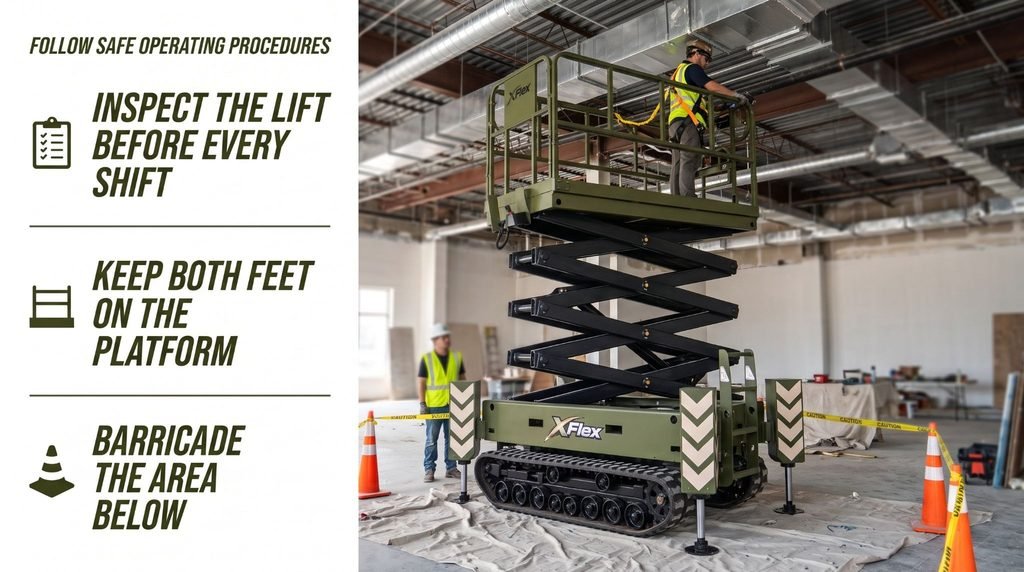
A well-chosen lift still depends on trained, careful operation. Operators should be trained and authorized according to the manufacturer’s instructions, applicable standards such as ANSI A92 in the United States, and your company’s procedures. Training should cover the specific model, including its controls, capacity limits, emergency systems, and the hazards of the actual work area.
Before each shift, complete a pre-use inspection. Check guardrails, mid-rails, toeboards, and the entry gate or chain for damage and secure closure. Test the platform and ground controls, the emergency stop, the emergency lowering system, the tilt alarm, and motion alarms. Inspect tires, the scissor stack, hydraulic hoses, and cylinders for damage or leaks, and confirm the battery is charged. Look for missing decals and the capacity plate. Tag out any lift with a defect and keep it out of service until a qualified technician completes the repair.
During operation, keep the gate closed and both feet on the platform floor. Wear any fall protection required by the manufacturer, your employer, or site rules, and attach only to the designated anchor points. Never lean over, sit on, or climb the guardrails. Drive at height only where the manufacturer permits it and the floor is firm, level, and clear. Watch for overhead obstructions while elevating and traveling. Barricade the area below the platform so people can’t walk underneath, and keep tools tethered or secured where falling objects could injure someone. Make sure someone on the ground knows how to use the ground controls and emergency lowering system if the operator needs assistance.
Key takeaway: Use trained, authorized operators, inspect the lift before every shift, keep both feet on the platform, barricade the area below, and make sure ground personnel know the emergency lowering procedure.
Conclusion
Electric scissor lifts support efficient, safe ceiling installation and high-level building maintenance when the machine matches the task. Working height should place the job within comfortable reach. Platform capacity must cover workers, tools, and materials, with separate attention to extension deck ratings. Dimensions must fit doorways, corridors, and elevators, and battery runtime should carry the crew through a full shift. Floor strength, slopes, openings, and overhead hazards all need checking before the platform rises.
Before your next project, measure the access route, calculate the height and capacity each task requires, and confirm floor loading in the work area. Request the lift’s specifications in writing, including working height definitions, capacity ratings, dimensions, and battery runtime. Then pair the right machine with trained operators and consistent pre-use inspections. That approach keeps your crews productive at height and protects everyone working in the building below.
Frequently Asked Questions
What jobs are electric scissor lifts used for?
Electric scissor lifts are used for ceiling installation, lighting and electrical work, HVAC and sprinkler installation, painting, inspections, and other elevated indoor tasks. Their wide, guarded platform supports workers, tools, and materials at height.
Is platform height the same as working height?
No. Platform height measures to the platform floor at full elevation. Working height is a manufacturer-defined figure that adds an allowance for operator reach, commonly about 6 feet. Check each manufacturer’s definition before comparing models.
Can a scissor lift carry tools and materials?
Yes, within the rated platform capacity, which includes occupants, tools, and materials. Extension decks usually carry a lower rating. Distribute loads evenly and never use the lift as a material hoist.
Can electric scissor lifts operate on any indoor floor?
No. The floor must be strong enough for the lift’s weight and wheel loads, and it must be firm, level, and free of openings or drop-offs. Confirm capacity on suspended slabs, mezzanines, and raised floors before use.