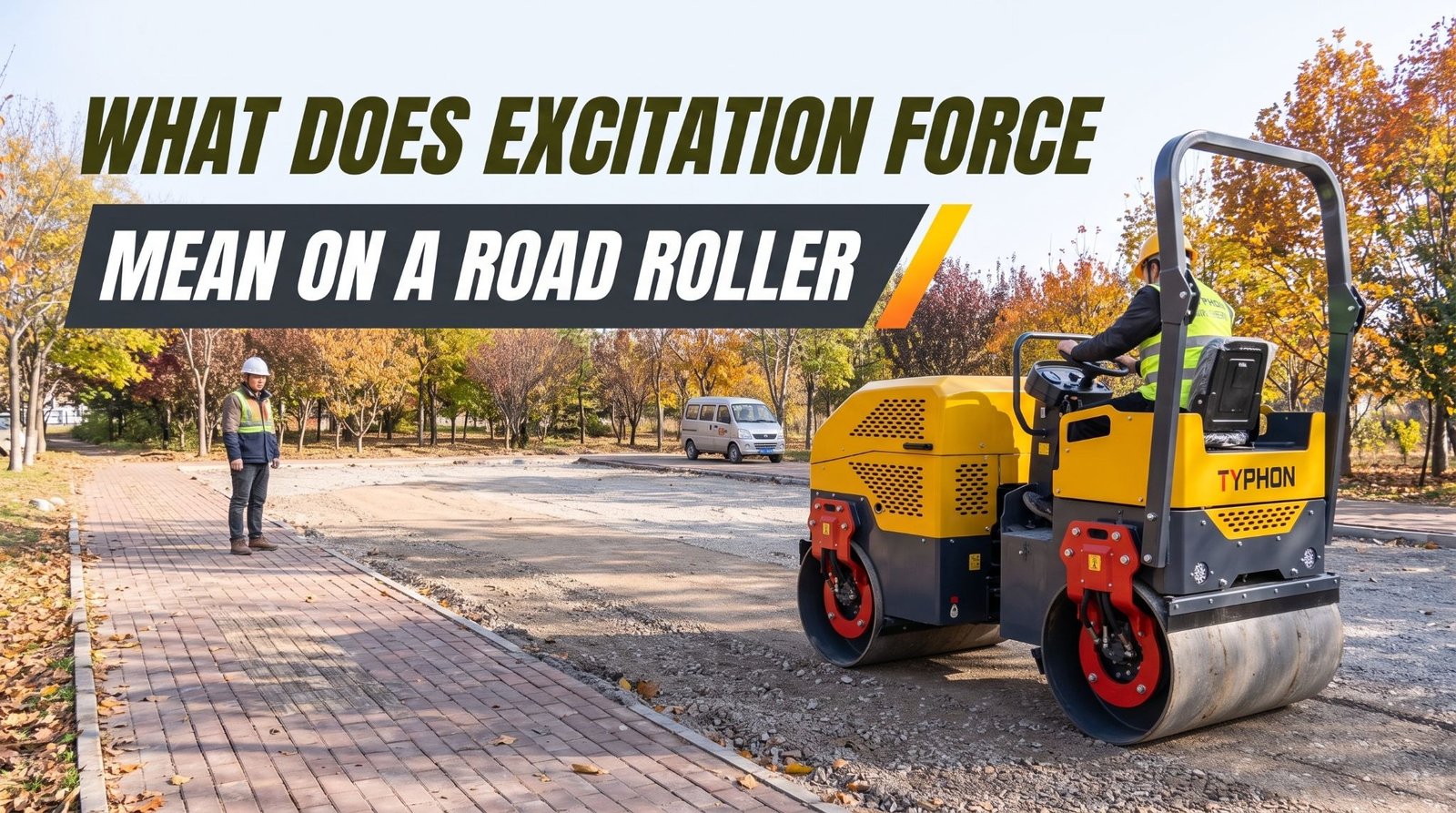
An operator rolls a fresh lift of gravel on a new access road, and at first the drum simply presses the surface flat under its own weight. The material barely moves. Then a switch flips, the drum begins to hum with a rapid shaking, and everything changes. The surface tightens visibly, the gravel packs down deeper with each pass, and a job that felt like it would take all afternoon suddenly gains momentum. What made the difference was not more weight or a bigger machine. It was a burst of pulsing energy generated inside the drum, driving compaction far below the surface in a way that raw weight alone never could. That energy has a name, and understanding it explains why a modern vibratory roller works the way it does.
Excitation force tends to sit quietly in the technical specs while buyers focus on operating weight and drum width. Yet it is one of the truest measures of how hard a roller can actually compact, and knowing what it means turns a confusing number into a practical tool for choosing and running the right machine. This post breaks down what excitation force is and how it is generated, why it matters for compaction, how it ties to amplitude and frequency, how different materials respond to it, how it compares to static weight, what habits help operators use it well, and how to judge excitation force specs when picking a roller.
Why Excitation Force Matters for Compaction Performance
Compaction is really about driving air and voids out of a material so its particles pack together into a dense, stable mass, and excitation force is what makes that happen efficiently. Static weight alone presses on the surface, but it struggles to move particles deep within a thick layer. The pulsing force from vibration does what weight cannot: it briefly loosens the grip between particles, lets them shift and settle into a tighter arrangement, and then packs them down before they can spread back apart. That deep, energetic action is the reason vibratory rollers reach target density in far fewer passes than static machines.
The payoff shows up in real, measurable ways on the job. A roller with adequate excitation force compacts a lift fully, from the bottom up, rather than leaving a soft base hidden beneath a firm crust. That matters because a layer compacted only near the surface will settle and fail later, undermining whatever is built on top of it. Enough excitation force also means fewer passes to reach density, which saves fuel, reduces machine wear, and gets the work finished sooner. Too little force for the material and lift depth leaves the layer under-compacted no matter how many times the drum rolls over it. In short, excitation force is a direct indicator of whether a roller can genuinely do the compaction a job demands.
Key takeaway: Excitation force drives compaction deep into a layer where static weight cannot reach, letting a roller hit target density in fewer passes and build a stable base from the bottom up.
How Different Materials Respond to Excitation Force
No two materials react to excitation force the same way, and matching the force to the ground is what separates good compaction from wasted passes. Granular materials such as sand, gravel, and crushed aggregate respond beautifully to vibration. Their loose particles are free to move, so the pulsing force shakes them out of a loose arrangement and settles them into a dense, tightly nested packing. These materials reward strong excitation force and high amplitude, especially on the thick lifts common in structural fill, because the energy needs to reach the full depth of the layer.
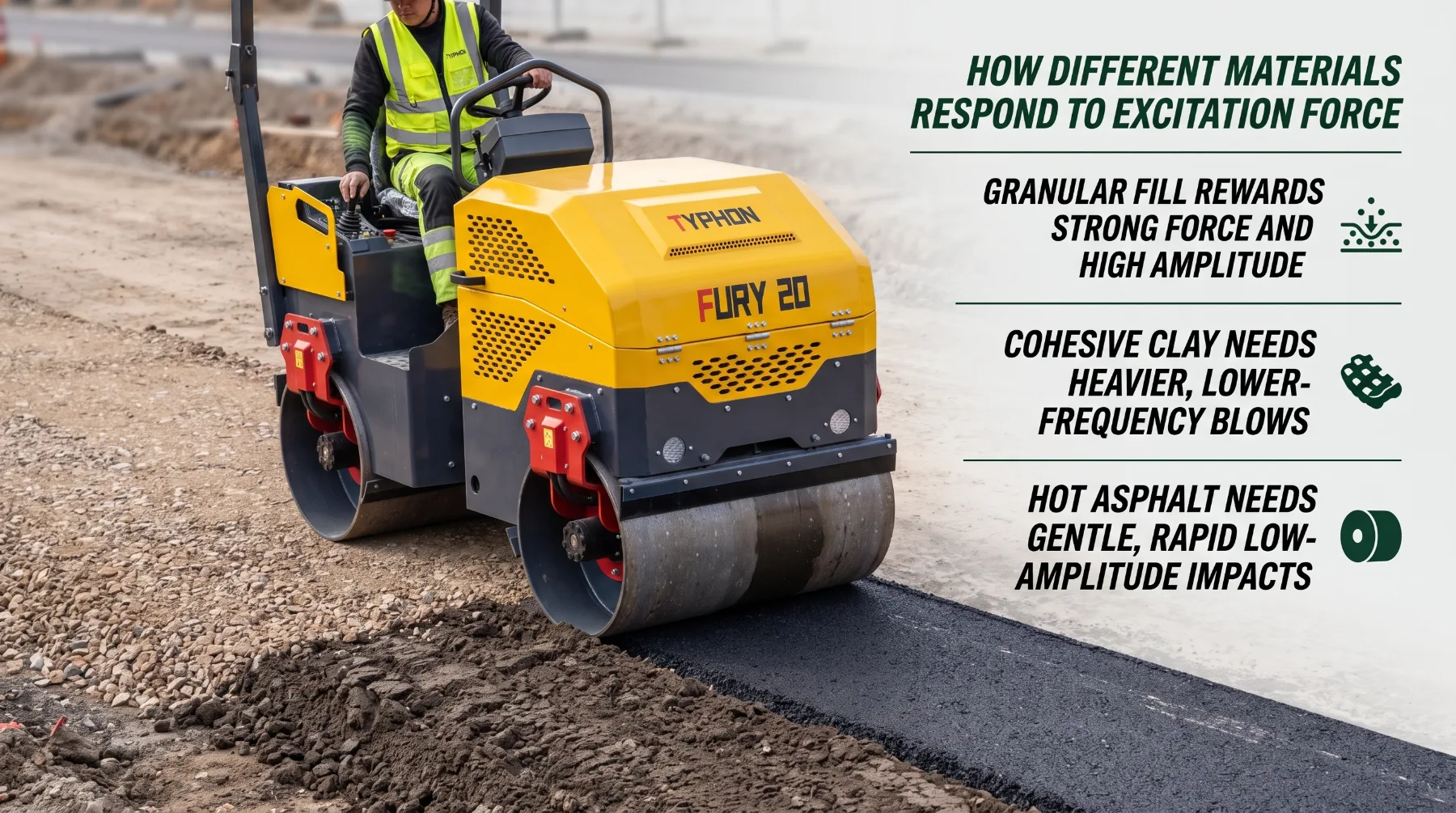
Cohesive soils like clay behave very differently. Their fine particles bond together through stickiness rather than resting loosely, and those bonds resist the rearranging that vibration relies on. Excitation force still helps, but it works better through heavier, lower-frequency blows that knead and manipulate the dense soil, and these materials often call for a padfoot drum rather than a smooth one. Asphalt sits at the opposite extreme, fragile and hot when laid, needing gentle, rapid impacts at low amplitude so the force seats the mat without cracking or shoving it. The same excitation force that packs deep granular fill would damage a thin asphalt lift if applied at full strength. This is why the ability to adjust the force, and read the material correctly, matters so much.
Key takeaway: Granular soils reward strong excitation force and high amplitude for deep compaction, cohesive clay needs heavier low-frequency blows and often a padfoot drum, and fragile asphalt needs gentler force at low amplitude.
How Excitation Force Compares to Static Weight
Static weight and excitation force represent two different ways a roller compacts, and understanding the contrast clarifies why vibratory machines dominate modern compaction. Static weight is simply the mass of the machine pressing down on the surface through the drum, working continuously and evenly. A static roller relies entirely on this weight to squeeze material together, which works well on thin lifts and finishing but reaches only so far into a layer. To compact deeper with static weight alone, you need a genuinely heavier, larger machine, and even then the reach has limits.
Excitation force changes the equation by adding dynamic energy on top of that static weight. Rather than pressing steadily, the vibrating drum strikes the material rapidly, and the combined effect of weight plus pulsing force drives compaction far deeper than the same machine could achieve sitting still. This is why a compact vibratory roller can outperform a much heavier static one, delivering more effective compaction from a lighter, more maneuverable machine. The two are not rivals so much as partners, since the static weight provides the constant pressure that holds material in place while the excitation force does the deep, energetic work. A roller’s true compaction capability comes from how these two forces combine, not from weight alone.
Key takeaway: Static weight presses continuously and suits thin lifts, while excitation force adds dynamic energy that reaches far deeper, so a lighter vibratory roller can outperform a heavier static one by combining both.
Practical Tips for Using Excitation Force Effectively
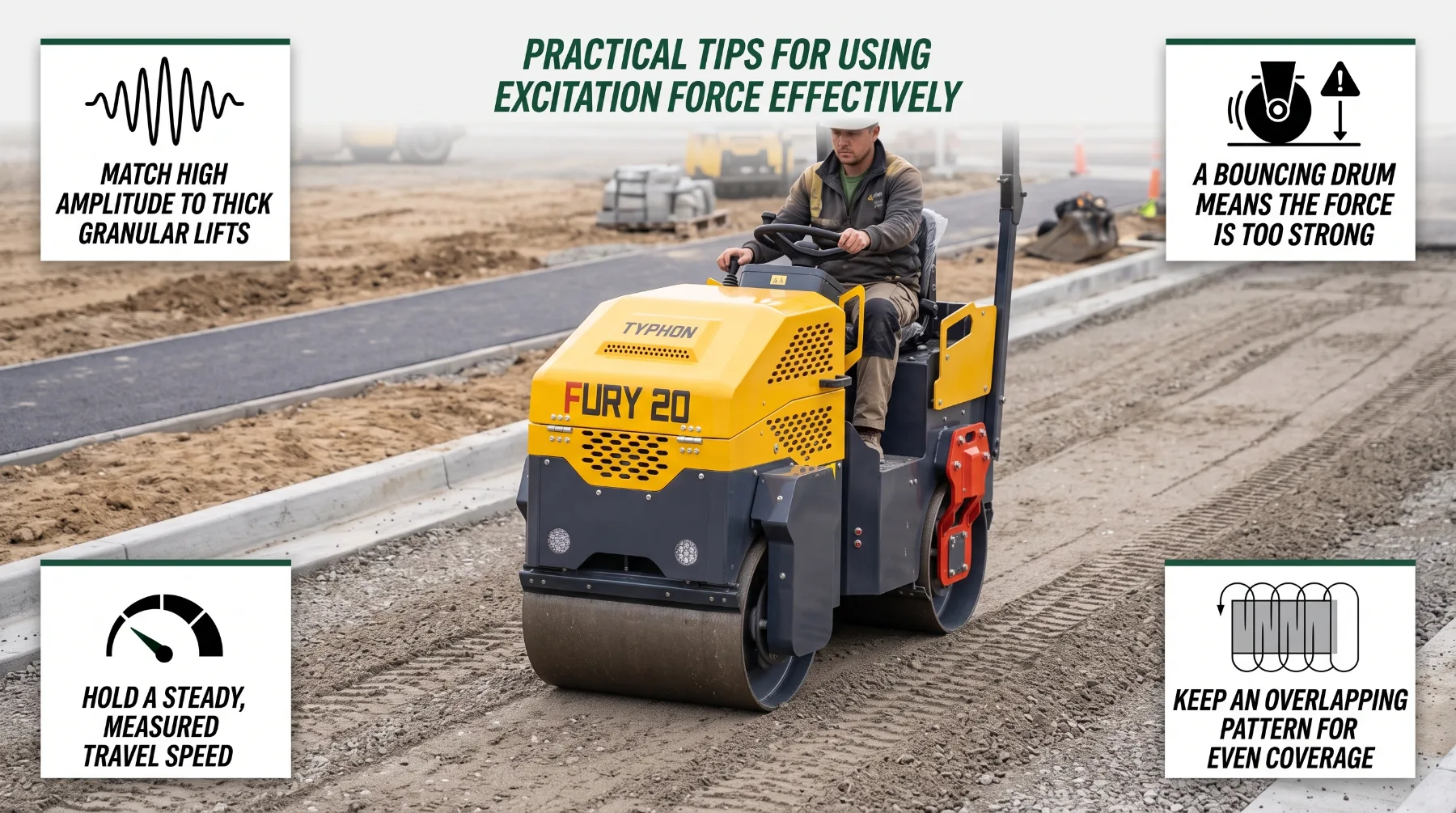
Getting the most from a roller’s excitation force starts with matching it to the material and lift in front of you rather than running one setting all day. For thick granular lifts that need deep compaction, use high amplitude and the full force the machine offers to drive energy to the bottom of the layer. For thin layers, finishing work, or fragile asphalt, dial back to low amplitude and higher frequency so the force packs the surface without over-working it. Reading the lift thickness and material type together tells you how much force, and what delivery, the pass actually calls for, and adjusting as conditions change keeps every pass productive.
Beyond matching settings, a few habits sharpen the results. Watch how the drum behaves, because a drum that starts to bounce or hop signals that the excitation force is too strong for the layer, which wastes energy and can damage both the surface and the machine, so reduce amplitude or change speed when you see it. Hold a steady, measured travel speed, since moving too fast spreads the force thinly over more ground while crawling too slowly can over-compact a surface. Keep an overlapping pass pattern so the force reaches every part of the lift evenly. And when the goal is a smooth finish rather than deeper density, switch the vibration off and let static weight alone leave a clean surface. These small disciplines turn raw excitation force into consistent, efficient compaction.
Key takeaway: Match excitation force and amplitude to the material and lift, watch for drum bounce as a sign of too much force, hold a steady speed with overlapping passes, and switch to static for finishing.
How to Evaluate Excitation Force Specs When Choosing a Roller
When compaction performance is what you are buying, excitation force deserves a careful read rather than a passing glance. Start by looking at the force value itself, listed in the specs as centrifugal or dynamic force, and compare it against the materials and lift depths your work actually involves. Deep granular fill demands substantial excitation force to compact fully, while lighter surface and finishing work needs far less. A number that looks impressive means little unless it matches the depth and material you truly work with, so anchor your read to the real demands of your jobs rather than the largest figure on the page.
From there, look at how the excitation force fits with the rest of the machine. Check whether the roller offers adjustable amplitude and frequency, since that flexibility lets one machine serve materials as different as thick fill and thin asphalt, and a machine locked to a single setting will struggle across varied work. Weigh the excitation force alongside the static weight, because the two together determine the real compaction capability, not either one alone. Consider the drum type as well, since smooth and padfoot drums suit different materials. Wherever you can, run a candidate roller on ground like your own, compact a representative lift, and check the density it achieves through the full depth of the layer. Watching the machine reach target density where a weaker one would fall short tells you far more than any figure printed on a spec sheet.
Key takeaway: Match the excitation force rating to your real materials and lift depths, confirm the machine offers adjustable amplitude and frequency, weigh it alongside static weight and drum type, and test it on ground like your own.
Conclusion
Excitation force is the hidden engine behind a modern road roller’s compaction power. Generated by a spinning eccentric shaft inside the drum, it adds a rapid, pulsing force on top of the machine’s static weight, driving energy deep into a layer where weight alone would stall near the surface. That dynamic force, shaped by amplitude and frequency and matched to the material underfoot, is what lets a vibratory roller reach target density in fewer passes, build a stable base from the bottom up, and outperform far heavier static machines. Granular fill rewards strong force and deep amplitude, cohesive clay needs heavier, kneading blows, and fragile asphalt calls for a gentle touch, so the real skill lies in reading the material and delivering the right force for it. Understood and used well, excitation force stops being a puzzling number in the specs and becomes the clearest measure of what a roller can genuinely accomplish on the ground.
Frequently Asked Questions
What is the difference between excitation force and operating weight on a road roller?
Operating weight provides continuous static pressure through the drum, while excitation force comes from the rotating eccentric shaft and creates repeated vibration impacts. Weight presses the material steadily, while excitation force transfers dynamic energy deeper into the layer. Both work together to determine compaction performance.
How is excitation force actually generated inside the drum?
A rotating eccentric shaft uses an offset weight to create centrifugal force, which vibrates the drum and transfers energy into the material. Greater eccentric mass or higher rotation speed can increase excitation force. Amplitude and frequency can also be adjusted on some rollers for different materials and lift thicknesses.
How much excitation force do I need for my compaction work?
It depends on the material and lift thickness. Deep granular layers generally need higher excitation force, while thin asphalt and finishing work require less. Match the force rating to your typical applications and use adjustable amplitude and frequency when working across different materials.