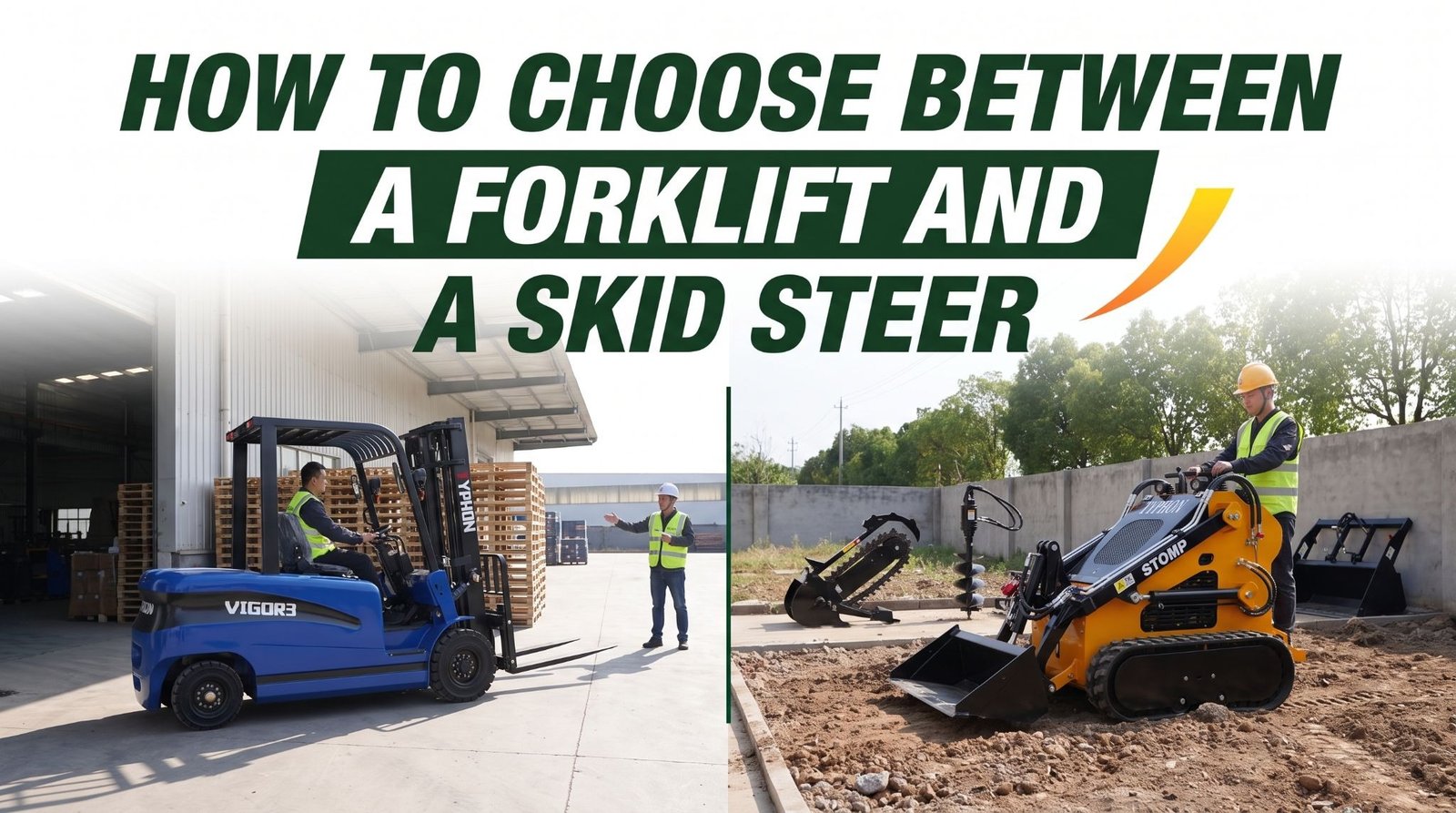
Picking between a forklift and a skid steer can become difficult when both appear capable of handling the same job. The two machines, however, are built around very different priorities. A forklift is designed to lift, carry, and position loads, while a skid steer is built for pushing, digging, loading, grading, and operating a wide range of attachments. The right machine depends on the load, terrain, working space, lift requirements, and type of work involved. Using the wrong equipment can increase operating costs, reduce productivity, or leave a task unfinished.
The difference becomes much clearer when you look at real job-site demands. Forklifts excel at material handling on firm, relatively level surfaces, while skid steers offer greater versatility and traction for earthmoving and attachment-driven work. Some projects may even benefit from having both machines on site, with each handling the tasks it was designed to perform. Understanding these differences makes it easier to match the equipment to the work instead of relying on machine size or lifting capacity alone.
Core Differences in Design and Purpose
Everything starts with what each machine was built to do. A forklift is a material-handling machine, engineered to lift, carry, and place palletized loads with precision. A skid steer is a compact, versatile power unit engineered to dig, grade, push, and run a wide range of attachments across rough ground.
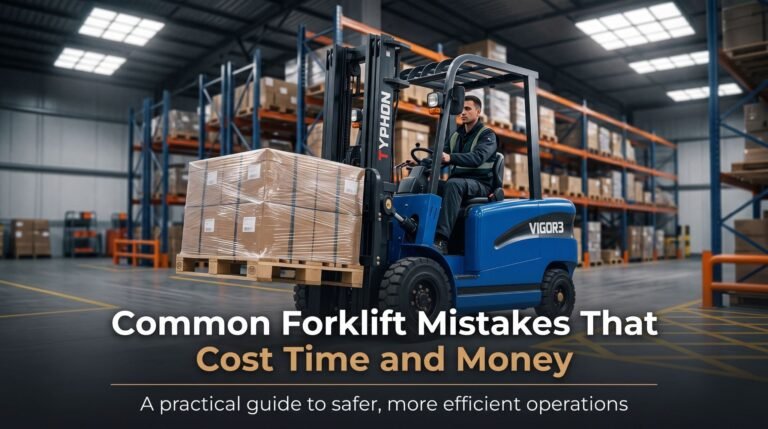
That split shows up in the hardware. A forklift carries a vertical mast, two forks, and a rear counterweight, all tuned to raise heavy loads to height and set them down cleanly. It rides on smaller wheels suited to firm, level surfaces.
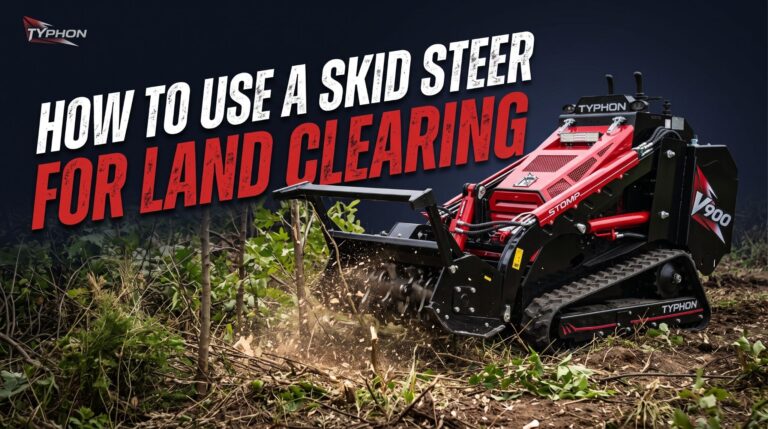
A skid steer, by contrast, mounts a universal attachment plate on lift arms, sits low and rugged, and rolls on wide tires or tracks built for dirt, mud, and uneven terrain. It doesn’t specialize in lifting to height; it specializes in adapting to the task in front of it.
Key takeaway: a forklift is built to move loads with precision, while a skid steer is built to work the ground and switch jobs with attachments.
What a Forklift Does Best
Material handling is the forklift’s entire purpose, and few machines match its efficiency at it. Wherever discrete loads need lifting, stacking, or transporting across a prepared surface, the forklift earns its place.
Its strongest applications cluster around storage and logistics:
- Warehouse operations. Moving palletized goods through aisles and stacking inventory on tall racking.
- Loading docks. Transferring pallets on and off trucks, trailers, and shipping containers quickly and safely.
- Pallet handling. Raising heavy loads to height and placing them precisely, shift after shift.
- Indoor and yard storage. Organizing crates, bagged materials, and boxed stock across factory floors and lumberyards.
The forklift shines because it combines lift height, load capacity, and tight maneuverability in one package. An operator can pull a pallet from the top of a rack, carry it across the building, and load a trailer without leaving the seat.
Key takeaway: if the job centers on lifting, stacking, or transporting palletized loads on firm ground, the forklift is almost always the right call.
What a Skid Steer Does Best
Versatility defines the skid steer, and that’s exactly where it separates itself. Rather than mastering one task, it adapts to many, driven by an attachment system that turns a single machine into a whole fleet of tools.
Its core strengths sit outdoors and on rough ground:
- Grading and leveling. Smoothing dirt, gravel, and site pads with a bucket or grading attachment.
- Digging and trenching. Excavating footings and utility lines with a bucket, backhoe, or trencher.
- Material pushing and loading. Moving soil, gravel, mulch, and debris around a site.
- Multi-attachment work. Running augers, breakers, brooms, grapples, pallet forks, and more from one machine.
Rough terrain is where it thrives. Wide tires or tracks give it traction and stability on mud, slopes, and loose fill that would strand a forklift. It can even handle palletized loads outdoors with fork attachments, though it won’t match a forklift’s lift height or precision.
Key takeaway: if the job involves grading, digging, varied attachment work, or rough outdoor terrain, the skid steer is the more capable machine.
Key Comparison Factors
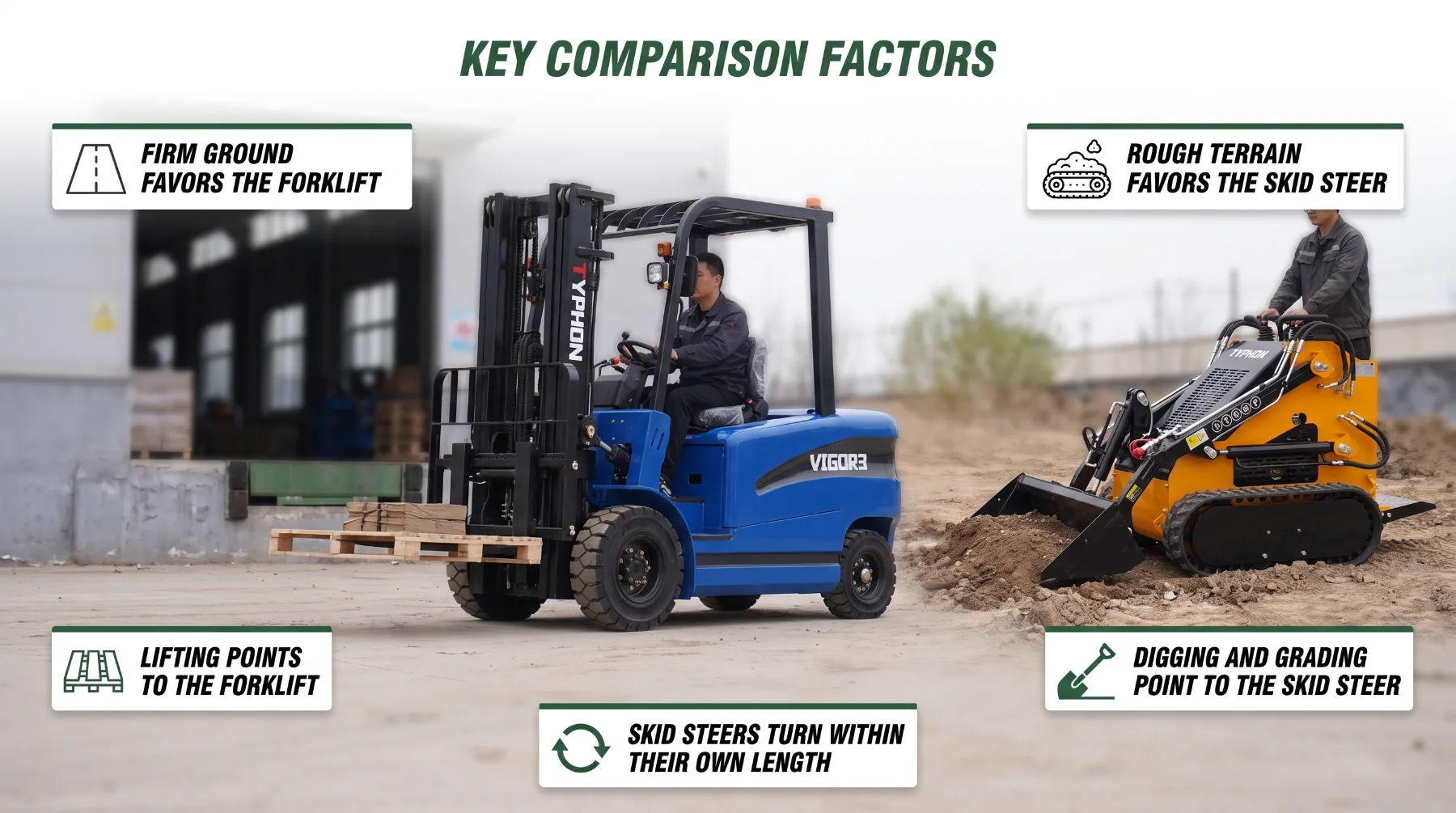
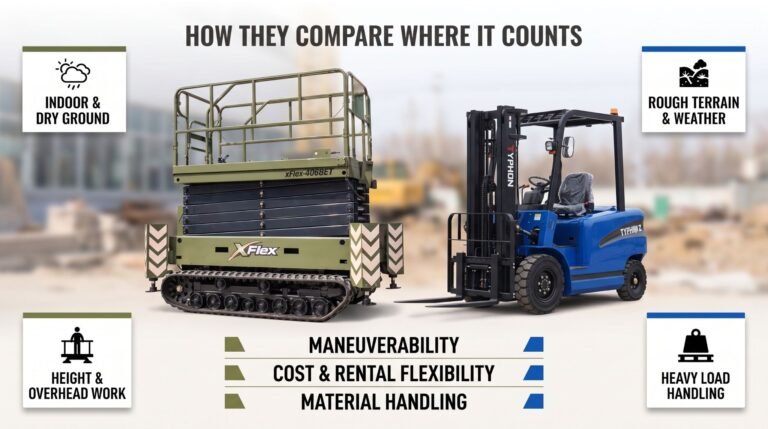
Weigh five factors, and the decision usually resolves itself. Each one pulls toward one machine or the other based on the reality of your work.
Terrain and Surface
Firm, level surfaces such as warehouse floors, paved yards, and loading docks favor forklifts because their tires are designed for stable operation on prepared ground. Soft, muddy, sloped, or uneven terrain favors skid steers, whose tires or tracks provide better traction and ground contact where a forklift may struggle or bog down.
Task Type
Lifting and placing discrete loads points to the forklift. Digging, grading, pushing, and ground-level material work points to the skid steer. Name the core action first, and the machine often names itself.
Attachment Versatility
A forklift runs forks and a limited set of related attachments. A skid steer’s universal plate accepts dozens of tools, so if your work varies day to day, that adaptability carries real value.
Indoor Versus Outdoor
Indoor and prepared-surface work leans forklift, especially with clean-running electric models. Open-site, construction, and landscaping work leans skid steer.
Maneuverability
Forklifts steer tightly in narrow aisles and confined indoor spaces. Skid steers turn within their own length by counter-rotating their wheels or tracks, which excels in tight outdoor quarters and against obstacles.
Key takeaway: match terrain, task type, attachment needs, environment, and maneuverability to your work, and the stronger fit becomes clear.
Job-Site Scenarios That Make the Choice Obvious
Picture the actual work, and the machine that fits usually becomes clear. A distribution center unloading palletized freight needs to lift loads from trailers and place them into racks, making it a forklift application. A manufacturing plant restocking a mezzanine has a similar need for precise indoor lifting, which is another forklift task.
A construction site preparing a building pad may need to grade ground, cut trenches, and push fill into place, making a skid steer more suitable. Landscaping work can also favor a skid steer when the job involves moving soil, leveling surfaces, and carrying materials across soft ground or tight spaces.
Key takeaway: focus on the main task. Lifting and stacking point toward a forklift, while digging, grading, and pushing point toward a skid steer.
When a Job Might Need Both Machines
Larger projects rarely fit one machine, and forcing a single choice can slow the whole operation. Many construction and site-development jobs call for both a forklift and a skid steer, each handling the phase it’s built for.
Consider a commercial construction project where both machines handle different stages of the work. A skid steer can prepare the site by grading pads, trenching for utilities, and moving fill, while a forklift can stage and lift delivered materials such as steel, blocks, and packaged supplies. Each machine handles a different part of the project, so they work alongside each other rather than competing for the same task.
Problems arise when one machine is pushed into a role it was not designed for. Using a skid steer to lift pallets to height can reduce lifting precision and create safety concerns, while sending a forklift onto soft ground for grading or earthmoving can limit traction and stability. When a project involves both ground work and material handling, assigning each machine to the stage where it performs best keeps the work moving more efficiently.
Key takeaway: Large projects may require both machines. Use the skid steer for ground preparation and the forklift for lifting and positioning materials instead of forcing one machine to handle both jobs.
Key Takeaways
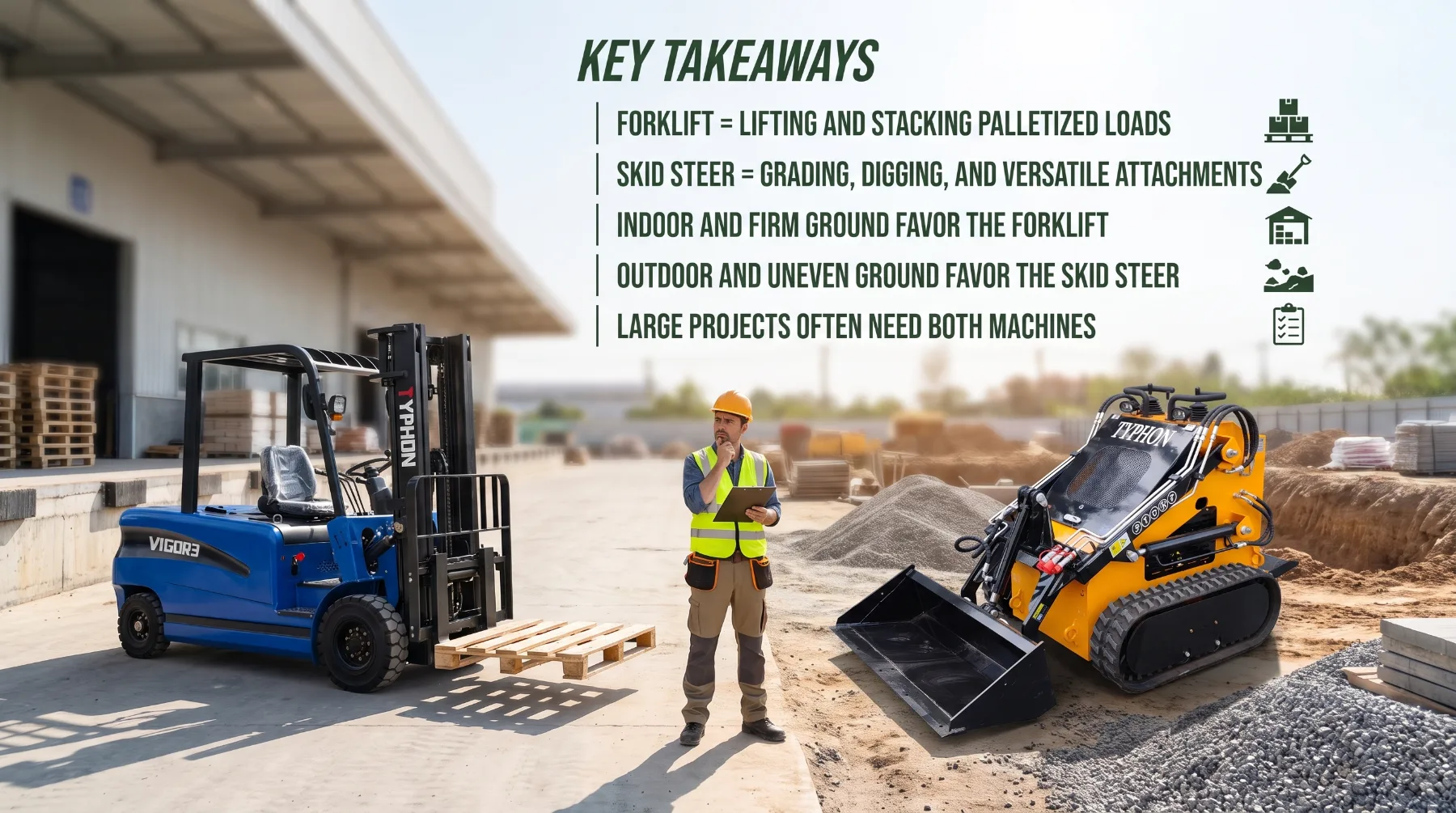
- Forklift = material handling: lifting, stacking, and transporting palletized loads on firm, level ground.
- Skid steer = ground work and versatility: grading, digging, pushing, and multi-attachment tasks on rough terrain.
- Terrain and environment matter: indoor and prepared surfaces favor forklifts; outdoor and uneven ground favors skid steers.
- Attachment range sets the skid steer apart when your work changes day to day.
- Large projects often need both, each handling its own phase.
Conclusion
A forklift and a skid steer serve fundamentally different purposes, so the key is to identify whether the job is centered on material handling or ground work. A forklift is built for lifting, stacking, loading, and transporting palletized materials on firm surfaces, making it well suited to warehouses, yards, docks, and similar environments. A skid steer is designed for grading, digging, pushing, backfilling, and attachment-driven work across rough, uneven, or changing terrain. To select the right machine, consider the main task, ground conditions, required lift height, maneuverability, and attachments you plan to use. If a project involves both material movement and ground work, using each machine for the stage it is designed to handle will keep productivity high and prevent one machine from being pushed beyond its intended role.
Frequently Asked Questions
Can a skid steer replace a forklift for handling pallets?
Only in limited situations. Fitted with pallet fork attachments, a skid steer can move palletized loads, which is useful outdoors on rough ground where a standard forklift struggles. But it can’t match a forklift’s lift height, load capacity at height, or placement precision, so it’s a poor substitute for warehouse racking or dock work. For frequent, precise pallet handling on firm surfaces, a forklift remains the right tool. Use a skid steer’s forks for occasional outdoor load movement, not as a full replacement.
Which machine is better for a construction site?
It depends on the phase of work. A skid steer is usually the workhorse for site preparation, grading pads, trenching utilities, and moving soil and fill across uneven terrain, thanks to its traction and attachment versatility. A forklift, often a rough-terrain model, earns its place staging and lifting delivered materials like block, steel, and packaged supplies. Many construction sites benefit from both, each handling its own role, so match the machine to the specific task rather than choosing one for the entire project.
Is a skid steer harder to operate than a forklift?
Each has its own learning curve. A skid steer uses a distinct control scheme to drive, steer by counter-rotation, and run attachments, which takes practice to master smoothly, especially on slopes and tight sites. A forklift demands careful load balancing, mast control, and precise placement, particularly when stacking at height. Neither is inherently harder; they simply require different skills. Whichever machine you choose, proper operator training is essential for safe, productive work and for protecting both your crew and your equipment.