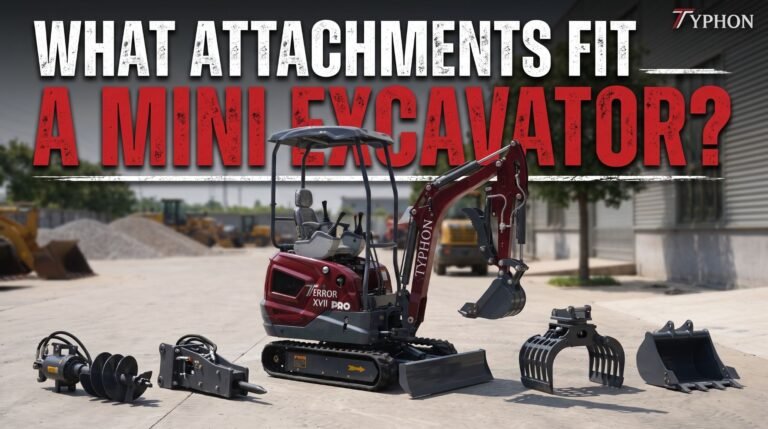
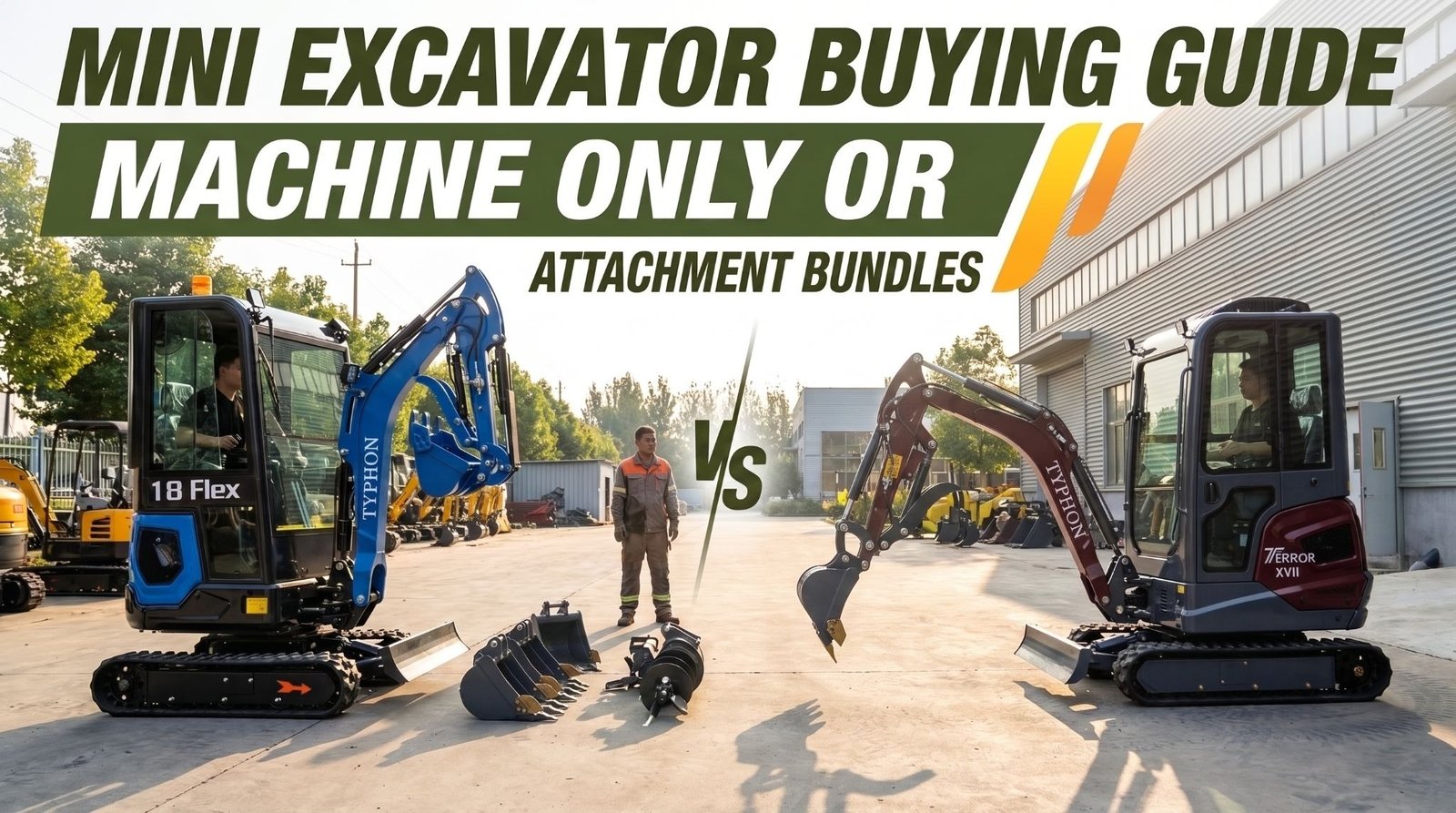
Mini excavators can handle a wide range of jobs, but their versatility depends on more than the machine itself. The attachments used with the excavator determine whether it can dig, break, drill, grade, clear material, or perform other specialized tasks. For this reason, buyers often have to decide whether a machine-only purchase is enough or whether an attachment bundle makes more sense.
A machine without extra tools may be the better choice for buyers with a specific type of work in mind or those who already own compatible attachments. An attachment package, meanwhile, can make the excavator useful across several applications from the beginning. The right option depends on the jobs you expect to perform, the tools you actually need, and the total cost of putting everything together.
This guide explains what to consider when comparing a mini excavator with attachments against a machine-only purchase. It covers common bundle contents, overall cost, hydraulic flow and pressure requirements, attachment compatibility, potential savings, and the specifications that should be checked before making a purchase.
What Attachment Bundles Typically Include
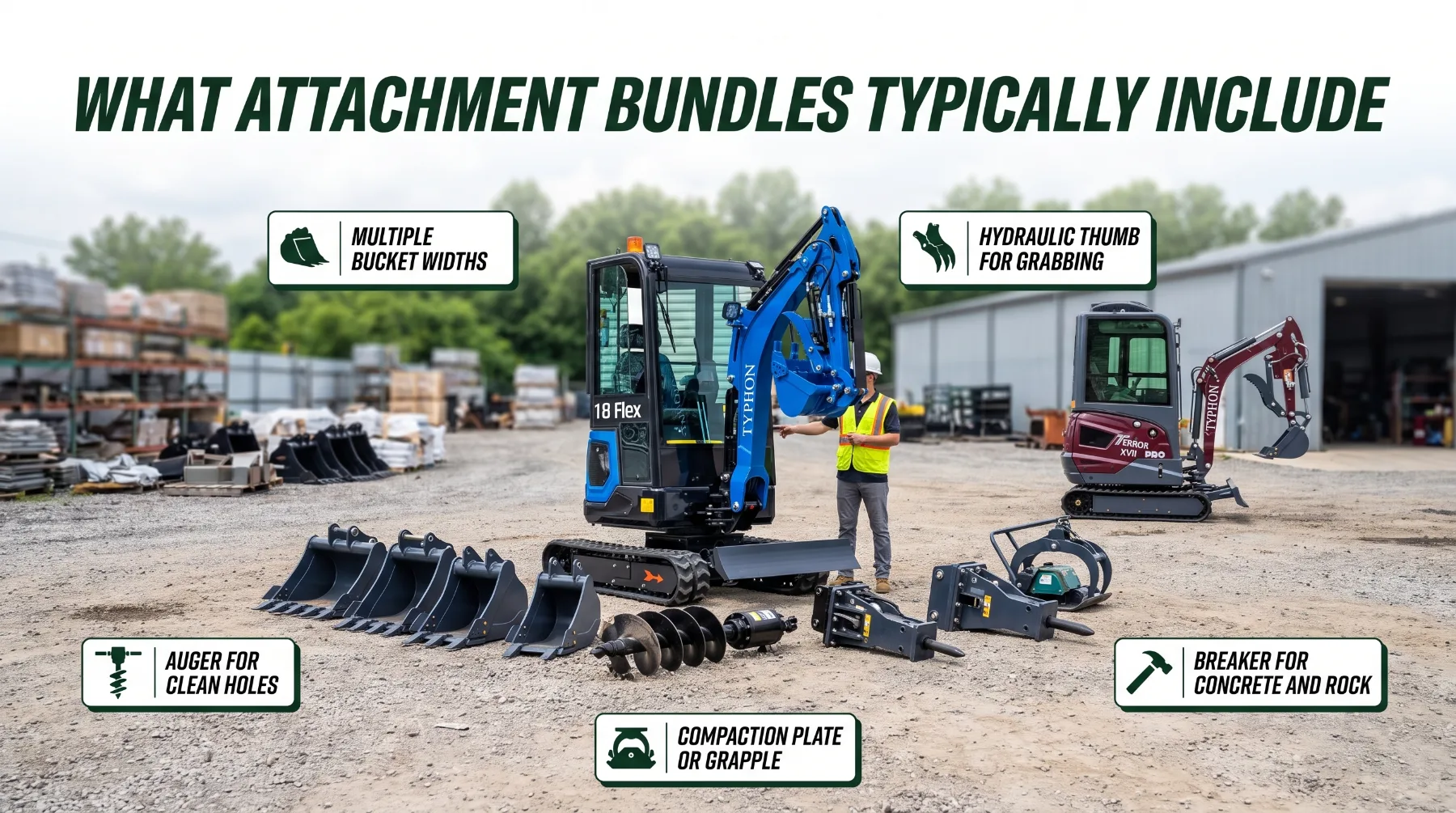
A mini excavator bundle pairs the base machine with a selection of attachments chosen to cover common tasks. The exact contents vary by dealer and manufacturer, but most packages are built around the tools contractors reach for most often.
Here’s what you’ll usually find in a bundle:
- Buckets in multiple widths. A digging bucket for trenching and a wider grading or ditching bucket for cleanup and finish work. Bucket variety is the backbone of nearly every bundle.
- A hydraulic thumb. This turns the excavator into a grabbing tool, letting you pick up rocks, logs, debris, and awkward loads. Thumbs are among the most popular add-ons because they expand the machine’s usefulness so dramatically.
- An auger. Paired with bits of different diameters, an auger drills clean holes for posts, footings, and planting. It’s a favorite for fencing and landscaping crews.
- A hydraulic breaker (hammer). For breaking concrete, rock, and hard surfaces. Breakers are heavy hitters that demand real hydraulic capacity, which matters when you evaluate compatibility later.
- A compaction plate or grapple. Depending on the package, you may see a plate compactor for backfill or a grapple for material handling.
Key takeaway: most bundles are assembled around versatility, giving you a bucket set plus one or two power attachments so the machine handles a wide range of jobs straight out of the gate.
The Cost-Benefit Analysis: Bundle vs. Machine-Only
The financial case is where this decision earns its weight. Bundles almost always carry a lower combined price than buying the same machine and attachments piece by piece, because dealers package them to move volume and reward the larger sale.
Buying a bundle offers clear advantages. You lock in a single negotiated price, often with attachments discounted well below their standalone cost. You handle one transaction, one delivery, and frequently one financing agreement, which simplifies both paperwork and budgeting. And you know every tool in the package is meant to fit the machine, removing the guesswork of cross-checking specifications yourself.
The machine-only route has its own logic. You pay less upfront, preserving capital for other needs. You avoid paying for attachments you may never use, and you keep the freedom to buy exactly the tools you want, when you need them, from whichever supplier offers the best value. For a buyer with a narrow, predictable workload, that focus can be smarter than a broad bundle.
Key takeaway: bundles win on price-per-tool and convenience, while machine-only wins on lower upfront cost and precision. The right choice depends on how many of the bundled attachments you’ll genuinely put to work.
Why Hydraulic Flow Compatibility Shapes Your Attachment Choices
Before you get attached to any tool, understand the single specification that decides whether it will even run: hydraulic flow. Powered attachments like augers, breakers, and grapples rely on the excavator’s auxiliary hydraulic circuit to function, and that circuit delivers a specific flow rate measured in gallons per minute (GPM).
Every hydraulic attachment is designed around a flow range. Supply too little, and the tool runs sluggishly or won’t perform at all. Supply too much, and you risk over-speeding and damaging it. A breaker, for example, needs enough flow to strike at its designed frequency, while an auger needs the right flow to turn its bit through soil with authority. If the machine’s auxiliary flow doesn’t match the attachment’s requirement, the pairing simply won’t deliver.
This is exactly where a well-built bundle earns trust. When a dealer packages attachments with a specific machine, those tools should already fall inside the excavator’s auxiliary flow window. Buy attachments separately, and that verification becomes your job. Neither path is wrong, but you must confirm the numbers.
Key takeaway: hydraulic flow is the gatekeeper for powered attachments. Whether bundled or bought alone, every tool’s rated flow must fall within your machine’s auxiliary hydraulic output.
When a Bundle Makes Sense vs. Sourcing Attachments Separately
The decision comes down to how you actually work. A bundle is the stronger choice when your jobs are varied and you’ll use most of the tools it contains. Contractors who dig one day, set posts the next, and break concrete the day after get real value from a package that covers all three, especially at the discounted bundle price. New businesses building a capability from scratch also benefit, since a bundle delivers a working toolkit immediately without a string of separate purchases.
Sourcing separately makes more sense when your workload is specialized or your needs are already well defined. If you spend ninety percent of your time trenching, a bundle heavy with breakers and grapples wastes money on tools that sit idle. Buyers who already own compatible attachments from a previous machine, or who demand a specific premium brand of breaker or thumb, are also better served buying à la carte.
Key takeaway: choose a bundle when breadth of work justifies breadth of tools; source separately when your work is focused, your tools already exist, or your standards for a specific attachment are non-negotiable.
How to Evaluate Bundle Quality and Dealer Value
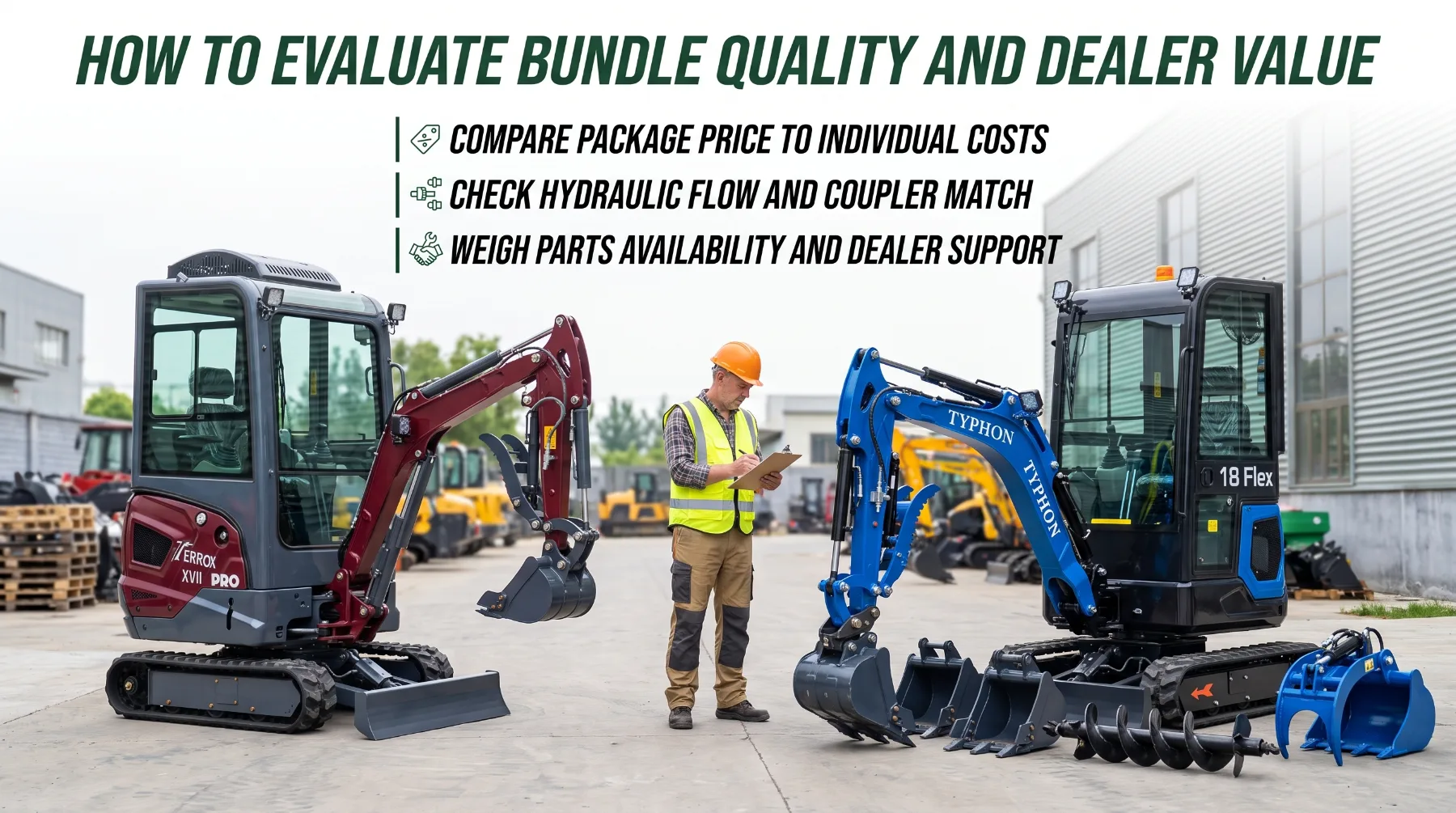
A bundle is not automatically a better deal just because several attachments are included. Compare the individual prices with the package price and inspect the quality, materials, brand, and warranty of each attachment. Make sure powered tools match the machine’s hydraulic flow and coupler, and avoid low-quality attachments that only make the package look more valuable.
The best bundle is built around tools you will actually use. Consider parts availability, service support, and dealer reputation as part of the total value. A worthwhile package should combine a meaningful discount, reliable attachments, proper compatibility, and useful support after the purchase.
How to Match Machine Specs to Your Planned Attachments
The smartest buyers work backward from the job. Before comparing machines, list the attachments the work demands, then choose an excavator whose specifications support all of them. Buying the machine first and forcing attachments to fit afterward is how expensive mismatches happen.
Choosing the right machine starts with matching its specifications to the attachments you intend to use. Check that auxiliary hydraulic flow meets the requirements of powered tools, particularly high-demand attachments such as breakers. Operating weight and stability also matter because heavier tools and impact forces place additional loads on the excavator. The coupler should match the attachments you plan to use, while a quick coupler can be valuable when changing tools frequently. Engine and hydraulic capacity should also provide enough reserve to maintain performance when digging and attachment work happen together. Matching these factors to your planned attachments helps the excavator deliver reliable performance while reducing unnecessary strain on the machine.
Conclusion
Equipment selection should begin with the attachment requirements the machine must support. A machine-only purchase is often more practical when compatible tools are already available, while a bundle can provide better value when multiple attachments are required from the start. Compare the bundle price with the cost of each attachment separately, then verify auxiliary hydraulic flow and pressure, coupler type, attachment weight, rated operating capacity, and available power reserve. Breakers, augers, and other hydraulic tools must remain within the auxiliary circuit’s flow and pressure range, while heavier attachments must stay within the machine’s stability and load limits. The right package is ultimately the one whose hydraulic and load-handling specifications properly support the attachments required for the intended work.
Frequently Asked Questions
Are mini excavator attachment bundles cheaper than buying attachments separately?
Usually, yes. Dealers price bundles to reward the larger sale, so the combined cost of the machine and attachments is typically lower than buying each piece on its own. That said, the savings only count for attachments you’ll actually use. Always ask the dealer to price each tool separately so you can see the real discount, and only credit the value of tools that will earn their keep on your jobs. A bundle stuffed with attachments you’ll never touch can cost more than a leaner machine-only purchase.
How do I know if an attachment will work with my mini excavator?
Two specifications decide it: hydraulic flow and coupler type. Powered attachments like augers and breakers need the machine’s auxiliary flow, measured in gallons per minute, to fall within the tool’s required range. Non-powered attachments need a matching coupler. Before buying any attachment, bundled or separate, confirm both the flow rating and the coupler fit against the machine’s specifications. Reputable dealers verify this readily, and getting it in writing protects you from a tool that won’t perform or won’t mount.
Should I buy a bundle if I only need the excavator for one type of work?
Probably not. Bundles make sense when your jobs are varied enough that you’ll use most of the included tools. If you spend nearly all your time on a single task like trenching, a broad bundle wastes money on attachments that sit idle. In that case, buy the machine on its own along with the specific attachments your work demands. Save the bundle for when breadth of work genuinely justifies breadth of tools.