
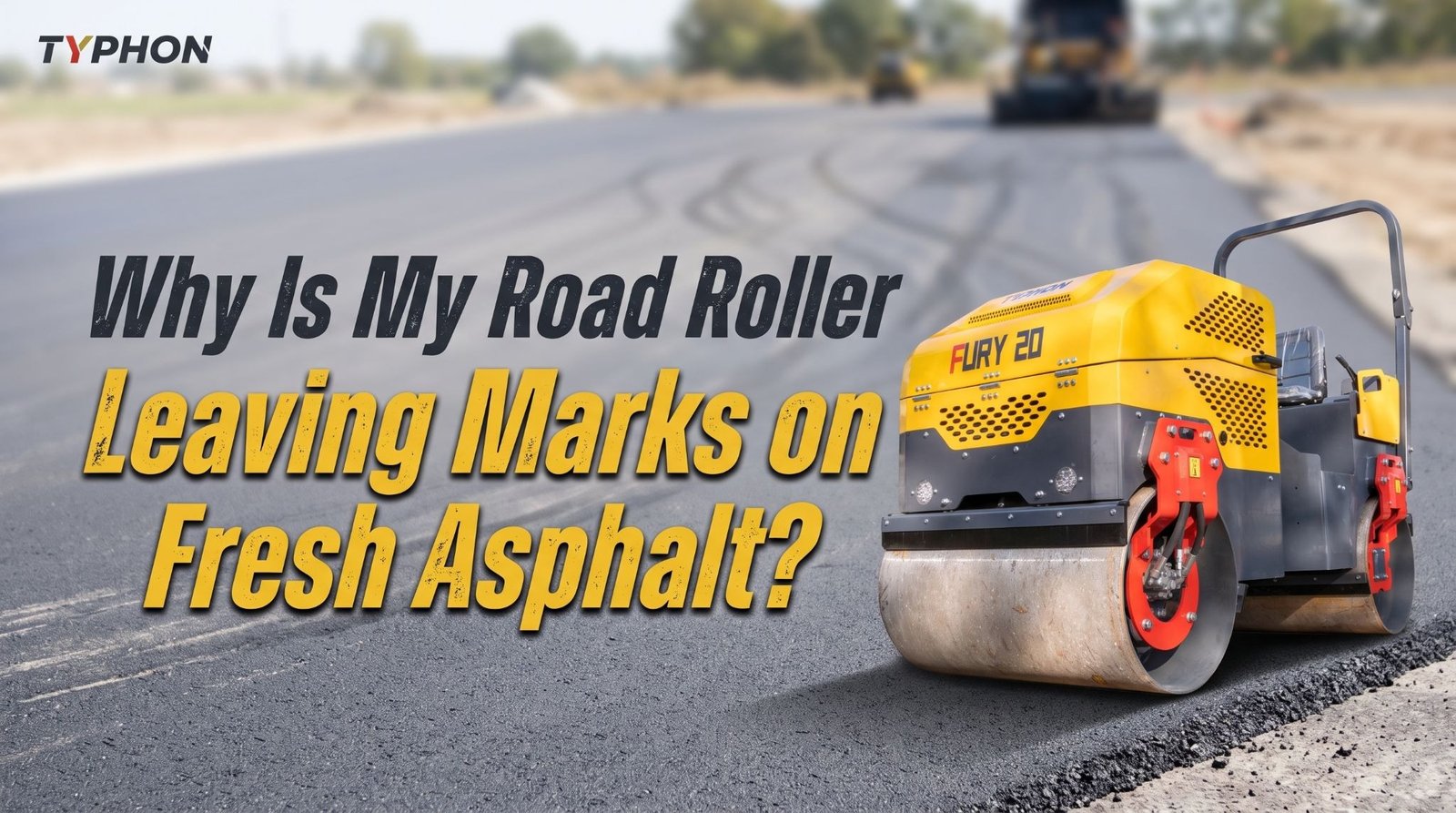
A paving crew lays down a clean mat on a warm afternoon, and the roller operator starts his passes feeling good about the finish. Then he looks back and sees it: shiny scuff lines, little ridges, and a checkerboard of marks where the drum sat too long. The asphalt went down right, but the rolling ruined the look, and now the customer is going to ask why the new lot has patterns baked into it. Those marks are one of the most frustrating problems in paving, and they almost always trace back to how the roller is run, not the mix.
Roller marks show up when the drum, the settings, or the timing don’t match the mat you’re compacting. The good news is that nearly every cause is common, predictable, and fixable once you know where to look. This guide walks through the usual reasons a road roller leaves marks on fresh asphalt, from a speed mismatch to a dirty drum, so you can spot the problem early and hand over a smooth, clean surface.
The key to preventing roller marks is understanding that compaction is not just about applying more pressure; it is about applying the right amount of force at the right time and in the right way. Fresh asphalt changes quickly as it cools, which gives operators a limited window to achieve proper density without damaging the surface finish. Factors like mat temperature, rolling speed, vibration settings, drum condition, and pass patterns all influence how the final surface looks. A roller that is perfectly suited for the job can still leave marks if it is operated incorrectly. Small adjustments and consistent rolling techniques can prevent surface defects, reduce costly corrections, and help deliver the smooth, professional finish the project was designed to achieve.
Drum Speed and Travel Speed Mismatch
Start with how the machine moves, because this is one of the most common causes of roller marks. A roller is not just about weight; the timing between drum vibration and travel speed determines how evenly that force is applied to the asphalt. When the vibration frequency does not match the speed you are traveling, the drum impacts the mat at uneven intervals and can leave behind ripples, waves, or a corrugated pattern. Moving too quickly for the selected vibration setting spreads the impact points too far apart, creating visible lines instead of a smooth, uniform surface.
The fix is to slow down and match your travel speed to the drum’s vibration output and the asphalt conditions. Manufacturers usually provide recommended speed ranges for different amplitude and frequency settings, and staying within those ranges keeps compaction impacts consistent across the entire pass. Operators should also avoid sudden acceleration, braking, or sharp direction changes on fresh asphalt, since those movements can create scuffing and uneven pressure. A steady, controlled pace usually produces a better finish than rushing through passes, even when the job is under time pressure. Confirming the correct speed for your roller setup removes much of the guesswork and helps prevent patterns from forming in the mat.
Drum Surface Buildup or Damage
The drum itself has to remain clean, smooth, and properly maintained to leave behind a clean asphalt surface. When asphalt sticks to the drum, it can drag across the fresh mat instead of rolling smoothly, creating scuff marks, streaks, or small tears with every pass. Buildup often happens when the drum surface becomes too dry, allowing hot asphalt to grab onto the steel and harden as the roller continues working.
The water spray system is designed to prevent this problem, so make sure the tank is filled, spray bars are working correctly, and nozzles are clear enough to provide even coverage across the drum. Any hardened asphalt buildup should be removed before it becomes difficult to clean, and the drum should be inspected regularly for damage such as dents, flat spots, cracks, or deep scratches. Even small imperfections can transfer directly into the pavement and become visible once the surface cools. A clean, properly maintained drum is one of the simplest ways to avoid unnecessary marks and achieve a smoother final finish.
Vibration Settings Too High or Too Low
Vibration is one of the most important tools a roller has for achieving proper density, but the wrong setting can quickly damage the surface finish. Too much amplitude on a thin lift, soft mix, or cooling asphalt mat can apply excessive force and disturb the aggregate structure. This may leave behind bruised areas, cracking, ripples, or shiny spots where the surface has been over-compacted. On the other hand, using too little vibration can prevent the material from reaching the required density, forcing the operator to make additional passes that increase drum contact and create more opportunities for marks.
The right vibration setting depends on the thickness of the lift, the material being compacted, and the temperature of the asphalt. Thin lifts and finishing passes often require lower amplitude settings or static rolling to protect the surface, while thicker base courses can handle more energy to achieve proper compaction. Operators should adjust settings as conditions change rather than relying on one setup for every job. A useful rule is that when working on a thin or cooling mat, reducing amplitude or switching to static mode is often better than adding more force. Following the correct rolling procedure and matching vibration to the material helps prevent over-working the surface while still achieving the density the project requires.
Wrong Roller Weight or Too Many Passes
The machine has to fit the job. A roller too heavy for a thin lift presses hard enough to leave drum edges and shove the mat around, especially while the asphalt is still soft. Edge marks and displacement often mean the machine is simply too much for the layer you’re finishing.
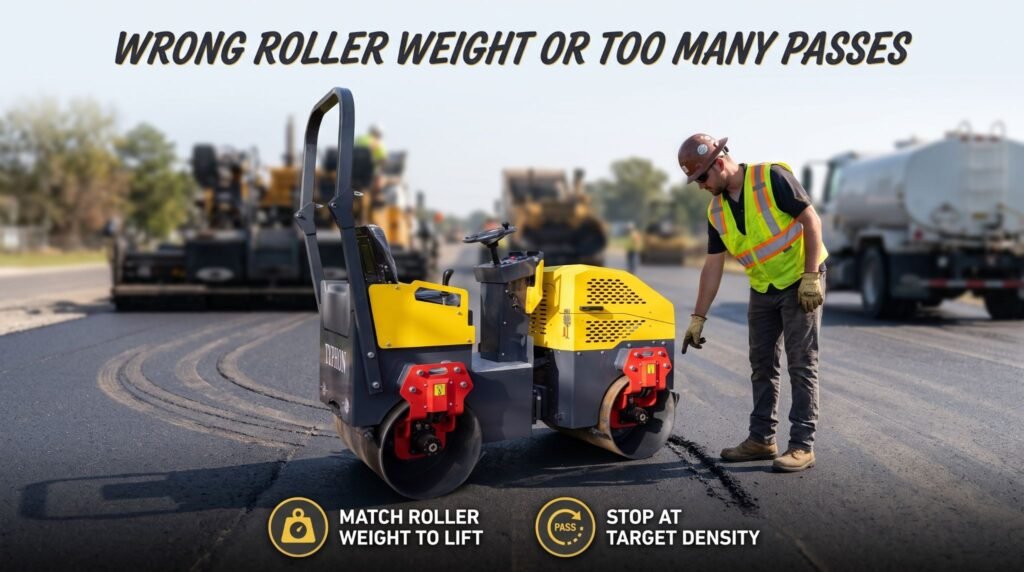
Passes matter just as much as weight. Every extra pass over a mat that’s already at density risks polishing the surface or printing lines, so more rolling is not better once you’ve hit the target. Plan your pass pattern, overlap smoothly instead of stopping and starting on the mat, and stop rolling once density is reached. Knowing your machine’s fit for the work through a steady and setup routine helps you match weight to lift.
Temperature and Timing Problems
Asphalt has a limited rolling window, and missing that window is one of the fastest ways to create surface defects. When the mat is too hot, the material is still soft and unstable, so the drum can push and displace the mix instead of compacting it evenly. This movement can create ridges, waves, and uneven areas that remain visible after the surface cools. On the other hand, waiting too long allows the asphalt to stiffen, making it harder for the drum to properly seat the aggregate. The result can be scuffing, surface checking, or marks caused by the roller dragging across material that no longer wants to move.
The solution is to monitor mat temperature and match your rolling sequence to the conditions of the mix. Breakdown rolling should happen while the asphalt is still workable enough to achieve density without disturbing the surface, while finish rolling needs to be completed before the mat cools beyond the effective compaction range. A quick temperature check is far more reliable than guessing based on appearance or timing alone. Staying within the correct temperature range helps prevent both problems: damaging a soft mat too early or leaving marks on a cold mat too late.
Operators should also avoid leaving a vibrating drum parked on fresh asphalt, even for a short pause. A stationary vibrating drum concentrates force in one spot and can press a visible indentation or pattern into the surface. If stopping is necessary, switch to static mode first or move the roller onto a completed section before pausing. Proper timing, temperature control, and movement discipline all work together to create a smoother finish and reduce costly surface corrections.
Conclusion
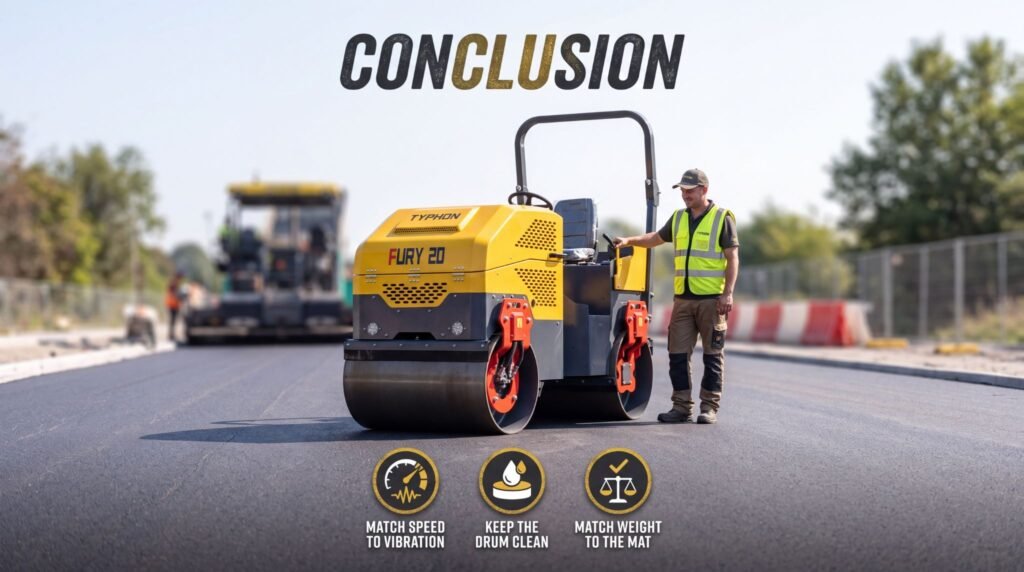
When a road roller leaves marks on fresh asphalt, the cause is almost always in how the machine is run, not the mix itself. Start with the basics: match your travel speed to the vibration, keep the drum wet and clean, and dial the amplitude to the lift you’re finishing. From there, check that the roller weight fits the mat, hold your passes to what density actually needs, and time your rolling to the temperature window. Nail those, and you hand over a smooth, clean surface instead of a patterned one. Stay on top of your maintenance and setup, roll steady rather than fast, and follow safe operating practices around the paving crew and the machine. When a marking problem runs deeper than a setting or a dirty drum, reach out to a trusted equipment specialist who can diagnose the roller and pair reliable repairs with the results your projects depend on.
Frequently Asked Questions
What is the most common cause of roller marks on fresh asphalt?
A dry or dirty drum and an incorrect speed-to-vibration match are two of the most common causes. When asphalt sticks to the drum, it can drag across the surface and leave scuff lines, while poor vibration timing can create ridges or uneven patterns. Keeping the drum clean and using the correct settings for the asphalt conditions helps prevent most marking problems.
Should I use vibration on a thin asphalt lift?
Usually not. Thin lifts and finish passes often require low amplitude or static rolling because excessive vibration can disturb the surface, create bruising, or leave shiny over-compacted areas. The correct setting depends on the lift thickness, asphalt temperature, and the stage of compaction.
Why does my roller leave a mark when I stop?
Stopping with vibration active concentrates the drum’s force in one area and can press a visible divot into the soft asphalt. To avoid this, switch to static mode before stopping or keep the roller moving whenever possible during compaction.
How can I prevent roller marks on asphalt?
Preventing marks comes down to proper roller operation and timing. Keep the drum clean, maintain the water spray system, match speed and vibration settings to the mat, and monitor asphalt temperature throughout the job. Small adjustments during rolling can protect the final surface and prevent costly corrections.