
Buying or renting a scissor lift is a decision that shapes your productivity, your safety record, and your budget for years. Choose the wrong machine and you face stalled jobs, scuffed floors, ventilation problems, or a lift that bogs down the moment it meets rough ground. Choose the right one and you gain a dependable asset matched precisely to the work you do. This scissor lift buyer’s guide is built to help you make that choice with confidence, whether you run a construction firm, manage a facility, rent equipment for specific projects, or buy machines for a growing fleet.
The market has shifted in meaningful ways heading into 2026, with lithium-ion battery technology, smarter safety systems, and a stronger total cost of ownership case all changing how buyers evaluate their options. By the end of this guide, you will understand the main types of scissor lifts, the key factors that drive a smart purchase, the safety features worth paying for, and how to decide between renting and buying. The goal is simple: to give you the clear, practical knowledge you need to invest in a machine that fits your work and delivers real value for every shift it runs.


Why Choosing the Right Scissor Lift Matters
A scissor lift is deceptively simple to operate, which can lead buyers to treat the purchase as a routine box to check. That is a mistake. The machine you select determines whether your crew can reach the work safely, whether your floors stay protected, whether you stay compliant with air quality and noise requirements, and whether your operating costs stay reasonable over the life of the equipment. A lift that is undersized for your reach forces dangerous workarounds, while one that is oversized or wrong for the environment wastes money and creates new problems.
The smartest buyers start with their actual work rather than with a spec sheet. They assess where the machine will operate, how high it needs to reach, how much weight it must carry, and how often it will run. With those facts in hand, the rest of the decision falls into place. Throughout this guide, we return to that principle again and again, because matching the machine to the job is the single most important step in learning how to choose a scissor lift that serves you well.
Understanding the Main Types of Scissor Lifts
Before you can compare specific models, you need a clear grasp of the three main categories of scissor lift, because each is built for a fundamentally different environment. Understanding these distinctions early saves you from comparing machines that were never meant to do the same job.

Electric Slab Scissor Lifts
Electric slab scissor lifts are the workhorses of indoor work, and they dominate facilities, warehouses, retail spaces, and any setting with finished floors. They run on rechargeable batteries that drive an electric motor and hydraulic system, which means they produce no exhaust emissions and operate quietly enough to work alongside people without disruption. Their compact frames and non-marking tires let them move through standard doorways, navigate tight aisles, and position loads precisely on smooth concrete without damaging the surface.
The defining limitation of a slab machine is the ground it can handle. These lifts are engineered for flat, level, finished surfaces, and their lower ground clearance and smaller tires make them unsuitable for gravel, soil, or uneven terrain. Drive one onto rough ground and you risk getting stuck or compromising stability. For the vast majority of indoor maintenance, installation, and finishing work, though, the electric slab lift is the natural and economical choice.
Rough Terrain Scissor Lifts
Rough-terrain scissor lifts are built for the outdoor world, where uneven ground, slopes, and unforgiving surfaces would defeat a slab machine. They feature four-wheel drive, high ground clearance, aggressive tires, and hydraulic outriggers that level the platform on irregular ground before the machine extends. This engineering allows them to work safely on construction sites, industrial yards, and unpaved surfaces where heavy-duty performance is non-negotiable. Many rough terrain models also reach greater heights and carry larger platforms than typical indoor units.
These machines come in both diesel and increasingly capable electric and hybrid configurations, which brings us to the question of power type that shapes so much of the buying decision.
Diesel Scissor Lifts
Diesel scissor lifts deliver sustained power and endurance for demanding outdoor applications, and they have long been the standard for heavy construction and industrial work far from charging infrastructure. Their internal combustion engines refuel in minutes and run as long as fuel is available, which suits long shifts and remote sites where battery charging is impractical. The tradeoff is exhaust, noise, and a heavier maintenance burden, which makes diesel unsuitable for indoor or enclosed work. As emissions regulations tighten and battery technology improves, many buyers who once defaulted to diesel are now weighing electric rough-terrain alternatives that deliver comparable capability without the exhaust.
Key Buying Considerations for 2026
Once you understand the categories, the next step is to weigh the specific factors that determine which machine fits your operation. These considerations work together, and getting them right is the heart of any sound scissor lift purchase.
Platform Height and Reach
Platform height is usually the first number buyers look at, and for good reason, because it defines whether the machine can actually reach the work. Scissor lifts are typically described by their platform height, which is how high the deck rises, and your true working height adds roughly six feet for an operator standing on that deck. Indoor electric slab models commonly cover platform heights from around nineteen to forty feet, which suits most commercial and industrial interior tasks, while rough terrain and diesel machines often extend to fifty feet or beyond for heavy outdoor work.
The practical guidance here is to match the machine to your actual reach requirement with a sensible margin, rather than buying the tallest lift available or the smallest one that barely reaches. A machine that forces operators to stretch beyond the guardrails is a safety hazard, while excess height you never use is money spent on capacity that sits idle. Measure your highest typical work point honestly, and choose accordingly.
Weight Capacity
Weight capacity is just as critical as height, and it is frequently underestimated. Every scissor lift carries a rated platform capacity that must account for the combined weight of all operators, their tools, and any materials they bring up with them. Many machines also specify a separate, lower capacity for an extended roll-out deck, so factor that in if your work requires one. Overloading the platform compromises the stability the machine was engineered to maintain and invites a tip-over.
When you assess your needs, add up the realistic combined weight of people and everything they carry, then choose a machine that handles that load comfortably rather than at the very edge of its rating. If your work involves heavy materials, multiple workers, or bulky equipment at height, prioritize a higher-capacity model. Buying with margin to spare protects your crew and gives you flexibility as your work evolves.
Power Type and Environment
The choice between electric and engine-powered machines flows almost entirely from where the work happens. If your work is indoors on finished floors, an electric slab lift is nearly always the right answer, delivering clean, quiet operation with floor protection that combustion machines cannot match. Inside sealed buildings, exhaust gases accumulate fast and create genuine health hazards, which makes zero-emission electric power the only safe and practical option for enclosed spaces.
If your work happens outdoors on rough ground, the decision shifts toward rough terrain machines, where you then weigh electric against diesel based on shift length, charging access, and emissions requirements. Operations that span both worlds often run a mix, deploying electric slab lifts for interior work and rough terrain units for exterior tasks. Before you commit, walk the surfaces where the machine will actually operate, because that single assessment tells you more about the right power type than any brochure.
Indoor Versus Outdoor Use
The indoor-versus-outdoor question deserves emphasis because it settles so much of the decision before other factors enter the picture. Indoor environments demand clean operation, low noise, compact dimensions, and non-marking tires, all of which point to electric slab machines. Settings with strict air quality controls, such as food processing, pharmaceutical facilities, and cleanrooms, rule out combustion equipment entirely. Outdoor construction and industrial work, by contrast, demand the terrain capability, height, and rugged durability that rough terrain and diesel machines provide.
When your work genuinely straddles both environments, resist the temptation to force one machine to cover conditions it was never built for. Matching each machine to its dominant environment, even if that means owning or renting more than one type, produces safer and more productive results than compromising on a single unit that fits neither setting well.
Battery Technology and the Lithium-Ion Shift
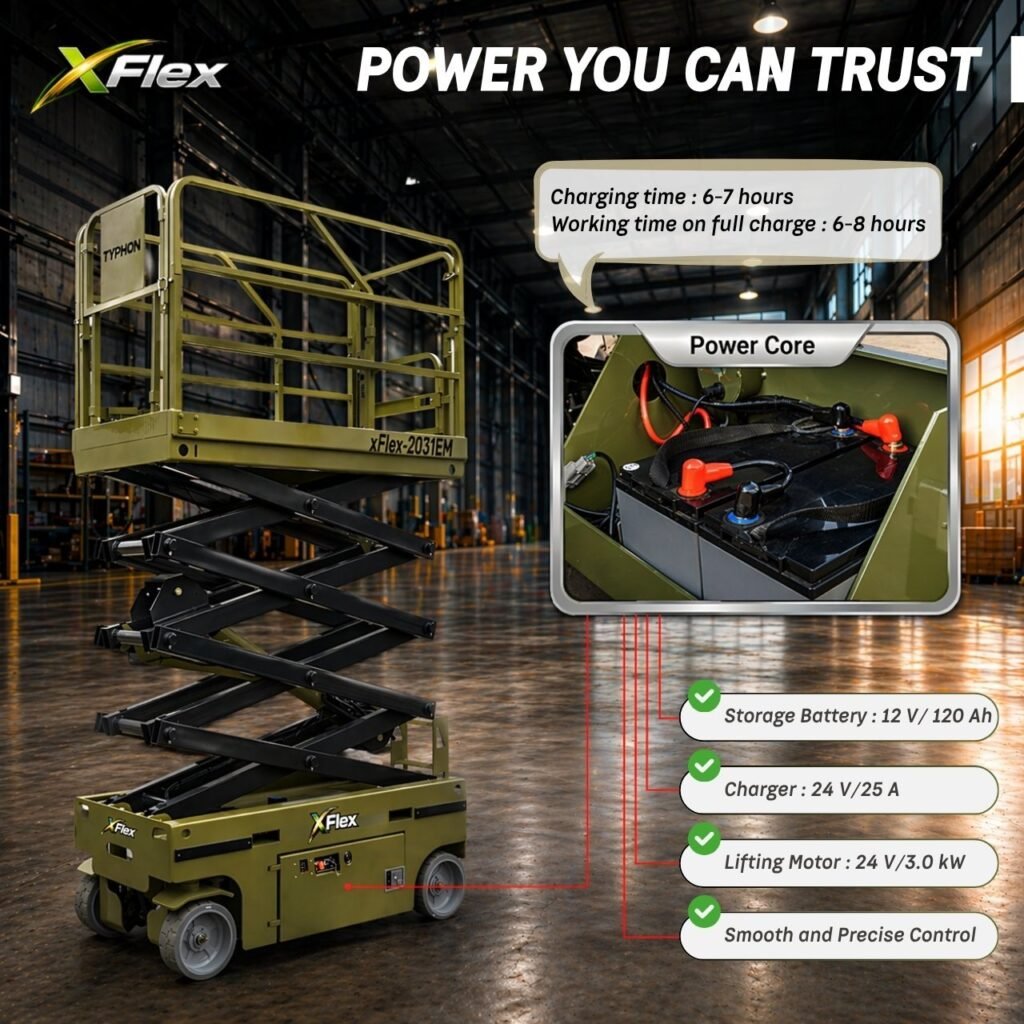
Battery technology has become one of the most important topics in any scissor lift buyer’s guide, because the power source increasingly defines performance, runtime, and long-term value. The traditional choice has been lead-acid batteries, which remain affordable and proven but demand consistent maintenance, including regular watering, periodic equalizing, and cooldown periods between charging and use. For single-shift indoor operations with disciplined battery care, lead-acid still serves reliably and keeps upfront costs down.
The momentum heading into 2026, though, runs firmly toward lithium-ion. These batteries charge faster, last longer, and require essentially no maintenance, since there is no watering or equalizing to manage. They support opportunity charging, which lets operators top up during breaks without harming the cells, keeping machines productive across multiple shifts and often eliminating the need for battery swapping. Lithium-ion units also use considerably less energy than comparable lead-acid systems and tolerate demanding conditions, including cold environments, far better. The upfront cost runs higher, but for high-utilization and multi-shift operations, the reduced maintenance, longer life, and lower downtime frequently deliver a stronger total cost of ownership. When you evaluate a machine for 2026, give serious weight to whether lithium-ion power fits your shift structure and budget, because for many buyers it has become the clear standard rather than the premium exception.
Safety Features Worth Looking For
Safety features are not optional extras on a scissor lift; they are the systems that protect your crew and keep your operation compliant. When evaluating any machine, start with the guardrail system, which serves as the primary fall protection and should be sturdy, complete, and fitted with a secure access gate rather than a chain. A reliable emergency lowering function matters enormously, because it lets an operator descend safely if the primary system fails while elevated.
Beyond the basics, modern machines offer features worth seeking out. Tilt sensors and automatic cutouts prevent operation on slopes that exceed safe limits, while overload sensing systems warn operators or restrict function when the platform carries too much weight. Pothole protection devices automatically deploy guards beneath the raised machine to prevent tip-overs from uneven ground or floor openings. Many lifts now include backup alarms, clear control labeling, and intuitive platform and ground-level controls that reduce operator error. For 2026, an increasing number of machines also arrive with telematics that track usage, location, maintenance needs, and operator behavior in real time, giving fleet managers the data to spot problems early and reinforce safe operation. Prioritizing these features protects both your people and your equipment, and it reflects the reliability and care that any serious operation should expect from its lifts.
Rental Versus Purchase: Making the Right Call
One of the most important decisions any buyer faces is whether to rent or purchase, and the right answer depends entirely on how you intend to use the machine. Renting makes strong sense for short-term projects, occasional needs, or specialized jobs that require a machine type you will rarely use again. It eliminates the burden of maintenance, storage, and depreciation, gives you access to current equipment without a large capital outlay, and lets you match a specific machine to a specific job. For a contractor who needs a fifty-foot rough terrain lift for a three-week project, renting is almost always the smarter financial move.
Purchasing becomes the better choice when your utilization is high and consistent. If a machine will work regularly across many months and years, ownership spreads the cost over a long productive life and typically proves cheaper than continuous rental. Owning also guarantees availability, lets you configure the machine exactly to your needs, and builds equity in an asset you can eventually resell. Many operations land on a hybrid approach, owning the machines they use constantly and renting to cover peak demand or specialized one-off requirements. To make the call, look honestly at how many days per year you will actually use the machine, compare the cumulative rental cost against the purchase price and operating expenses, and factor in your need for guaranteed availability. That clear-eyed comparison points reliably toward the right decision.
Understanding Total Cost of Ownership
Smart buyers look well beyond the sticker price, because the purchase cost is only the beginning of what a scissor lift truly costs. Total cost of ownership captures the full financial picture across the machine’s working life, and it often reverses the conclusion a buyer would reach by comparing purchase prices alone. An electric lift, particularly one with a lithium-ion battery, may carry a higher upfront cost than a comparable lead-acid or diesel model, yet frequently costs less to own over time.
The savings come from several sources. Energy costs favor electric machines, since electricity runs cheaper per operating hour than diesel fuel, especially with off-peak charging. Maintenance is where the gap widens most, because electric lifts have far fewer moving parts, with no engine oil, coolant, fuel system, or exhaust to service, which cuts both parts and labor costs year after year. Add longer equipment life, reduced downtime, and the elimination of fuel handling, and the full picture often shows a well-chosen electric machine paying back its premium within a few years in high-utilization settings. When you evaluate any scissor lift for 2026, build an honest total cost of ownership comparison that accounts for purchase price, energy or fuel, maintenance, expected utilization, and resale value. Run those full numbers, and the machine that truly delivers the best value usually becomes clear.
How to Choose the Right Machine for Your Application
Bringing all of these considerations together, the path to the right machine starts with a clear assessment of your specific application. Begin by walking the surface where the lift will operate, because that single observation tells you whether you need an electric slab machine for finished floors or a rough terrain unit for uneven ground. Confirm whether the work is indoors, where clean and quiet electric operation is essential, or outdoors, where terrain capability and endurance take priority.
From there, define your reach and load requirements precisely. Measure the highest point your crew must reach and add the working height an operator adds on the deck, then total the realistic combined weight of people, tools, and materials the platform must carry. Match those numbers to a machine that handles them with a sensible margin rather than at its limit. Next, weigh your power and battery options against your shift structure, leaning toward lithium-ion for multi-shift or high-utilization work and considering lead-acid or diesel where they genuinely fit better. Factor in the safety features your environment demands, decide between renting and buying based on your utilization, and build a total cost of ownership comparison to confirm the financial logic. Above all, work with a knowledgeable equipment partner who understands your industry and can match a specification precisely to your conditions. A choice grounded in your actual jobsite, rather than in spec sheets alone, leads reliably to a machine that delivers safe, productive work for years.
Conclusion
Choosing a scissor lift in 2026 comes down to a disciplined, honest look at your work and a clear understanding of the options in front of you. Electric slab machines win indoors with clean, quiet, low-cost operation on finished floors, while rough terrain and diesel units deliver the power and stability that demanding outdoor work requires. Battery technology, led by the rapid rise of lithium-ion, increasingly shapes performance and long-term value, and the safety features you choose protect both your crew and your compliance. Whether you rent for a single project or buy for a busy fleet, the right decision flows from matching the machine to the job and weighing the full total cost of ownership rather than the purchase price alone.
Your next step is straightforward. Walk the surface where the machine will work, measure your reach and load requirements, review your shift structure and budget, and weigh your safety and runtime needs honestly. With those facts in hand, consult a trusted equipment partner who can guide you to the machine that fits your operation precisely. Make that investment with care, and your scissor lift will protect your people, support your productivity, and deliver dependable value for every shift it runs through 2026 and well beyond.