Selecting a dumper for a residential foundation project involves more than looking at payload, engine power, and purchase price. Access width, unloading requirements, ground conditions, and site layout can all affect how well the machine performs. A dumper that appears suitable on paper may create problems if it cannot pass through the available access route or handle the terrain around the foundation.
Machine configuration directly affects how efficiently material can be moved and unloaded. Overall width needs to suit gates and pathways, while the bed design and dumping direction should match the receiving area. Ground conditions also matter when the route includes slopes, loose soil, or mud, especially when the dumper is carrying a full load.
Matching the dumper to the actual worksite helps prevent unnecessary delays and extra manual labor. Before selecting equipment, contractors should consider payload, machine dimensions, dump configuration, terrain capability, access conditions, and the materials being transported. Looking at the complete job rather than a few headline specifications can help ensure the dumper is suited to the project.
Check the Required Payload
Payload is the natural starting point, but the right figure comes from your work, not the largest number on a spec sheet. Payload capacity should reflect the materials and loads you normally handle on the jobsite. A dumper sized to your everyday work will outperform one chosen for rare, oversized jobs.
Material type changes the math. A bed filled with wet clay or broken concrete weighs far more than the same volume of topsoil or mulch. That means a dumper can reach its rated payload well before the bed looks full. Consider both the weight and the volume of the materials you move most often.
Rated operating limits matter just as much. A larger load does not always mean greater productivity, especially if it slows travel, reduces stability on slopes, or strains the machine. Staying within the manufacturer’s rated limits protects the dumper, the operator, and the schedule.
Key takeaway: Choose payload capacity based on the materials and loads you normally handle, and respect the machine’s rated operating limits rather than assuming a bigger load always means more productivity.
Consider Machine Dimensions
A dumper can only work where it fits. Width, height, length, and turning requirements all affect where the machine can operate. These dimensions often decide whether a dumper reaches the work area or stops at the entrance.
Restricted access is common on construction sites. Narrow gates, access roads, excavation areas, and confined spaces between structures may call for a compact machine. Height matters too, especially when passing under doorways, scaffolding, or overhead obstructions during renovation or interior work.
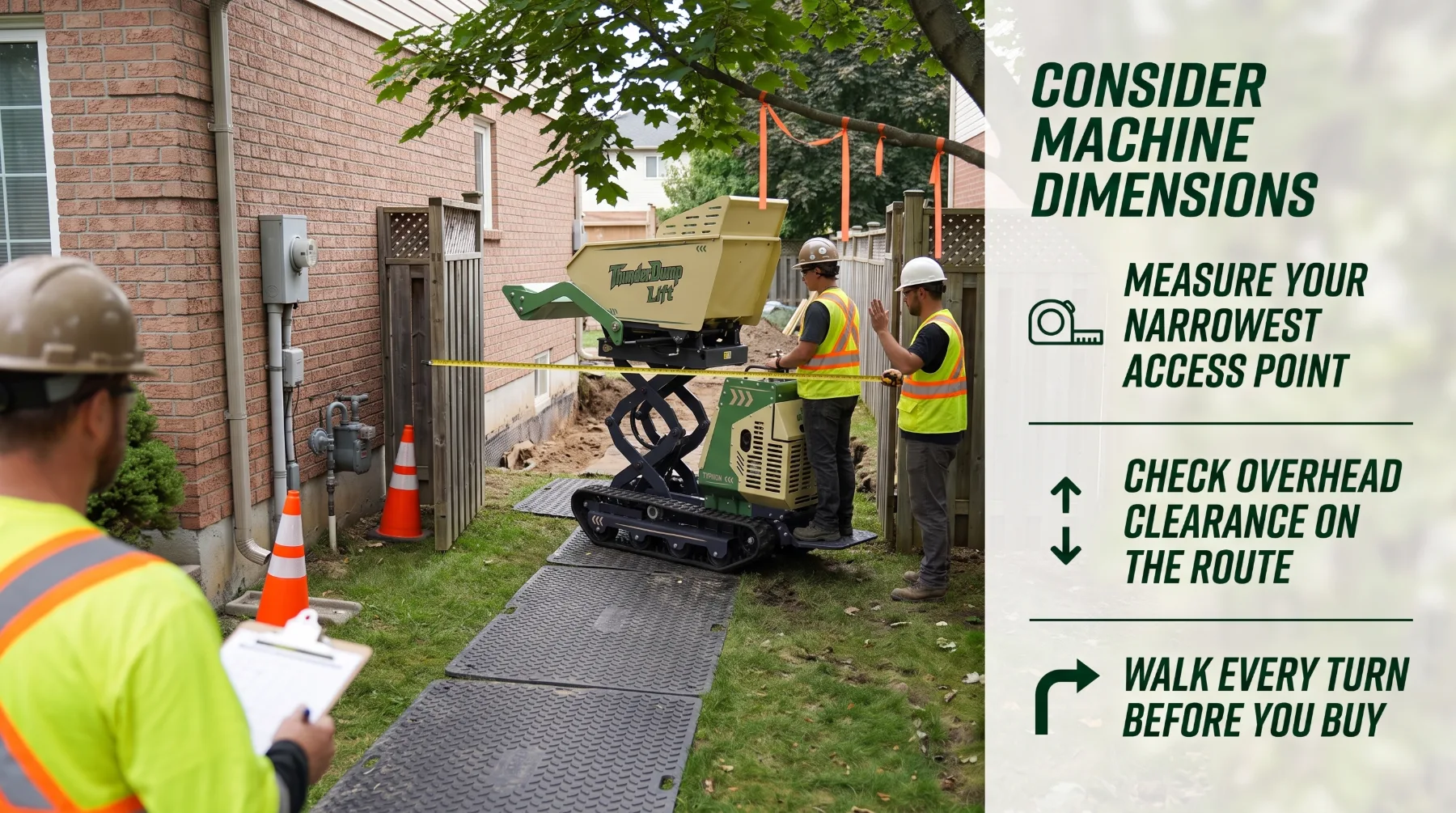
Turning requirements deserve close attention. Many dumpers use articulated steering or tracked undercarriages that help them maneuver in tight quarters. A machine that turns in a small footprint can reposition near trenches and foundations without repeated back-and-forth moves, which saves time on every load.
Key takeaway: Width, height, length, and turning requirements determine where a dumper can work, so confined sites, narrow gates, and access roads may require a compact machine.
Evaluate Terrain Capability
Construction sites rarely offer smooth, level ground. Mud, loose soil, gravel, slopes, and uneven surfaces are part of everyday work. A dumper needs to handle those conditions safely while carrying a full load.
Several features shape terrain performance. Traction determines how well the machine grips soft or loose ground. Ground clearance helps it pass over ruts and debris. Drive configuration matters as well, whether that means four-wheel drive on a wheeled dumper or a tracked undercarriage that spreads weight and improves flotation on soft ground.
Stability ties everything together. A loaded dumper on a slope carries a higher center of gravity, especially as the bed begins to tip. Choose a machine whose stability and rated slope limits suit the terrain where it will normally operate, and always follow the manufacturer’s guidance on working grades.
Key takeaway: Traction, ground clearance, drive configuration, and stability should suit the mud, loose soil, gravel, slopes, and uneven ground where the dumper will normally work.
Review Dumping Height and Bed Design
Dumping performance determines where material can go once it reaches its destination. A dumper that carries well but discharges poorly still creates extra work for the crew. Check whether the machine can place material exactly where your projects need it.
Bed design varies widely. Front-tip dumpers discharge directly ahead, which suits many general tasks. Swivel-bed models rotate the bed to tip to the side, which helps when working along trenches or in spaces where the machine can’t turn. High-tip designs raise the bed to discharge into skips, containers, or higher stockpiles.
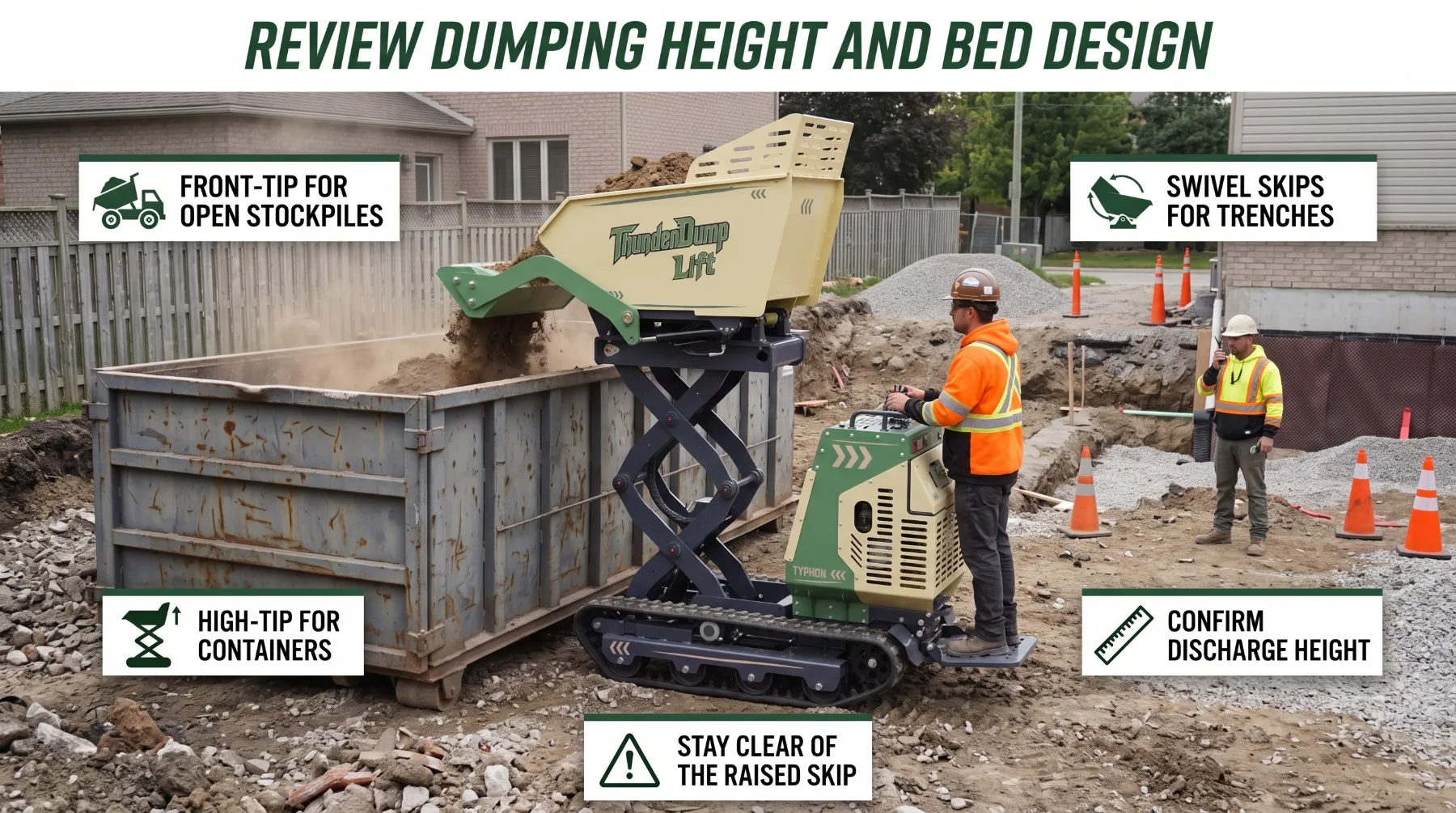
Match the design to your receiving areas. If your crews regularly fill skips, backfill trenches, or place material around foundations, confirm the dumper reaches the required discharge height and positions material accurately. The right bed design reduces manual handling and keeps each cycle moving.
Key takeaway: Confirm the dumper can reach the required discharge height and place material accurately around stockpiles, trenches, foundations, or other receiving areas.
Look at Operator Controls
Dumper work is repetitive. Operators load, travel, and dump many times over a shift, so controls should be easy to understand and operate. Clear, logical controls reduce errors and help operators maintain a steady pace.
Visibility is equally important. Operators often work near ground crews, structures, excavation edges, and other equipment. A clear view of the travel path, the bed, and the surrounding area supports both accuracy and safety. Features such as a raised seat, a rotating operator station, or reversible controls on some models can improve sightlines in both directions.
Comfort supports consistency over long days. A supportive seat, well-placed controls, and smooth travel response help operators stay focused. When crews share machines, simple and intuitive controls also shorten the learning curve for each new operator.
Key takeaway: Repeated loading, traveling, and dumping require easy-to-understand controls, along with good visibility near workers, structures, excavation edges, and other equipment.
Consider Maintenance Requirements
Routine service has a direct effect on long-term machine availability. A dumper that is difficult to maintain is more likely to miss service intervals, and missed service leads to breakdowns. Maintenance access deserves attention before you buy.
Review how easily technicians can reach the parts serviced most often. Check access to inspection points, fluids, filters, and hydraulic components. Tires or tracks also need regular inspection, since they carry heavy loads across rough ground every day.
Good access saves time and supports reliability. When daily checks are quick and simple, operators are more likely to complete them consistently. Ask about recommended service intervals, parts availability, and support options so you understand what ownership will involve over the life of the machine.
Key takeaway: Review access to inspection points, fluids, filters, hydraulic components, tires or tracks, and other regularly serviced parts, since routine service affects long-term availability.
Conclusion
Buying a construction dumper requires evaluating payload, dimensions, dumping performance, terrain capability, operator controls, and maintenance requirements against actual jobsite conditions rather than comparing capacity alone. Payload should match the typical weight and volume of materials while remaining within rated limits, and machine width, height, length, turning radius, and overhead clearance should fit the narrowest access points. Dump height and bed design must suit receiving areas such as skips, trenches, and stockpiles, while traction, ground clearance, drive type, stability, and rated slope limits should match the site’s terrain. Clear controls and good visibility support consistent operation, while accessible service points for fluids, filters, hydraulics, tires, or tracks can simplify routine maintenance. Parts availability and service support should also be considered alongside manufacturer maintenance intervals. Matching the dumper’s capacity, dimensions, discharge capability, terrain performance, operator station, and service requirements to the actual workload helps support reliable material handling across different construction projects.
Frequently Asked Questions
What should I consider first when buying a construction dumper?
Start with your typical payload, jobsite conditions, access requirements, and material-handling tasks. Consider the weight of materials you move most often, since dense loads such as wet soil, rock, or concrete can reach payload limits quickly. Review gate widths, access roads, overhead clearances, and ground conditions at your usual sites. Also consider where material must be discharged, such as skips, trenches, stockpiles, or foundations. Once these needs are clear, compare machine dimensions, bed design, terrain capability, controls, and maintenance access to avoid selecting a dumper that cannot handle your daily work.
Does dumper size affect jobsite access?
Yes. Dumper width, height, length, and turning requirements can determine whether it can reach restricted areas. Residential, urban, and renovation sites may have narrow gates, tight paths, doorways, or overhead obstacles. A machine that is too large can require access modifications or additional material handling. Turning space also matters in confined areas. Compact, articulated, or tracked dumpers can improve maneuverability depending on the site. Measuring your narrowest access points before purchase is the best way to confirm the machine will fit your regular jobsites.
Why is dump height important?
Dump height determines where the machine can discharge material and whether it can load elevated receiving areas. If crews regularly fill skips, containers, or high stockpiles, a high-tip dumper may be more suitable than a standard front-tip model. Bed design also affects material placement. Swivel-bed dumpers can discharge to the side, which is useful near trenches or confined areas where turning is difficult. Matching dump height and bed design to the job reduces manual handling, improves cycle efficiency, and helps place material correctly with fewer repositioning movements.
Is maintenance access important when buying a dumper?
Yes. Easy access to service points makes routine inspections and maintenance more practical. Dumpers operate in dusty and muddy conditions, so fluids, filters, hydraulic components, and tires or tracks need regular attention. During evaluation, check how easily daily inspection points and service components can be reached and review the manufacturer’s maintenance intervals. Parts availability and service support are also worth considering. Good maintenance access encourages consistent servicing, helps reduce unexpected downtime, and supports longer machine service life.