You look at the task ahead, check the working height, and the first tool that comes to mind is often a ladder. It is simple, portable, and available almost everywhere. However, reaching the work area is only one part of the decision. The surface condition, time spent working overhead, tools or materials involved, and the need for movement while elevated all affect whether a ladder is the safest and most efficient option.
A ladder can be practical for quick jobs that require minimal setup and limited time above ground. But when the work requires longer access, multiple tools, or a stable platform to move around, a scissor lift can provide a safer and more productive solution. The extra workspace and controlled positioning can make a major difference on demanding projects.
Selecting between a ladder and a scissor lift requires looking beyond height requirements. Factors such as job duration, worker comfort, site conditions, and safety expectations should guide the decision. Matching the equipment to the actual task helps reduce risks, improve efficiency, and ensure the job is completed with the proper level of support.
How Each Option Keeps You Off the Ground
Before you pick one, you need to understand what each tool actually does for your safety and your productivity. A ladder and a scissor lift both get you up high, but they support your body, your tools, and your balance in completely different ways. That difference decides which one protects you on a given task and which one quietly stacks the odds against you.
The working conditions around the job also play a major role in determining the better option. A stable platform, available workspace, required reach, and time spent at elevation can change what equipment makes the most sense. Looking at the full task instead of only the height helps prevent unsafe setups and unnecessary delays.
The Ladder: Simple, Fast, and Limited
A ladder is the most direct way to gain a few feet of height. You set it, climb it, and work, with almost no setup and no power required. For quick, low-height tasks in a tight spot, that speed and simplicity are hard to beat, and a well-placed ladder on firm ground handles plenty of everyday jobs safely.
The limits show up the moment the work gets longer or more demanding. A ladder gives you a narrow base of support, expects you to keep three points of contact, and leaves little room for tools or materials. Lean too far, overload the top, or set it on uneven ground, and the same simplicity that makes a ladder convenient turns it into one of the most common sources of workplace falls.
The Scissor Lift: A Stable Elevated Platform
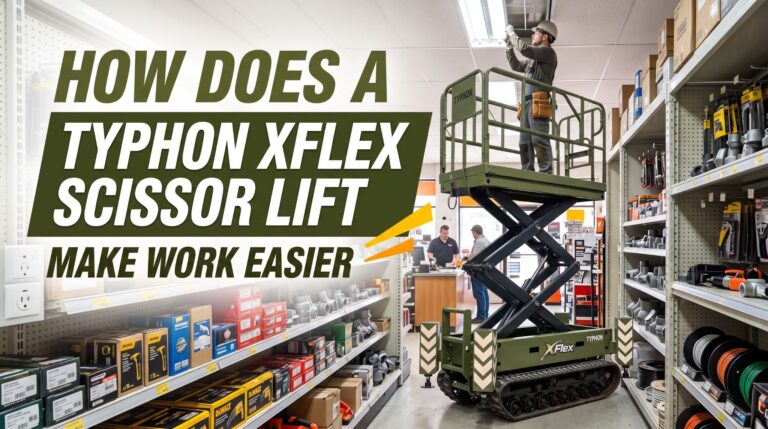
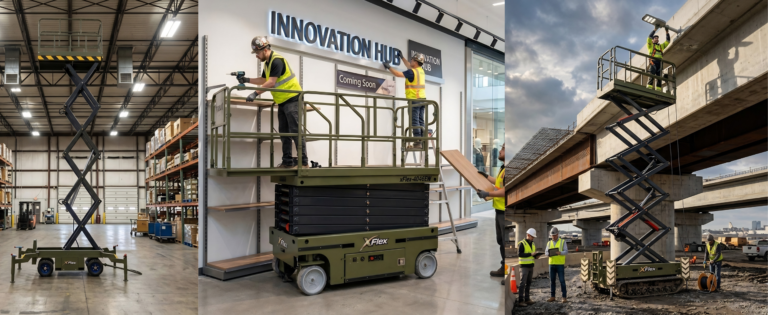
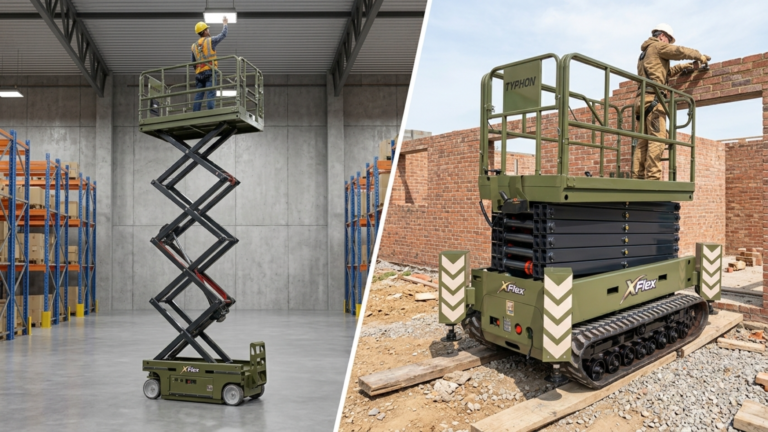
A scissor lift raises a full guarded platform straight up on a folding, criss-cross frame. Instead of balancing on rungs, you stand on a flat, railed deck with room to move, carry tools, and work with both hands. That stable platform changes the whole experience of working at height, especially when the job runs long.
The tradeoff is setup, space, and cost. A lift needs a clear, firm, reasonably level surface, room to maneuver, and time to position, and it represents a bigger investment than a ladder. But for extended work, heavier loads, or wider reach, that guarded platform delivers a level of stability and safety a ladder simply can’t match.
Takeaway: A ladder wins on speed and simplicity for quick, low tasks, while a scissor lift trades setup and cost for a stable, guarded platform built for longer, heavier, higher work.
Where a Ladder Still Makes Sense
A ladder is not automatically the wrong choice simply because a scissor lift is available. For short-duration tasks with light tools, simple access needs, and a stable surface, a ladder can be the faster and more practical solution without unnecessary setup.
The important factor is understanding where a ladder performs best and where its limitations begin to affect safety and efficiency. When the job requires extended work time, frequent movement, or carrying multiple tools, a larger work platform may provide better support and control.
Quick, Low-Height Tasks
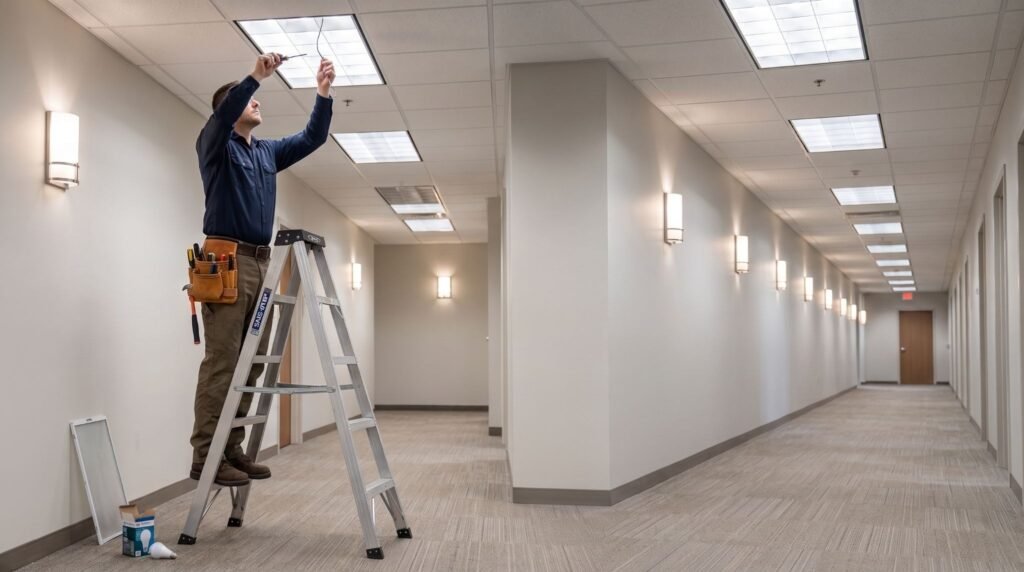
Short-duration work at modest heights is a ladder’s sweet spot. Swapping a light bulb, checking a smoke detector, hanging a sign, or making a quick inspection takes a minute or two, and hauling out a lift for that would be overkill. When you can complete the task in the time it would take to position a lift, the ladder is the practical choice.
The safety math works here because your exposure is brief and your movements are limited. You climb, do one contained task, and come down. As long as the ladder is rated for the load, set on firm ground, and used with proper contact, these quick jobs stay well within a ladder’s safe operating range.
Tight Spaces and Restricted Access
Sometimes a scissor lift simply can’t get where you need to be. Cramped mechanical rooms, narrow aisles, stairwells, and cluttered spaces often leave no room to position and raise a lift. A ladder fits where a lift can’t, letting you reach spots that would otherwise be inaccessible.
That access advantage matters most on service and repair work in existing buildings, where space is fixed and obstacles are everywhere. In these conditions, a ladder isn’t a compromise; it’s often the only tool that fits. The job is to use it correctly, set it on stable footing, and keep the task short enough that a ladder remains the safe option.
Takeaway: Reach for a ladder on quick, low-height tasks and in tight or restricted spaces, where its speed and small footprint make it both the practical and the safe choice.
Where a Scissor Lift Clearly Wins
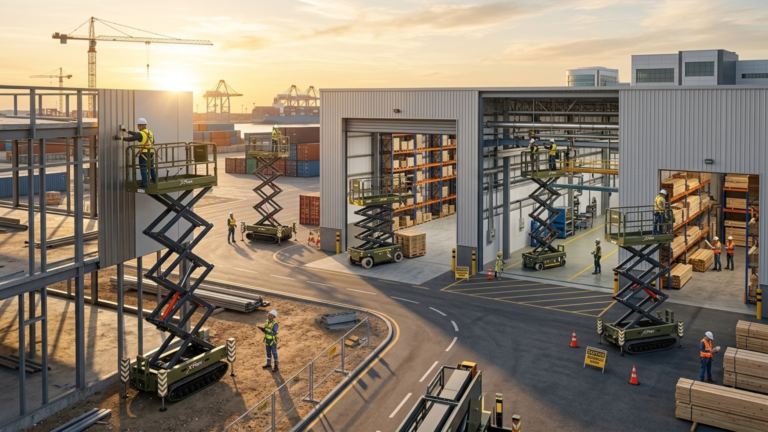
A scissor lift becomes the stronger option when the task requires more time, workspace, or stability at elevation. Its enclosed platform provides room for workers, tools, and materials while reducing the constant repositioning needed with a ladder.
For projects involving extended overhead work, repeated movements, or higher access points, a scissor lift helps create a more controlled working environment. Instead of balancing on limited footing, operators can focus on completing the task efficiently with better support and mobility.
Extended Work and Overhead Tasks
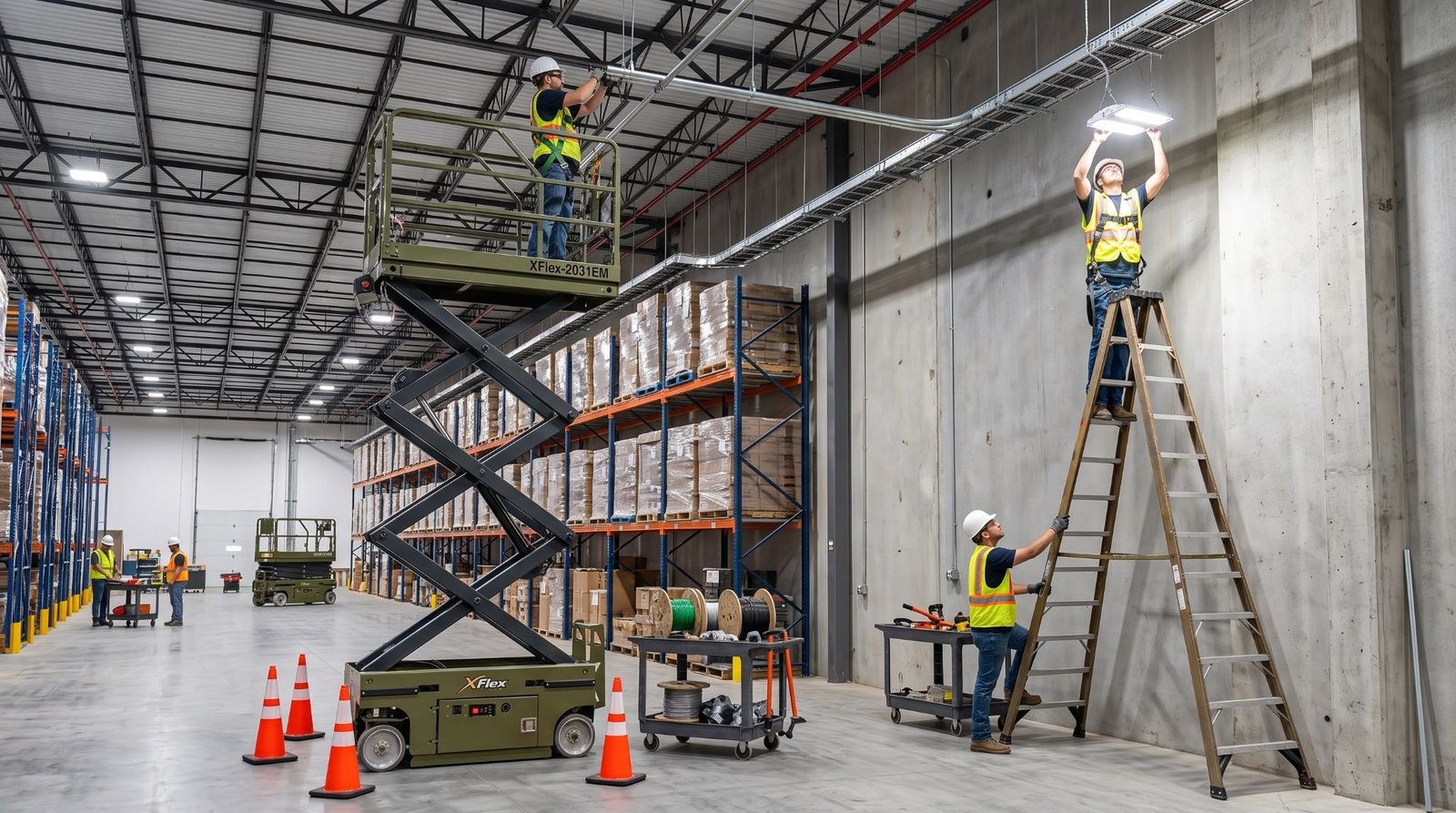
Long stretches of overhead work are where ladders become dangerous and lifts prove their worth. Installing conduit, running cable, hanging drywall, painting ceilings, or servicing HVAC across a large space means hours with your arms up and your body reaching. On a ladder, that fatigue and constant repositioning drive the risk sharply upward.
A scissor lift changes that entirely. You stand on a stable, railed platform, work with both hands, and move the deck along the work instead of climbing down and resetting a ladder dozens of times. The result is less fatigue, fewer transitions, and a far lower chance of a fall over the course of a long job.
Carrying Tools, Materials, and Working Wide
The moment you need to bring tools and materials up with you, a ladder’s limits become a hazard. Balancing supplies while maintaining contact is awkward and risky, and it’s a frequent cause of falls. A scissor lift gives you a deck to stage tools and materials, so you keep everything within reach without compromising your balance.
That platform also lets you work across a wider area from a single position. A guardrail-protected deck gives you room to move side to side and reach out safely, covering more of the work before you need to reposition. For jobs that demand materials, multiple tools, or lateral reach, the lift keeps you productive and protected at the same time.
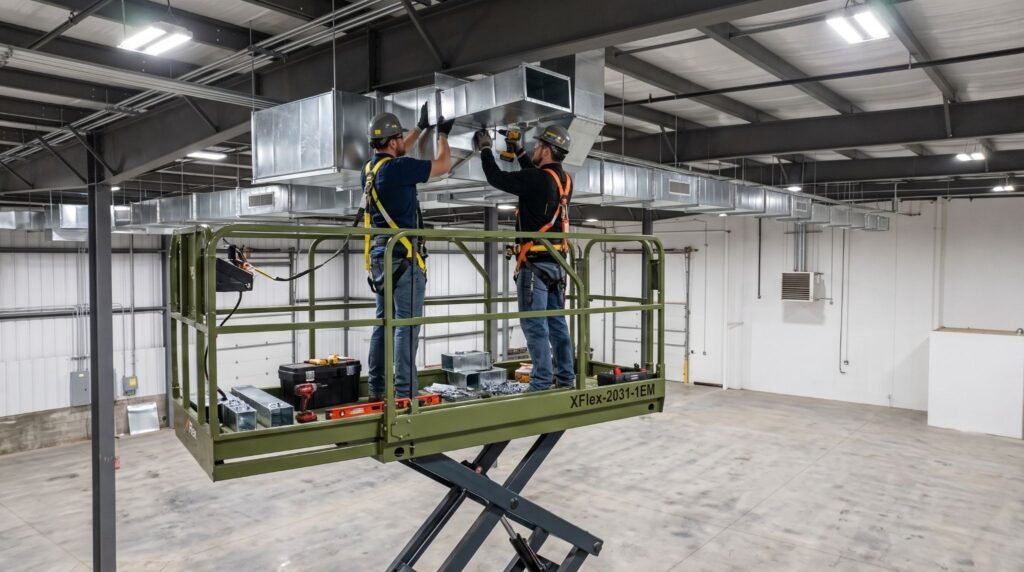
Takeaway: Choose a scissor lift for extended, overhead, or repetitive work and any task that requires carrying tools, handling materials, or reaching wide, where its stable platform sharply reduces the fall risk a ladder creates.
How the Job Should Steer Your Choice
The equipment you use should match the demands of the task rather than simply follow routine. Factors such as working height, time spent elevated, materials being handled, ground conditions, and job frequency all influence whether a ladder or scissor lift is the better fit.
Evaluating these details before starting helps prevent inefficient setups and unnecessary risks. When the conditions of the job are clear, the more suitable option becomes easier to identify.
Weigh Duration, Height, and Repetition
Start with how long and how high the work runs. A brief task at modest height leans ladder; sustained work, greater height, or anything you’ll repeat across a space-lean lift. Repetition matters more than people expect, because every climb up and down a ladder is another chance for a misstep, and dozens of resets add up to real exposure.
Be honest about the scope, too. A job that starts as “just a few minutes” often grows once you’re up there, and a ladder that feels fine for one task becomes risky for ten. If you find yourself climbing down and moving a ladder again and again, that’s the job telling you it needs a lift from the start.
Assess the Surface, Load, and Environment
Next, look at the ground and the surroundings. A firm, level surface with clear space supports a scissor lift and lets it work safely; soft, sloped, cluttered, or cramped conditions may rule a lift out and point back toward a ladder. Match the equipment to the environment rather than forcing a tool the site can’t safely accommodate.
Factor in what you’re carrying and where you’re working. Heavy tools, bulky materials, or wide reach favor a lift’s platform, while a quick, hands-light task in a tight spot suits a ladder. Weigh the surface, the load, and the space together, and choose the tool that stays safe under the real conditions of the job, not the ideal ones.
Takeaway: Let duration, height, repetition, surface, load, and space drive the decision, and you’ll match the safer tool to the actual job instead of defaulting to whatever’s closest.
Conclusion
A scissor lift and a ladder aren’t rivals so much as tools built for different jobs. A ladder wins on speed, cost, and access for quick, low-height tasks and tight spaces where a lift can’t fit or isn’t needed. A scissor lift wins on safety and productivity for extended, overhead, or repetitive work and any task that demands carrying tools, handling materials, or reaching wide from a stable, guarded platform.
The people who work safely at height don’t default to habit. They weigh the height, duration, load, surface, and repetition of the task, then match the tool to those real conditions. Before your next job, take an honest look at what the work truly involves and choose accordingly. And if you’d like help selecting the right lift, size, and setup for your work at height, reach out to a trusted equipment specialist who can match dependable equipment to the safe, efficient results your projects depend on.
Frequently Asked Questions
When should I use a scissor lift instead of a ladder?
The decision depends on more than height. Longer tasks, frequent movement, heavy tools, or uncomfortable ladder positions are signs that a scissor lift may be the safer option.
Do operators need training to use a scissor lift?
Yes. Scissor lift operators should receive proper training on controls, safety procedures, load limits, and equipment inspections before use.
Why do ladders cause many workplace falls?
Many ladder accidents happen due to improper setup, overreaching, unstable surfaces, or using a ladder for tasks that require a more stable platform.