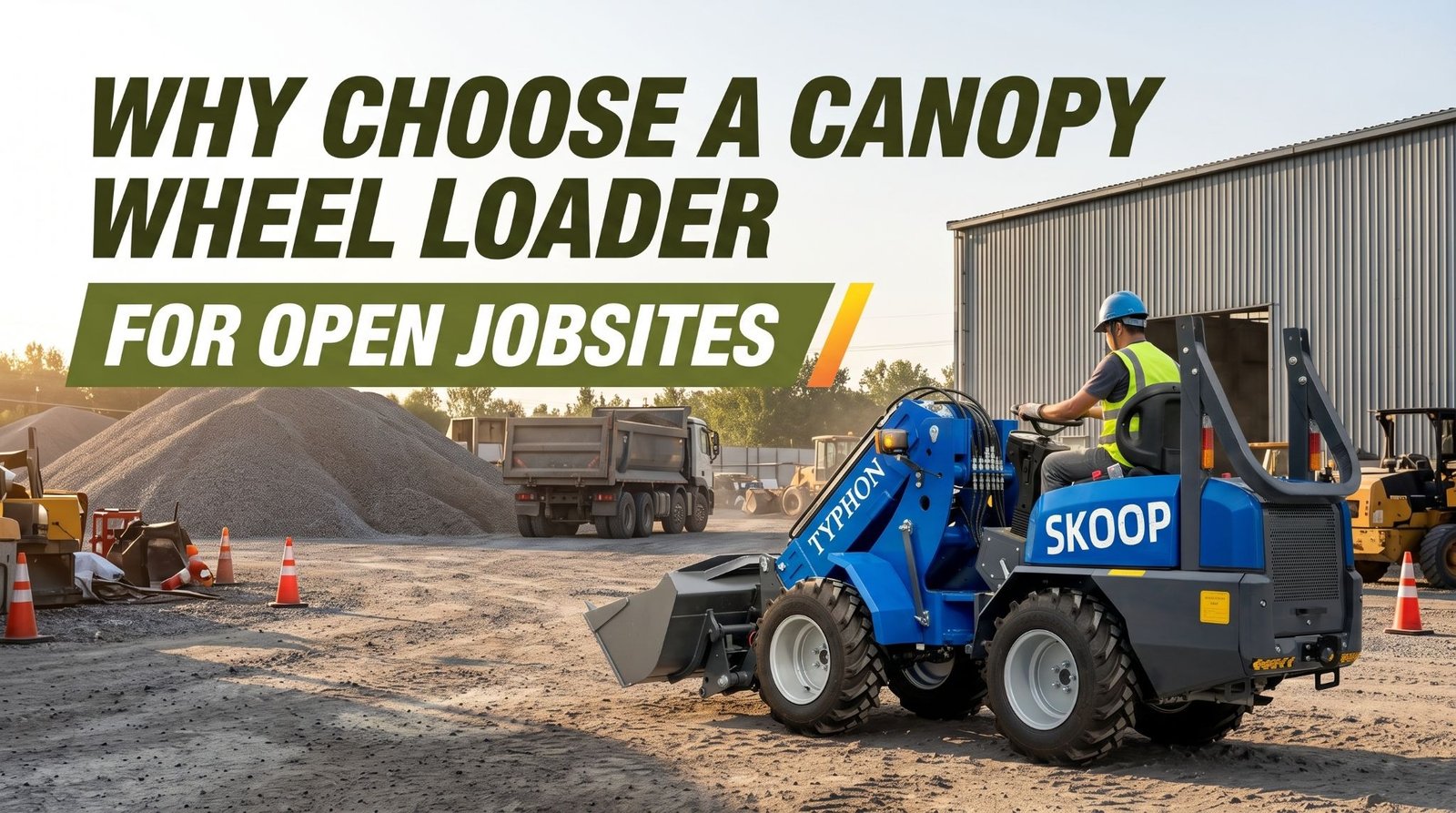
Working at an open construction site from first light, a wheel loader may spend the entire day moving gravel between stockpiles, haul trucks, and fresh material piles. The routine is straightforward: scoop, reverse, travel, dump, and repeat. Under an open sky, the operator deals with warm air, dust, changing light, and constant movement from trucks and ground crews. An enclosed cab can provide added protection, but it can also limit the open airflow and quick access that some outdoor applications favor. A canopy configuration keeps the operator station open while providing overhead coverage, giving crews a practical setup for steady material handling when site and weather conditions allow.
For outdoor work, the canopy becomes part of the machine’s operating setup rather than simply an overhead cover. Open sides allow air to move more freely around the operator, while the unobstructed layout can support a broad view of the bucket, travel path, and surrounding activity. Quick entry and exit can also be useful when the operator needs to inspect a load, communicate with workers, or move between short loading cycles.
Weather and jobsite conditions still determine where this configuration makes sense. Strong sunlight, light rain, dust, temperature, and falling material all influence the level of protection an operator needs during a shift. Regular inspection of the canopy frame, mounting points, seat area, controls, and other operator-station components helps keep the setup secure and ready for continued outdoor use. Matching the machine to the environment ensures the benefits of open airflow and visibility do not come at the expense of practical protection.
Improving Airflow Around the Operator
An open operator station lets air move naturally around the person at the controls, and that simple advantage carries real weight on a warm-weather jobsite. Instead of sitting in a sealed box that traps heat, the operator works in moving air that helps regulate temperature through a long shift. On summer construction, landscaping, and aggregate jobs where the machine runs outdoors for hours, that steady airflow keeps the operator cooler and more comfortable than a station that relies on closed-cab climate control to fight the heat.
Comfort here is not a small thing, because a cooler operator stays sharper and works more consistently across a full day. Heat wears people down, slows their decisions, and pushes them toward more frequent breaks, all of which cut into how much material the loader moves. An open canopy station turns the natural conditions of an outdoor site into an advantage, letting the breeze do the work of keeping the operator fresh. For crews spending long stretches outdoors in mild to warm weather, that airflow is one of the clearest reasons to favor a canopy configuration over an enclosed cab.
Key takeaway: An open canopy station lets air move freely around the operator, keeping them cooler and more focused through long warm-weather shifts than a sealed cab would.
Supporting Direct Visibility
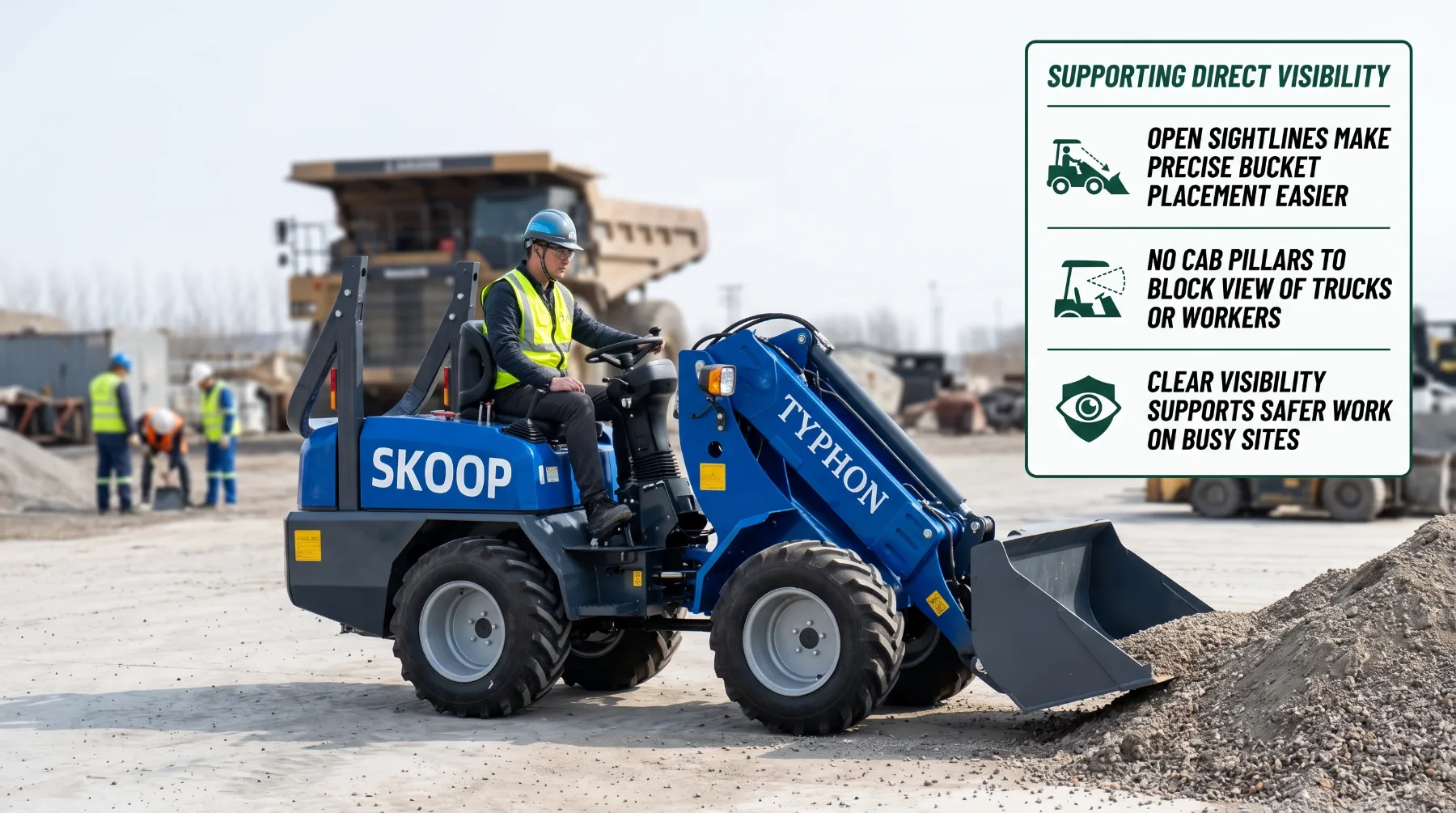
Without the posts, glass, and framing of a full cab, a canopy loader gives the operator an open, unobstructed feel around the station, and that clarity pays off on every cycle. Loading a truck, easing the bucket into a stockpile, grading a surface, or threading the machine past other equipment all depend on seeing exactly where the bucket and the machine are headed. The fewer structures standing between the operator and the work, the easier those judgments become, and the more confidently the operator can place each load.
On a busy open site, that visibility is also a safety asset. A loader shares its space with haul trucks, ground crews on foot, and other machines, and clear sightlines in every direction help the operator track all of it while working. An open station makes it easier to spot a worker approaching, judge the gap to a truck bed, or line up a precise dump without craning around cab pillars. Visibility still depends on good machine design, correct bucket positioning, and well-placed mirrors, but the open canopy layout gives the operator a strong starting point for seeing the whole work area clearly.
Key takeaway: A canopy loader’s open station provides clear, unobstructed sightlines that make bucket positioning, truck loading, and maneuvering easier and safer on a busy jobsite.
Accessing Controls Quickly
Frequent work cycles reward a machine that is easy to get in and out of, and a canopy configuration delivers exactly that with its open entry area. Rather than working around cab doors and a fully enclosed frame, the operator steps in and out quickly between tasks. Across a day of repeated loading cycles, short material moves, and stops to check the machine or the load, those saved seconds and easier movements add up to smoother, less tiring work.
This convenience matters most on jobs built around repetition and frequent stops. Repeated inspections, attachment changes, and short material-handling tasks all involve getting on and off the machine often, and an open station makes each of those transitions simpler. When an operator has to swap an attachment, walk the load, or check tire condition several times a shift, easy access keeps the workflow moving instead of turning every dismount into a chore. For open jobsites with busy, stop-and-go cycles, that quick access is a practical everyday advantage of the canopy setup.
Key takeaway: The open entry of a canopy loader makes getting in and out fast and easy, which suits jobs with frequent cycles, inspections, and attachment changes.
Handling Routine Outdoor Materials
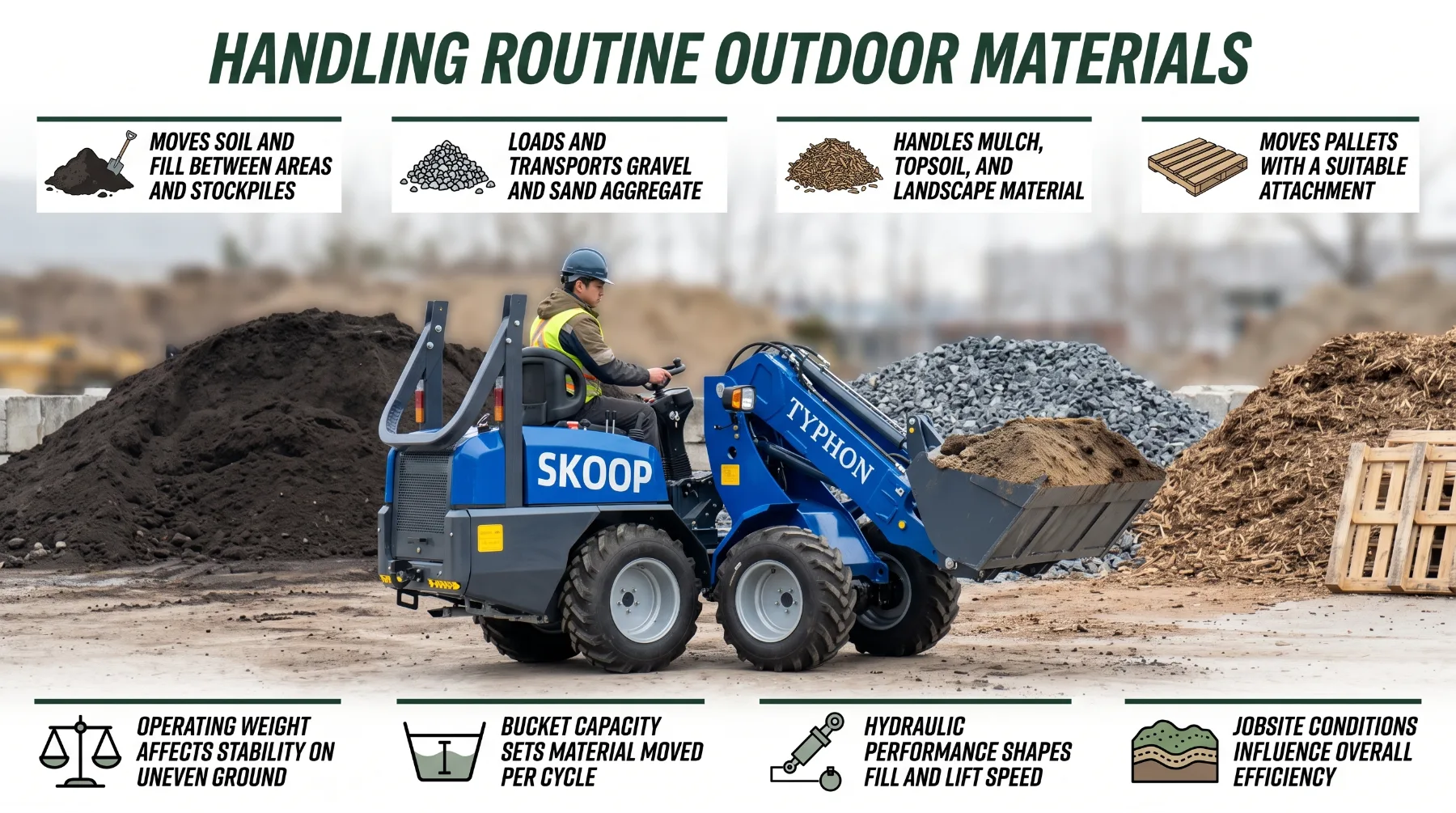
Canopy wheel loaders are well suited to everyday outdoor material handling, moving soil, gravel, sand, mulch, pallets, and other common jobsite materials. Their open configuration provides airflow, visibility, and easy access while the loader performs routine loading, carrying, and dumping work. Performance still depends on matching the machine’s specifications to the material, ground conditions, and workload.
- Soil and dirt: Wheel loaders can move excavated soil, fill material, and dirt between work areas, stockpiles, and trucks.
- Gravel and sand: Aggregate materials can be loaded, transported, and placed around construction and landscaping sites through repeated bucket cycles.
- Mulch and landscape materials: Landscaping crews can use the loader for moving mulch, topsoil, compost, and similar bulk materials across larger outdoor work areas.
- Pallet handling: With a suitable attachment, a loader can move pallets and other packaged materials around construction or storage areas.
- Operating weight: Machine weight affects stability and how the loader handles loaded buckets, particularly when working on uneven ground or carrying heavier materials.
- Bucket capacity: Bucket size determines how much material can be moved during each cycle, directly affecting the number of cycles needed for a specific workload.
- Hydraulic performance: Hydraulic flow and pressure influence how smoothly and quickly the loader fills, lifts, and dumps the bucket or operates compatible attachments.
- Jobsite conditions: Ground surface, material density, slopes, available working space, and travel distance all affect how effectively the loader can perform routine material-handling tasks.
Key takeaway: Canopy loaders handle common outdoor materials like soil, gravel, sand, mulch, and pallets well, but real performance depends on matching operating weight, bucket capacity, and hydraulics to the work.
Working in Suitable Weather
The open design that makes a canopy loader so comfortable in mild conditions is also its main limitation, which is why weather sits at the center of the decision. Canopy machines are best suited to jobs where weather exposure stays manageable, meaning fair conditions and moderate temperatures where the open station is an advantage rather than a hardship. On those days, the airflow and visibility of the open layout make it a clear fit for outdoor material handling.
Harsher conditions call for honest judgment. Steady rain, extreme heat, biting cold, and strong wind all reach the operator directly in an open station, and each can affect comfort, focus, and safe operation. A contractor weighing a canopy loader should look realistically at the climate and season the machine will work in, and decide whether the open configuration suits the conditions or whether enclosed protection makes more sense for the job. The right call depends on the site: for open work in agreeable weather, a canopy loader is a strong choice, while jobs that regularly face rough conditions may be better served by a machine built to shut the weather out.
Key takeaway: Canopy loaders fit jobs with manageable weather and moderate temperatures, so operators should weigh rain, heat, cold, and wind honestly before choosing an open machine for the work.
Maintaining the Operator Station
An open operator station stays ready for daily use only when it is inspected and cared for as a genuine part of the machine. Because the station is exposed to sun, dust, and the vibration of steady material handling, its components need regular attention to keep working reliably. A short, disciplined check before work begins is the simplest way to catch small problems before they affect the operator or slow the job.
A good routine covers the whole station. Check the canopy structure and its mounting hardware for cracks, looseness, or damage, since these protect the operator and must stay sound. Inspect the seat and controls to confirm they are secure and working correctly, look over the mirrors so the operator’s sightlines stay clear, and verify that safety equipment is present and in good condition. Anything loose, worn, or damaged should be addressed before the machine goes to work rather than left to worsen. Folding these checks into the daily walkaround keeps them from being skipped and keeps the open station dependable shift after shift.
Key takeaway: Regular inspection of the canopy structure, hardware, seat, controls, mirrors, and safety equipment keeps an open operator station safe and ready for daily use.
Conclusion
A canopy wheel loader is suited to outdoor material-handling applications where weather conditions are manageable and the machine specifications match the workload. The open operator station improves natural airflow and provides direct visibility around the bucket, work area, and surrounding traffic, which can support precise material placement and maneuvering during repetitive loading cycles. Easy entry and exit can also reduce access time during inspections, attachment changes, and frequent operating interruptions. Overall handling performance still depends on operating weight, bucket capacity, hydraulic flow and pressure, lift capacity, traction, and drivetrain characteristics rather than the canopy configuration alone. Weather exposure is another important consideration because an open station provides less protection from rain, cold, wind, and extreme heat than an enclosed cab. Regular inspection of the canopy structure, mounting hardware, seat, controls, mirrors, and required safety equipment helps maintain reliable operation. Machine selection should therefore consider expected weather, material type, payload, cycle frequency, surface conditions, hydraulic requirements, and operator protection needs to determine whether an open canopy configuration is appropriate for the intended jobsite.
Frequently Asked Questions
What is a canopy wheel loader?
A canopy wheel loader has an overhead protective structure instead of a fully enclosed cab. The open sides provide natural airflow, easier entry and exit, and a more open view of the work area. The trade-off is greater exposure to weather, so this setup is best suited to jobs where outdoor conditions are manageable.
Where are canopy wheel loaders commonly used?
Canopy wheel loaders are commonly used for outdoor work in landscaping, agriculture, construction, and aggregate handling. Typical tasks include moving soil, gravel, sand, mulch, and pallets. They suit jobs where operators benefit from airflow, easy access, and clear visibility. Machine weight, bucket capacity, hydraulics, and site conditions should still be considered.
Does a canopy improve visibility?
An open canopy can provide a less obstructed view than an enclosed cab because there is less framing and glass around the operator. This can help when loading trucks, positioning the bucket, grading, or working around other equipment. However, visibility also depends on bucket position, mirrors, machine design, and site conditions.
Are canopy wheel loaders suitable for all weather?
No. An open operator station leaves the operator more exposed to rain, heat, cold, and wind than an enclosed cab. Canopy loaders are better suited to moderate outdoor conditions where weather exposure is manageable. For jobs involving frequent harsh weather, an enclosed cab may provide better protection and comfort.