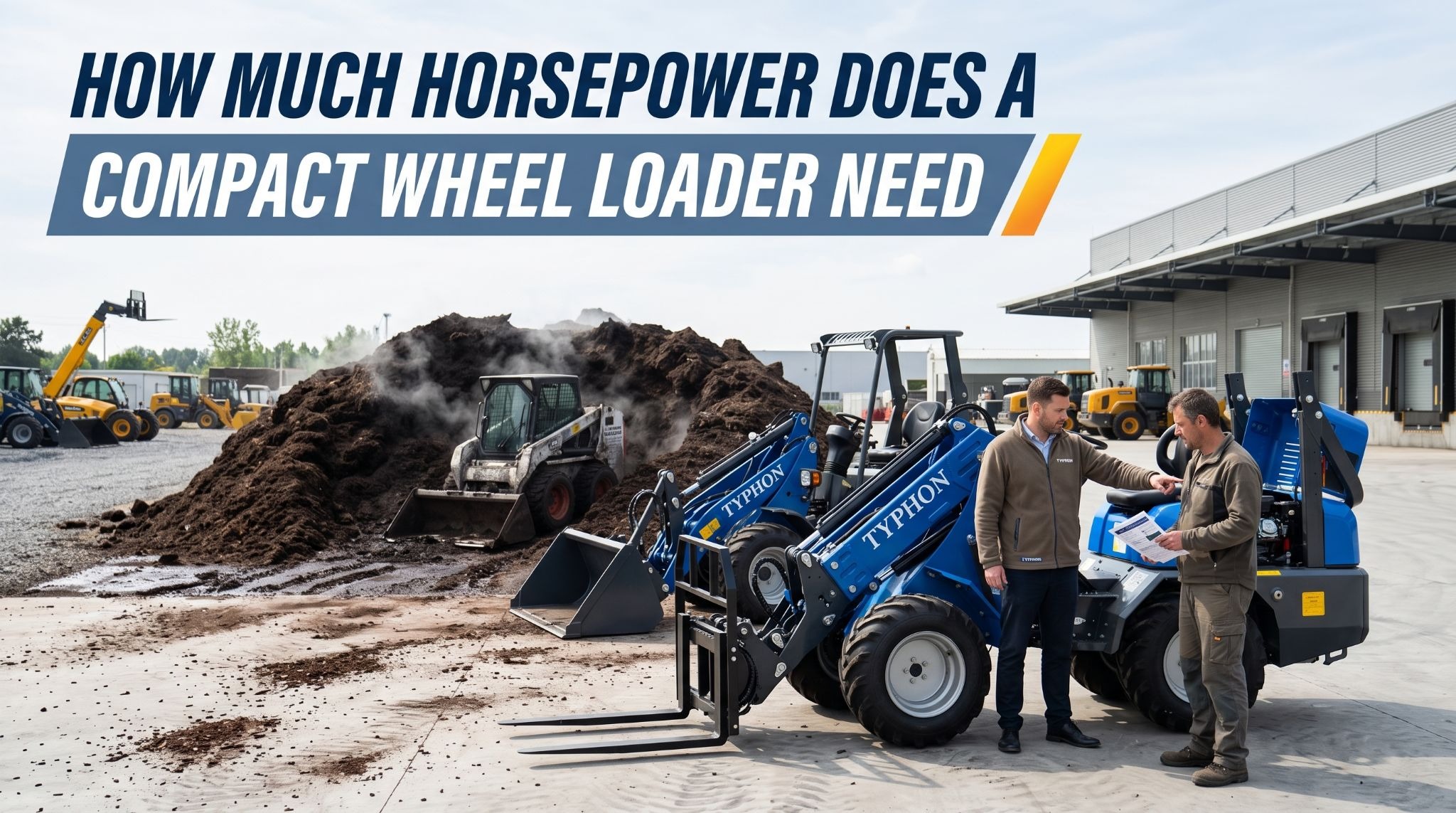
A landscape supply owner walks a dealer lot with a simple goal: replace an aging loader that struggles to fill a bucket of wet mulch on a busy Saturday. Two compact wheel loaders sit side by side, and the salesperson keeps circling back to the horsepower figures on each spec sheet. The owner nods along, but a quiet worry lingers underneath the conversation. Is the machine with the bigger number actually the better buy, or does that extra power just mean a higher price tag and a thirstier engine? The honest answer is that horsepower matters enormously, but only when you read it in the context of the work the loader will do. Buying too little leaves the machine straining through every task, while buying too much drains your budget on capability that sits idle. Getting the figure right is what turns a smart purchase into a machine that earns its keep every shift.
Horsepower shapes how a compact wheel loader performs, yet the number on the spec sheet tells only part of the story. Knowing what the rating means, how your work shapes the requirement, and how power connects to the rest of the machine helps you buy with real confidence.
Power Rating and Its Impact on Every Task
Horsepower defines the ceiling of what a compact wheel loader can accomplish, because the engine ultimately drives everything the machine does. Filling a bucket, pushing into a pile, driving the hydraulics, and rolling across a yard all draw on that single power source, so the rating hints at how much work the loader can perform before it starts to strain. A machine with power suited to its tasks handles a full day without bogging down, while an underpowered one fights its own load on every cycle.
Productivity ties straight to that power, since a loader that carries enough muscle keeps moving material at a steady, profitable pace. When the engine has room to spare, the machine fills faster, travels quicker, and recovers between cycles without hesitation, and those small gains stack into real output across a shift. A loader that labors through each pass costs you time you never get back.
Cost pulls in the other direction, which is why the rating deserves a balanced eye rather than a chase for the largest figure. A higher-rated loader generally carries a steeper purchase price, burns more fuel, and can cost more to maintain over its life, so paying for power you never tap wastes money on every shift. Key takeaway: horsepower sets the ceiling on what a compact wheel loader can do and touches both productivity and cost, which is why the rating deserves careful, balanced attention.
Reading a Horsepower Rating the Right Way
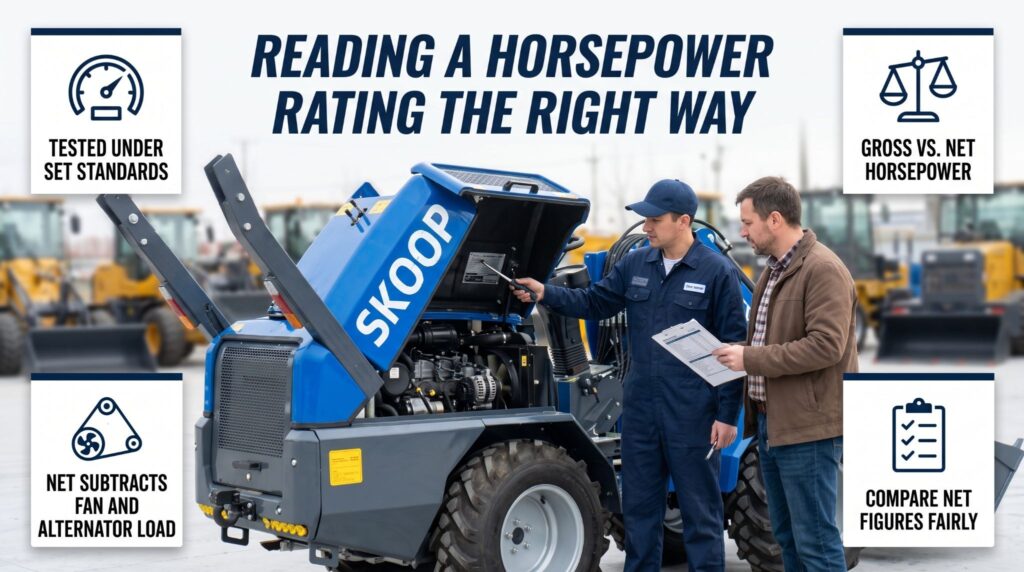
Spec sheets hide a few traps in their horsepower figures, so learning to read them honestly is the first step toward a sound comparison. Manufacturers test engines under recognized standards and publish the result, but different standards measure under different conditions, so two loaders rated by different methods may not line up as cleanly as their numbers suggest. Confirming the basis behind each figure keeps a side-by-side comparison fair.
Gross and net ratings mark the distinction buyers most often miss, and mixing them up leads to a poor decision. Gross horsepower measures the bare engine on a test stand, while net horsepower measures the output once the fan, alternator, and other systems have taken their share, so net reflects the power actually available to do work. Comparing one loader’s net figure against another’s net figure keeps your judgment grounded in usable muscle rather than laboratory potential.
Torque belongs beside horsepower whenever you study a rating, because the two describe different qualities of the same engine. Horsepower reflects the rate at which the engine works, while torque reflects the twisting force that lets the machine push into a dense pile without stalling, so a loader with strong torque digs with an authority the horsepower number alone never reveals. Key takeaway: read horsepower against its testing standard, compare net figures against net, and weigh torque alongside the headline number to understand what a loader truly delivers.
Letting the Material and Duty Cycle Guide the Requirement
Material is the honest starting point for any power decision, because what a loader lifts every day sets the baseline for how much muscle it needs. Light, loose material like mulch, wood chips, or dry topsoil asks far less of an engine than dense, heavy loads such as wet aggregate, gravel, or compacted soil, so naming your primary material tells you plenty before you ever read a spec sheet. A machine sized for feathers will flounder in stone.
Duty cycle shapes the requirement just as firmly, since how hard and how often the loader works matters as much as the weight it carries. A machine running short, occasional loading passes at a supply yard asks less of its engine than one cycling continuously through a demanding shift, loading truck after truck without pause. Thinking through the full rhythm of a typical day, not just the heaviest single lift, points you toward power that holds up under real use.
Consistency of the workload rounds out the picture, because a loader that faces its toughest task only rarely deserves different consideration than one that grinds through hard work all day. A yard that handles heavy material during a brief seasonal rush might manage with moderate power and a little patience, while an operation loading dense fill every hour needs headroom built in from the start. Key takeaway: matching horsepower to your primary material, your duty cycle, and the consistency of the work keeps the loader powered for the job rather than the exception.
Connecting Horsepower to Hydraulics and Bucket Size
Hydraulic performance leans heavily on engine power, because the same source that drives the wheels also feeds the pump that raises the arms and curls the bucket. A loader with adequate horsepower runs its hydraulics smoothly even while traveling under load, so the operator lifts and drives at once without either function starving the other. When power runs thin, the hydraulics slow the moment the machine asks the engine to do two things at the same time.
Breakout force reveals what that power feels like at the working end, since it measures how forcefully the bucket can pry material loose from a pile. This force depends on the engine and the hydraulics working together, so a loader with the right power behind its hydraulic system bites into compacted material with confidence rather than skating across the surface. A buyer chasing real productivity should study breakout force alongside the horsepower figure rather than trusting the rating alone.
Bucket capacity must stay in balance with the power that fills it, because a larger bucket holds more per pass but demands more engine output to fill and lift a heavier load. Manufacturers size the standard bucket to suit the loader’s power for good reason, so a machine whose rating and bucket capacity match one another was built for genuine, sustained work. Key takeaway: horsepower feeds the hydraulics, drives the breakout force, and sets the bucket size a loader can handle, so reading these figures together shows what the machine can truly move.
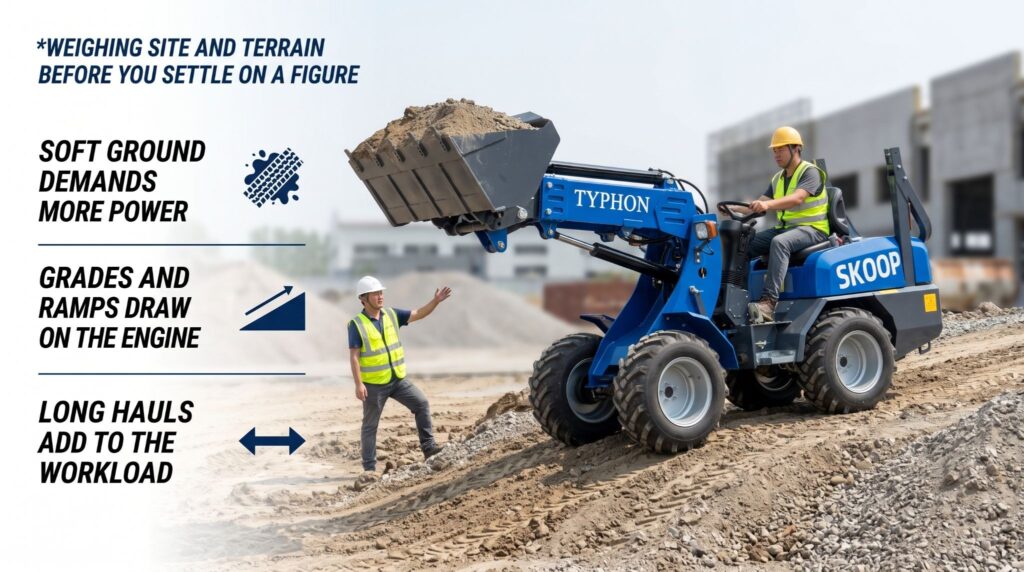
Weighing Site and Terrain Before You Settle on a Figure
Ground conditions influence power needs more than many buyers expect, because the surface a loader works on decides how hard the engine must labor to move at all. Soft, muddy, or sandy terrain drags at the wheels and demands extra power to maintain a steady pace, while firm, level ground lets the same machine work with far less effort. A loader that feels strong on a paved yard can struggle on a soft site if its power leaves no margin.
Grades and travel distances add their own draw on the engine, so the layout of your site belongs in the calculation. Climbing a ramp, pushing up a slope, or hauling a full bucket across a long yard all ask more of the loader than working in a tight, flat space, and a machine short on power will slow noticeably on every incline. Mapping the grades and distances your loader will cover routinely helps you judge whether a given rating leaves enough headroom.
Altitude quietly trims engine output in ways worth remembering for operations at elevation, since thinner air reduces the power a naturally aspirated engine can produce. A loader that performs well near sea level may deliver noticeably less at a mountain site, so buyers working high ground should account for that loss and lean toward a machine with power to spare. Key takeaway: soft ground, steep grades, long travel, and high elevation all raise the power a compact wheel loader needs, so read your site honestly before settling on a figure.
Choosing the Horsepower That Fits Your Operation
Selection comes together when you gather everything the earlier sections revealed and weigh it against the machine in front of you. Start by naming your primary material, your duty cycle, and your typical bucket size, then confirm the loader’s net horsepower and breakout force suit that works rather than assuming the biggest number wins. Buying for the tasks you actually perform keeps you from overpaying for capability that never leaves the yard.
Headroom deserves a deliberate decision rather than an afterthought, because a little power in reserve protects you as your work grows or your loads grow heavier. Sizing a machine to handle only your lightest days leaves it straining the moment a demanding job arrives, so choosing a rating with modest margin above your routine needs guards against buying too little. That said, piling on power far beyond your work simply spends money on fuel and purchase price you will never recover.
Guidance from a knowledgeable equipment source turns your assessment into a confident purchase, because matching horsepower to a machine, a workload, and a budget rewards real experience. Describing your material, your duty cycle, your site conditions, and your growth plans to a trusted specialist lets them recommend a loader built for the results you need rather than a generic best guess. Key takeaway: choose horsepower by matching your material, duty cycle, and site to a machine’s net rating, build in sensible headroom, and lean on a trusted specialist so the loader fits the work you truly do.
Conclusion
Deciding how much horsepower a compact wheel loader needs comes down to matching the machine honestly to the work your operation demands, and the full picture holds once you weigh each factor in turn. Start by recognizing why the power rating sets the ceiling on productivity and touches your cost, then read the figure correctly by comparing net ratings against net and weighing torque beside horsepower. Let your primary material and duty cycle guide the baseline requirement, and connect that power to the hydraulics, breakout force, and bucket capacity it must drive. Account for the soft ground, steep grades, long travel, and elevation that raise the demand, then choose a rating that fits your work with sensible headroom built in. Attend to all six, and you buy a loader powered for the job rather than for the spec sheet. Before your next purchase, name your typical material, confirm the net rating and breakout force, and map your site so the machine performs from the first bucket. When you’re ready to put a dependable compact wheel loader matched to your work to work, or need help reading the ratings for your operation, reach out to a trusted equipment specialist who can match reliable equipment to the results your work depends on.
Frequently Asked Questions
How much horsepower does a compact wheel loader usually have?
Most compact wheel loaders produce about 40–75 HP. The right rating depends on your workload, material, duty cycle, and site conditions.
Is more horsepower always better in a compact wheel loader?
No. More horsepower can increase fuel, purchase, and maintenance costs. Choose enough power for your regular work with some extra capacity for heavier tasks.
What is the difference between gross and net horsepower on a loader?
Gross horsepower measures the engine under ideal test conditions. Net horsepower measures power available after accessories and systems use some engine output. For comparisons, focus on net horsepower.