
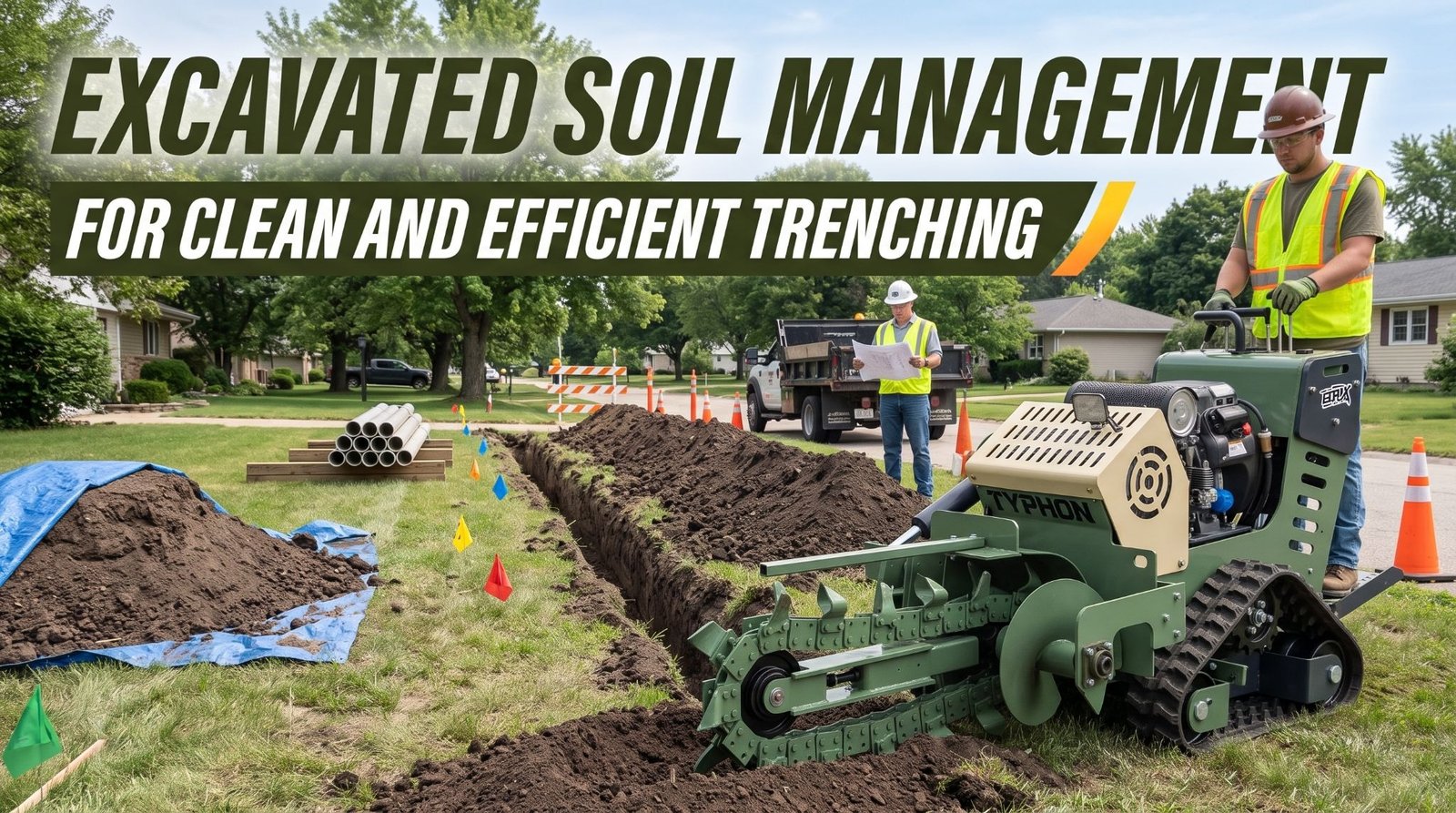
Every trench produces soil, and that soil has to go somewhere. On a well-run jobsite, excavated material sits in a planned location, stays clear of the trench edge, and returns as backfill with little extra handling. On a poorly managed site, spoil piles block access, slide back into the trench, turn to mud after a storm, and get moved two or three times before the job is done.
Good spoil management keeps trenching sites organized, protects workers, and keeps installations on schedule. It supports efficient work on water lines, electrical cables, drainage systems, irrigation networks, and communication conduits. The practices below help contractors plan soil placement, control water, coordinate backfilling, and choose equipment that limits disturbance. Always follow applicable regulations, project specifications, and site-specific safety requirements for your location.
Plan Where Excavated Soil Will Go
Spoil management starts before the first cut. Once digging begins, crews tend to place soil wherever it is convenient at that moment. That often means piles in the wrong spot, blocked access routes, and material that must be moved again later. A few minutes of planning prevents hours of rehandling.
Walk the trench route and identify a suitable spoil storage area for each section of the job. Consider access routes for equipment and deliveries, property boundaries, drainage paths, nearby structures, and overhead and underground utilities. Leave enough room for the trencher or excavator to work, for pipe or conduit to be staged, and for workers to move safely along the trench.
Estimate how much material each section will produce. Trench length, width, and depth determine the volume, and excavated soil typically takes up more space once it is loosened than it did in the ground. Planning for that swell helps you size storage areas correctly. On tight residential sites, you may need to load spoil directly into a dumper or truck for temporary storage elsewhere. Before any digging, contact your local utility notification center, such as 811 in the United States, and make sure existing services are located and marked.
Key takeaway: Choose spoil storage locations before digging begins, account for soil swell, and plan around access, drainage, structures, and marked utilities.
Keep Spoil Away From Trench Edges
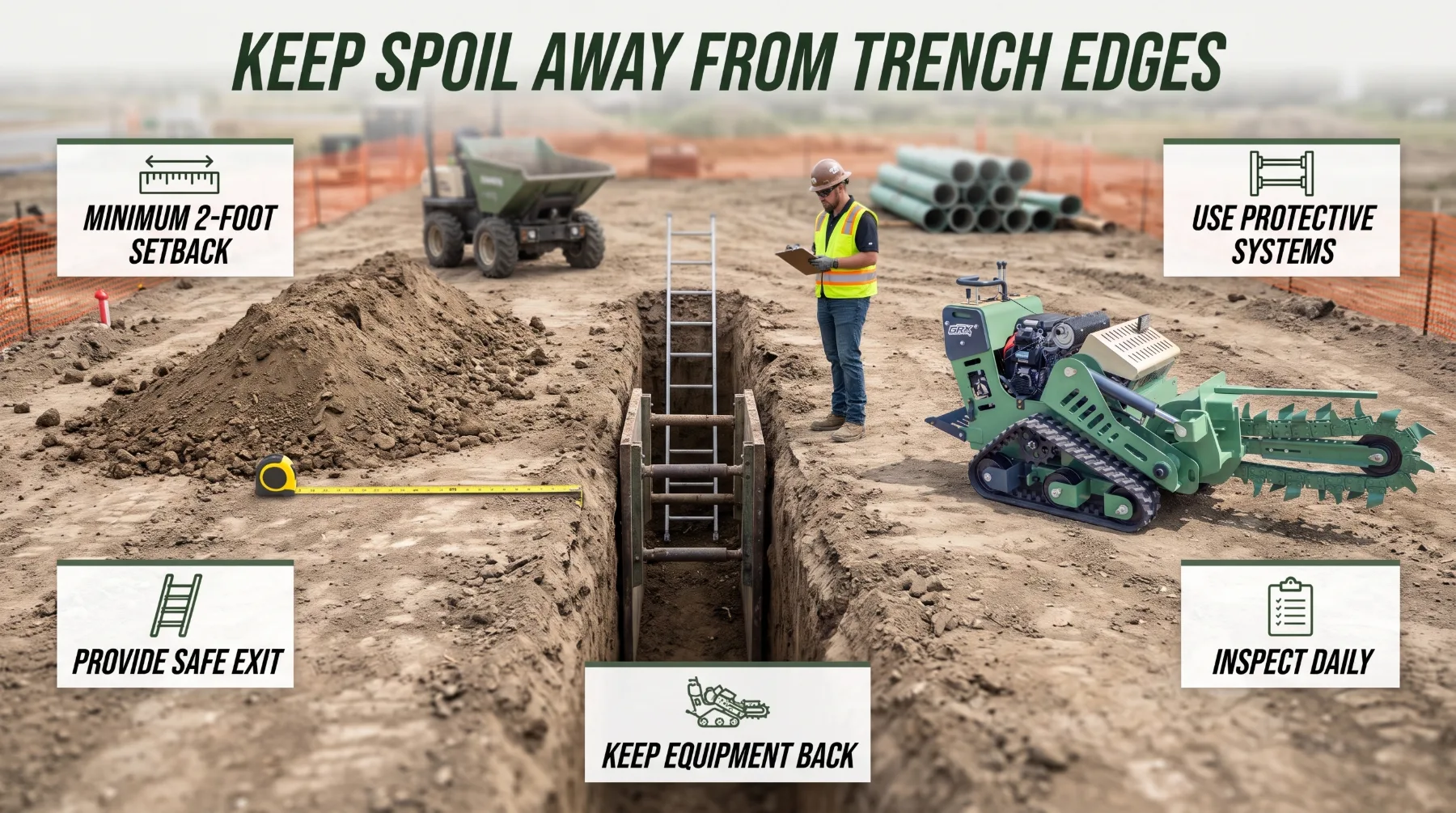
Spoiling placed too close to a trench creates two serious hazards. Its weight adds pressure, known as surcharge, to the trench wall, which increases the risk of a cave-in. Loose material can also roll or slide back into the excavation and strike workers below. Trench collapses happen quickly and without warning, and even a small section of soil can cause fatal injuries.
Keep excavated material, equipment, and other loads set back from the trench edge. In the United States, OSHA requires spoils and materials to be kept at least 2 feet from the edge of an excavation, or retained by devices that prevent them from falling in. That distance is a minimum. Deeper trenches, unstable soils, wet conditions, and vibration from nearby equipment may call for greater setbacks, so follow your competent person’s direction and any engineering requirements for the site.
Spoil setbacks work together with other protective measures. Trenches 5 feet deep or more generally require a protective system, such as sloping, benching, shoring, or a trench box, unless they are excavated entirely in stable rock. A safe means of exit, such as a ladder, is required in trenches 4 feet deep or more. A competent person should inspect the trench daily and after rain or other events that could affect stability. Keep heavy equipment traveling away from trench edges whenever possible.
Key takeaway: Keep spoil at least 2 feet back from the trench edge, and farther when conditions require it. Combine setbacks with protective systems, safe exits, and daily inspections.
Separate Reusable and Unsuitable Material
Not all excavated soil is the same. Topsoil, clean subsoil, sand, gravel, rock, and debris each have different uses and handling requirements. Mixing them together in one pile makes it harder to reuse good material and often increases disposal costs.
Separate materials as you dig. Strip and stockpile topsoil on its own so it can be returned to the surface for landscaping and turf restoration. Keep clean subsoil and granular material in a separate pile for backfill where project specifications allow. Set aside rocks, roots, concrete fragments, and other debris that could damage pipe or conduit during backfilling.
Watch for material that may be unsuitable or contaminated, such as soil with unusual odors, discoloration, buried waste, or fuel residue. Stop work in that area and follow project procedures and environmental requirements for testing, handling, and disposal. Reuse of excavated soil as backfill can be useful for reducing material costs and limiting the need to transport soil off-site, provided it meets project specifications for particle size, moisture content, and compaction. Clear separation from the start makes approval and reuse much easier.
Key takeaway: Stockpile topsoil, reusable backfill, and unsuitable material separately. Proper separation increases reuse, protects installations, and reduces disposal costs.
Control Mud and Surface Water
Water turns a clean trenching site into a difficult one fast. Rain can wash spoil piles back into the trench, soften trench walls, and create mud that slows equipment and makes footing unsafe. Groundwater seeping into an excavation can also undermine wall stability and complicate installation.
Place spoil piles where they won’t block natural drainage or channel runoff into the trench. Shape stockpiles to shed water, and cover them with tarps when heavy rain is expected, especially piles you plan to reuse as backfill. Wet backfill is harder to compact and may fail to meet specifications. Grade the surrounding area or use diversion berms to keep surface water flowing away from the excavation.
Protect drains, storm inlets, and nearby waterways from sediment. Silt fence, inlet protection, and other erosion control measures help keep soil on site and support compliance with local stormwater requirements. When water collects in a trench, remove it using appropriate pumping methods, and discharge it in a way that doesn’t carry sediment off site. Workers should not enter a trench with accumulating water unless proper precautions are in place and a competent person has assessed the conditions.
Key takeaway: Shape and cover spoil piles, divert surface water away from trenches, and use erosion controls to keep sediment out of drains and waterways.
Coordinate Excavation and Backfilling
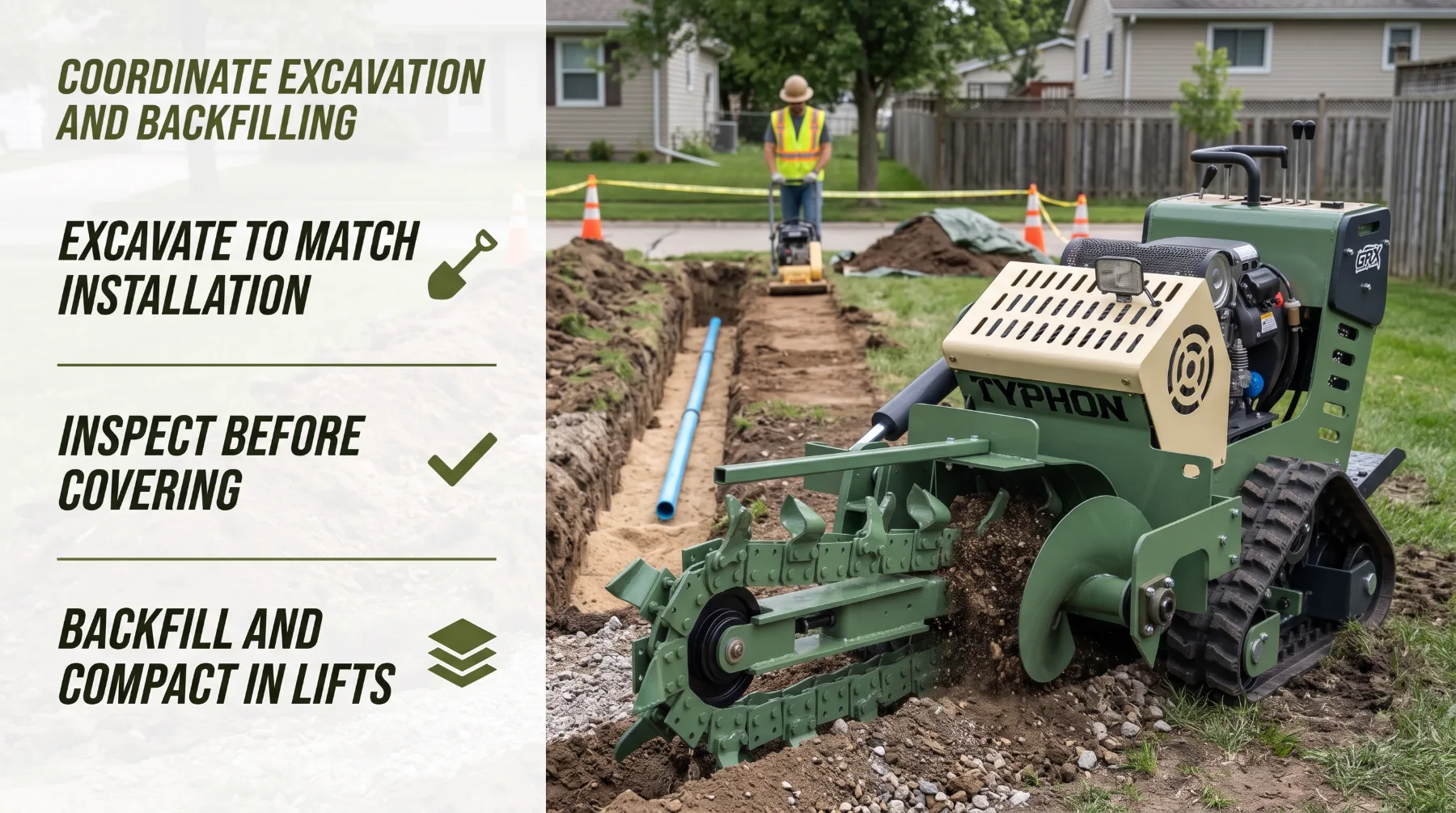
Efficient trenching depends on timing. Digging far ahead of the installation crew leaves long sections of open trench exposed to weather, traffic, and collapse risk. It also spreads spoil across more of the site and blocks access for longer than necessary.
Excavate in stages that match pipe or cable installation progress. Open only as much trench as the crew can install, inspect, and backfill within a reasonable working period. This approach keeps spoil piles smaller, reduces the length of open excavation, and lowers the risk of water damage or wall failure. Barricade or cover open trenches when work stops, especially near public areas, driveways, and walkways.
Backfill only after the installation has been inspected and approved for covering. Place bedding and initial backfill as the project specifications require, using clean material free of rocks and debris that could damage pipe or conduit. Compact in lifts to the specified density, and install warning tape where required. Return stockpiled topsoil to restore the surface. When excavation, installation, inspection, and backfilling move together in a steady sequence, crews handle each pile of soil once and leave a clean, finished section behind them.
Key takeaway: Match excavation to installation progress, limit open trench length, and backfill in compacted lifts only after inspection and approval.
Choose Equipment for Site Conditions
The right equipment makes spoil management easier from the start. A machine that cuts a cleaner, narrower trench removes less material, which means smaller spoil piles, less backfill, and less surface disturbance. On residential and landscaped sites, that difference is visible the moment the job is finished.
A compact trencher creates consistent trenches with controlled width and depth, which makes it well suited to irrigation, electrical, communication, and small water line installations. Its compact footprint helps it work in restricted areas, such as backyards, side lots, and established landscapes, with less damage to turf and hardscape. A compact excavator offers more flexibility for wider trenches, deeper cuts, and work around existing obstructions. Match the machine to the trench dimensions, soil conditions, and access your projects require.
Pair your digging equipment with suitable spoil handling machines. Compact dumpers, tri loaders, and skid steers can move material between the trench and storage areas without tearing up the site. Plan transport routes so machines don’t cross trench edges, block crews, or create congestion. Consider ground protection mats on sensitive surfaces. Before committing to equipment, review machine width, weight, and ground pressure against your typical site access to confirm the right fit.
Key takeaway: Choose compact equipment that cuts accurate trenches with minimal disturbance, and pair it with spoil handling machines and planned transport routes.
Conclusion
Effective excavated soil management helps keep trenching projects organized, safe, and productive. Planning spoil placement before digging begins reduces unnecessary material handling and keeps work areas clear. Excavated soil should be kept away from trench edges in accordance with applicable safety requirements, while reusable material should be separated from unsuitable soil to support efficient backfilling and site restoration. Proper water management also helps maintain stable working conditions and prevent delays caused by excess moisture or runoff. Coordinating excavation, spoil removal, and backfilling keeps the project moving while reducing unnecessary site disturbance. Suitable compact equipment further supports these tasks by producing clean trenches and maneuvering efficiently in restricted work areas. Spoil management should be included in the project plan from the beginning, with designated storage areas, material handling procedures, and backfilling requirements clearly established. Crews must follow applicable regulations and project specifications, while trench safety decisions should remain under the direction of a qualified competent person. Equipment selection should also reflect soil conditions, site access, digging requirements, and available working space. Combining proper planning, suitable machinery, and consistent safety practices helps maintain cleaner jobsites, protect workers, reduce rehandling, and complete installations more efficiently.
Frequently Asked Questions
Where should excavated soil be placed?
Place it in a designated storage area that does not obstruct access, block drainage, or create a hazard near the trench. Keep spoil at least 2 feet from the trench edge, or farther when site conditions require it.
Can excavated soil be reused as backfill?
Suitable clean material may be reused when it meets project specifications and approval requirements. Remove rocks, roots, and debris, and keep backfill material protected from excessive moisture.
Why should spoil be kept away from trench edges?
Spoil adds weight and pressure to trench walls, which increases the risk of a cave-in. Loose material can also fall back into the excavation and injure workers.
When should backfilling begin?
Backfilling should begin after the installed utility or structure has been inspected and approved for covering. Place and compact material in lifts according to the project specifications.