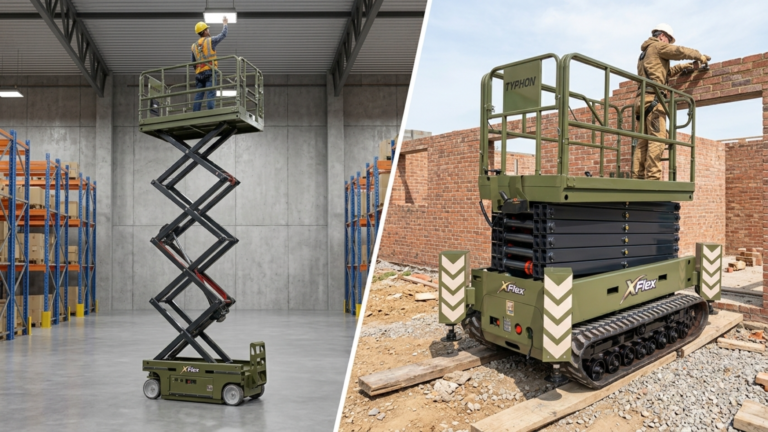
A framing crew wraps up a summer stretch of interior finish work and lands a fall contract loading material across a muddy exterior lot. The scissor lift that carried them through clean indoor jobs now sits useless at the edge of the site, unable to cross soft ground or lift a pallet off a delivery truck. The crew scrambles for a forklift with a week left on the clock. That scramble is the whole reason this comparison matters. When the season shifts, the machine that fit last month can become the wrong tool overnight.
The choice in scissor lift vs forklift comes down to what the job actually asks the machine to do. A scissor lift raises workers and light material straight up on a stable platform. A forklift moves and stacks heavy loads across a site and lifts them to height. Both earn a place in seasonal construction equipment planning, but they solve different problems, and picking wrong costs you time, rental fees, and stalled crews. Here is how they compare and when each one fits the work in front of you.
The biggest mistake is choosing based on the machine that worked for your last project instead of the conditions of the next one. Jobsite access, surface conditions, lifting requirements, and the type of work being performed all determine which machine delivers real value. A scissor lift may be the perfect solution for overhead installation and maintenance tasks, while a forklift becomes essential when moving heavy materials is the priority. Understanding the role of each machine before the job starts helps avoid downtime, unexpected rentals, and crews waiting on the right equipment to arrive.
The Core Difference in Plain Terms
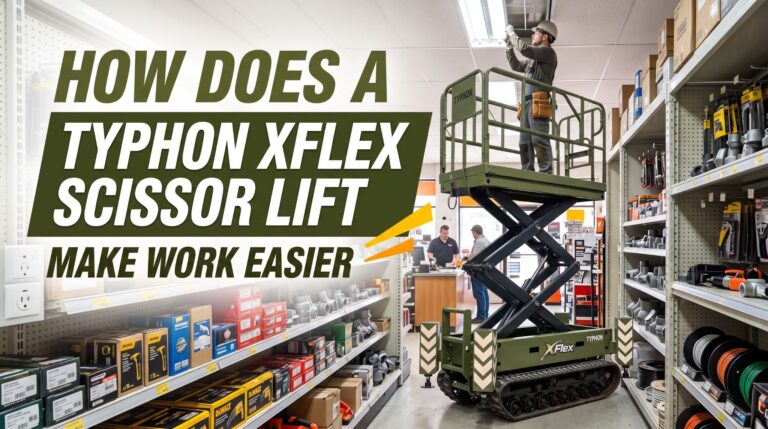
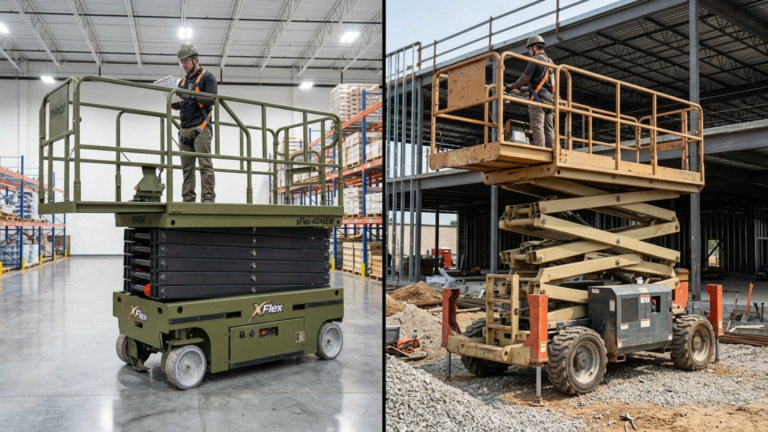
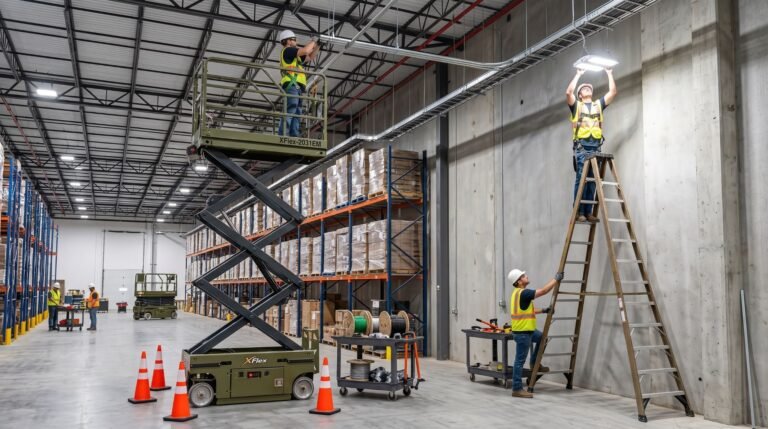
Strip away the specifications and the difference becomes much clearer. A scissor lift is designed as a vertical access machine, built to raise workers, tools, and small materials straight upward so crews can safely complete tasks at height. It is commonly used for electrical work, ceiling installation, maintenance, painting, and interior construction where a stable platform and precise positioning are more important than moving heavy loads. Because it relies on a wide, stable base, it performs best on firm, level surfaces where operators can work comfortably and efficiently.
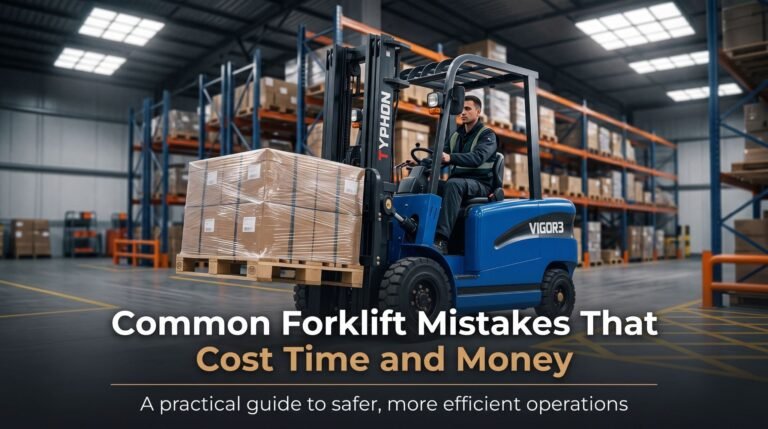
A forklift is a material handling machine built around moving weight. Its forks slide beneath pallets, equipment, and construction materials, allowing operators to lift, transport, and stack heavy loads across a jobsite. Unlike a standard scissor lift, forklifts are designed to handle much greater weight, and rough-terrain models can travel across dirt, gravel, uneven ground, and outdoor construction areas where a platform lift may struggle.
Here is the key idea: one machine raises workers, while the other moves materials. The right choice depends on what your project demands most during the season. If your crews spend most of their time installing, repairing, or working overhead, a scissor lift provides the access they need. If the priority is moving heavy materials, loading deliveries, or keeping a site supplied, a forklift becomes the better fit. For companies that handle a mix of tasks, understanding your typical jobsites and workload patterns matters more than comparing a single specification on a machine sheet.
Comparing the Features That Matter Most
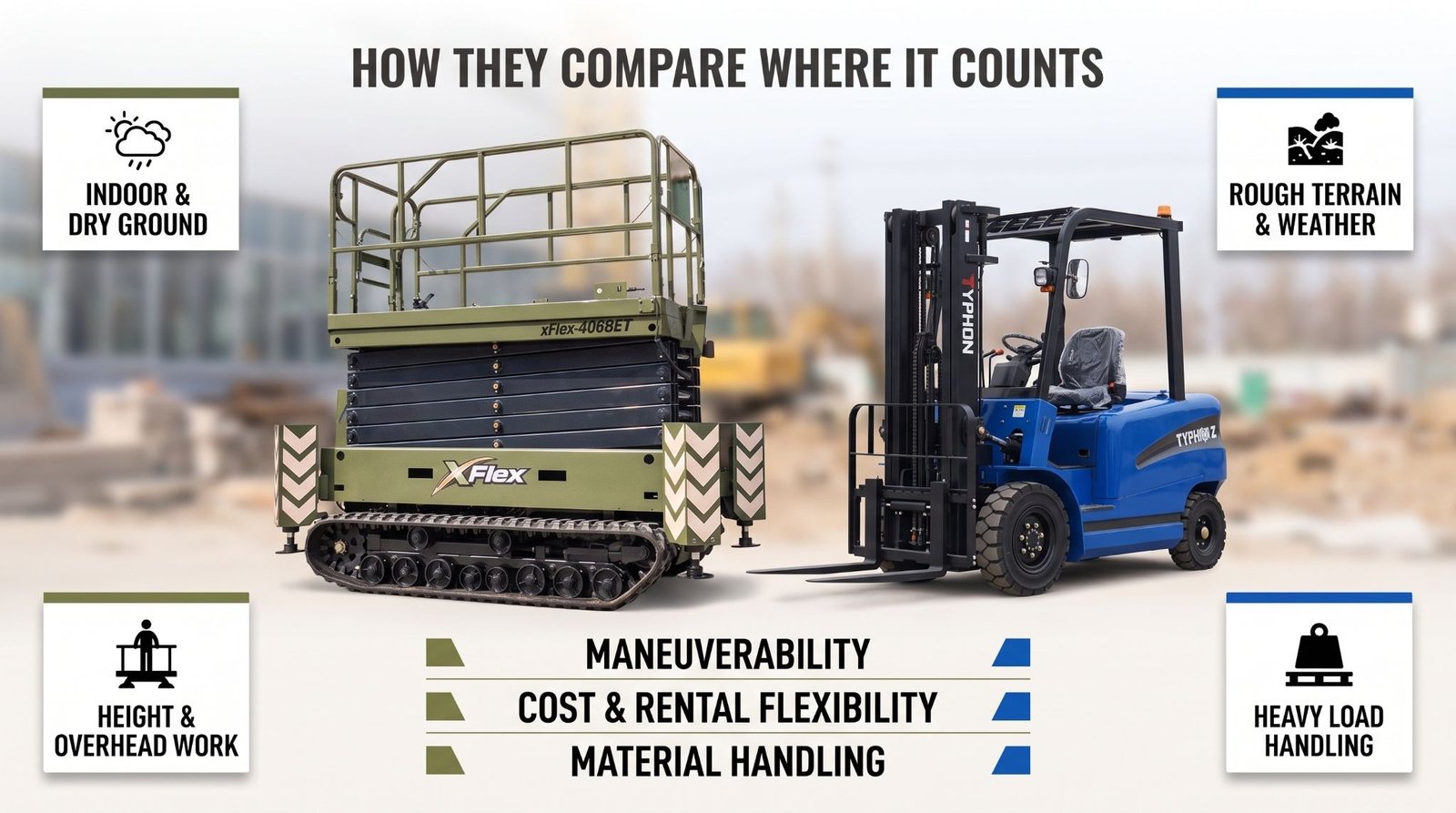
The right machine depends on the work your season actually throws at you, not the widest range of jobs you can imagine. A machine that performs perfectly on one project may become inefficient when the environment, materials, or tasks change. Scissor lifts and forklifts are built for different challenges, so the better choice comes down to understanding what your crew does most often. Here is how the two compare across the factors that have the biggest impact on productivity, jobsite efficiency, and overall value.
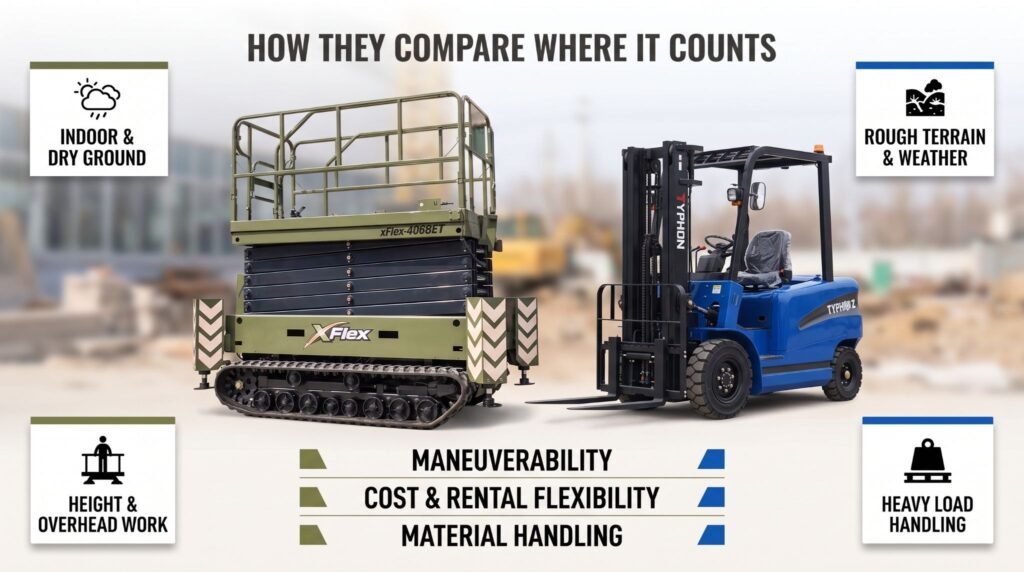
Seasonal Conditions and Weather
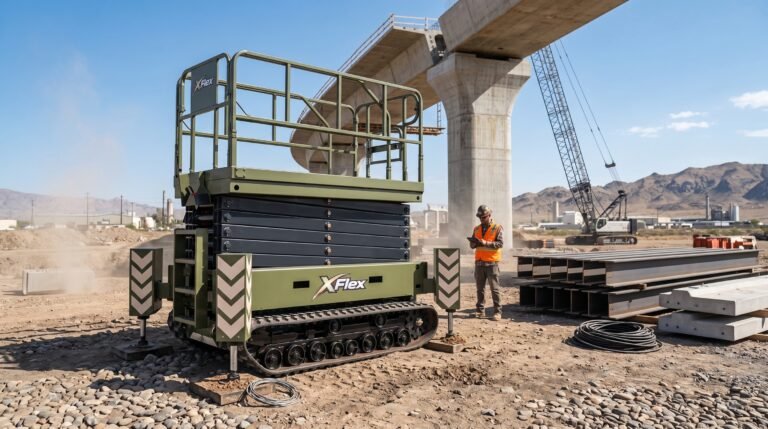
Weather separates these two machines quickly because the conditions that help one perform can limit the other. A scissor lift works best on firm, level, and stable ground where the platform can be raised safely without compromising balance. Wet, frozen, muddy, or uneven surfaces can restrict where it can operate, especially for standard electric models designed mainly for indoor or hard-surface environments. As seasons change and jobs move outdoors, rain, snow, and soft ground can reduce the flexibility of a scissor lift and create the need for a more terrain-focused machine.
A rough-terrain forklift handles changing conditions much better because it is built to travel through challenging outdoor environments. Larger tires, higher ground clearance, and stronger traction allow it to move across mud, gravel, snow, and unfinished construction areas while still carrying heavy materials. This makes it a reliable choice for jobsites where weather can quickly change the surface conditions. Following manufacturer recommendations for cold-weather operation, load limits, and stability checks helps keep either machine operating safely throughout the year.
Indoor vs Outdoor Use
Scissor lifts are the clear choice for many indoor applications because they are designed around worker access rather than material movement. Electric models operate quietly, produce no exhaust, fit through standard doorways, and can move across finished floors with minimal disruption. For tasks such as electrical installation, drywall finishing, ceiling work, painting, and HVAC maintenance, a scissor lift provides a stable working platform that allows crews to focus on precision and safety.
Forklifts are naturally better suited for outdoor material handling, especially rough-terrain models built for construction sites, warehouses, and supply yards. They are designed to unload deliveries, transport heavy materials, and move pallets across uneven surfaces where a lift platform would not be practical. While indoor forklifts perform well on smooth concrete floors, the heavier lifting and transport tasks around active jobsites usually belong to forklifts. Matching the machine to the environment, surface conditions, and daily workflow is what determines whether the equipment becomes a productivity tool or a limitation.
Load Handling and Reach
This is where the forklift pulls ahead without argument. It lifts and carries heavy pallets, bundles, and equipment that a scissor lift is never designed to touch. If your season involves moving material, staging deliveries, or feeding a build with supplies, the forklift is the tool.
A scissor lift carries people plus their gear and light material, straight up and nothing more. It reaches height with a stable, roomy platform, but it does not move loads across a site. For overhead work where crews need space to stand and build, though, that platform beats a forklift every time.
Maneuverability
Scissor lifts move in tight, predictable patterns and shine in confined indoor spaces. They tuck into rooms and hallways where a forklift would never fit. The trade is range, since they travel slowly and stay put once raised.
Forklifts cover ground fast and turn sharply for a machine their size, which suits busy yards and open sites. On a cramped interior job, though, that same size becomes a liability. Match the maneuverability to the space your season demands.
Cost and Rental Flexibility
Cost is closer than many crews expect, and rental flexibility often decides it. Scissor lifts generally rent cheaper by the day and suit short interior stints. Forklifts cost more but carry heavier loads and handle rougher sites, so you pay for capability you may not always need.
Here’s the objection worth naming: buying either machine for a single season ties up cash you could keep working. For crews whose needs swing with the calendar, renting the right unit per phase usually beats owning one machine that only half fits. Weighing your real workload keeps that spend lean.
Built for the Job: Choosing the Right Machine
Choose a scissor lift if your seasonal work leans on interior tasks at height, framing, finishing, electrical, HVAC, and similar jobs on firm, level floors. The stable platform, clean electric operation, and lower rental cost make it the smarter pick when crews work up rather than across, and when the site stays dry and indoors.
Choose a forklift if your season involves moving heavy material, unloading trucks, staging deliveries, or working across rough outdoor ground. A rough-terrain model earns its keep when mud, snow, and uneven lots would strand a platform lift, and when load capacity matters more than reaching overhead.
Still unsure? Many crews rent both across a season, running a scissor lift for interior phases and a forklift for material moves and outdoor stretches. Pairing the right machine with the right keeps you from paying for capability you don’t need in a given month.
Conclusion
Both machines earn their place, so the choice comes down to what your season actually asks. A scissor lift raises workers and light material straight up, making it the pick for indoor, at-height work on firm, level ground. A forklift moves and lifts heavy loads across a site, and a rough-terrain model handles the mud, snow, and open lots that stop a scissor lift cold. Weather, indoor versus outdoor use, load needs, and maneuverability decide the winner far more than price alone. For crews whose work shifts with the calendar, renting the right machine per phase usually beats owning one that only half fits. Match the lift to the season in front of you, and when you are ready to line up dependable equipment for the months ahead, reach out to a trusted equipment specialist who can pair reliable machines with the results your projects depend on.
Frequently Asked Questions
Which is better for seasonal construction work, a scissor lift or a forklift?
It depends on the task: a scissor lift wins for indoor at-height work on level ground, while a forklift wins for moving heavy loads across rough or outdoor sites.
Can a scissor lift be used outdoors in wet or cold weather?
Most standard scissor lifts need firm, dry, level ground, so wet, frozen, or uneven surfaces limit safe outdoor use, unlike a rough-terrain forklift.
Is it cheaper to rent a scissor lift or a forklift?
Scissor lifts usually rent cheaper by the day, but a forklift carries far heavier loads, so the better value depends on which task your season demands.